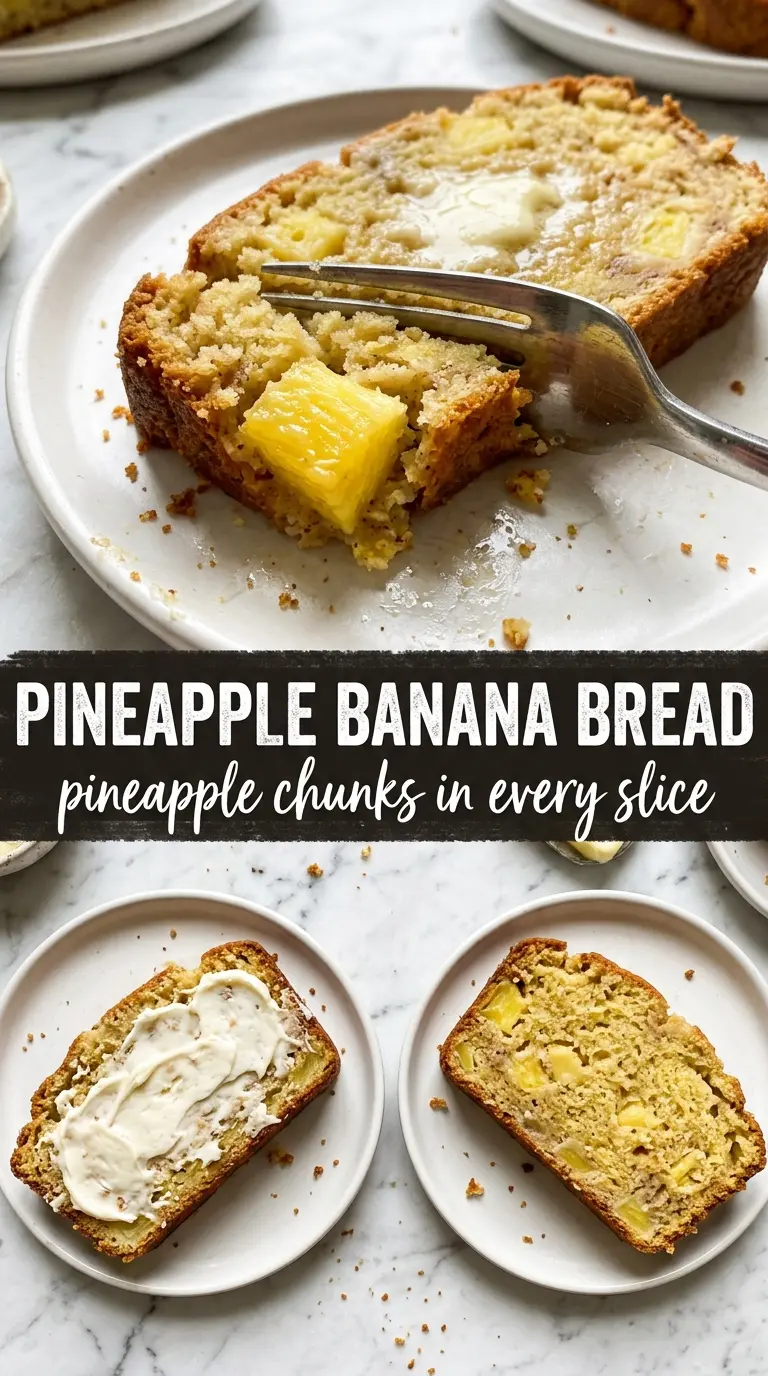
Crushed pineapple makes banana bread stay soft for days, but it also changes the crumb in a way that matters: the loaf turns tighter, richer, and just a little chewy at the edges instead of airy and muffin-like. That’s exactly what makes this version worth baking. You get the familiar banana-bread comfort, then the pineapple comes through in little bright pockets that keep each slice from tasting flat.
The trick is using drained crushed pineapple and a bit of the reserved juice in the batter. Too much liquid and the loaf bakes up gummy in the middle; too little and you lose the tropical note that makes the bread special. The batter is mixed in stages so the fruit stays distributed without overworking the flour, which keeps the crumb tender instead of tough.
Below, I’ve included the ingredient choices that matter most, the part of the bake that decides whether the center sets cleanly, and a few swaps that still keep the loaf moist and flavorful.
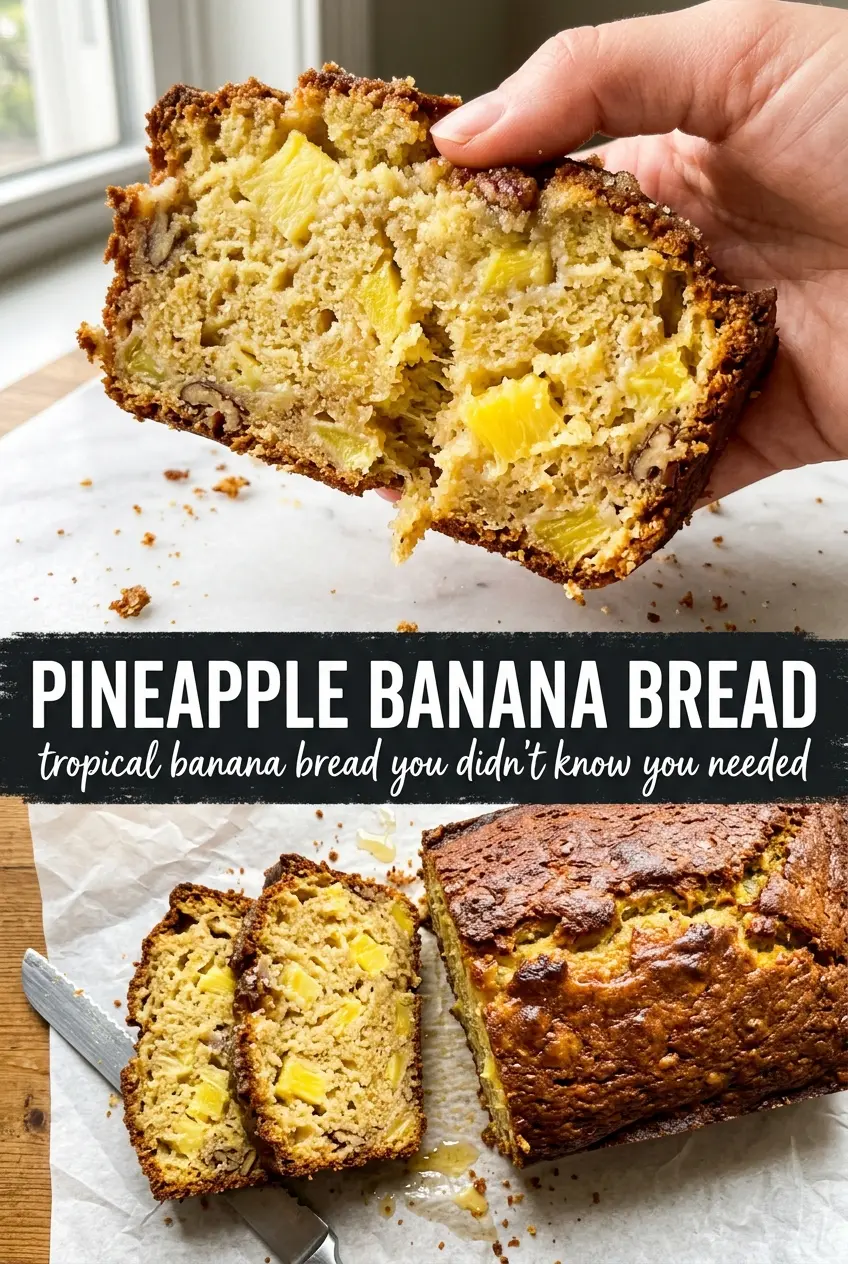
The pineapple kept the loaf incredibly moist, and the crumb set up beautifully after the full cooling time. Mine sliced cleanly the next day and the coconut on top gave it just enough extra texture.
Save this pineapple banana bread for the days when you want a moist, golden loaf with a tropical crumb and no complicated steps.
The Pineapple Is Doing More Than Adding Flavor
Banana bread goes wrong in two common ways: it bakes up dry, or it turns dense and wet in the center. Pineapple can help with the first problem, but only if you handle it carefully. Drained crushed pineapple adds moisture without flooding the batter, and the small bits spread through the loaf more evenly than big chunks would.
The other mistake is overmixing after the flour goes in. Once the dry ingredients hit the bowl, the batter should look a little rough, not glossy and beaten smooth. That light hand keeps the loaf tender and lets the pineapple stay in little bursts instead of disappearing into the crumb.
What Each Ingredient Is Actually Doing In This Loaf
- Ripe bananas — These give the bread its core sweetness and that classic banana-bread aroma. Use bananas with plenty of brown spotting; pale bananas won’t mash smoothly or bring enough flavor.
- Crushed pineapple — This is the ingredient that keeps the loaf plush. Drain it first, then reserve a couple tablespoons of juice so you can boost the tropical flavor without making the batter soggy.
- Melted butter — Butter adds richness and a softer crumb than oil gives here. Melted butter also mixes easily with the sugar and eggs, which helps the batter come together quickly.
- Baking soda and baking powder — Banana bread needs both when there’s extra fruit in the mix. The soda reacts with the banana and pineapple moisture, while the baking powder gives the loaf enough lift to avoid turning heavy.
- Optional coconut or macadamias — Coconut leans the loaf toward a more tropical, almost bakery-style finish. Macadamias add a buttery crunch, but leave them out if you want the pineapple to stay front and center.
Getting The Batter Mixed Without Losing The Tender Crumb
Start With The Wet Ingredients
Mash the bananas in a large bowl, then whisk in the melted butter, sugar, eggs, vanilla, and pineapple juice until the mixture looks thick and glossy. You want everything combined, but not whipped. If the butter is too hot, it can start cooking the eggs, so let it cool for a minute before it goes in.
Add The Pineapple Before The Flour
Stir in the drained crushed pineapple next so it spreads through the batter while it’s still loose. This keeps the fruit from clumping at the bottom of the loaf. The mixture will look a little lumpy, and that’s fine; the fruit should still be visible.
Fold, Don’t Beat
Add the flour, baking soda, baking powder, and salt, then fold just until the dry streaks disappear. If you keep stirring after that point, the bread turns tough and can tunnel through the center. Fold in coconut or nuts at the very end, using only enough strokes to distribute them.
Watch The Center, Not Just The Color
Bake at 350°F until the loaf is deeply golden and a toothpick comes out clean or with just a few moist crumbs. The top should spring back lightly when pressed, but the middle needs the full time to set. If the top browns too fast before the center is done, tent it loosely with foil for the last 15 to 20 minutes.
Three Ways To Change The Loaf Without Losing The Moist Crumb
Dairy-Free Version
Swap the butter for melted coconut oil or a neutral dairy-free baking stick. Coconut oil nudges the loaf even further toward a tropical flavor, while a baking stick keeps the taste more neutral. Either one works as long as it’s melted and cooled slightly before mixing.
Gluten-Free Adjustment
Use a good 1:1 gluten-free flour blend that already includes xanthan gum. The loaf will be a little more delicate, so let it cool completely before slicing. If your blend tends to be dry, add an extra tablespoon of pineapple juice for a softer crumb.
More Tropical, Less Sweet
Reduce the sugar to 2/3 cup and add coconut, chopped macadamias, or both. The bread will taste a little less dessert-like and a little more breakfast-friendly, but the crumb stays soft because the pineapple and bananas still do the heavy lifting.
Storage and Reheating
- Refrigerator: Store tightly wrapped for up to 5 days. The crumb gets even softer by day two, and the pineapple flavor deepens.
- Freezer: Freezes well for up to 3 months. Slice the cooled loaf first, wrap individual slices, and freeze them flat so you can grab one at a time.
- Reheating: Warm slices in the toaster oven or microwave just until the butter softens and the crumb loosens. Don’t overheat it or the pineapple pockets can turn rubbery.
Questions I Get Asked About This Recipe
Pineapple Banana Bread
Ingredients
Equipment
Method
- Preheat oven to 350°F and grease a 9x5 loaf pan so the loaf releases cleanly after baking.
- Whisk melted butter, sugar, eggs, vanilla, and pineapple juice into mashed bananas until fully combined.
- Stir in drained crushed pineapple to distribute the fruit through the batter.
- Fold in all-purpose flour, baking soda, baking powder, and salt until just combined for a tender quick bread.
- Fold in coconut or macadamia nuts if using so every slice has a little texture.
- Pour batter into the prepared pan and bake at 350°F for 60–70 minutes, until deeply golden and a toothpick comes out clean.
- Cool in the pan for 15 minutes, then turn out so the crumb sets and stays extra moist.