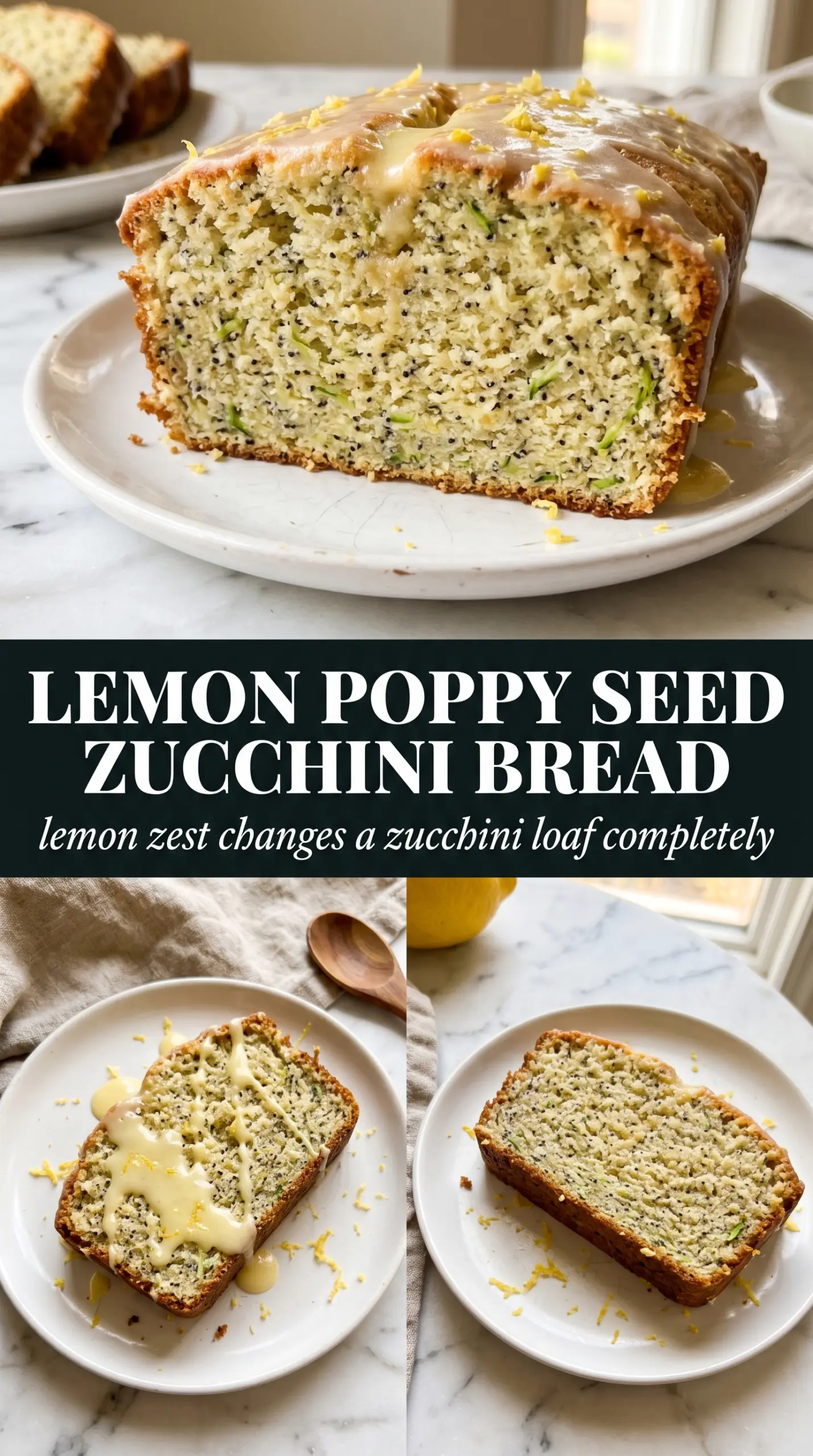
Lemon poppy seed zucchini bread comes out with a soft, tender crumb, a bright citrus edge, and those little poppy seeds scattered through every slice. The zucchini keeps the loaf moist without making it heavy, and the lemon glaze gives the top a glossy finish that tastes as fresh as it looks. It’s the kind of breakfast loaf people keep slicing into until half the pan is gone.
What makes this version work is balance. The zucchini needs to be squeezed dry before it goes in, or the loaf turns dense and gummy in the center. Greek yogurt adds extra moisture and a little tang, while lemon zest carries the flavor farther than juice alone ever can. The poppy seeds don’t just add crunch; they keep the crumb from feeling flat.
Below, I’ve included the small details that matter most: how to avoid a soggy loaf, what to watch for near the end of baking, and the easiest way to get a smooth glaze that actually stays on top instead of disappearing into the bread.
The crumb stayed so soft and the lemon glaze set up beautifully without sliding off. I squeezed the zucchini dry like you said, and the loaf baked up with no soggy middle at all.
Like this lemon poppy seed zucchini bread? Save it to Pinterest for a bright breakfast loaf with a soft crumb and glossy lemon glaze.
The Small Mistake That Makes Zucchini Bread Dense
Zucchini bread usually turns out heavy for one of two reasons: too much moisture or too much mixing. The zucchini itself holds a lot of water, and if it goes into the batter unprepared, that water ends up steaming the loaf instead of helping it bake. Squeezing it dry is what keeps the crumb tender instead of wet.
The other trap is stirring until the batter looks perfectly smooth. Stop earlier than that. Once the dry ingredients hit the bowl, mix only until the flour disappears. Overmixing develops the gluten in the flour, and that’s how you end up with a loaf that slices neatly but eats like cake in the wrong way — tight and rubbery instead of soft.
What Each Ingredient Is Actually Doing In This Loaf
- Greek yogurt — This adds moisture and a slight tang that makes the lemon taste brighter. Plain regular yogurt works in a pinch, but Greek yogurt gives the loaf a little more body and keeps the crumb plush.
- Lemon zest and juice — Zest carries most of the lemon flavor here. Juice adds acidity, which helps the baking soda do its job, but if you skip the zest the bread will taste muted.
- Zucchini — Grate it finely and squeeze it dry. That step matters more than the exact size of the shreds, because excess water is what turns a loaf gummy in the middle.
- Poppy seeds — They give the bread that classic speckled look and a subtle crunch. Don’t replace them with more flour or oat flour; you’d lose the texture that makes the loaf feel special.
- Vegetable oil — Oil keeps the bread soft even after it cools. Melted butter will work, but the loaf won’t stay as tender on day two.
Building The Batter So The Loaf Stays Light
Mix The Dry Ingredients First
Whisk the flour, baking soda, baking powder, salt, and poppy seeds in a separate bowl before anything touches the wet ingredients. That quick step keeps the leavening evenly distributed, which matters in a quick bread because you don’t get a second chance for the rise once the batter is in the pan. If the poppy seeds clump in one spot, the slice will bake unevenly.
Whip The Wet Ingredients Until Smooth
Beat the sugar, eggs, oil, yogurt, lemon zest, lemon juice, and vanilla until the mixture looks creamy and fully combined. The batter should smell strongly of lemon at this stage. If the eggs still look streaky, keep mixing for a few more seconds; uneven eggs can give the loaf a spotty texture and a less even rise.
Fold In The Zucchini And Stop Early
Stir in the squeezed zucchini, then add the dry ingredients and fold just until no dry flour remains. The batter will look thick, and that’s right. If you keep going because you want it smooth, the loaf turns tough, so stop as soon as the flour disappears and pour it into the pan.
Bake Until The Center Springs Back
Bake at 350°F until a toothpick comes out clean and the top is set with a light golden color, usually 50 to 58 minutes. The loaf should spring back lightly when you press the center, and the edges will pull just a touch from the pan. If the top browns too fast before the middle is done, lay a loose piece of foil over it for the last 10 to 15 minutes.
Glaze While The Loaf Is Still Warm
Let the bread cool for 15 minutes, then whisk the glaze until it’s smooth and pour it over the warm loaf. Warm bread helps the glaze settle and shine instead of sitting in a dry layer on top. If the loaf is too hot, the glaze will melt off; if it’s completely cool, it won’t soak in enough to give that pretty finish.
Three Ways To Adjust This Bread Without Losing The Lemon Flavor
Make It Dairy-Free
Swap the Greek yogurt for an unsweetened dairy-free yogurt with a thick texture, such as coconut or almond yogurt. The loaf will still stay moist, but it may be a little less rich, so don’t use a runny yogurt drink or the batter will loosen too much.
Make It Gluten-Free
Use a 1:1 gluten-free baking flour that already includes xanthan gum. The crumb will be a little more delicate, but the lemon and zucchini still come through clearly. If the batter seems thicker than usual, that’s normal for gluten-free flour.
Turn It Into Muffins
Spoon the batter into lined muffin cups and bake until the tops spring back and a tester comes out clean, usually around 18 to 22 minutes. Muffins give you more of the golden edge and less of the soft center, which some people prefer, and they’re easier to freeze in portions.
Skip The Glaze For A Less Sweet Loaf
Leave the glaze off and brush the top with a little warm lemon juice instead. You’ll still get a bright citrus finish, but the loaf will taste more like breakfast bread than dessert. The glaze is optional; the lemon in the batter already carries enough flavor on its own.
Storage and Reheating
- Refrigerator: Store covered for up to 4 days. The glaze will soften a little, but the loaf stays moist.
- Freezer: Freeze slices tightly wrapped for up to 2 months. It freezes well, especially if you glaze it after thawing rather than before.
- Reheating: Warm a slice in the microwave for 10 to 15 seconds or toast it very lightly. Don’t overheat it or the crumb turns dry fast.
Questions I Get Asked About This Recipe

Lemon Poppy Seed Zucchini Bread
Ingredients
Equipment
Method
- Preheat oven to 350°F and grease a 9x5 loaf pan; set pan aside for batter. Use a light coating so the loaf releases cleanly.
- Whisk all-purpose flour, baking soda, baking powder, salt, and poppy seeds together in one bowl. Stop when the mixture looks evenly speckled with poppy seeds.
- Beat granulated sugar, eggs, vegetable oil, Greek yogurt, lemon zest, fresh lemon juice, and vanilla extract until smooth. The batter should look glossy and fully combined.
- Stir in zucchini, grated and squeezed dry. Mix just until the zucchini is evenly distributed with no dry pockets.
- Fold the dry ingredients into the wet ingredients until just combined. Scrape the bottom and sides and stop as soon as no flour streaks remain.
- Pour batter into the loaf pan and smooth the top. Give it a gentle tap so bubbles rise.
- Bake at 350°F for 50–58 minutes, until a toothpick comes out clean. Look for a golden top and slightly pulling away from the pan edges.
- Cool for 15 minutes. The loaf should be warm but not hot when you glaze.
- Whisk powdered sugar, lemon juice, and lemon zest until smooth. Adjust with extra lemon juice (as needed) for a thick but pourable consistency.
- Pour glaze generously over the warm loaf. Finish with a glossy coat and visible poppy seeds throughout the golden crumb.