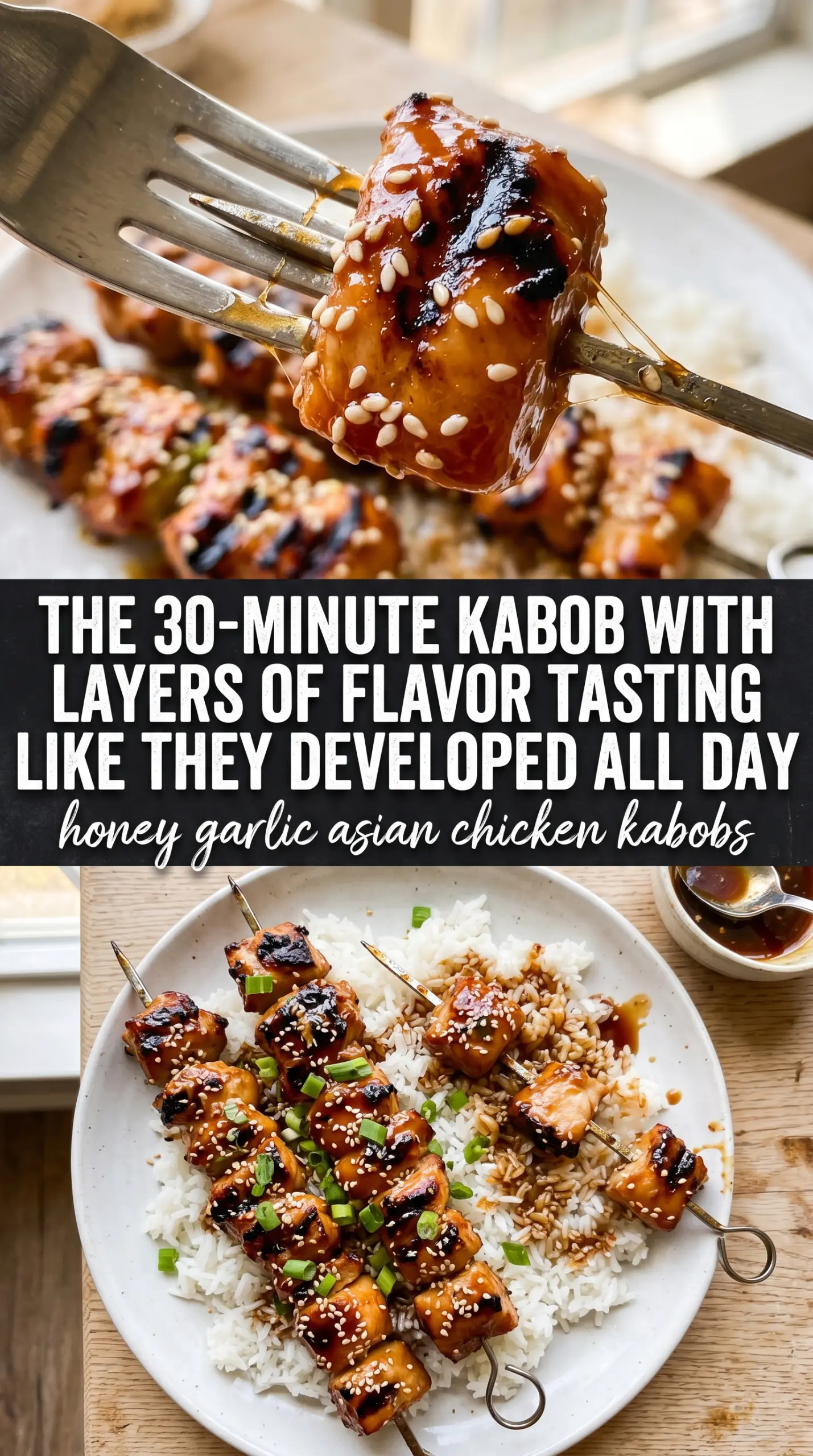
Glossy, sticky, and just charred at the edges, these Honey Garlic Asian Chicken Kabobs hit that sweet-savory spot that keeps you reaching for one more skewer. The chicken stays juicy, the peppers and onions pick up a little smoke, and the pineapple caramelizes into a bright, punchy bite that keeps the whole thing from tasting heavy.
What makes this version work is the balance in the marinade. Honey gives the glaze its shine, soy sauce brings depth, rice vinegar keeps it from turning cloying, and sesame oil plus ginger round everything out with that unmistakable takeout-style warmth. I also like reserving part of the marinade for basting so the kabobs get a lacquered finish on the grill instead of drying out while they cook.
Below, I’ll walk you through the one marinating detail that matters most, the best way to keep the glaze from burning, and a few smart swaps if you want to adjust the skewers for what’s already in your kitchen.
The marinade made the chicken taste like it had been on the grill all day, and the pineapple caramelized right at the edges without falling apart. I followed the basting step and the kabobs came off glossy instead of dry.
Save these honey garlic chicken kabobs for the nights when you want sticky grilled skewers with sweet soy glaze and barely any cleanup.
The Marinade Needs Balance, Not Just Sweetness
Honey can easily take over a glaze and turn the outside of the chicken into candy before the inside has time to cook. That’s why this marinade leans on soy sauce and rice vinegar instead of trying to rely on honey alone. Soy sauce gives the chicken real savoriness, while vinegar keeps the glaze lively and helps it cling instead of pooling in the bowl.
The other thing that matters here is how you use the reserved marinade. Once the raw chicken has touched it, that portion needs heat on the grill to become safe, which is why basting happens while the kabobs cook. It also helps you build layers of flavor instead of dumping all the sugar on at the start, which is the fastest route to burnt edges and pale chicken.
- Honey — This is what gives the skewers their glossy finish and sticky body. A runnier honey works best because it mixes smoothly and bastes evenly.
- Soy sauce — Use regular soy sauce for the most balanced salt level. Low-sodium works too, but the glaze will taste a little lighter and you may want an extra pinch of salt elsewhere.
- Rice vinegar — This keeps the marinade from tasting flat. Apple cider vinegar can stand in, but it’s sharper and less clean.
- Sesame oil — A little goes a long way. Don’t swap in a neutral oil here; you’d lose the nutty aroma that makes the glaze taste finished.
- Fresh ginger and garlic — Fresh is worth it. Powdered versions won’t give you the same brightness or that punchy first bite.
What Each Ingredient Is Actually Doing in Honey Garlic Asian Chicken Kabobs
- Protein (quality, proper thickness) — Good quality protein tastes better. Even thickness ensures even cooking.
- Seasoning (bold, distributed throughout) — Don’t be shy with salt and pepper. Quality seasoning elevates everything.
- Oil or fat (protective and flavorful) — The fat helps develop crust and carries flavors. Use generously.
- Heat management (appropriate temperature for the protein) — Too high and the outside burns before the inside cooks. Too low and it steams.
- Technique (sear, then finish based on thickness) — Proper technique creates flavor. Sear for crust, then cook through gently.
- Aromatics and seasonings (garlic, herbs, spices) — These add complexity and depth. Distribute them throughout the cooking process.
- Resting time (let it rest before serving) — Resting allows juices to reabsorb. This keeps the protein moist and tender.
- Optional: finishing sauce or glaze — A light sauce adds richness without overwhelming. Apply at the very end.
Keeping the Glaze Glossy on the Grill
Mix the Marinade First
Whisk the honey, soy sauce, garlic, rice vinegar, sesame oil, and ginger until the honey loosens completely and the mixture looks smooth. If the honey sits in streaks, the chicken won’t marinate evenly. Reserve part of the marinade before it touches the raw chicken so you have a clean basting sauce later. That reserved portion is what gives the kabobs their lacquered finish.
Let the Chicken Sit Long Enough to Take on Flavor
Marinate the chicken for at least 1 hour and up to 4 hours. Less than that and the glaze stays mostly on the surface; much longer and the vinegar starts changing the chicken’s texture in a way that can make it a little soft around the edges. Keep the bowl covered in the fridge and stir once if the pieces settle. You want everything evenly coated, not swimming in excess liquid.
Build the Skewers with Even Heat in Mind
Thread the chicken, peppers, onions, and pineapple onto soaked wooden skewers, keeping the pieces close in size so they cook at the same pace. If the chicken chunks are much larger than the vegetables, the peppers will go soft before the chicken is done. Leave a tiny bit of space between pieces so the heat can circulate. Crowded skewers steam; looser ones brown.
Grill Fast, Then Baste at the End
Cook the kabobs over medium-high heat for 5 to 6 minutes per side, turning them when the first side releases easily and shows good grill marks. Brush on the reserved marinade as they cook, but don’t flood the skewers or the glaze will drip into the flames and scorch. The chicken is done when the centers are no longer pink and the juices run clear. The last few minutes are where the sugar caramelizes, so watch closely once the glaze starts darkening.
Make It Gluten-Free with Tamari
Swap the soy sauce for tamari in a 1:1 ratio. You’ll keep the same savory depth and glossy finish without the wheat, and the rest of the recipe can stay exactly the same.
Use Chicken Thighs for a Juicier Skewer
Boneless thighs can replace the breasts if you want a more forgiving grill. They stay tender longer and handle a little extra char, though they’ll cook slightly slower and usually need another minute or two per side.
Skip the Pineapple if You Want a Less Sweet Kabob
You can leave out the pineapple and add extra bell pepper or zucchini instead. The skewers will be less glossy-sweet and a little more savory, which works well if you’re serving them with rice or a sharp cucumber salad.
Storage and Reheating
- Refrigerator: Store leftovers in an airtight container for up to 3 days. The vegetables soften a little, but the flavor holds up well.
- Freezer: The cooked chicken freezes well, though the peppers and onions lose some texture. Freeze for up to 2 months and thaw overnight in the fridge.
- Reheating: Warm the kabobs in a 325°F oven covered loosely with foil until heated through, or reheat the chicken off the skewers in a skillet over medium-low. High heat dries the chicken fast and can turn the glaze sticky in the wrong way.
Questions I Get Asked About This Recipe

Honey Garlic Asian Chicken Kabobs
Ingredients
Method
- Whisk together honey, soy sauce, garlic, rice vinegar, sesame oil, and ginger until smooth.
- Reserve 1/4 cup marinade for basting.
- Marinate chicken for 1-4 hours, turning occasionally so the cubes stay coated.
- Thread chicken, bell peppers and onions, and pineapple chunks onto soaked wooden skewers in an even pattern.
- Grill over medium-high heat for 5-6 minutes per side, basting with the reserved marinade during grilling until glossy.
- Garnish with sesame seeds and green onions right before serving.