Pizza on a Blackstone griddle gives you the kind of crust that keeps people hovering by the cooktop waiting for the next slice. The bottom turns crisp and spotted with char while the cheese melts into a bubbling blanket, and the whole thing comes together fast enough to keep dinner relaxed instead of rushed. It’s the closest you can get to pizzeria-style pizza outdoors without firing up a stone or heating the kitchen.
The trick is cooking the dough first, then flipping it and topping the cooked side. That simple move keeps the crust from going soggy under sauce and cheese, and it gives you enough structure to handle toppings without folding or tearing. Medium heat matters here, too. Too hot and the bottom burns before the cheese melts; too low and the crust dries out before it ever gets that good blistered finish.
Below, I’ll walk through the part that matters most: how to stretch the dough without fighting it, how to get that clean flip, and how to use a dome so the cheese melts before the crust overcooks.
The crust got those perfect little char spots and the cheese melted all the way through under the dome. I was worried the toppings would slide off, but flipping the dough first kept everything neat.
Save this Blackstone pizza for the nights when you want bubbling cheese, a crisp griddle crust, and dinner on the table in about 30 minutes.
The One Flip That Keeps Blackstone Pizza Crisp Instead of Soggy
Most griddle pizzas go wrong when the sauce lands on raw dough. The bottom never gets a chance to set, and by the time the cheese melts, the center is soft and the crust bends under the weight of the toppings. Cooking the first side plain gives the dough a head start, so it can hold up once you flip it and start building the pizza on the cooked surface.
That first side only needs to be golden and firm enough to lift cleanly. If it still sticks, it’s not ready yet. Give it another 30 to 60 seconds and check again. The goal is a crust that releases with confidence, because once you flip it, everything happens fast and there isn’t time to wrestle with the dough.
What the Dough, Cheese, and Dome Are Each Doing Here

- Pizza dough — A good, elastic dough stretches thin without tearing and puffs at the edges instead of staying flat and dense. Store-bought dough works fine if it’s rested enough to relax. If it keeps snapping back, cover it and give it 10 minutes before trying again.
- Mozzarella — Shredded low-moisture mozzarella melts more evenly than fresh mozzarella on the griddle. Fresh mozzarella adds great flavor, but it releases water fast and can make the center slippery. If you use it, tear it small and use less of it.
- Pizza sauce — Keep it on the thicker side so it stays put after the flip. Thin sauce runs to the edges and leaks under the crust. A few spoonfuls are enough; this is not the place for a heavy layer.
- Olive oil — A thin coat on the griddle helps the crust brown and release cleanly. Use enough to lightly sheen the surface, not so much that the dough fries. Too much oil softens the bottom instead of crisping it.
- Flour for dusting — A light dusting keeps the dough from sticking while you stretch and move it. Too much flour burns on the griddle and leaves a bitter taste, so shake off the excess before the dough hits the heat.
Getting the Griddle Pizza From Raw Dough to Melted Cheese
Heating the Surface the Right Way
Bring the Blackstone to medium heat before the dough goes down. You want the surface hot enough to brown the crust in a couple of minutes, but not so aggressive that the underside burns before you can flip it. A light film of oil should shimmer, not smoke. If the griddle is smoking hard, wait a minute and let it settle.
Stretching and Setting the First Side
Divide the dough into four portions and stretch each one into a thin round. Work from the center outward and keep the edges slightly thicker so they can puff a little. Lay the dough on the oiled surface and leave it alone until the bottom turns golden and releases cleanly. If you try to flip too early, it will tear or fold over itself.
Flipping and Building Fast
Once the first side is cooked, flip the crust and work quickly while the cooked surface is facing up. Add sauce first, then cheese, then toppings. Keep the layer light so the crust doesn’t get weighed down. If you overload it, the center steams instead of staying crisp.
Melting Under the Dome
Cover the pizza with a dome or large pan to trap heat and melt the cheese. This is what gives you that gooey top without leaving the bottom on the griddle long enough to burn. Check after 3 minutes, then keep going until the cheese is fully melted and the toppings are hot. Remove it as soon as the crust is done; every extra minute on the heat makes the bottom drier.
Ways to Make This Work With What You Have
Gluten-Free Griddle Pizza
Use a gluten-free pizza dough that’s meant to be stretched or rolled, not one that bakes up cakey. It may need a little more handling support, so keep the rounds smaller and don’t stretch them paper-thin. The texture will be a little more delicate, but the crispy underside still works well on the griddle.
Dairy-Free Pizza
Use a melting dairy-free mozzarella-style cheese and keep the layer modest. Some brands brown better than others, so watch for the cheese to soften and melt rather than waiting for classic bubbling. The pizza will still get a crisp crust and bold toppings, even if the top is a little less stretchy.
Vegetarian Toppings That Hold Up
Mushrooms, olives, peppers, onions, and spinach all work well here, but keep watery vegetables cooked down first if you can. Raw mushrooms and tomatoes can release enough liquid to soften the center. A lighter hand with toppings gives you a cleaner slice and a better crust.
Leftover Pizza Storage
Store leftovers in the refrigerator for up to 3 days, wrapped or in an airtight container. The crust softens a bit in the fridge, but it crisps back up better than it reheats in the microwave. Warm slices in a dry skillet or on the griddle over medium-low heat until the bottom is hot and the cheese loosens again.
Questions I Get Asked About This Recipe
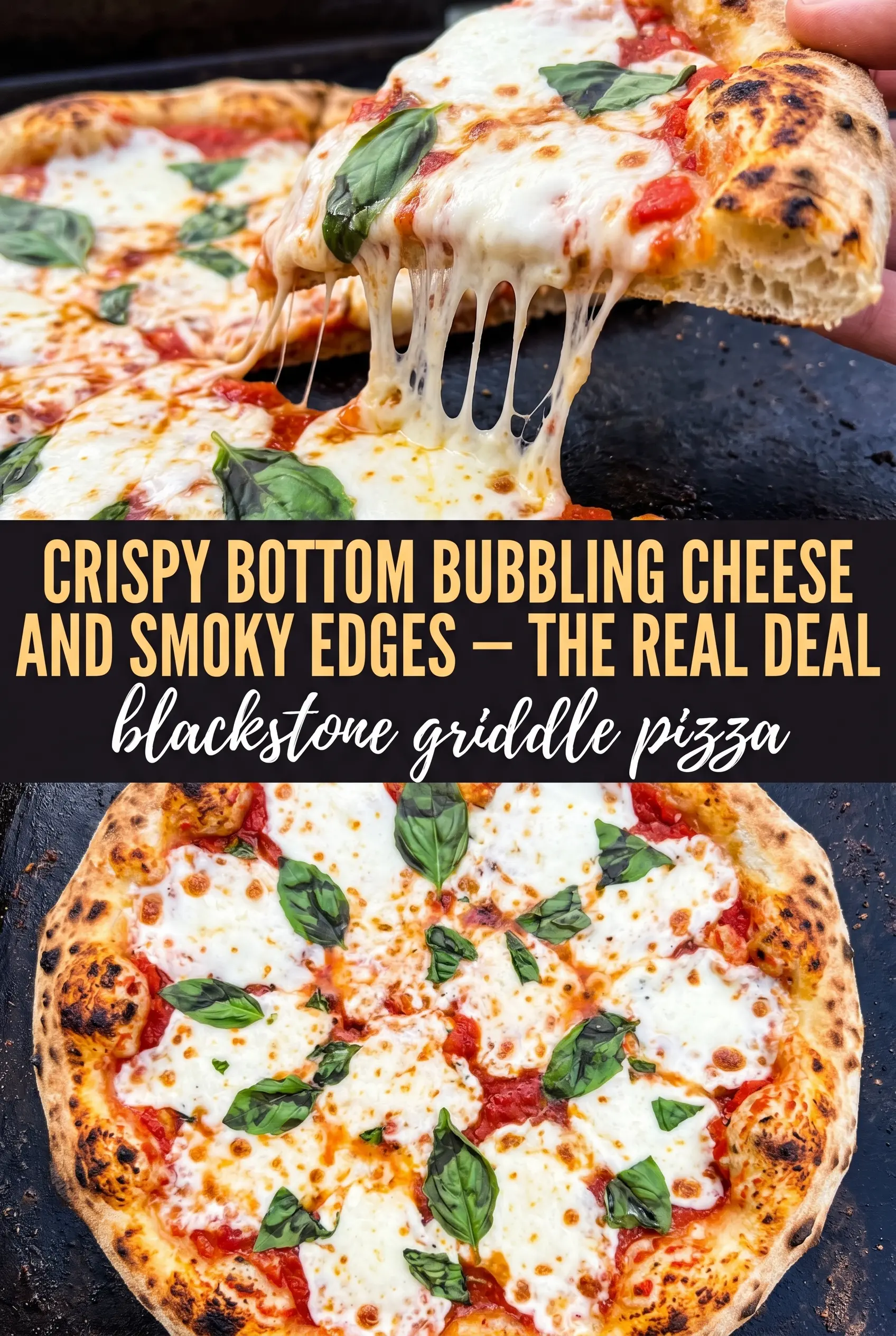
Pizza on a Blackstone Griddle
Ingredients
Equipment
Method
- Heat Blackstone griddle to medium heat, then lightly oil the surface so the dough releases easily.
- Divide pizza dough into 4 portions and stretch into thin rounds, dusting both sides with flour to prevent sticking.
- Place dough directly on the griddle and cook for 2-3 minutes until the bottom is golden and set.
- Flip the crust and quickly add pizza sauce, mozzarella cheese, and your choice of toppings to the cooked side.
- Cover with a dome or large pan and cook for 3-5 minutes until the cheese melts and turns glossy.
- Remove the pizza from the griddle, then top with fresh basil leaves and grated Parmesan cheese for a fresh, aromatic finish.
- Slice and serve immediately while the cheese is still bubbling.