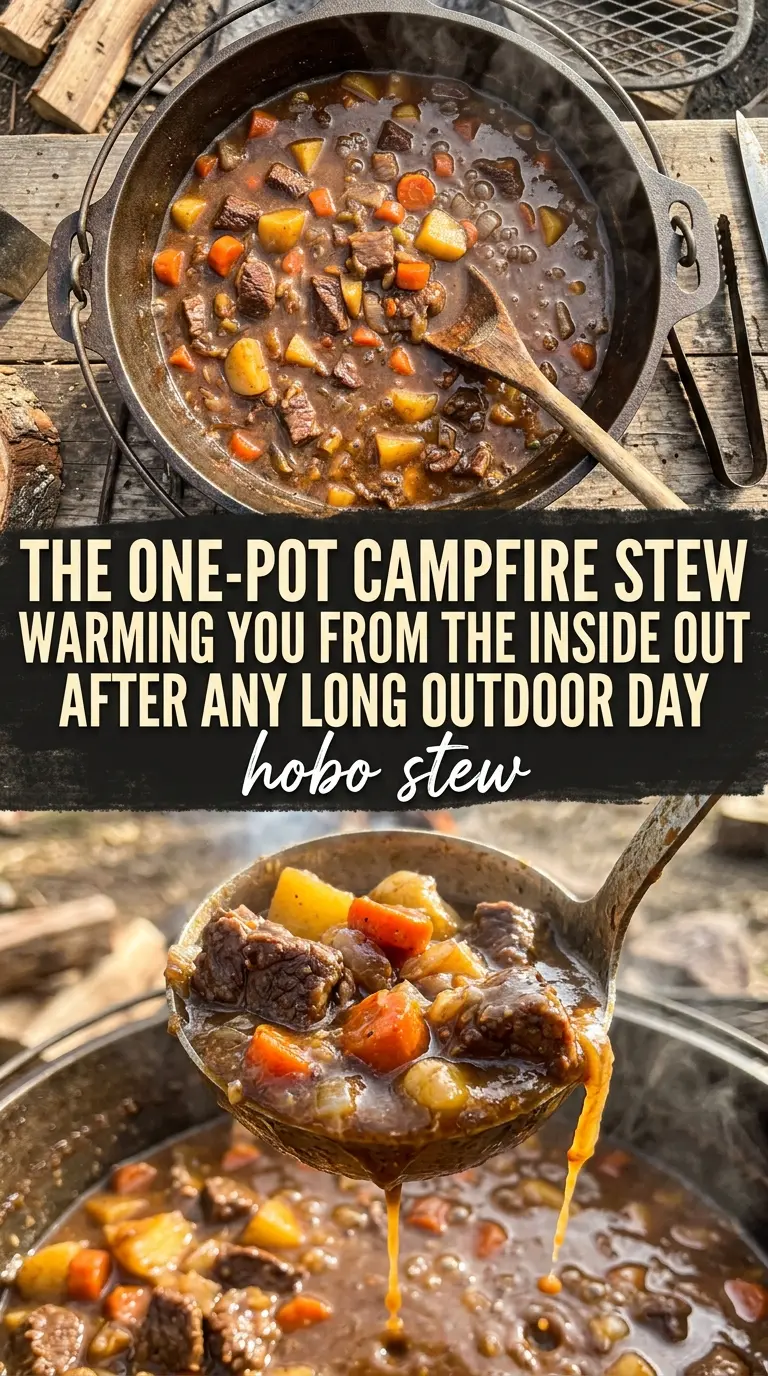
Hobo stew lands in the bowl the way a good campfire dinner should: thick, smoky, and full of spoon-tender potatoes that hold their shape instead of dissolving into the broth. It’s the kind of meal that tastes even better after a slow simmer, when the beef, tomatoes, and vegetables have had time to settle into one rich, hearty pot.
What makes this version work is the order. Browning the meat first gives the broth depth, and adding the potatoes and carrots before the delicate vegetables lets everything finish at the same time. The canned corn, green beans, and tomatoes do a lot of the heavy lifting here because they bring both liquid and texture without making the stew fussy.
Below, I’m sharing the small details that keep the stew from turning watery or bland, plus a few smart swaps if you’re cooking at home instead of over a fire.
Save this campfire-style Hobo Stew for a hearty Dutch oven dinner with tender vegetables and a smoky, beefy broth.
The Reason This Stew Stays Hearty Instead of Turning Mushy
The biggest mistake with a pot like this is adding everything in at the same time and expecting the texture to sort itself out. Potatoes and carrots need a head start, but canned vegetables only need enough time to warm through and blend with the broth. If they simmer too long, the corn loses its pop and the green beans go soft in a way that flattens the whole stew.
Browned meat matters here too. Whether you use stew meat or ground beef, the first step is what gives the broth its backbone. If you skip that step, the stew still cooks, but it tastes boiled instead of rich.
- Stew meat or ground beef Stew meat gives you chunkier bites and a more classic campfire feel, but ground beef is a solid shortcut that still builds plenty of flavor. If you use ground beef, brown it well and don’t rush the step; the deeper the browning, the better the broth tastes.
- Potatoes These need to be cut into even cubes so they finish at the same time. Waxy potatoes hold their shape best, but regular russets work if you don’t mind a softer, thicker broth.
- Canned tomatoes and broth The tomatoes bring acidity that keeps the stew from tasting flat, and the broth carries the seasoning through the whole pot. If your stew tastes thin, the fix is usually more simmer time, not more salt.
- Canned vegetables Corn and green beans are convenient here because they’re already cooked. Drain them before adding so they don’t water down the stew, then stir them in late enough that they stay recognizable.
What Each Ingredient Is Actually Doing in Hobo Stew
- Protein (quality, proper thickness) Good quality protein tastes better. Even thickness ensures even cooking.
- Seasoning (bold, distributed throughout) Don’t be shy with salt and pepper. Quality seasoning elevates everything.
- Oil or fat (protective and flavorful) The fat helps develop crust and carries flavors. Use generously.
- Heat management (appropriate temperature for the protein) Too high and the outside burns before the inside cooks. Too low and it steams.
- Technique (sear, then finish based on thickness) Proper technique creates flavor. Sear for crust, then cook through gently.
- Aromatics and seasonings (garlic, herbs, spices) These add complexity and depth. Distribute them throughout the cooking process.
- Resting time (let it rest before serving) Resting allows juices to reabsorb. This keeps the protein moist and tender.
- Optional: finishing sauce or glaze A light sauce adds richness without overwhelming. Apply at the very end.
Building the Pot So Every Vegetable Finishes at the Right Time
Brown the Meat First
Set the Dutch oven over medium heat and brown the beef until you see deep color on the bottom and the juices have mostly cooked off. That browned layer is where the flavor starts, so don’t move the meat around too early. If the pot looks dry, the meat is probably still steaming instead of searing.
Layer in the Hearty Vegetables
Add the potatoes, carrots, and onion before the canned vegetables. These firmer ingredients need the full simmer to soften without turning to paste. Stir them through the meat and let them pick up a little of that browned flavor before the liquid goes in.
Add the Broth and Seasoning
Pour in the beef broth, then add the tomatoes, garlic powder, paprika, salt, and pepper. Bring the pot to a real boil first so the stew starts moving, then reduce it to a steady simmer. If the heat stays too high, the potatoes can break on the outside before the center is tender.
Finish With the Canned Vegetables
Stir in the corn and green beans once the stew is already simmering. They only need enough time to heat through and take on the broth’s flavor. Cover the pot and cook until the potatoes and carrots are tender enough to pierce easily with a fork, but still hold their shape.
Three Ways to Work With What You Have
Ground Beef Shortcut
Use ground beef instead of stew meat if you want a faster, more affordable version. You’ll lose the chewy chunks of braised beef, but the stew turns out just as hearty, especially if you let the meat brown well before adding anything else.
Make It Dairy-Free and Gluten-Free
This recipe is naturally dairy-free and gluten-free as written, which makes it easy to serve to a crowd. Just check your broth label if you’re cooking for someone with gluten sensitivity, since some brands use additives you wouldn’t expect.
Swap the Veggies for What’s in the Pantry
If you’re out of green beans or corn, use peas, mixed vegetables, or extra carrots. Keep the total amount about the same so the stew doesn’t become too thick or too broth-heavy, and add softer vegetables near the end so they don’t disappear.
Turn It Into a Thicker One-Pot Meal
For a thicker stew, simmer uncovered for the last 10 minutes so some of the liquid cooks off. The broth will cling better to the vegetables, but keep an eye on the bottom of the pot so it doesn’t catch if you’re cooking over a strong fire or burner.
Storage and Reheating
- Refrigerator: Store covered for up to 4 days. The potatoes absorb more broth as it sits, so the stew gets thicker by day two.
- Freezer: It freezes well for up to 3 months, though the potatoes will soften a bit after thawing. Cool completely before freezing in airtight containers.
- Reheating: Warm it gently on the stove over medium-low heat, adding a splash of broth or water if needed. Don’t boil it hard again or the potatoes can break apart and the broth can turn greasy.
Questions I Get Asked About This Recipe
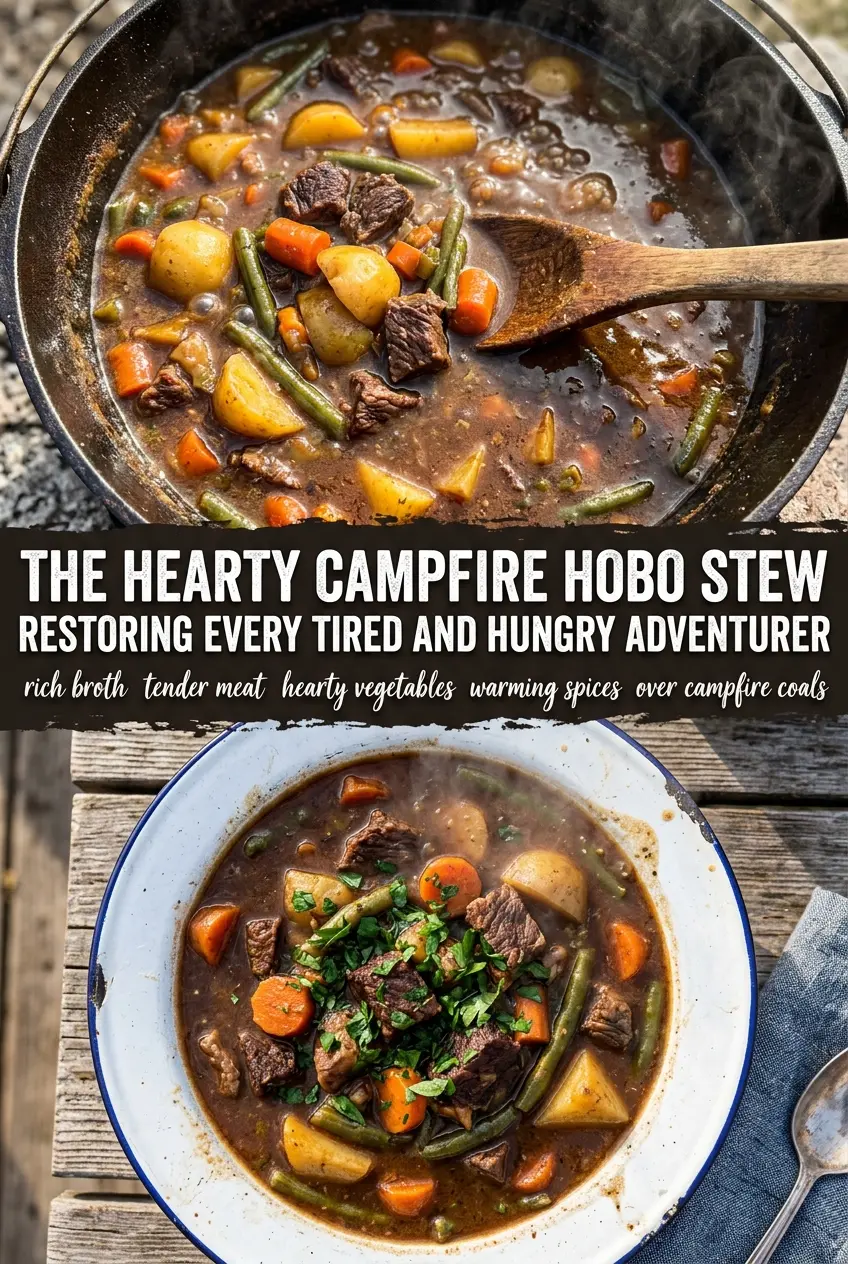
Hobo Stew
Ingredients
Equipment
Method
- Brown the stew meat in a Dutch oven over campfire until browned. You should see fond on the bottom and no visible pink.
- Add potatoes, carrots, onion, corn, green beans, diced tomatoes, and beef broth to the Dutch oven. Stir to combine so the vegetables are coated in the broth.
- Season with garlic powder, paprika, salt, and pepper, then stir again to evenly distribute the spices. The liquid should look speckled and fragrant.
- Bring the stew to a boil over the campfire, then reduce the heat so it maintains a gentle simmer. Keep the bubbling steady without aggressively rolling.
- Simmer covered for 35-40 minutes until vegetables are tender. Watch for potatoes to yield when pressed and the pot to stay bubbling around the edges.
- Ladle the hobo stew into bowls while hot. Serve right away so the meat and vegetables stay steaming.