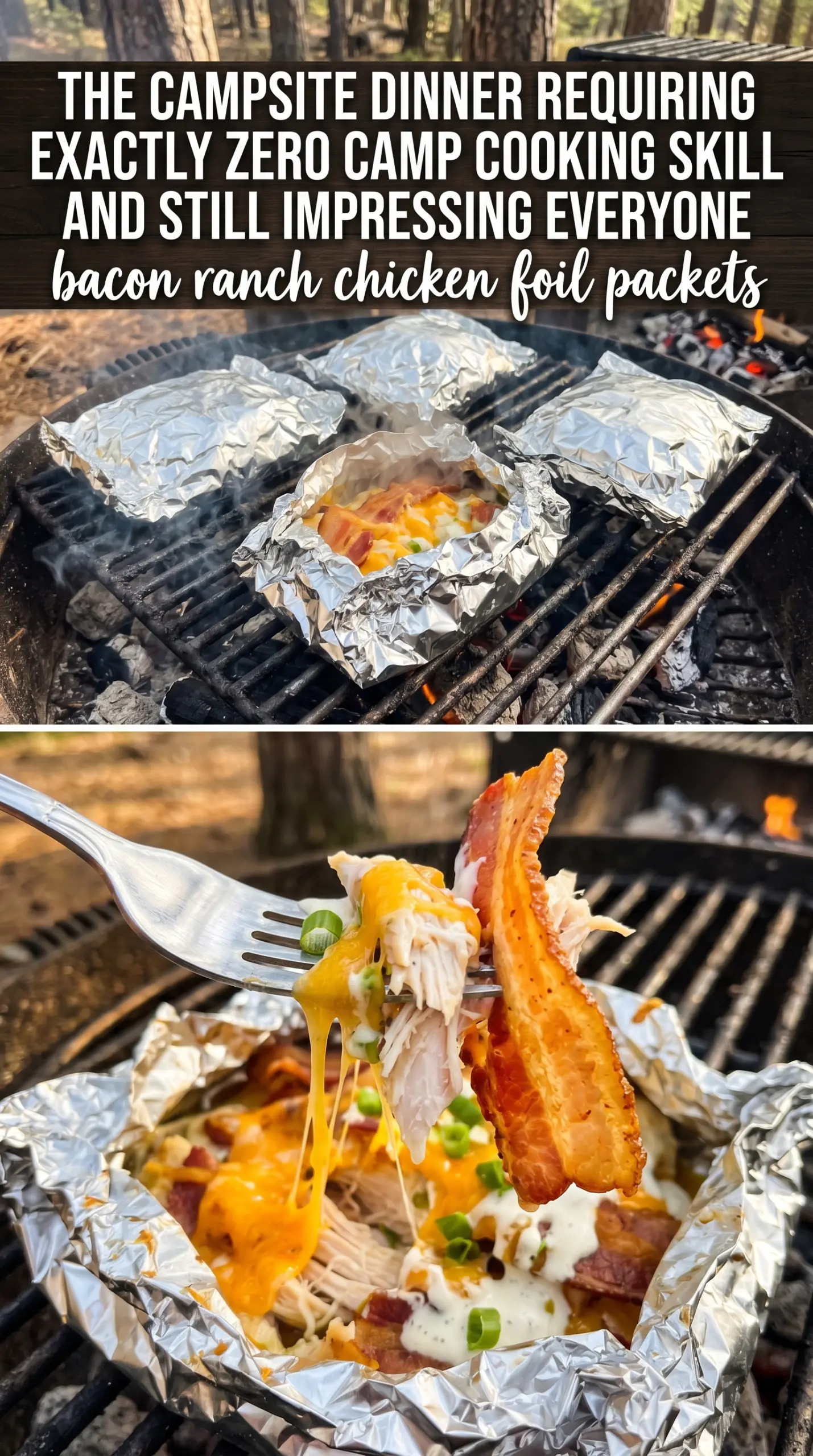
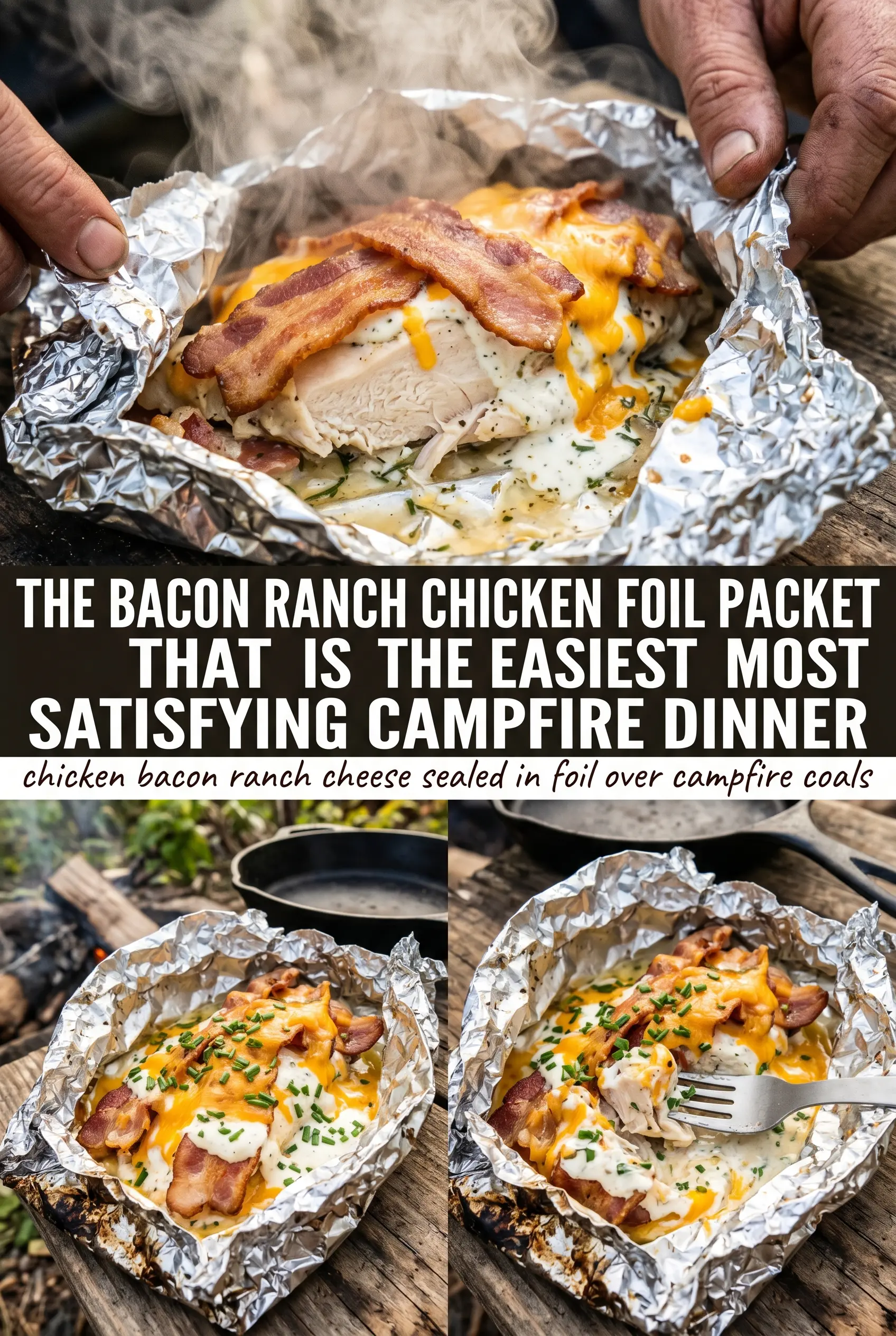
Bacon Ranch Chicken Foil Packets come out with juicy chicken, smoky bacon, tender potatoes, and broccoli all cooked in one sealed packet, which means the flavors stay put instead of drying out on the grill or campfire. The bacon bastes the chicken as it cooks, and the ranch seasoning slips into every bite without needing a separate sauce.
What makes this version work is the order: the potatoes go in the packet with the chicken so they have enough time to soften, and the broccoli gets tucked around the edges where it can steam without turning mushy. Heavy-duty foil matters here, too. Thin foil tears easily once the bacon starts rendering, and a leaky packet means lost juices and uneven cooking.
Below, I’m sharing the small things that keep these packets from going soggy or splitting open, plus the easiest swaps if you want to change up the vegetables or make them work in the oven instead of over the fire.
The bacon stayed crisp enough, the potatoes were tender, and the ranch seasoning made everything taste like it had been cooking all day. I opened the packet and the cheese melted right into the chicken instead of clumping up.
Love these Bacon Ranch Chicken Foil Packets? Save them for easy camping nights, grill dinners, and no-fuss cleanup.
The Trick to Keeping the Chicken Juicy While the Potatoes Finish
The biggest mistake with foil packet dinners is piling everything into the packet in a random heap. Chicken breast cooks faster than potatoes, so if the potatoes are cut too large or tucked too close to the heat source without enough steam around them, you end up with dry chicken and hard centers. This version solves that by cutting the potatoes small and surrounding the chicken so the packet acts like a little covered roaster.
Another thing that matters is sealed edges. A tight fold traps steam, which cooks the potatoes and broccoli while the bacon renders over the chicken. If steam escapes, the vegetables dry out before the chicken is done. Keep the packets snug, and cook over medium heat rather than high heat so the bacon has time to brown without scorching the foil.
- Chicken breasts — Use boneless breasts of similar size so they finish at the same time. If one is much thicker, pound it lightly or slice it into a more even piece before wrapping.
- Baby potatoes — Halving them is important. Whole baby potatoes can stay firm too long in the packet, especially over a campfire where the heat can be uneven.
- Broccoli florets — These go in late in the visual sense, but in the packet they cook the whole time. Keep the florets medium-sized so they soften without collapsing.
- Heavy-duty foil — This is one place where the upgrade matters. Thin foil can split when the bacon shrinks and the packet gets moved on the grate.
What Each Ingredient Is Actually Doing in Bacon Ranch Chicken Foil Packets
- Protein (quality, proper thickness) — Good quality protein tastes better. Even thickness ensures even cooking.
- Seasoning (bold, distributed throughout) — Don’t be shy with salt and pepper. Quality seasoning elevates everything.
- Oil or fat (protective and flavorful) — The fat helps develop crust and carries flavors. Use generously.
- Heat management (appropriate temperature for the protein) — Too high and the outside burns before the inside cooks. Too low and it steams.
- Technique (sear, then finish based on thickness) — Proper technique creates flavor. Sear for crust, then cook through gently.
- Aromatics and seasonings (garlic, herbs, spices) — These add complexity and depth. Distribute them throughout the cooking process.
- Resting time (let it rest before serving) — Resting allows juices to reabsorb. This keeps the protein moist and tender.
- Optional: finishing sauce or glaze — A light sauce adds richness without overwhelming. Apply at the very end.
Building the Packet So Everything Finishes Together
Seasoning the Chicken First
Lay each chicken breast on its own foil sheet and sprinkle the ranch seasoning directly over the top before anything else goes on. That puts the seasoning in contact with the meat, where it can stick and dissolve into the chicken juices as it cooks. If you wait and season only the vegetables, the chicken can taste flat while the packet smells seasoned.
Wrapping With Bacon
Wrap each breast with two slices of bacon so the fat drips over the chicken as it cooks. Keep the bacon snug, but don’t stretch it tight enough to split; bacon that is pulled too hard tends to shrink and slide off once it hits heat. If your bacon is very thick, expect the packet to need a few extra minutes.
Arranging the Vegetables
Scatter the potatoes and broccoli around the chicken instead of stacking them underneath it. That gives the potatoes direct steam and keeps the broccoli from getting buried in rendered bacon fat. If the potatoes are still firm when the chicken is close to done, close the packet again and give them a few more minutes before adding the cheese.
Finishing With Cheese
Open the packets carefully because the steam will rush out. Sprinkle the cheddar over the hot chicken, then reseal the packet just long enough for the cheese to melt into the bacon and ranch juices. If you leave it closed too long at this stage, the broccoli can overcook and the cheese can disappear into the bottom of the packet instead of sitting on top where you want it.
Oven-Baked Foil Packets
Bake the sealed packets on a sheet pan at 400°F instead of cooking over a fire. The result is a little more controlled, with more even potato tenderness and less risk of scorching the foil. This is the best move when you want the same dinner without babysitting a grill or campsite.
Dairy-Free Version
Leave off the cheddar or use a dairy-free shredded cheese that melts well. The bacon and ranch still carry most of the flavor, so you won’t lose the salty, savory backbone of the dish. Just add the substitute cheese at the very end so it softens instead of drying out.
Gluten-Free Check
Most ranch seasoning packets are gluten-free, but not all of them are, so read the label before you start. The rest of the ingredients are naturally gluten-free, which makes this an easy dinner to adapt without changing the cooking method.
Swap the Broccoli for Another Vegetable
Cauliflower florets, green beans, or sliced bell peppers all work here. Just keep the pieces bite-size so they steam in the same amount of time as the chicken. Dense vegetables like carrots need to be cut much smaller, or they’ll stay too firm by the time the chicken is done.
Storage and Reheating
- Refrigerator: Store leftovers in an airtight container for up to 3 days. The potatoes soften a bit more as they sit, but the flavor holds up well.
- Freezer: It freezes, but the broccoli and potatoes will be softer after thawing. Freeze in sealed portions if you need to, but fresh is better for the best texture.
- Reheating: Warm in a covered skillet over low heat or in a 325°F oven until heated through. The common mistake is blasting it in the microwave, which makes the chicken rubbery and the bacon tough.
Questions I Get Asked About This Recipe
Bacon Ranch Chicken Foil Packets
Ingredients
Equipment
Method
- Place each chicken breast on a sheet of heavy-duty aluminum foil and sprinkle with the ranch seasoning mix evenly over the surface (visual cue: seasoning dust visible on top).
- Wrap each chicken breast with 2 slices of bacon, pressing the bacon so it clings to the chicken (visual cue: bacon fully covers the top and sides).
- Surround each chicken bundle with the halved baby potatoes and broccoli florets inside the foil so vegetables are packed around it (visual cue: vegetables visible along the sides of the chicken).
- Fold the foil up and over to form a sealed packet for each serving, keeping edges tightly crimped (visual cue: steam pocket with no gaps at the seams).
- Place the packets on a campfire grate over medium heat for 20-25 minutes, until the chicken reaches 165°F in the thickest part (visual cue: steam rising through foil seams and bacon looking cooked).
- Open each packet carefully, sprinkle shredded cheddar cheese over the chicken and vegetables, and reseal briefly to melt (visual cue: cheese spreading and turning glossy).
- Serve immediately after the cheese melts (visual cue: melted cheese layer on top, vegetables hot and tender).