Grilled salmon earns its spot in the rotation when the skin turns crisp, the flesh stays tender, and the whole fillet lifts off the grates in one clean piece. The best version doesn’t need much more than salt, pepper, lemon, and garlic, but it does need a method that respects how quickly salmon cooks. Get the heat right and the fish goes from delicate to dry in a narrow window.
What makes this version work is the short rest in the oil, lemon, and garlic mixture, plus a hot, well-oiled grill. The marinade isn’t there to soak deeply into the fish; it lightly seasons the surface and helps the salmon cook with better browning. Skin-on fillets matter here because the skin protects the flesh and gives you a built-in cue for when it’s ready to turn loose.
Below, I’ll walk through the exact details that keep salmon from sticking, drying out, or overcooking. There’s also a section on smart swaps and the one timing mistake that trips people up most often.
The salmon lifted off the grill so cleanly, and the skin got crisp without burning. I used the 15-minute rest and it was seasoned all the way through, not just on top.
Save this grilled salmon guide for crisp skin, tender centers, and an easy lemon-dill finish.
The Reason Grilled Salmon Sticks or Slides Away
Most grilled salmon problems start before the fish ever hits the grate. If the grill isn’t hot enough, the skin sticks and the flesh clings to the bars. If the salmon is wet on the outside, it steams first and browns last, which is how you end up with soft skin and uneven color.
The fix is simple: dry the fillets well, oil the grates, and leave the salmon alone once it goes down. Skin-on fillets act like a barrier between the heat and the flesh, and they’re much more forgiving than skinless pieces on the grill. The fish will release when the surface has browned enough, so if it sticks when you try to lift it too early, give it another minute.
What the Olive Oil, Lemon, and Dill Are Doing Here
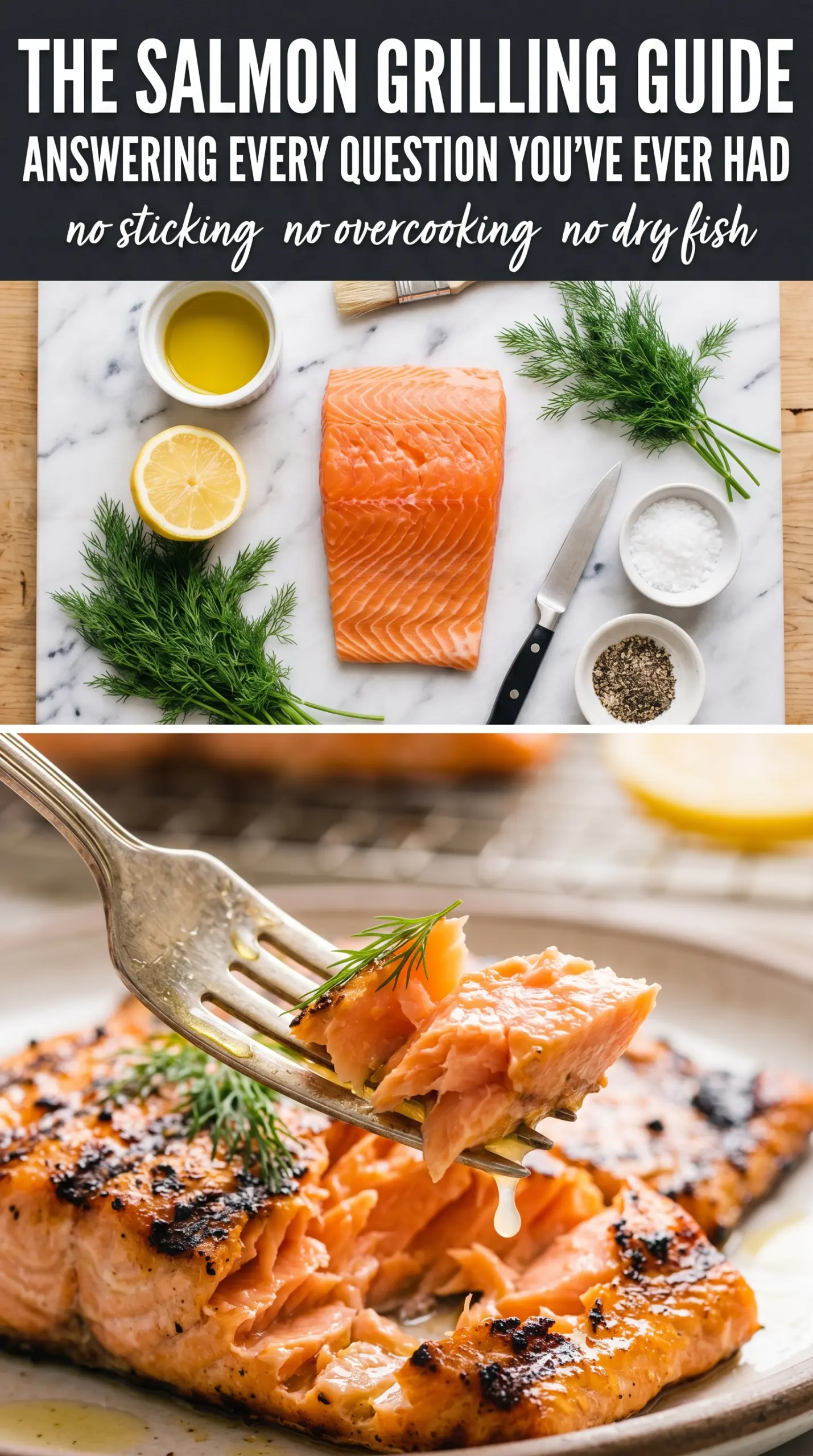
- Salmon fillets — Skin-on fillets hold together better on the grill and protect the flesh from direct heat. If you only have skinless salmon, use a grill basket or a piece of well-oiled foil, because bare skinless fish is much easier to tear when you flip it.
- Olive oil — This helps with browning and keeps the surface from drying out. A standard extra-virgin olive oil works fine here; save the expensive finishing oil for the table.
- Lemon juice — Lemon brightens the fish, but it also starts to change the surface if it sits too long. Fifteen minutes is enough to season the salmon without turning the exterior chalky or firm.
- Garlic — Minced garlic adds sharpness to the marinade, but tiny pieces can burn if they’re left loose on a screaming-hot grate. Letting the salmon rest before grilling helps the garlic cling to the oil instead of falling into the fire.
- Dill and lemon wedges — These are the finish, not the foundation. Dill gives the clean herbal note that salmon loves, and a fresh squeeze of lemon right at the end wakes everything up.
How to Get the Skin Crisp Without Overcooking the Center
Dry and Season First
Pat the salmon dry before anything else. Surface moisture is the enemy of browning, and wet fish will fight the grill all the way. Brush on the olive oil, lemon juice, and garlic mixture, then season generously with salt and pepper and let it sit for 15 minutes. That short rest seasons the outside and takes the chill off the fish, which helps it cook more evenly.
Heat the Grill Until It’s Ready to Sear
Preheat the grill to medium-high and oil the grates well. You want the grates hot enough that the salmon starts to sear right away, but not so fierce that the skin scorches before the center has a chance to cook. If the grates aren’t clean and oiled, the skin will tear when you try to turn it. That’s the moment most people blame on the fish, but the problem usually starts with the grill.
Cook Skin-Side Down and Don’t Rush the Release
Place the salmon skin-side down and leave it alone for 6 to 8 minutes. The skin will crisp and the flesh will turn opaque around the edges while the center stays slightly translucent. If you try to flip too soon, the fish will stick and break apart. Wait until it releases cleanly, then turn it carefully and cook 2 to 3 minutes more, just until the salmon reaches about 145°F for medium or looks barely opaque in the center.
Finish with the Fresh Stuff
Move the salmon off the grill and serve it right away with fresh dill and lemon wedges. The resting time here is short, and that’s on purpose; salmon keeps cooking from carryover heat, so leaving it on the grill too long is how you lose that tender middle. A final squeeze of lemon over the hot fish sharpens the flavor and cuts through the richness without burying it.
How to Adapt This Grilled Salmon Without Losing the Texture
Skinless Salmon
Skinless fillets can work, but they need more help. Use a well-oiled grill basket or a sheet of heavy foil with a few small holes poked in it so the fish doesn’t fall apart when you turn it. The texture will be a little less crisp and a little more delicate, but the flavor stays the same.
Dairy-Free and Gluten-Free by Default
This recipe already fits both needs as written, which is one reason it’s such a useful weeknight fish dinner. Keep the seasoning simple and check any store-bought garnish blends if you add them, since some seasoning mixes hide gluten or milk powders.
Cedar Plank Version
A soaked cedar plank adds smoky aroma and gives you an easier release, especially if your grill tends to run unevenly. The fish cooks a bit more gently, so watch for the center to turn just opaque instead of relying only on time. You’ll lose a little direct char, but you gain a more forgiving cook.
Extra Lemon and Herbs
If you want a brighter finish, add lemon zest to the oil mixture and scatter chopped dill or parsley over the top just before serving. Zest gives you the lemon aroma without extra acid, so the salmon still keeps its tender texture. Fresh herbs added at the end stay cleaner and more vivid than herbs cooked on the grill.
Storage and Reheating
- Refrigerator: Store cooked salmon in an airtight container for up to 3 days. The skin softens in the fridge, but the flesh still holds up well for leftovers.
- Freezer: Cooked grilled salmon can be frozen for up to 2 months, wrapped tightly and sealed to keep freezer burn away. Thaw it overnight in the fridge for the best texture.
- Reheating: Warm it gently in a low oven or covered skillet until just heated through. High heat dries salmon out fast, and microwaving long enough to steam it is the quickest way to lose the texture you worked for.
Questions I Get Asked About This Recipe
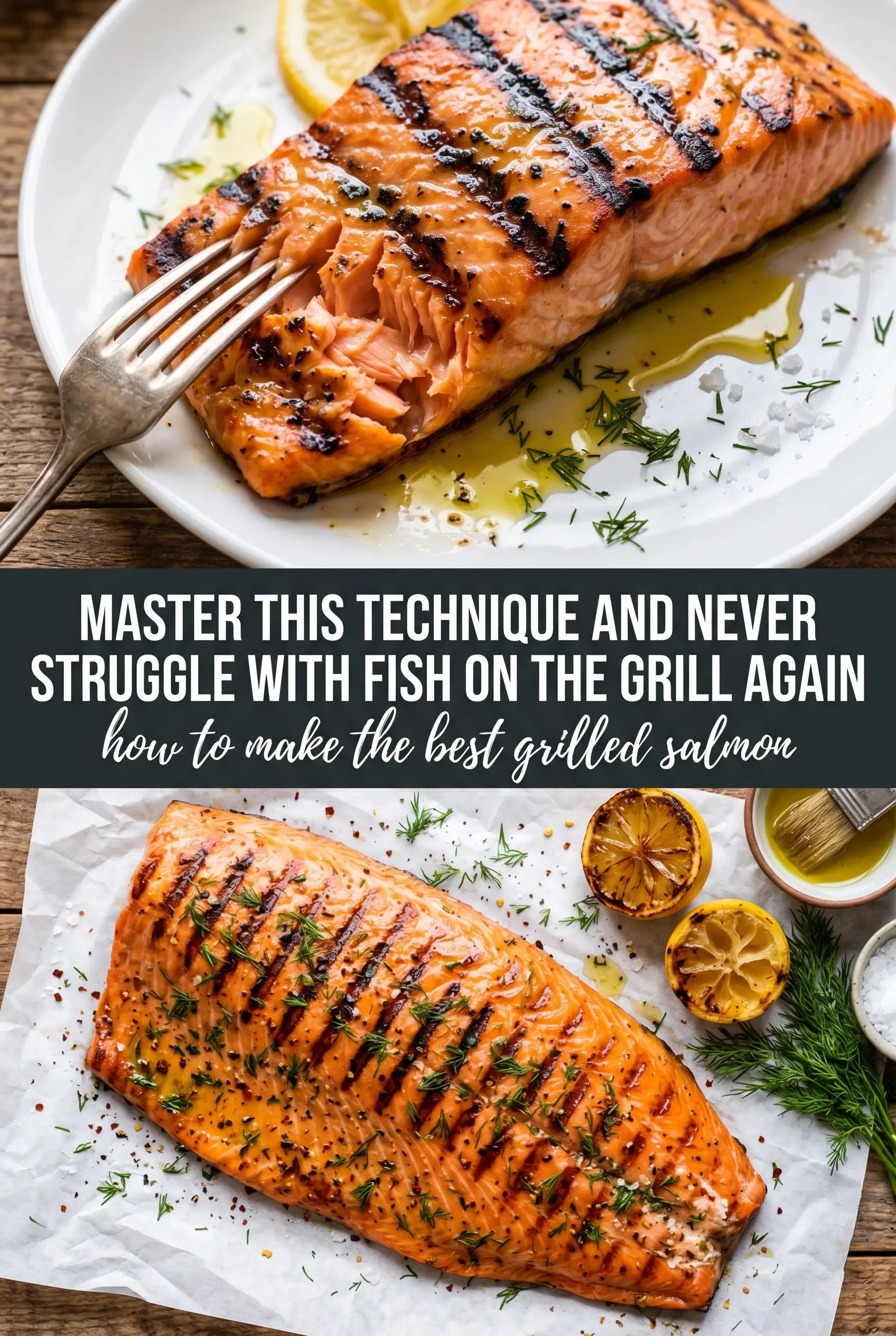
How to Make the Best Grilled Salmon
Ingredients
Equipment
Method
- Pat the salmon dry and brush it with the mixture of olive oil, lemon juice, and minced garlic.
- Season the salmon generously with salt and pepper, then let it sit for 15 minutes to marinate.
- Preheat the grill to medium-high and oil the grates well to prevent sticking.
- Place the salmon skin-side down and grill for 6-8 minutes without moving.
- Carefully flip and grill for 2-3 minutes more, until desired doneness is reached (145°F for medium).
- Serve immediately with fresh dill and lemon wedges.