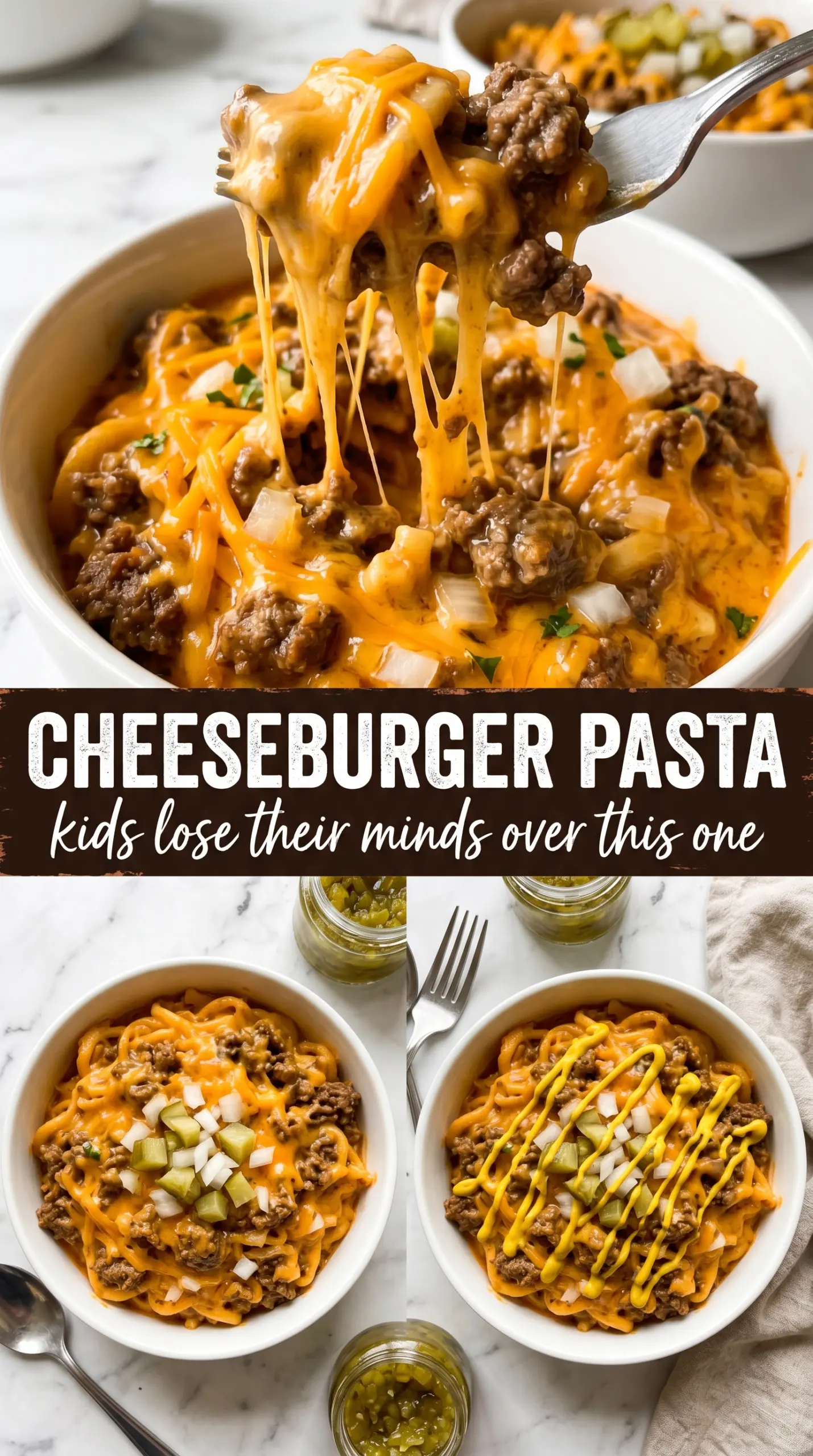
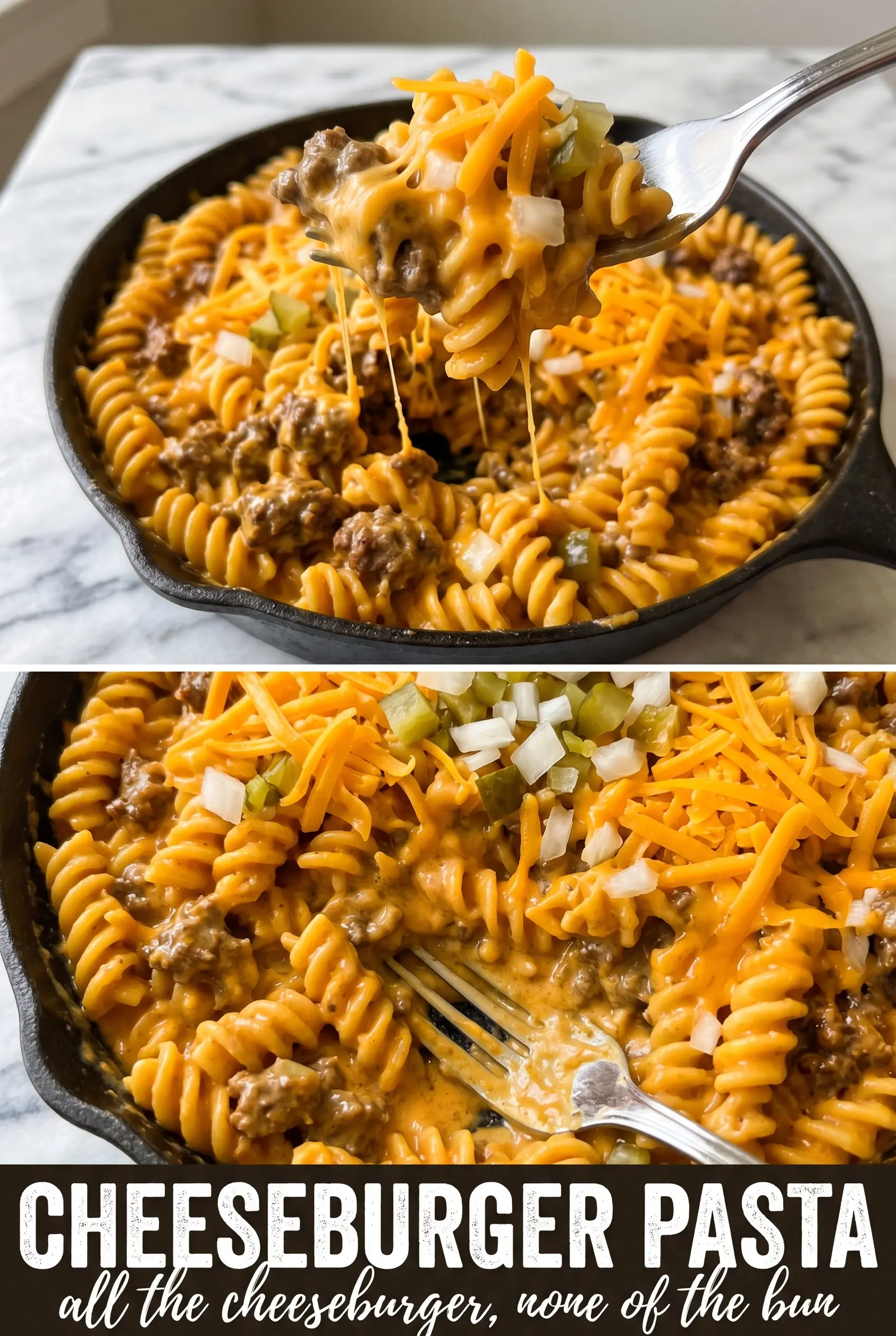
Cheeseburger pasta hits that same salty, tangy, cheesy note as a burger and fries plate, but in a skillet you can get on the table in under 40 minutes. The pasta soaks up a beefy sauce that tastes layered instead of flat, and the final handful of pickles and drizzle of ketchup give it the little sharp finish that keeps each bite from feeling heavy.
What makes this version work is the way the sauce is built right in the pan. Browning the beef with onion gives you a savory base, then the broth and milk cook the pasta while they pick up all that flavor. The ketchup, mustard, and Worcestershire aren’t there to make it taste like condiments; they add the sweet-tangy depth that makes the whole dish read like a cheeseburger instead of plain beef pasta.
Keep reading for the one step that keeps the sauce creamy, plus a few swaps that make this skillet dinner fit what you’ve got in the fridge.
Save this cheeseburger pasta for nights when you want a one-pan dinner with beefy flavor, melty cheese, and those burger-style pickle toppings.
The Trick to Keeping Cheeseburger Pasta Creamy Instead of Gritty
The biggest mistake with a dish like this is rushing the cheese. If the pan is boiling hard when the cheddar and American cheese go in, the sauce can turn oily or grainy instead of smooth. Pulling the pan off the heat for the final melt gives the cheese time to relax into the liquid instead of seizing up.
Another thing that matters here is the pasta-to-liquid ratio. The noodles should be just barely covered as they cook so they absorb the broth and milk without turning into mush. If the skillet still looks loose at the end, give it a minute off the heat before judging it; the sauce thickens as the pasta rests.
- Ground beef: An 80/20 or 85/15 blend gives you enough fat for flavor without making the finished sauce greasy. If your beef is much leaner, keep a little of the drippings in the pan when you drain.
- American cheese: This is what gives the sauce that burger-stand melt. Sharp cheddar brings the flavor, but American cheese is what keeps the texture smooth.
- Worcestershire sauce: Just a tablespoon deepens the beefiness without making the dish taste saucy or sweet. There isn’t a perfect substitute, but soy sauce plus a tiny splash of vinegar comes closest in a pinch.
- Dill pickles: Don’t skip them if you want the burger effect. They cut through the richness and wake up the whole skillet at the end.
What Each Ingredient Is Actually Doing in This Recipe
- Primary ingredient (the star): Quality matters most. Choose the best you can find.
- Cooking medium (oil, butter, or broth): This carries flavors and prevents dryness.
- Seasonings (salt, pepper, spices, herbs): Layer flavors so nothing overpowers. Build depth gradually.
- Aromatics (garlic, onion, herbs): Cook with fat to bloom flavors. Become the foundation.
- Supporting ingredients: Complement the main ingredient without overpowering it.
- Sauce or liquid (if applicable): Brings flavors together. Balance richness with acid.
- Acid (lemon, vinegar, wine, or other): Brightens and prevents flat-tasting results.
- Final finish (garnish, glaze, or sauce): Prevents one-dimensional taste and adds visual appeal.
How to Build the Sauce in the Same Skillet
Browning the Beef and Onion
Cook the beef and onion over medium-high heat until the meat loses its pink color and the onion turns soft and glossy. You want some browning on the bottom of the pan, because that’s where a lot of the flavor lives. If the beef sits in a deep pool of grease, drain it before adding the garlic and liquid, or the sauce will taste heavy instead of rich.
Cooking the Pasta in the Seasoned Liquid
Stir in the uncooked pasta with the broth, milk, ketchup, mustard, Worcestershire, salt, and pepper, then bring it to a boil before lowering the heat. The pasta should move around freely in the liquid as it cooks; if it looks dry before the noodles are tender, add a small splash of broth or water. Stir every few minutes so nothing catches on the bottom and the starch can thicken the sauce evenly.
Finishing With Cheese Off the Heat
Once the pasta is tender and most of the liquid has been absorbed, take the skillet off the burner before adding the cheddar and American cheese. Stir until the sauce turns glossy and smooth, then let it sit for a minute to settle. If it still looks thin at first, give it time; cheese sauces tighten as they cool slightly, and that brief rest keeps you from overcooking the dairy.
Bacon Cheeseburger Pasta
Cook 4 to 6 strips of bacon first, then use a spoonful of the drippings to brown the beef. The bacon adds smoky depth and a little extra salt, which makes the finished skillet taste closer to a diner burger.
Dairy-Free Cheeseburger Pasta
Use unsweetened oat milk and a good melting dairy-free cheddar-style shreds, then finish with a little extra mustard for bite. You won’t get the exact same melt as American cheese, but the sauce still comes together if you keep the heat low at the end.
Gluten-Free Cheeseburger Pasta
Swap in your favorite gluten-free short pasta and watch the liquid closely, since some GF shapes soften faster than wheat pasta. Keep the simmer gentle and taste a minute early so you catch the noodles at tender instead of gummy.
Storage and Reheating
- Refrigerator: Store leftovers in an airtight container for up to 4 days. The pasta will keep soaking up sauce, so expect it to thicken.
- Freezer: It freezes, but the texture gets softer after thawing because of the dairy and pasta. Freeze in portions for up to 2 months if you don’t mind a less silky sauce.
- Reheating: Warm gently on the stovetop or in the microwave with a splash of milk or broth. High heat is the fastest way to make the cheese separate, so reheat slowly and stir often.
Questions I Get Asked About This Recipe
Cheeseburger Pasta
Ingredients
Equipment
Method
- Brown the ground beef with the diced onion in a large skillet over medium-high heat. Stir and cook until the beef is browned, then drain excess fat and cook 30 seconds after adding the minced garlic.
- Stir in the uncooked pasta, beef broth, milk, ketchup, yellow mustard, Worcestershire sauce, and salt and pepper. Bring the mixture to a boil over medium-high heat.
- Reduce the heat to medium, cover, and cook for 12–14 minutes, stirring occasionally, until the pasta is tender.
- Remove the skillet from heat and stir in the shredded sharp cheddar and cubed American cheese until fully melted.
- Top with dill pickle chips and drizzle ketchup and mustard before serving.