Tender Mongolian beef meatballs with a sticky soy-garlic glaze hit that sweet-savory balance that keeps a dinner rotation from getting boring. The sauce clings to every browned edge, and the sesame seeds and green onions on top give each bite a little crunch and freshness so the whole dish doesn’t feel heavy.
What makes this version work is the way the meatballs are seared first, then finished in the sauce instead of being boiled or baked and tossed at the end. That quick browning gives you deeper flavor before the glaze goes in, and the cornstarch in the sauce thickens fast enough to coat the meatballs without turning syrupy. A little hoisin adds body and a rounder flavor than soy sauce alone can manage.
Below, I’ve included the small details that matter most, from how to keep the meatballs tender to what to do if your glaze gets too thick too fast. There’s also a couple of easy variations if you want to work with what’s already in your kitchen.
Save these sticky Mongolian beef meatballs for the nights when you want a fast skillet dinner with glossy sauce and zero takeout regret.
The Part That Keeps the Meatballs Tender Instead of Dense
The biggest mistake with meatball recipes is packing them too tightly. Ground beef only needs enough mixing to hold together; if you work it like bread dough, the texture turns tight and bouncy instead of soft and juicy. The panko and egg here help trap moisture, but they can’t save overmixed meat.
Searing matters just as much. You’re not cooking the meatballs through in the skillet at this stage; you’re building a browned crust that adds depth before the sauce goes in. If the pan is crowded, the meatballs steam and shed juice into the oil instead of browning, so cook in batches and leave space around each one.
What Each Ingredient Is Actually Doing in the Glaze
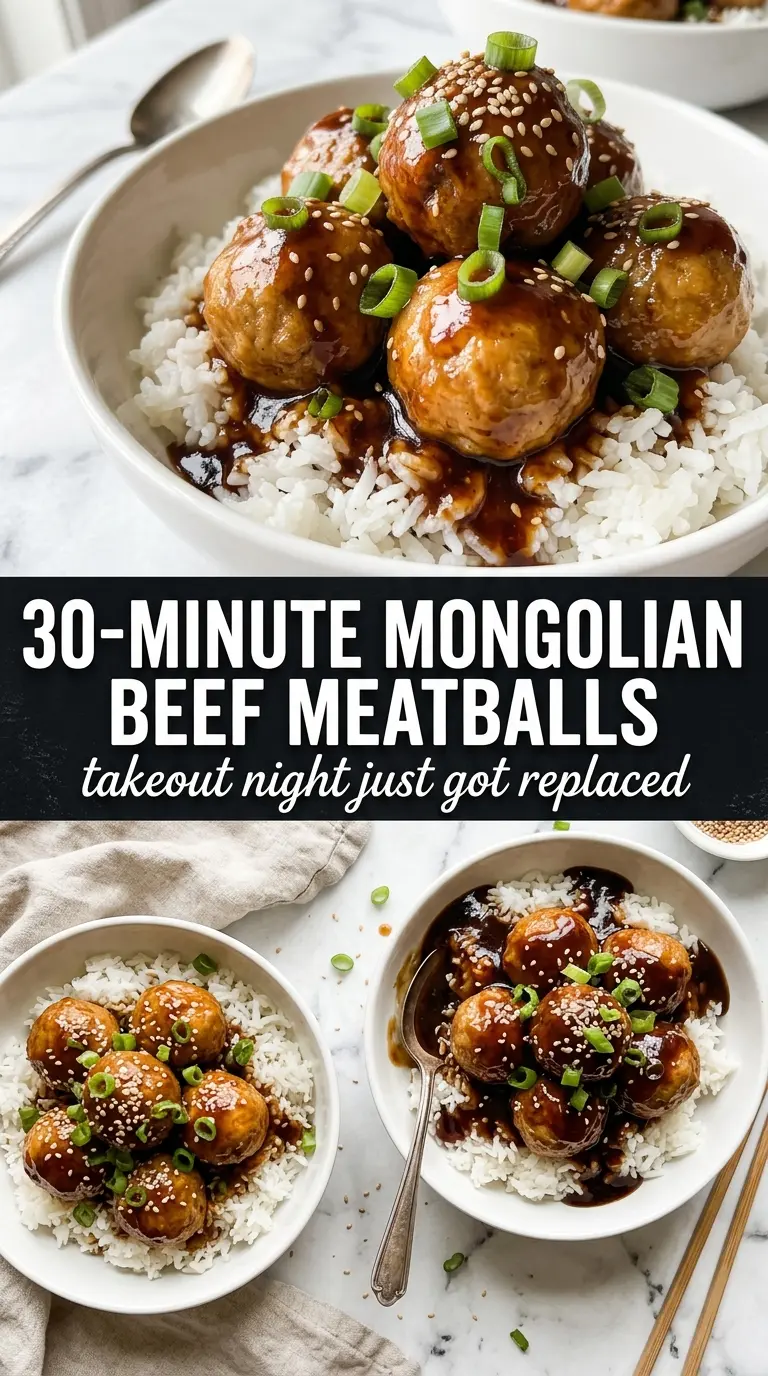
- Ground beef: Use 80/20 if you can. It stays juicy under high heat and gives the meatballs enough fat to taste rich without needing extra filler.
- Panko breadcrumbs: These keep the meatballs light. Regular breadcrumbs work in a pinch, but panko gives a softer, less dense bite.
- Soy sauce: It seasons both the meatballs and the glaze, so the dish tastes balanced all the way through. Low-sodium soy sauce works well if that’s what you keep on hand.
- Hoisin and brown sugar: This is where the Mongolian-style glaze gets its sticky, glossy finish. Hoisin adds body and a little depth; brown sugar gives you that lacquered look once the sauce reduces.
- Beef broth: It loosens the sauce just enough to simmer without scorching. Water will work, but the sauce tastes flatter.
- Sesame oil: A little goes a long way here. It adds the nutty finish that makes the sauce taste complete, so don’t swap in neutral oil unless you have no choice.
- Cornstarch: This is what turns the sauce from thin and salty into a coating glaze. Whisk it in before it hits the pan so it thickens evenly.
How to Get the Sauce to Coat Instead of Turn Watery
Mix the Meatballs Just Enough
Combine the beef, panko, egg, garlic, ginger, soy sauce, salt, and pepper until the mixture looks evenly distributed, then stop. It should feel cohesive but still soft. If the mixture starts looking paste-like, you’ve gone too far and the meatballs will cook up compact.
Sear for Color, Not Doneness
Heat the skillet until the oil shimmers, then add the meatballs in batches. Let them sit long enough to brown before turning, because pale meatballs won’t give the sauce much to cling to. Don’t move them around every few seconds or they’ll release before they develop a crust.
Simmer Until the Glaze Turns Glossy
Whisk the sauce together first, then pour it into the pan and turn the meatballs gently to coat. As it simmers, the sauce should go from thin and foamy to darker and shiny, with a texture that leaves a trail on the spoon. If it thickens too fast, add a splash of broth; if it stays loose, let it simmer another minute before deciding it needs more time.
Make It Gluten-Free Without Losing the Sticky Sauce
Swap the panko for gluten-free breadcrumbs and use tamari instead of soy sauce. The glaze will still thicken the same way because the cornstarch does the heavy lifting, and the texture stays close to the original.
Use Ground Turkey for a Lighter Version
Ground turkey works if you want a leaner dinner, but it needs a gentler hand because it dries out faster than beef. Keep the sear brief and don’t skip the sesame oil in the sauce, since turkey needs that extra richness to taste satisfying.
Add Heat Without Changing the Sauce Base
Stir in red pepper flakes or a little chili garlic sauce with the glaze ingredients. That keeps the sweetness and saltiness intact while giving the meatballs a sharper finish instead of a completely different flavor profile.
Storage and Reheating
- Refrigerator: Store in an airtight container for up to 4 days. The sauce will thicken as it chills, but the flavor deepens.
- Freezer: These freeze well for up to 2 months. Freeze the meatballs and sauce together in a sealed container, then thaw overnight in the fridge before reheating.
- Reheating: Warm gently in a covered skillet over low heat with a splash of broth or water. High heat can make the sauce separate and dry out the meatballs.
Questions I Get Asked About This Recipe
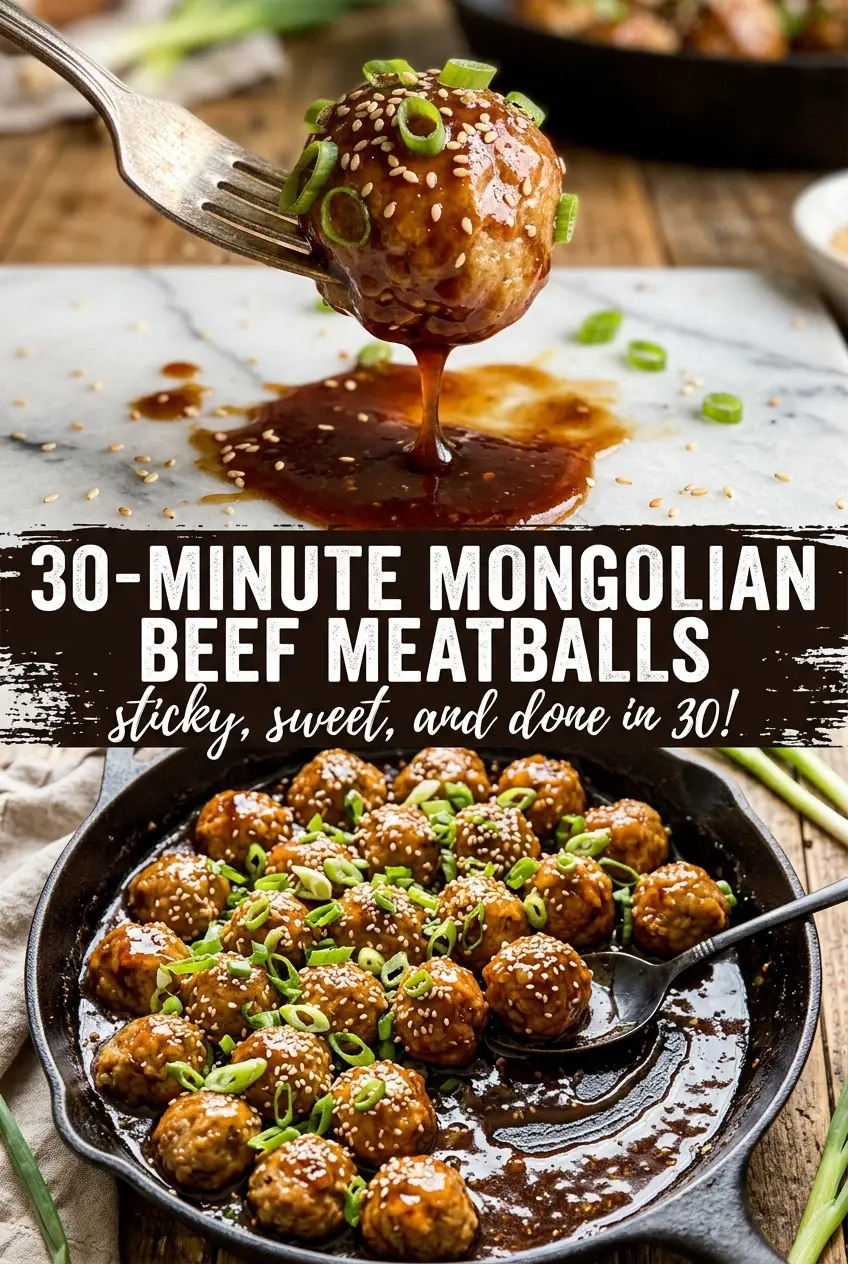
30-Minute Mongolian Beef Meatballs
Ingredients
Equipment
Method
- Mix ground beef with panko breadcrumbs, egg, minced garlic, grated ginger, soy sauce, salt, and pepper until evenly combined.
- Roll the mixture into 1.5-inch balls and set aside while you heat the skillet.
- Heat a cast iron skillet over medium-high heat and add oil until shimmering.
- Sear meatballs for 2–3 minutes per side until browned all over, working in batches so they don’t steam.
- Whisk together all Mongolian sauce ingredients until the cornstarch is dissolved.
- Pour the sauce into the pan with the meatballs and simmer for 4–5 minutes, turning meatballs to coat, until the sauce thickens and turns glossy.
- Pile the glazed meatballs over steamed rice, then garnish with sesame seeds and sliced green onions.