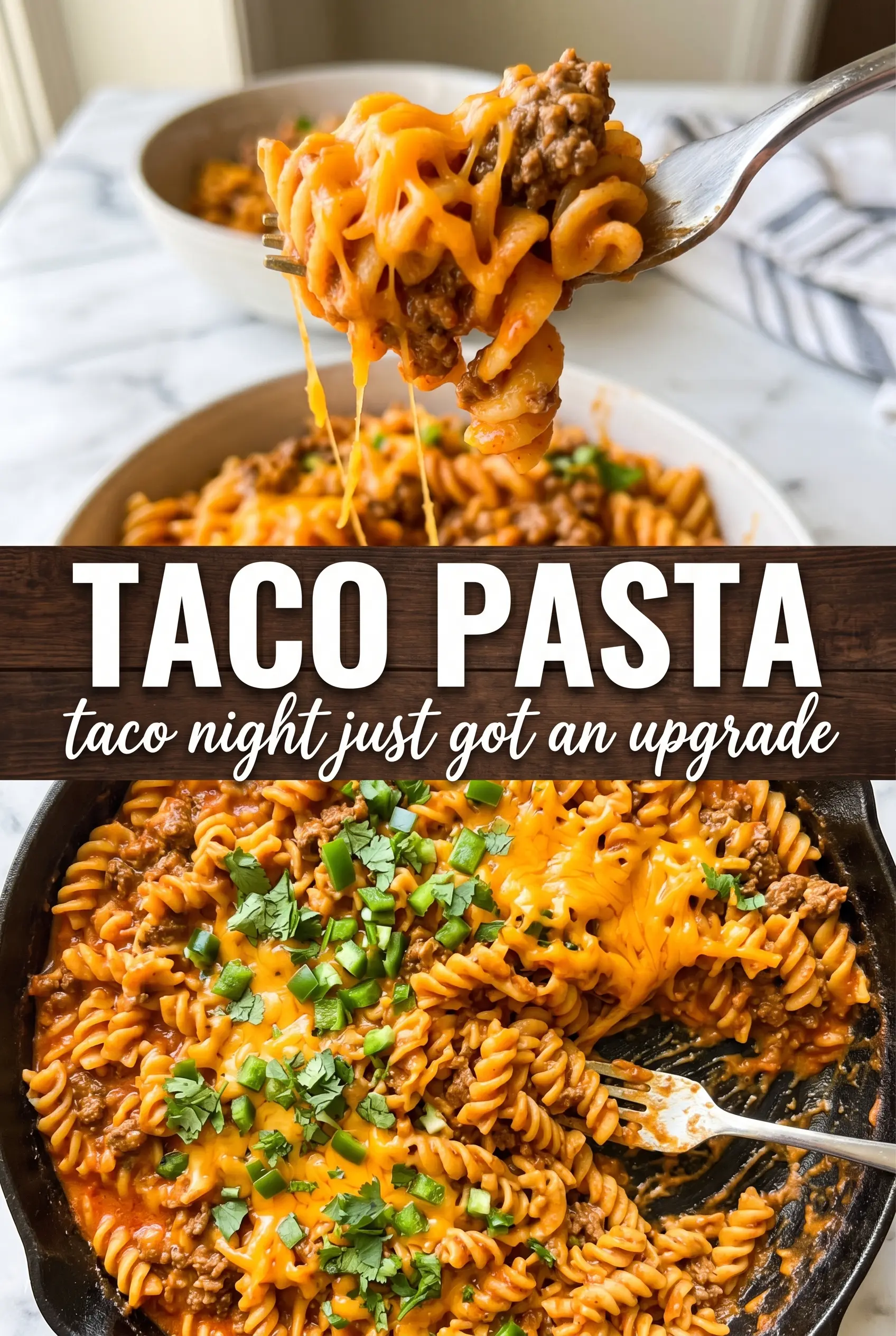
Smoky, creamy taco pasta has the kind of weeknight appeal that keeps showing up on the table: hearty ground beef, tender pasta, and a sauce that clings instead of pooling at the bottom of the bowl. The whole dish eats like a cross between skillet tacos and a cozy baked pasta, with enough spice to keep it interesting and enough cheese to pull everything together.
What makes this version work is the timing. The pasta cooks right in the tomato-and-broth mixture, which lets it soak up the taco seasoning instead of tasting like plain noodles tossed into sauce at the end. Cream cheese melts in at the finish for body, not heaviness, and cheddar goes on after the sauce has thickened so it stays smooth instead of getting grainy.
Below you’ll find the little details that matter most: how to keep the pasta from going soft before the liquid is absorbed, which toppings add crunch without getting soggy, and a few smart swaps if you want to make it lighter, spicier, or dairy-free.
Save this taco pasta for the nights when you want smoky beef, creamy cheese sauce, and crunchy toppings in one pot.
The Pasta Stays Tender Because the Sauce Never Gets a Chance to Boil Dry
The biggest mistake with taco pasta is treating it like a regular skillet sauce and letting the liquid disappear too fast. The pasta needs enough broth and water to cook evenly, and it needs a lid on the pot so the steam does part of the work. If the heat is too high, the bottom goes dry before the noodles are tender, and you end up adding more liquid at the wrong stage.
Keep the simmer gentle after the boil. You want small bubbles around the edges, not a hard rolling boil. That keeps the pasta from breaking apart and gives the tomatoes time to mellow into the broth instead of tasting sharp.
What the Cream Cheese and Cheddar Each Bring to the Pan
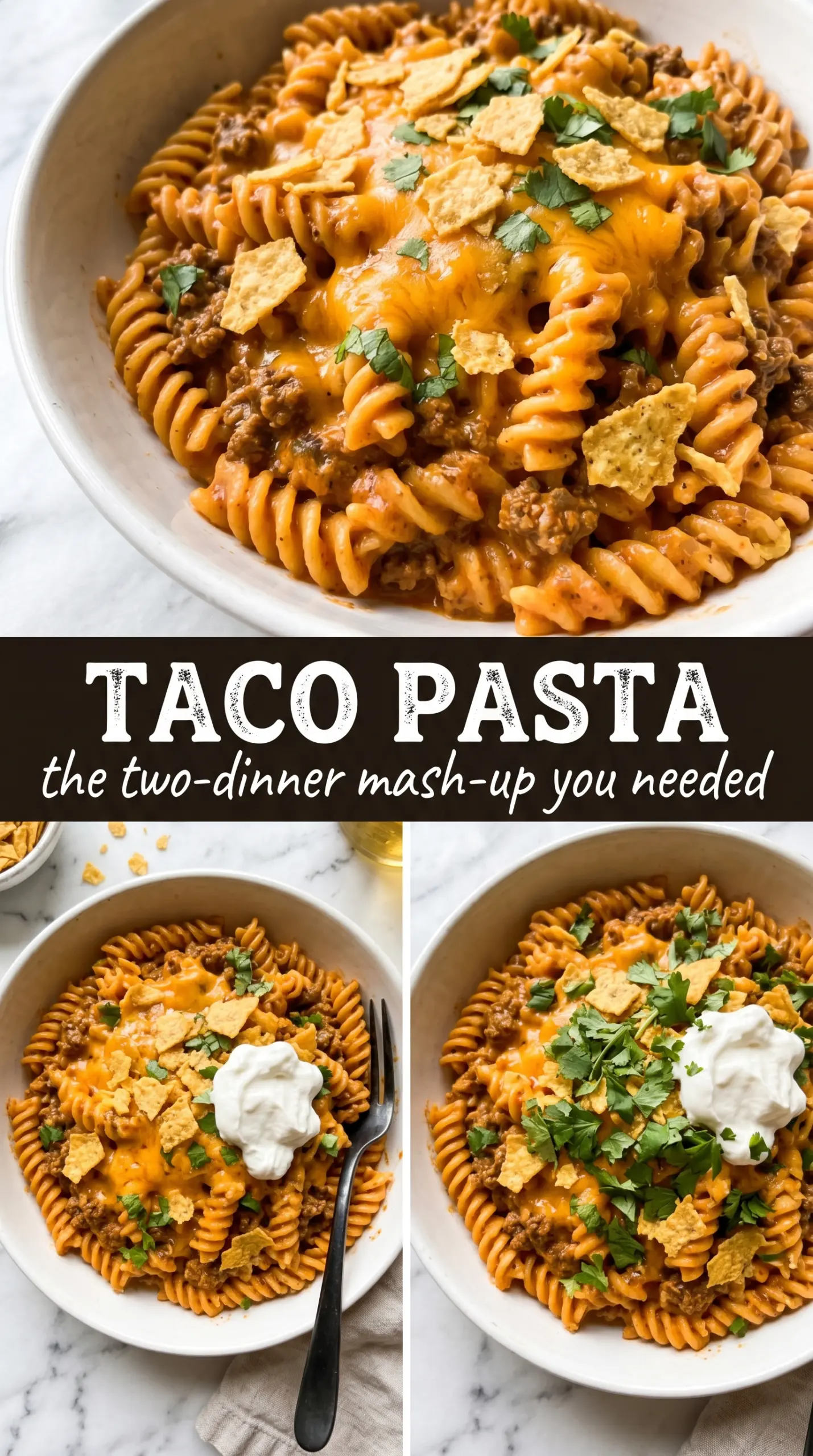
- Ground beef: Use an 80/20 or 85/15 blend if you can. You want enough fat for flavor, but not so much that the final dish feels greasy after the cheese goes in. If you use leaner beef, add a small splash of oil at the start so the onion has a chance to soften properly.
- Taco seasoning: This is the backbone of the dish, so a good packet matters more here than in a dish where the seasoning gets diluted. If yours tastes salty, reduce the added cheese topping a little and let the sour cream at serving time balance it out.
- Rotel and diced tomatoes: The mix of plain tomatoes and tomatoes with green chiles gives the sauce body and a little heat without turning it into salsa. If you only have plain diced tomatoes, add a small pinch of chili flakes or a spoonful of chopped pickled jalapeños.
- Cream cheese: This is what turns the sauce silky and coats every piece of pasta. Cube it first so it melts quickly and evenly. If you add it in one cold block, the sauce can overcook while you wait for the center to soften.
- Cheddar cheese: Shred it yourself if you can. Pre-shredded cheese has anti-caking starch on it, and that can make the sauce slightly grainy instead of smooth. Stirring it in off the heat keeps the melt clean and glossy.
Building the Sauce So It Stays Creamy Instead of Clumping
Brown the Beef and Wake Up the Seasoning
Cook the beef and onion together until the meat has lost its pink color and the onion looks translucent at the edges. Drain off extra fat if the pan looks slick, then stir in the garlic and taco seasoning for about a minute. That short cook time blooms the spices and keeps the garlic from tasting raw, but don’t let it sit long enough to scorch or the whole pot will pick up a bitter edge.
Let the Pasta Cook in the Sauce
Add the pasta, tomatoes, Rotel, broth, and water, then stir well so nothing sticks in the bottom corners of the pot. Bring it to a boil only long enough to get the liquid moving, then lower the heat and cover the pot. The pasta should be moving gently in the liquid as it simmers; if the pot looks dry before the noodles are tender, add a small splash of water, not a full cup at once.
Finish with Dairy Off the Hard Heat
When the pasta is tender and most of the liquid is gone, stir in the cream cheese until the sauce looks smooth and glossy. Pull the pot off the burner before you add the cheddar. That keeps the cheese from clumping or turning oily, which is the fastest way to ruin a creamy pasta sauce. Cover the pot for a minute at the end so the cheese melts into the top instead of disappearing into the sauce.
How to Adjust Taco Pasta Without Losing the Bowl-Builder Magic
Make It Spicier with Fresh Heat
Add diced jalapeños with the onion, or stir in a spoonful of chopped chipotles in adobo with the tomatoes. That gives the pasta a deeper heat than just more taco seasoning, and it keeps the flavor smoky instead of sharp. Top with fresh jalapeños at the end if you want the heat to stay bright.
Make It Lighter Without Turning It Watery
Use lean ground beef or ground turkey, but keep the cream cheese and cheddar in place. Those two ingredients are what keep the sauce from tasting thin, especially if you trim the meat fat. If you use turkey, season the onion and meat a little more boldly since it has a milder base flavor.
Make It Gluten-Free
Swap in a gluten-free short pasta and check that your taco seasoning and broth are certified gluten-free. The biggest difference is timing, since gluten-free pasta can go from firm to soft faster than regular rotini or penne. Start checking a couple of minutes early and keep a little extra broth nearby in case the pot tightens up too soon.
Make It Dairy-Free
Use a dairy-free cream cheese and a good melting plant-based cheddar, or skip the cheddar and finish with avocado, cilantro, and crushed tortilla chips for richness and texture. The sauce will be a little less glossy, but it still holds together if you keep the simmer gentle and don’t over-reduce the liquid.
Storage and Reheating
- Refrigerator: Store for up to 4 days. The pasta will absorb more sauce as it sits, so expect it to thicken.
- Freezer: It freezes well for about 2 months, though the pasta softens a bit after thawing. Cool it completely, pack it in airtight containers, and leave the crunchy toppings off until serving.
- Reheating: Warm it gently on the stove or in the microwave with a splash of broth or water. The common mistake is blasting it on high heat, which tightens the cheese and dries out the pasta before the center is hot.
Answers to the Questions Worth Asking
Taco Pasta
Ingredients
Equipment
Method
- Heat a large pot over medium-high heat and brown the ground beef with the diced onion. Drain excess fat, then add the minced garlic and taco seasoning and cook for 1 minute, stirring until fragrant.
- Add the uncooked rotini or penne, diced tomatoes, Rotel tomatoes, beef broth, and water to the pot and stir to combine. Bring everything to a boil over high heat, then immediately reduce to a simmer.
- Cover and simmer for 12–14 minutes until the pasta is tender and most of the liquid is absorbed. Keep the pot at a steady gentle simmer and stir once or twice if needed to prevent sticking.
- Lower the heat and stir in the cubed cream cheese until fully melted and the sauce looks creamy. Watch for streaks disappearing before moving on.
- Sprinkle the shredded cheddar cheese over the top and cover the pot for 1 minute. Remove the lid when the cheese is melted and glossy, then gently stir to incorporate if desired.
- Serve the taco pasta hot and top with sour cream, jalapeños, cilantro, and crushed tortilla chips. Add the chips right before eating so they stay crunchy.