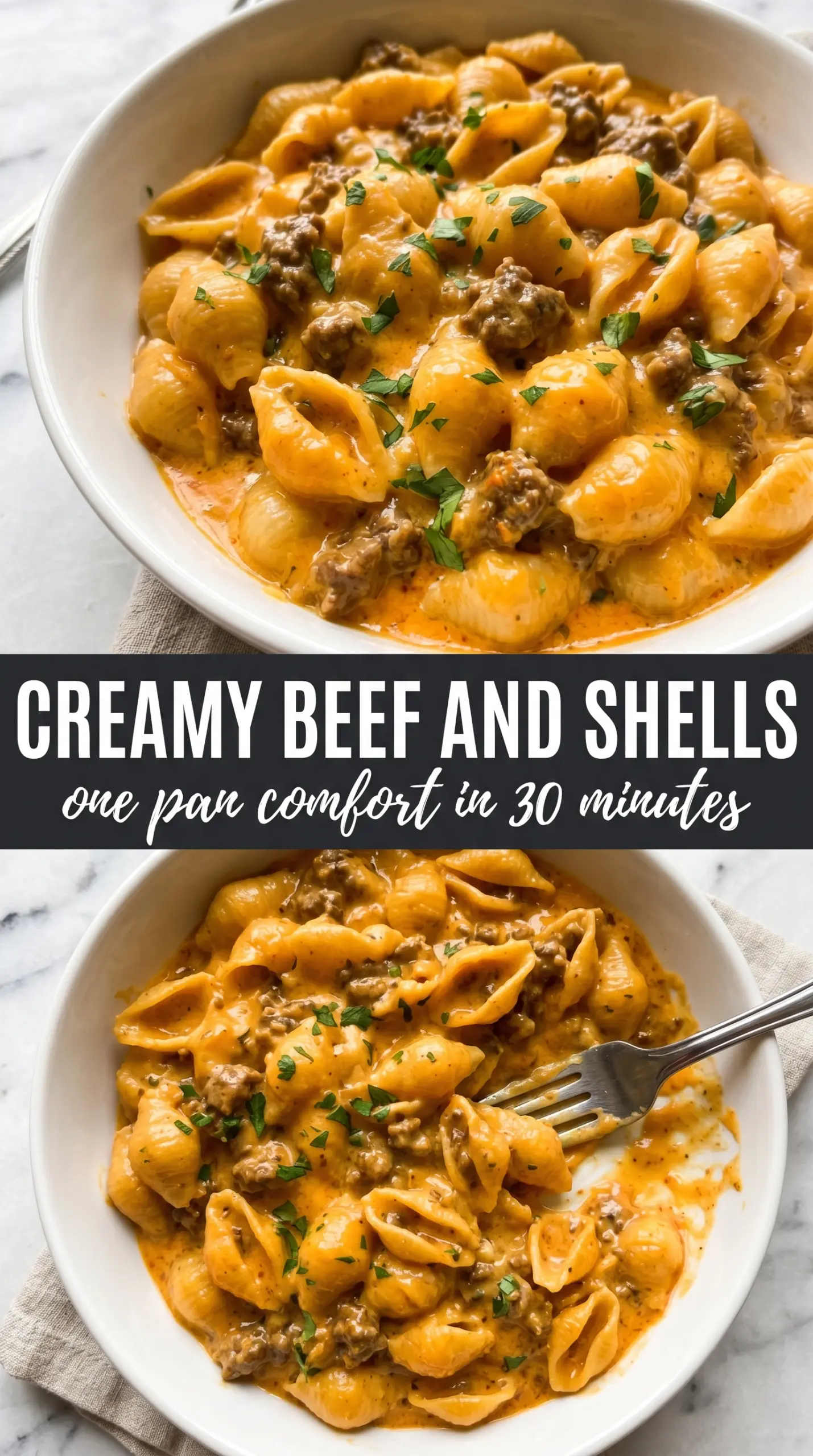
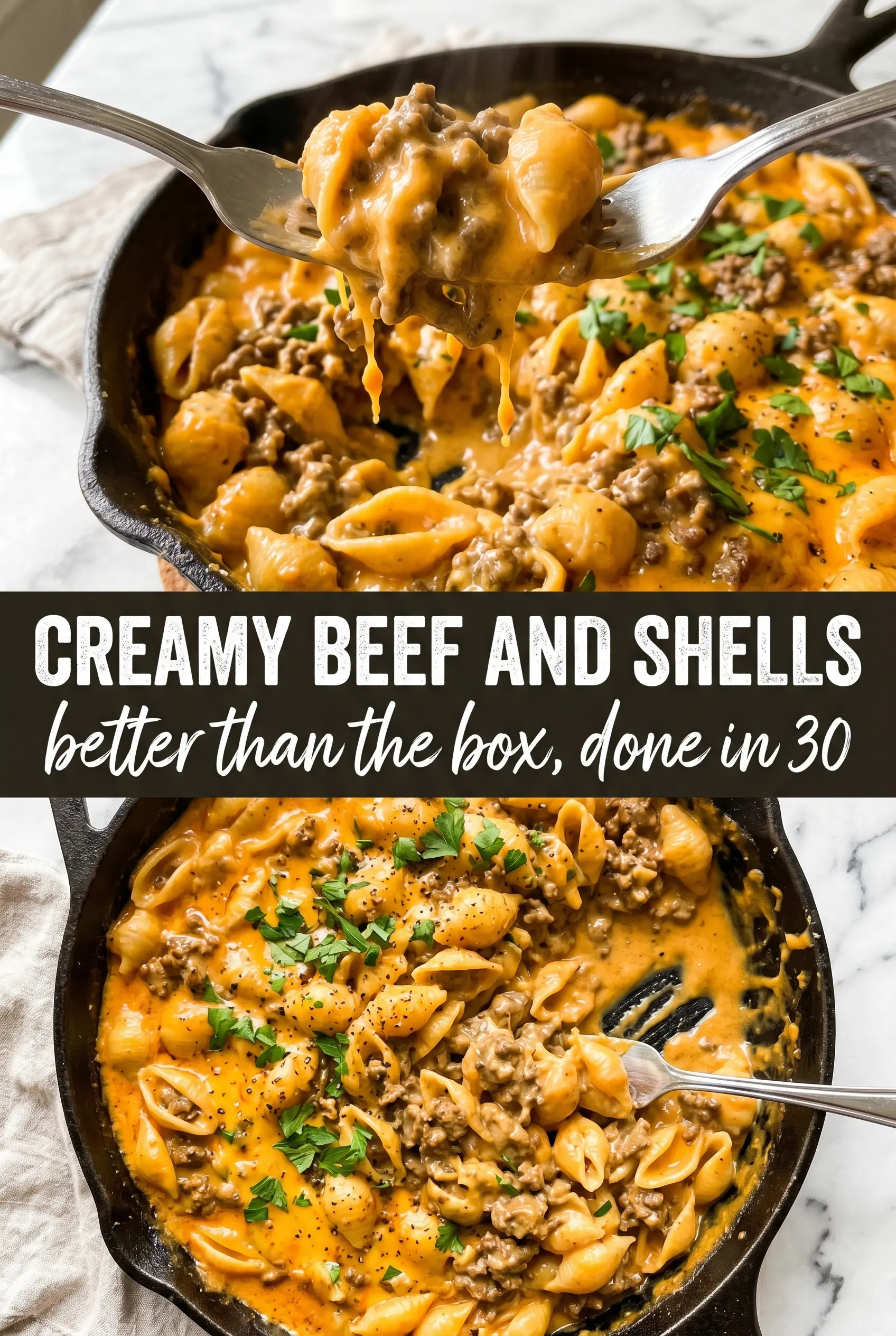
Rich, cheesy, and deeply comforting, creamy beef and shells is the kind of skillet dinner that disappears fast because every bite hits the same notes: tender pasta, savory beef, a tomato-cream sauce with just enough tang, and melted cheddar tucked into the shells. The sauce clings instead of pooling, which is what makes this version worth keeping in the regular rotation.
The key is building the pasta right in the skillet so the shells absorb the broth and tomatoes as they cook. That gives the sauce body without flour, and it keeps the beef flavor in the pan where it belongs. Heavy cream goes in at the end, after the pasta is tender, so it can thicken without breaking. Sharp cheddar finishes the dish with a clean, salty edge instead of turning the whole pot bland and heavy.
Below, I’ve included the one detail that keeps the sauce silky, plus a few smart swaps for nights when you need to work with what’s already in the pantry.
Creamy beef and shells makes a cheesy, one-skillet dinner with pasta that soaks up the sauce instead of swimming in it.
The Reason the Sauce Stays Creamy Instead of Turning Grainy
The mistake that breaks this kind of skillet pasta is adding cheese or cream too early, while the pan is still fiercely hot and the liquid is still bubbling hard. High heat makes dairy tighten up and separate, which leaves you with a grainy sauce instead of a smooth one. The fix is simple: cook the shells until they’re tender first, then lower the heat before the cream goes in, and pull the pan off the burner before adding the cheddar.
The other thing that matters here is the pasta itself. Shells catch sauce in their curves, but they also need enough liquid to finish cooking evenly. If the pan looks dry before the shells are tender, add a splash of broth. Don’t wait for the sauce to seem perfect before the pasta is done; the starch from the shells is part of what thickens everything into that glossy, clingy finish.
What Each Ingredient Is Doing in the Skillet
- Ground beef: This is the backbone of the dish, so use something with enough fat to brown well. If yours is very lean, leave a little extra moisture in the pan after cooking so the sauce doesn’t taste dry.
- Onion and garlic: They build the savory base before the liquids go in. The onion should soften and look glossy, not browned hard, because you want sweetness more than caramelization here.
- Diced tomatoes and Rotel: This combination gives the sauce its tomato body plus a little heat and tang. Rotel is what keeps the dish from tasting flat, so if you swap it out, add a pinch of chili flakes or a spoonful of mild diced green chiles.
- Beef broth: Use a broth you’d actually drink. A thin, weak broth makes the pasta taste watered down, while a decent broth pulls the beef flavor through the whole skillet.
- Heavy cream: This is what turns the tomato-beef mixture into a real creamy sauce. Half-and-half can work in a pinch, but it won’t thicken the same way and it’s more likely to look thin at the table.
- Sharp cheddar: Sharp cheddar gives you flavor without needing a mountain of it. Pre-shredded cheese works, but freshly shredded melts smoother because it doesn’t have the anti-caking starch that can make the sauce a little dusty.
Building the Skillet So the Pasta Finishes Right
Brown the Beef Until the Pan Has Color
Cook the beef over medium-high heat until it loses the pink color and you can see browned bits starting to stick to the bottom of the skillet. That fond is part of the flavor, so don’t rush to wipe the pan clean after draining the fat. If the beef steams instead of browns, the pan is crowded or the heat is too low.
Let the Shells Cook in the Sauce, Not in Plain Water
Once the broth, tomatoes, and seasonings go in, bring the pan to a boil and then drop it to a steady simmer with the lid on. The shells should move from hard to tender while soaking up the liquid, and the sauce will look looser at first before tightening as the starch releases. Stir once or twice during cooking so the pasta on the bottom doesn’t stick and the shells cook evenly.
Finish Off Heat for a Smooth, Cheesy Sauce
When the pasta is tender and most of the liquid is absorbed, stir in the cream and let it bubble gently for a couple of minutes. Then remove the skillet from the burner before the cheddar goes in. Cheese melts best in residual heat; if the pan is still boiling, the sauce can turn oily or grainy instead of velvety.
Make It Milder for Kids
Swap the Rotel for plain diced tomatoes and add a small pinch of paprika instead of anything hot. You’ll still get a rich, creamy beef pasta, but the finished dish will taste softer and less zippy.
Dairy-Free Version
Use unsweetened coconut cream or a plain dairy-free cooking cream, then finish with a dairy-free shredded cheddar that melts well. The sauce will be a little less tangy and a touch sweeter depending on the brand, but the skillet still eats like a comfort-food pasta.
Gluten-Free Adjustment
Use a sturdy gluten-free shell pasta and watch the liquid closely, since some GF pastas absorb broth faster and can go from tender to overdone in a short window. If the pan looks dry before the pasta is ready, add broth a splash at a time until the shells finish cooking.
Storage and Reheating
- Refrigerator: Store leftovers in an airtight container for up to 4 days. The sauce thickens as it chills, so the pasta will look a little tighter the next day.
- Freezer: It freezes, but the cream sauce can separate slightly after thawing. For the best texture, freeze only if you don’t mind a less silky finish, and thaw it overnight in the fridge.
- Reheating: Warm it gently on the stove or in the microwave with a splash of broth or milk. The biggest mistake is blasting it with high heat, which can make the cheese greasy and the pasta dry.
Answers to the Questions Worth Asking
Creamy Beef and Shells
Ingredients
Equipment
Method
- Brown the ground beef in a large deep skillet over medium-high heat, breaking it apart, until browned, then drain excess fat. The meat should lose its pink color as it browns.
- Add the diced onion and cook for 3 minutes until softened. You should see the onion turn slightly translucent.
- Add the minced garlic and cook for 1 minute. Stir until fragrant, without letting it brown.
- Add the uncooked shells, beef broth, diced tomatoes, Rotel, Italian seasoning, smoked paprika, salt, and pepper, then stir to combine. Make sure the pasta is submerged and evenly coated.
- Bring to a boil, then reduce heat to medium-low, cover, and cook for 12–15 minutes until pasta is tender and most liquid is absorbed. Lift the lid to check—liquid should cling to the shells rather than pool heavily.
- Stir in the heavy cream and simmer uncovered for 2–3 minutes until the sauce thickens. The mixture should look glossy and coat the pasta.
- Remove from heat and stir in the shredded cheddar until fully melted, then serve immediately. The sauce should turn smooth and thick with cheddar pooled in the crevices.