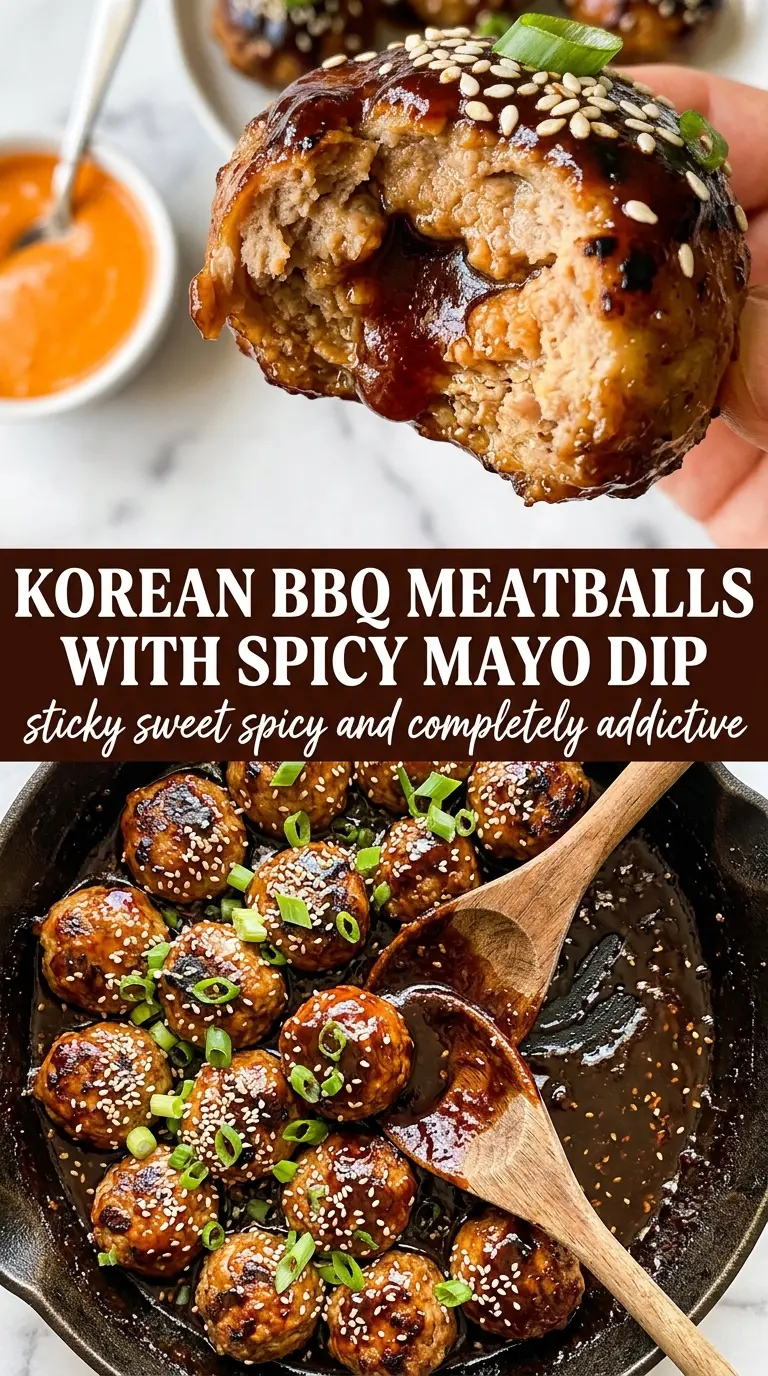
Glossy Korean BBQ meatballs have a way of disappearing fast once they hit the table. The beef stays tender inside, the glaze clings in a sticky lacquer, and the spicy mayo gives each bite a cool, creamy finish that keeps pulling you back for one more. These are the kind of appetizer people hover over, even when there are plenty of other snacks around.
What makes this version work is the balance in the meatball itself and the way the glaze is handled. Panko keeps the texture light instead of dense, while sesame oil, garlic, and ginger give the beef enough backbone that it doesn’t taste flat under the sauce. The glaze only needs a short simmer long enough to thicken slightly, not long enough to turn tight or burnt then the hot meatballs get tossed in while they’re still able to soak it up.
Below, I’ve included the small details that matter most: how to keep the meatballs tender, how to get the glaze sticky without overcooking it, and a few smart swaps if you need to work with what’s already in the fridge.
Love the sticky gochujang glaze and spicy mayo? Save these Korean BBQ meatballs for your next appetizer spread.
The Part Most Meatballs Get Wrong: Keeping Them Tender Under the Glaze
The biggest mistake with glazed meatballs is overworking the mixture until it turns dense and springy. Here, the panko and egg are doing more than holding things together; they’re keeping the beef from tightening up in the oven. Mix until the ingredients are just combined and stop there. If the mixture looks smooth and packed before you’ve even shaped it, it’s already too far.
Baking them on parchment at 400°F gives you a firm exterior without the dry, browned crust that can fight the sauce. You want them cooked through, but still soft enough that the glaze can coat the surface instead of sliding off in a shiny puddle at the bottom of the pan.
- Gochujang: This is the flavor anchor in the glaze. Nothing else gives you the same fermented heat and savory depth, so if you swap it out, the sauce loses its Korean-inspired backbone.
- Sesame oil: A little goes a long way here. Use the real thing, not plain oil, because the toasted nutty note is part of what makes the beef taste complete.
- Panko breadcrumbs: These keep the meatballs lighter than standard breadcrumbs. Regular breadcrumbs work in a pinch, but panko gives a looser, more tender bite.
- Mayonnaise: The base for the dip needs to be full-fat mayo for the creamiest result. Light mayo can work, but the sauce will taste thinner and more acidic once the sriracha goes in.
What Each Ingredient Is Actually Doing in This Recipe
- Primary ingredient (the star): Quality matters most. Choose the best you can find.
- Cooking medium (oil, butter, or broth): This carries flavors and prevents dryness.
- Seasonings (salt, pepper, spices, herbs): Layer flavors so nothing overpowers. Build depth gradually.
- Aromatics (garlic, onion, herbs): Cook with fat to bloom flavors. Become the foundation.
- Supporting ingredients: Complement the main ingredient without overpowering it.
- Sauce or liquid (if applicable): Brings flavors together. Balance richness with acid.
- Acid (lemon, vinegar, wine, or other): Brightens and prevents flat-tasting results.
- Final finish (garnish, glaze, or sauce): Prevents one-dimensional taste and adds visual appeal.
Building the Glaze So It Clings Instead of Running Off
Mix the Meatball Base Gently
Combine the beef, panko, egg, garlic, soy sauce, sesame oil, ginger, salt, and pepper in a bowl and mix with your hands just until the mixture holds together. The texture should look cohesive but still loose. Roll into 1.5-inch balls without packing them tight; compressed meatballs cook up heavy and won’t absorb the glaze as well.
Bake Until Just Cooked Through
Arrange the meatballs on a parchment-lined baking sheet with a little space between them so they brown evenly instead of steaming. Bake until they’re cooked through and the tops look set, about 15 to 18 minutes. If they’re left in too long, the glaze can’t save them the sauce will coat dry meat instead of juicy meat.
Reduce the Glaze Briefly
Simmer the gochujang, soy sauce, honey, rice vinegar, sesame oil, and garlic in a saucepan for just 2 to 3 minutes. It should look glossy and lightly thickened, not syrupy. If it boils hard or cooks too long, the honey can dominate and the glaze turns sticky in the wrong way, almost pasty.
Toss While Everything Is Hot
Move the baked meatballs straight into the pan or a bowl and toss them with the glaze until every surface is coated. Heat helps the sauce cling, so don’t let the meatballs sit and cool before saucing them. Finish with sesame seeds and green onions while the glaze is still tacky so the garnish sticks instead of sliding off.
How to Adapt These Korean BBQ Meatballs Without Losing the Good Part
Turkey or Chicken Meatballs
Lean ground turkey or chicken works well, but the meatballs need a gentler hand because they dry out faster than beef. Keep the same seasoning and glaze, and pull them as soon as they’re cooked through. The result is a lighter bite with the same sticky-sweet finish.
Gluten-Free Version
Use gluten-free panko and swap in a gluten-free soy sauce or tamari. That keeps the texture and savory depth close to the original without changing the way the meatballs hold together. The glaze still thickens the same way.
Less Heat, More Sweet
Cut the gochujang back a little and add an extra teaspoon of honey if you want a milder glaze. You’ll lose some of the slow-burning heat, but the sauce will still taste balanced and bold. This is the move when you’re serving mixed crowds and don’t want the dip to overpower the platter.
Make-Ahead Party Prep
Shape and bake the meatballs ahead, then cool them before refrigerating. Reheat gently and toss with freshly warmed glaze right before serving so they stay glossy instead of gummy. The spicy mayo can be mixed a day early and held cold, which actually improves the flavor.
Storage and Reheating
- Refrigerator: Store leftovers in an airtight container for up to 4 days. The glaze will thicken as it chills.
- Freezer: Freeze the baked, unsauced meatballs for up to 2 months. Thaw overnight and glaze after reheating for the best texture.
- Reheating: Warm gently in a 325°F oven or in a skillet over low heat with a splash of water. High heat can make the beef tough and cause the glaze to scorch.
Answers to the Questions Worth Asking
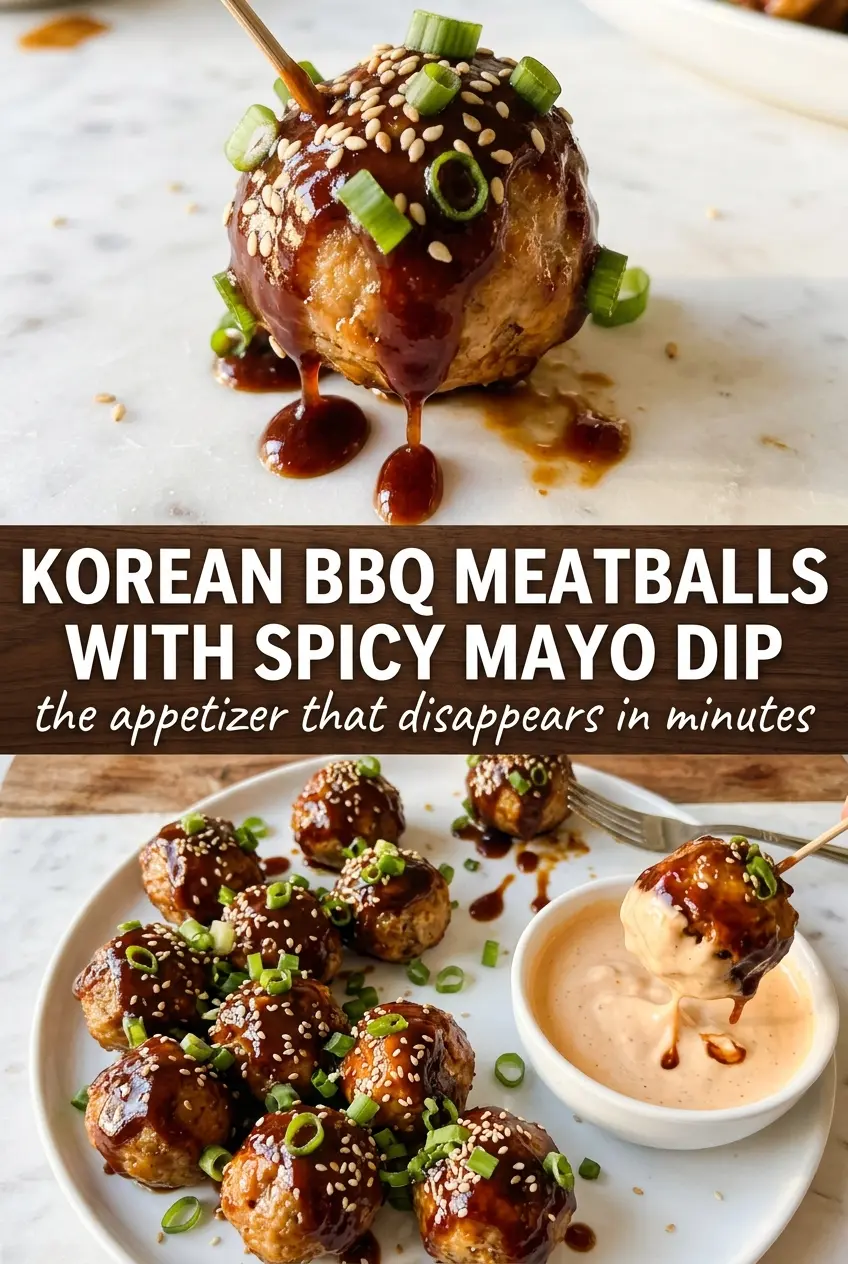
Korean BBQ Meatballs with Spicy Mayo Dip
Ingredients
Equipment
Method
- Preheat the oven to 400°F and line a baking sheet with parchment for easy release.
- Combine ground beef with panko breadcrumbs, egg, garlic, soy sauce, sesame oil, ginger, salt, and pepper, then roll into 1.5-inch balls and place them on the baking sheet.
- Bake at 400°F for 15–18 minutes until cooked through, with the tops starting to set and lightly brown.
- In a saucepan, simmer gochujang, soy sauce, honey, rice vinegar, sesame oil, and garlic for 2–3 minutes until slightly thickened and glossy.
- Toss the baked meatballs in the glaze until fully coated, so the sauce clings like a dark sticky lacquer.
- Mix the spicy mayo (mayo, sriracha, and lime juice), garnish the meatballs with sesame seeds and green onions, and serve immediately with the dip on the side.