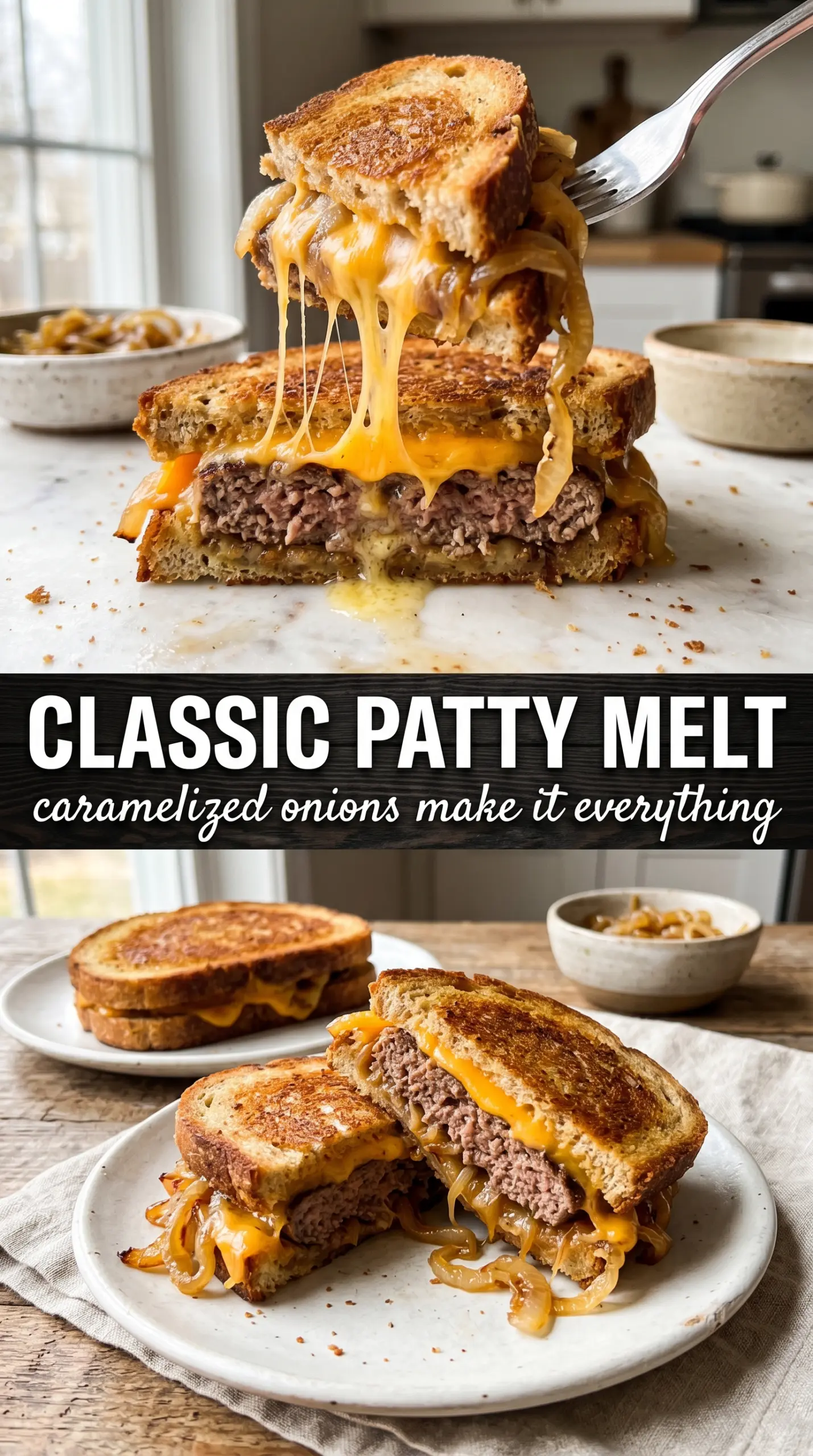
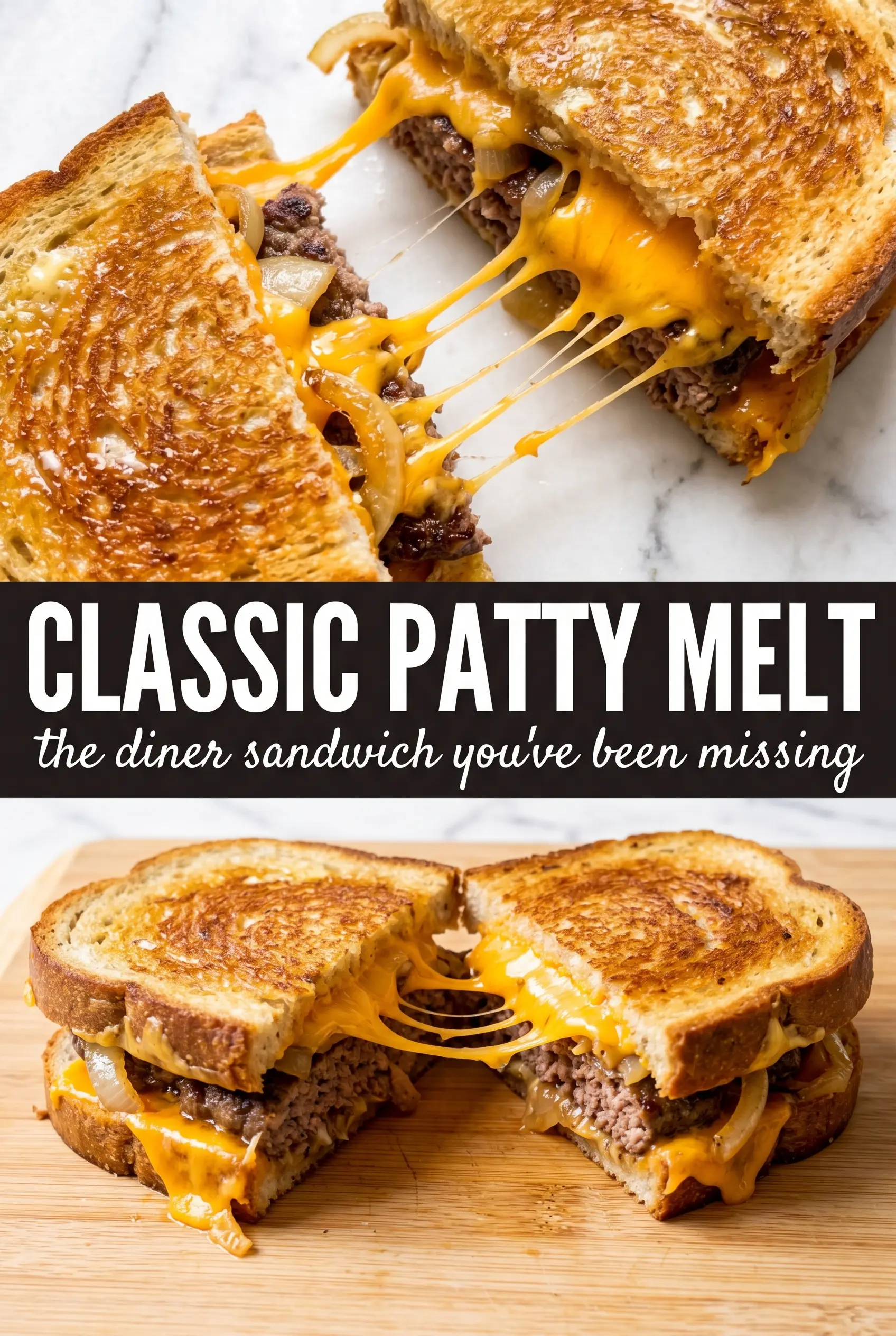
Golden rye, a juicy beef patty, sweet onions, and melted Swiss cheese are what make a patty melt worth repeating. The bread turns crisp and deeply toasted while the center stays soft and savory, with the onions bringing just enough sweetness to balance the beef. When the cheese melts into the onions and the edges of the bread pick up those buttery brown spots, you get the kind of diner sandwich people remember.
The trick is treating the onions and the patty like two separate jobs before they ever meet the bread. The onions need time over medium-low heat until they collapse and turn jammy; rushing them leaves you with harsh, sharp bits that fight the cheese. The patties should be thin and shaped to match the bread so the whole sandwich stays flat enough to grill without the filling sliding out.
Below, I’ll show you how to keep the sandwich from getting greasy, how to get the rye crisp without burning it, and a few swaps that still give you that classic melt-and-press finish.
Save this classic patty melt for the nights when you want a crispy rye crust, caramelized onions, and that stretchy Swiss-cheese center.
The Part That Makes or Breaks a Patty Melt
The biggest mistake with a patty melt is trying to rush the onions and the bread at the same time. If the onions are still pale, they taste sharp and muddy the whole sandwich. If the bread is too hot, the outside burns before the cheese has time to melt through the center.
The best version is built from separate wins: onions cooked low and slow until sweet, patties cooked hard enough to brown, then a gentle grill to bring everything together. That last stage only works when the sandwich is assembled in a thin, even layer. Stack it too tall and you’ll end up with toasted bread around a cold middle.
- Caramelized onions: These bring sweetness and body. Thin slicing matters here; thick slices take longer and are more likely to stay limp instead of turning jammy.
- 80/20 ground beef: The fat keeps the patty moist in a sandwich that gets pressed again on the griddle. Leaner beef works, but it eats drier and needs more attention so it doesn’t tighten up.
- Rye bread: Rye gives the sandwich its classic diner flavor and holds up better than soft sandwich bread. Marble rye is a nice middle ground if you want a milder taste.
What Each Ingredient Is Doing in the Pan
- Ground beef: Form it into thin ovals that match the bread. That shape keeps the sandwich neat and prevents the filling from spilling out when you press it.
- Worcestershire sauce: This adds a little savory depth without making the patties taste saucy. It’s subtle, but it gives the beef that diner-style finish.
- Swiss cheese: Swiss melts smoothly and brings a nutty edge that works with onions. American cheese melts even softer if you want a more gooey center.
- Butter and olive oil: The oil keeps the butter from scorching while you cook the onions and grill the bread. Butter alone can burn before the sandwich is finished.
- Thousand Island dressing: Optional, but a thin spread adds tang and a little sweetness. Use it sparingly so the bread doesn’t get soggy.
Building the Melt So the Bread Stays Crisp
Cooking the Onions Until They Turn Sweet
Melt the butter with the olive oil over medium-low heat, then add the onions with a pinch of salt. Stir often and keep the heat low enough that they soften gradually instead of browning at the edges too fast. After 20 to 25 minutes, they should be deep golden and soft enough to slump on a spoon. If the pan looks dry before they’re done, add a small splash of water to lift the browned bits without scorching the onions.
Shaping the Patties to Match the Bread
Season the beef with salt, pepper, and Worcestershire, then divide it into four thin oval patties. The oval shape matters because it matches the bread and helps every bite stay balanced. Thin patties cook quickly and fit the sandwich better than thick burgers, which can throw off the ratio of bread to filling. If the meat starts to shrink too much in the pan, press it into shape right after it hits the heat.
Grilling the Sandwich Without Burning the Crust
Butter one side of each bread slice, then build the sandwich with the unbuttered side facing the filling. Grill over medium heat for 2 to 3 minutes per side, pressing gently with a spatula until the bread is golden and the cheese is fully melted. If the bread browns before the cheese melts, lower the heat and give it another minute. The goal is a crisp, even crust that still gives when you cut into it.
Make It with Cheddar Instead of Swiss
Cheddar gives the sandwich a sharper bite and a more familiar burger flavor, but it won’t melt as silkily as Swiss. Use a good melting cheddar and keep the heat moderate so the cheese softens before the bread over-browns.
Dairy-Free Version
Use a plant-based butter for the onions and grilling, then swap in a dairy-free meltable cheese. The sandwich still works, but you’ll want to keep the heat a little lower because many nondairy cheeses brown faster before they fully melt.
Gluten-Free Swap
Use a sturdy gluten-free sandwich bread that can handle pressing in the skillet. Softer gluten-free loaves can fall apart once the filling warms, so choose one with enough structure to crisp at the edges.
Storage and Reheating
- Refrigerator: Store leftovers up to 3 days. The bread softens a bit, but the flavor stays good.
- Freezer: Not ideal once assembled. The onions and cheese can freeze, but the bread loses its texture after thawing.
- Reheating: Reheat in a skillet over medium-low heat until the bread crisps and the center warms through. The microwave makes the bread rubbery and leaves the cheese uneven.
Answers to the Questions Worth Asking
Classic Patty Melt
Ingredients
Equipment
Method
- Melt 1.5 tablespoons butter with olive oil in a skillet over medium-low heat, then add the thinly sliced onions and a pinch of salt. Cook 20–25 minutes, stirring often, until deeply caramelized, then set aside.
- Season the ground beef with salt, black pepper, and Worcestershire sauce, then form into 4 thin oval patties matching the bread shape.
- Cook the patties in the same skillet over medium-high heat for 3–4 minutes per side, until cooked through, then set aside.
- Butter one side of each bread slice.
- Build each sandwich with the unbuttered side down, then add Swiss cheese, a patty, caramelized onions, and more cheese, finishing with unbuttered bread on top.
- Grill on medium heat 2–3 minutes per side, pressing gently, until the bread is golden and the cheese is fully melted.