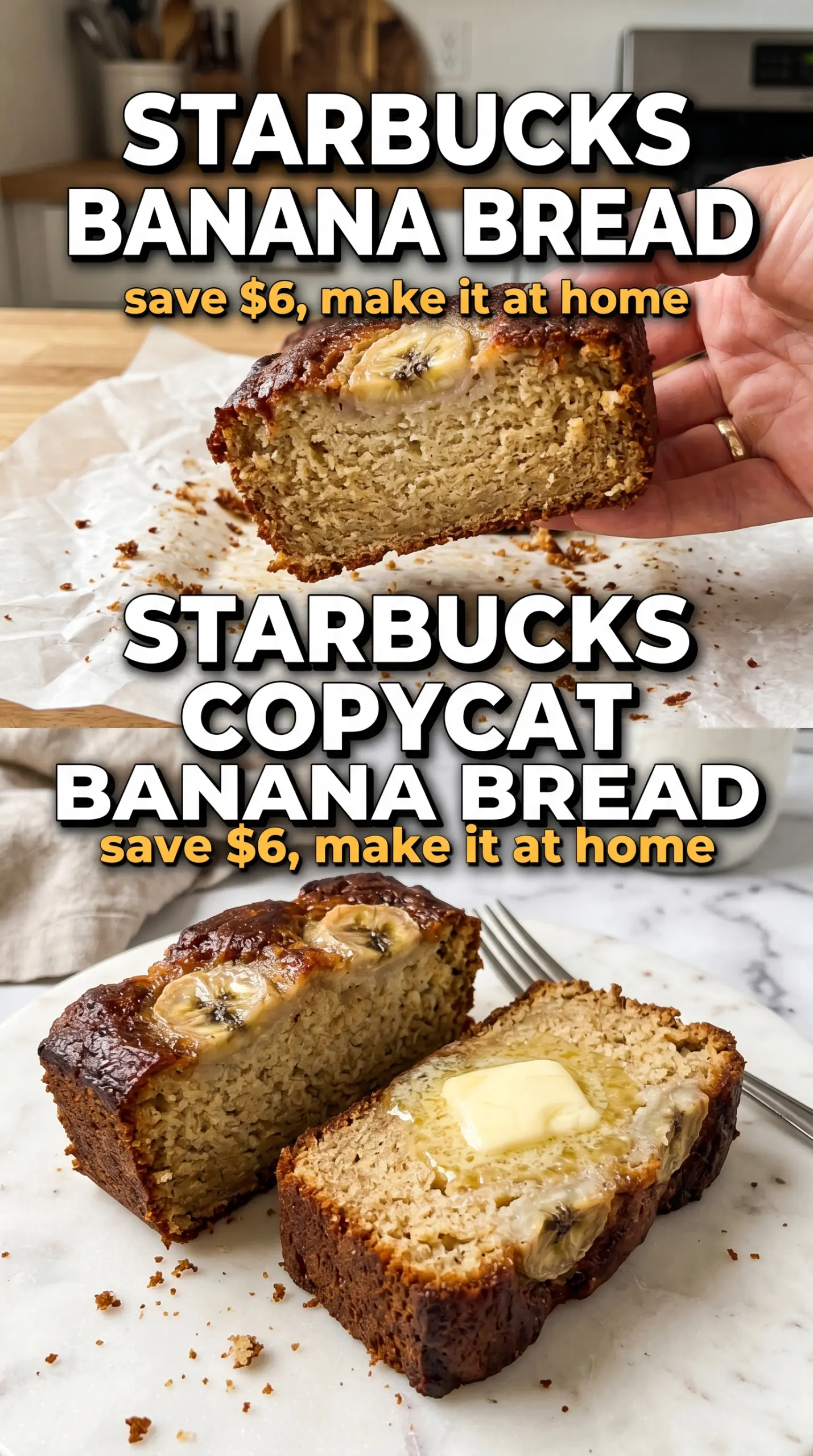
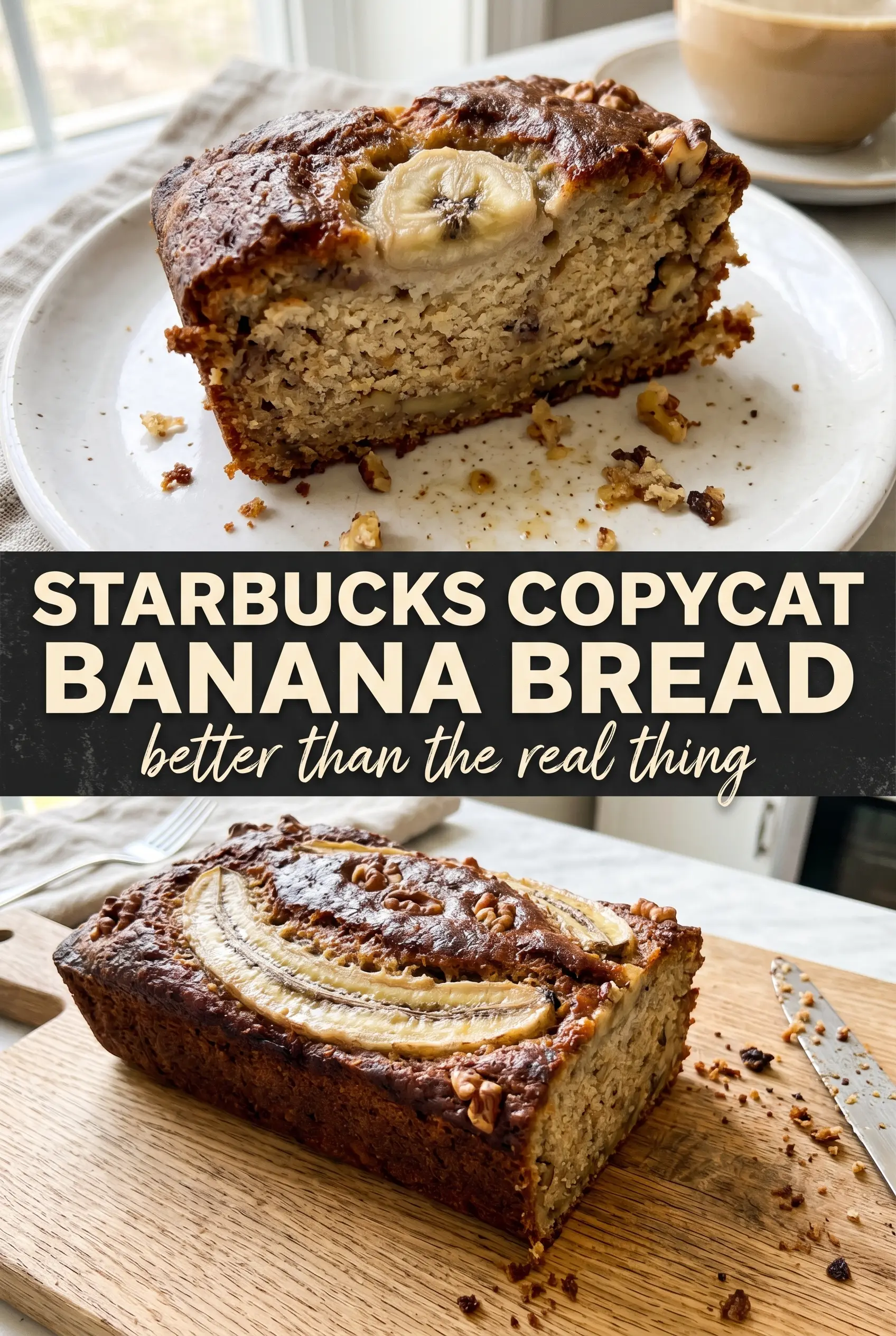
Starbucks-style banana bread has that specific bakery-loaf texture people remember: deeply golden on top, moist in the middle, and packed with walnuts in every slice. It’s not a delicate quick bread and it’s not cake-like either. The crumb stays dense enough to hold together cleanly, but soft enough that a warm slice feels like it should come with coffee.
The key is baking it low and slow. That lower oven temperature gives the loaf time to cook through without drying out the edges before the center is set, which is what makes the crust turn that deep caramel color without burning. Ripe bananas do the heavy lifting for moisture and flavor, while the butter and sugar are beaten first to give the loaf a little lift before the bananas go in and weigh everything down.
Below you’ll find the small details that make this copycat version taste like the coffee shop loaf people go back for, plus a few swaps and troubleshooting notes if your bananas are extra large or you want to leave the nuts out.
Save this Starbucks copycat banana bread for the days when you want a bakery-style loaf with a caramelized crust and plenty of walnuts.
The Low Oven Is What Gives This Loaf Its Bakery Crust
Most banana bread problems start with heat. A hot oven rushes the outside before the middle has time to set, so you get a dark edge and a gummy stripe through the center. This loaf behaves differently at 325°F. The slower bake gives the sugar time to deepen in color, the walnuts toast without scorching, and the crumb stays tight in the way Starbucks-style banana bread is known for.
The other mistake people make is overmixing once the flour goes in. That breaks down the batter and gives you a looser, more muffin-like texture. Stir just until the flour disappears, then stop. The batter should look thick and a little rustic, not whipped smooth.
- Butter and sugar: Beating them together first gives the loaf its structure and helps the finished bread slice neatly. Softened butter matters here; melted butter will make the crumb denser and heavier.
- Very ripe bananas: Spotty, deeply ripe bananas bring the strongest banana flavor and enough moisture to keep the loaf tender. If yours are still yellow, the bread will taste flatter and need more help from the sugar to feel rich.
- Walnuts: Chop them roughly so you get a mix of big crunchy pieces and smaller bits through the batter. Toasting them first is nice, but not necessary because the long bake warms them all the way through.
What Each Ingredient Is Actually Doing In This Loaf
- All-purpose flour: This gives the loaf its sturdy bakery-style structure. Bread flour is too chewy, and cake flour makes it too soft.
- Baking soda: Banana bread needs baking soda for lift because the bananas bring enough acidity to activate it. If it’s old, the loaf won’t rise properly and the top will stay flat.
- Cinnamon and nutmeg: These don’t make the bread taste spiced; they make the banana taste rounder and deeper. Use them lightly so they support the loaf instead of pulling it into spice-cake territory.
- Eggs: They bind the batter and help it set in the center without turning dry. Add them one at a time so the butter mixture stays smooth and emulsified.
Building the Batter Without Losing the Dense, Moist Crumb
Start With Soft Butter and Sugar
Beat the softened butter and sugar until the mixture looks lighter in color and a little fluffy. That step traps air and keeps the loaf from becoming leaden once the bananas go in. If your butter is still cold, it won’t cream properly, and you’ll end up with a grainier batter that doesn’t bake evenly.
Work the Bananas In After the Eggs
Once the eggs are mixed in, stir in the mashed bananas and vanilla until the batter looks evenly speckled and glossy. The bananas will loosen the mixture, which is exactly what you want before the flour goes in. Don’t overwork it here; too much stirring starts breaking the texture down before the loaf even hits the oven.
Fold the Dry Ingredients Only Until They Disappear
Add the flour, baking soda, salt, cinnamon, and nutmeg together, then fold just until no dry streaks remain. A few small pockets of flour vanish during the last turns of the spoon, so stop before the batter turns smooth. Fold in half of the walnuts at the end, then pour the batter into the pan and scatter the rest over the top, pressing them in lightly so they stay put while the loaf rises.
Bake Until the Center Has Set
Bake the loaf until it’s deeply golden and a toothpick comes out clean from the center. The top should look almost mahogany, not pale blond. If the top browns too fast before the middle is done, lay a loose piece of foil over it for the rest of the bake. Let the loaf cool in the pan for a short stretch before lifting it out, because this bread is more fragile when it’s hot.
How to Adjust This Banana Bread for What’s in Your Kitchen
Dairy-Free Banana Bread
Use a good plant-based butter stick instead of regular butter. You’ll still get a tender crumb and rich flavor, but the loaf may brown a little less deeply on top. Avoid tub-style spreads, which contain more water and can make the bread bake up softer and less bakery-like.
No-Walnut Version
Leave the walnuts out completely for a smoother, softer loaf. The bread will still taste like Starbucks-style banana bread, just with a more uniform crumb and no crunch on top. If you want some texture without nuts, add a few chocolate chips or leave the top plain and bake as written.
Gluten-Free Swap
A 1:1 gluten-free baking blend can work here, but the loaf will be a little more delicate and may need the full bake time. Don’t use almond flour by itself; it won’t give the structure this style of banana bread needs.
Storage and Reheating
- Refrigerator: Store tightly wrapped for up to 5 days. The crumb stays moist, though the loaf will firm up a bit once chilled.
- Freezer: This freezes well. Wrap the cooled loaf or individual slices tightly, then freeze for up to 3 months.
- Reheating: Warm slices in the microwave for 10 to 15 seconds or in a low oven until just heated through. Don’t blast it on high heat or the walnuts can turn dry and the bread loses that soft bakery texture.
Answers to the Questions Worth Asking
Starbucks Copycat Banana Bread
Ingredients
Equipment
Method
- Preheat oven to 325°F and grease a 9x5 loaf pan. Lower-and-slower baking helps create the dense, bakery-style crumb.
- Beat the softened butter and sugar until light and fluffy. Stop and scrape the bowl if needed so the mixture turns cohesive and airy.
- Add eggs one at a time and beat well after each addition. The batter should look smooth and thick, with no visible egg streaks.
- Stir in mashed bananas and vanilla until fully incorporated. Keep mixing just until uniform, with banana evenly dispersed.
- Fold in flour, baking soda, salt, cinnamon, and nutmeg until just combined. The batter should look thick and slightly streaky, with no dry flour pockets.
- Fold in 1/2 cup walnuts. You should see walnuts throughout the batter.
- Pour batter into the prepared pan, scatter the remaining walnuts across the top, and press lightly. Aim for walnuts to sit mostly on the surface, lightly embedded.
- Bake for 60–70 minutes at 325°F. Look for a deeply golden loaf and a toothpick to come out clean; the top should be nearly mahogany in color.