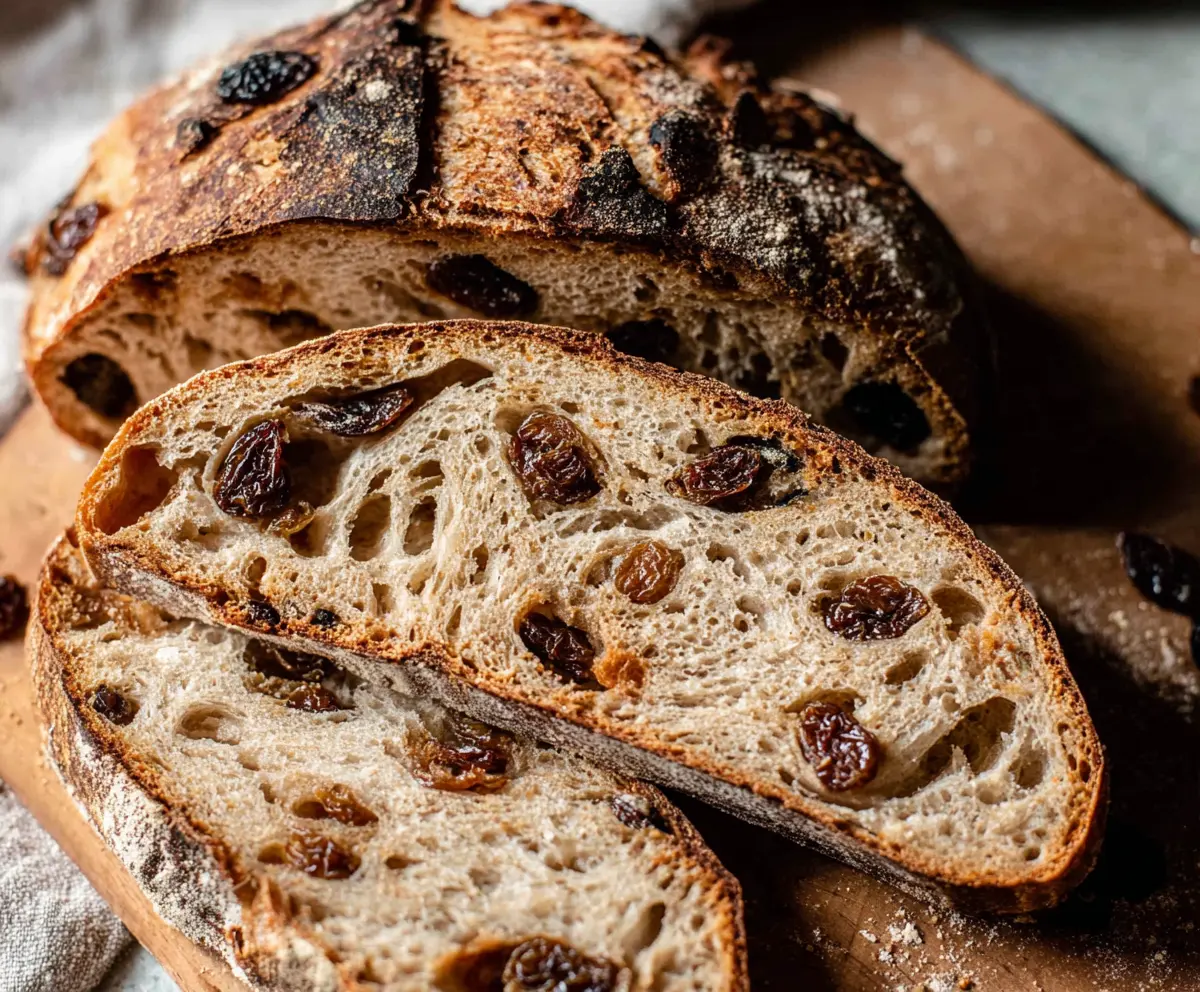
This Cinnamon Raisin Sourdough Bread is a warm and cozy treat. With soft, fluffy bread filled with sweet raisins and a swirl of cinnamon, it’s perfect for breakfast or a snack!
Just imagine the smell of this bread baking in your kitchen! I love to toast a slice and slather on some butter—pure joy. You might want to make two loaves, trust me! 😄
Key Ingredients & Substitutions
Bread Flour: Bread flour is ideal for this recipe due to its higher protein content, which helps create a strong gluten structure. If you don’t have bread flour, all-purpose flour can work but might yield a slightly softer loaf.
Sourdough Starter: Using an active, bubbly sourdough starter is crucial. If you don’t have one, you can buy a starter online or from a local bakery. Alternatively, you could also use instant yeast (about 1 tsp) for quicker results, but it won’t have the same depth of flavor.
Raisins: Raisins provide sweetness and texture. For a twist, try using chopped dried cranberries, currants, or even golden raisins. If you’re looking for a healthier option, substitute with chopped nuts or seeds for added crunch.
Cinnamon: Ground cinnamon gives warmth and flavor. You can replace it with other spices, like nutmeg or allspice, for a different taste. I love adding a touch of vanilla extract for extra flavor!
How Do I Get My Dough to Rise Properly?
Getting your dough to rise can be a bit tricky, but with a few key steps, you can have great results!
- Make sure your sourdough starter is active and bubbly before using. Feed it about 4-6 hours before you mix the dough.
- Keep your dough in a warm spot (70-75°F) during the bulk fermentation phase. If your kitchen is cool, consider placing it in an oven with just the light on.
- Perform stretch and folds every 30 minutes during the first couple of hours. This helps develop gluten and improves dough structure.
- The final proof in the refrigerator slows down the fermentation, giving you a better flavor and texture. Let it proof overnight if you can!
By following these tips, you increase your chances of achieving a nice rise and a beautifully fluffy loaf. Happy baking!
How to Make Cinnamon Raisin Sourdough Bread
Ingredients You’ll Need:
For the Dough:
- 500 g bread flour (about 3 ¾ cups)
- 350 g water (about 1 ½ cups), room temperature
- 100 g active sourdough starter (100% hydration)
- 10 g salt (about 2 tsp)
- 100 g raisins (about ¾ cup)
- 2 tsp ground cinnamon
- Optional: 1 tbsp sugar or honey for slight sweetness
Time Needed:
This recipe will take about 4-5 hours of active time for the dough to rise, plus an overnight fermentation in the refrigerator (10-12 hours) for the final proof. Overall, you can expect to spend about 1 hour preparing and mixing the ingredients, with most of the time being for fermentation and baking. So, clear a day for making this delicious bread!
Step-by-Step Instructions:
1. Prepare the Raisins:
Start by soaking the raisins in warm water for about 15 minutes. This will help plump them up and give your bread extra sweetness. Once they’re plump, drain and pat them dry with a paper towel.
2. Mix the Dough:
In a large mixing bowl, combine the bread flour, ground cinnamon, and salt. In a separate bowl, mix your active sourdough starter, room temperature water, and the optional sugar or honey until everything is well combined. Then, pour the wet ingredients into the dry mixture and stir until you no longer see any dry flour.
3. Autolyse the Dough:
Cover the bowl with a cloth or plastic wrap and let the dough rest for about 30 minutes. This resting phase is called autolyse, and it helps develop the gluten in the flour.
4. Add the Raisins:
After the autolyse, gently fold the drained raisins into the dough until they are evenly distributed. Be careful not to overwork the dough at this stage.
5. Bulk Fermentation:
Cover the dough again and let it ferment at room temperature (around 70-75°F or 21-24°C) for 4-5 hours. During the first two hours, perform 3-4 sets of stretch and folds every 30 minutes. To do this, gently pull one side of the dough up and fold it over to the opposite side, rotating the bowl as you go.
6. Shape the Dough:
Once the dough has risen and has a nice airy texture, gently turn it out onto a lightly floured surface. Shape it into a tight round loaf by folding the edges toward the center and then flipping it over. Use your hands to create surface tension by pulling the dough towards you without applying too much pressure.
7. Final Proof:
Place the shaped dough seam-side up in a well-floured banneton or a bowl lined with a tea towel. Cover it and let it proof in the refrigerator overnight for 10-12 hours or for at least 4 hours for a shorter proof.
8. Preheat the Oven:
About 30 minutes before you’re ready to bake, preheat your oven to 475°F (245°C) with a Dutch oven or a heavy pot inside to heat up as well.
9. Score and Bake:
Once preheated, carefully transfer your dough onto a piece of parchment paper. Use a sharp knife or lame to make a score on the top of the loaf for steam to escape.
10. Bake the Bread:
Lift the parchment paper with the dough and place it into the hot Dutch oven. Cover it with the lid and bake for 20 minutes.
11. Remove the Lid and Continue Baking:
After 20 minutes, remove the lid and bake for an additional 20 to 25 minutes, until the bread is a deep golden brown and has a crispy crust.
12. Cool the Bread:
Remove the bread from the oven and place it on a wire rack. Allow it to cool completely before slicing. This rest time helps finish cooking the inside and gives you the best texture.
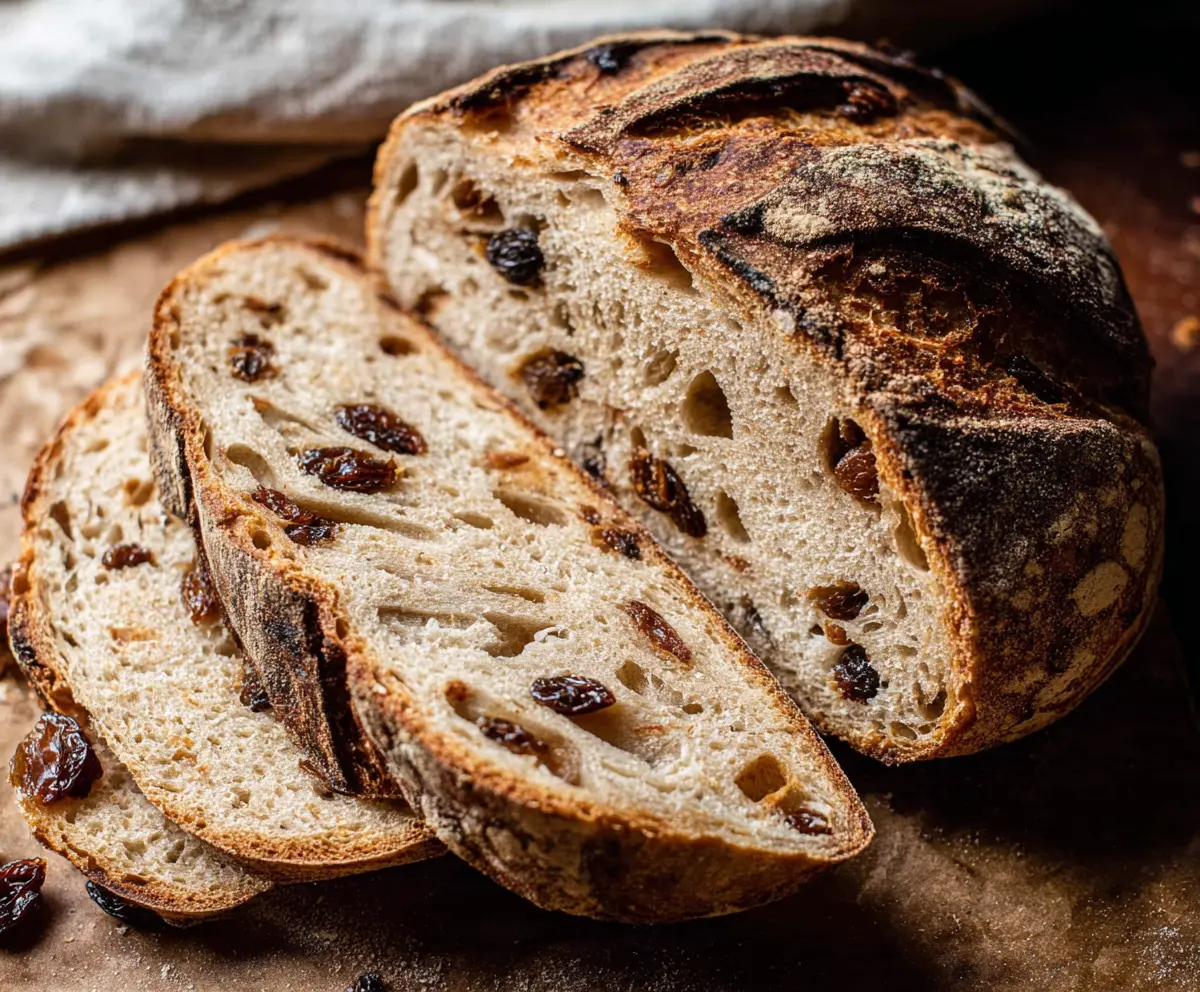
This recipe yields a beautiful crusty sourdough with a soft, slightly chewy interior studded with raisins and a lovely cinnamon aroma throughout. It’s perfect for toasting and enjoying with butter or cream cheese. Enjoy the deliciousness of your homemade bread!
Can I Use Instant Yeast Instead of Sourdough Starter?
Yes, you can use instant yeast if you’re short on time. Substitute the active sourdough starter with about 1 teaspoon of instant yeast, but the flavor and texture will differ from traditional sourdough bread.
How Can I Store This Bread?
Store the bread at room temperature in a paper bag or wrapped in a clean kitchen towel for up to 3 days. To keep it fresh for longer, you can slice and freeze the bread in an airtight container for up to 3 months. Just toast it when you’re ready to enjoy!
What If I Don’t Have Bread Flour?
If you don’t have bread flour, all-purpose flour can work in a pinch. The bread may be slightly softer, but it will still have good flavor and texture. You might consider adding a tablespoon of vital wheat gluten to help improve the structure if you have some on hand.
How Do I Know When the Bread is Done Baking?
The bread is done when it has a deep golden brown crust and sounds hollow when tapped on the bottom. You can also check with a thermometer—an internal temperature of about 200°F (93°C) indicates it’s fully baked!