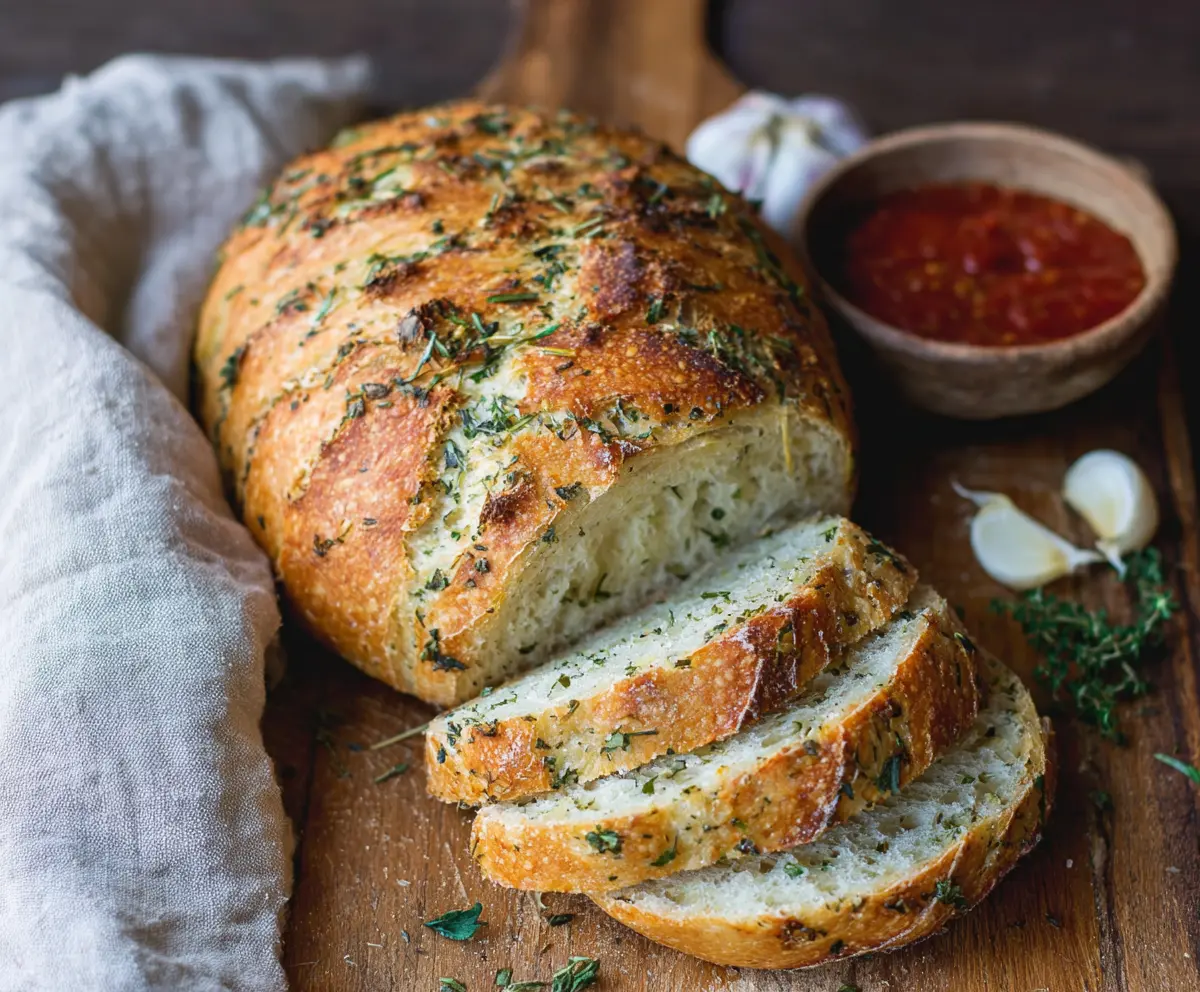
This Garlic and Herb Sourdough Bread is a tasty treat that fills your kitchen with amazing smells! Soft on the inside with a crunchy crust, it’s perfect for any meal.
Don’t be surprised if you find yourself sneaking slices before dinner! I love to slather mine with some butter or jam—so good that it might just steal the spotlight at the table!
Key Ingredients & Substitutions
Bread Flour: This type of flour gives bread its chewy texture due to the higher gluten content. If you can’t find bread flour, you can use all-purpose flour, but the bread may be slightly less chewy.
Sourdough Starter: An active starter is crucial for the bread to rise. If you don’t have one, try using store-bought sourdough starter or even dry yeast; however, the flavor may differ.
Garlic: Fresh garlic provides the best flavor. If you’re in a pinch, garlic powder can work too—just use about 1 teaspoon, as it’s more concentrated.
Fresh Herbs: I love using fresh rosemary, thyme, and parsley. If fresh herbs aren’t available, try dried versions—reduce the amount to about one-third since dried herbs are stronger in flavor!
Olive Oil: Extra virgin olive oil adds a nice flavor. You can substitute it with melted butter or even sunflower oil if you prefer.
How Can I Ensure My Sourdough Bread Rises Well?
Getting your bread to rise properly relies on the fermentation process. First, it’s important to use an active sourdough starter. Feed your starter a few hours before you plan to use it to ensure it’s bubbly and ready to go!
- During bulk fermentation, keep the dough in a warm environment, around 75-78°F (24-26°C), to encourage yeast activity.
- Perform stretch and folds to develop gluten strength, this gives your bread structure and lift.
- Don’t skip the overnight proof in the fridge; this enhances flavor and helps with the rise.
With these tips, your Garlic and Herb Sourdough Bread will turn out perfectly fluffy and flavorful! Enjoy the process, as sourdough baking is as rewarding as it is delicious.
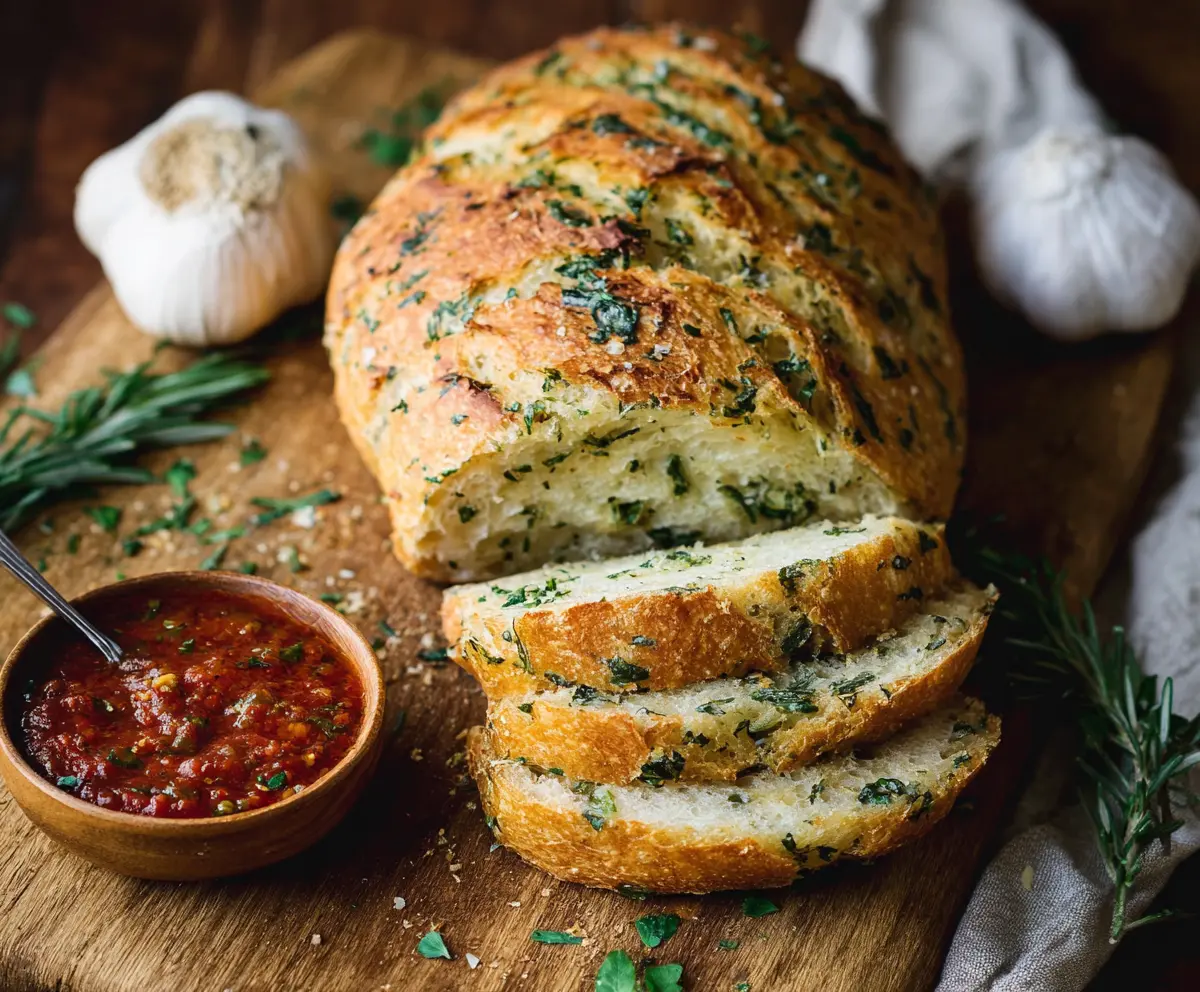
Garlic And Herb Sourdough Bread
Ingredients You’ll Need:
- 500g (about 4 cups) bread flour
- 100g (½ cup) active sourdough starter
- 350ml (about 1 ½ cups) warm water
- 2 tsp salt
- 4-5 garlic cloves, finely minced
- 2 tbsp fresh rosemary, finely chopped
- 1 tbsp fresh thyme leaves
- 2 tbsp fresh parsley, chopped
- 2 tbsp olive oil, plus extra for brushing
- Cornmeal or flour for dusting
How Much Time Will You Need?
This delightful bread will take about 30 minutes of active preparation time and 12-18 hours total including fermentation and baking. Give yourself some time to allow the dough to rise and develop flavor, especially during the overnight proof in the fridge.
Step-by-Step Instructions:
1. Combine Dry Ingredients:
In a large mixing bowl, mix together the bread flour and salt. Make sure everything is well combined.
2. Mix Wet Ingredients:
In a separate bowl, dissolve the sourdough starter in warm water. Stir it well until everything is fully mixed.
3. Create the Dough:
Pour the starter mixture into the flour mixture. Stir with a wooden spoon or your hands until it forms a shaggy dough. Cover it with a damp towel and let it rest (this is called the autolyse phase) for about 30 minutes. It helps to improve the dough’s texture!
4. Add Flavor:
After resting, add the minced garlic, chopped rosemary, thyme, parsley, and olive oil to the dough. Mix everything together thoroughly by hand or with a dough scraper until all ingredients are fully incorporated.
5. Bulk Fermentation:
Cover the bowl with a towel again and let the dough rest at room temperature for 4-6 hours. During this time, every 30 minutes perform 3 to 4 sets of stretch and folds. This helps develop the gluten and strength of the bread.
6. Shape the Dough:
Once the bulk fermentation is done, turn the dough out onto a lightly floured surface. Shape it into a round boule by folding the edges into the center. Place it seam side up into a floured proofing basket or bowl lined with a floured kitchen towel.
7. Final Proof:
Cover the dough and place it in the refrigerator overnight (8-12 hours) to allow for a slow fermentation. This gives the bread a fantastic flavor and texture!
8. Preheat the Oven:
The next day, preheat your oven to 450°F (230°C). Put a Dutch oven or heavy lidded pot inside to heat for at least 30 minutes before baking.
9. Prepare for Baking:
Carefully turn the dough out onto a parchment paper-lined baking tray or a peel. Use a sharp knife or razor blade to score the top of the dough; this allows it to expand while baking.
10. Bake the Bread:
Transfer the dough (with parchment) into the preheated Dutch oven. Cover it with the lid and bake for 20 minutes. Then, remove the lid and continue to bake for an additional 20-25 minutes until the crust is deep golden brown and crispy.
11. Final Touch:
After baking, brush the hot bread lightly with olive oil and sprinkle with some more fresh herbs if you like.
12. Cool and Serve:
Let the bread cool completely on a wire rack before slicing. Enjoy your delicious Garlic and Herb Sourdough Bread with your favorite dips, soups, or as a savory sandwich base!
Can I Use All-Purpose Flour Instead of Bread Flour?
Yes, you can use all-purpose flour, but keep in mind that the texture will be slightly different. Bread flour creates a chewier texture due to its higher protein content, which is beneficial for sourdough. If using all-purpose flour, the bread may be less chewy but still delicious!
How Do I Know If My Sourdough Starter is Ready?
Your sourdough starter should be bubbly, have doubled in size, and have a pleasant, slightly tangy smell. If you’re not sure, perform the “float test” by dropping a small spoonful of the starter into a glass of water; if it floats, it’s ready to use!
Can I Freeze Leftover Bread?
Absolutely! Once cooled, wrap the bread tightly in plastic wrap and then in aluminum foil or a freezer bag. It will keep well for up to 3 months. To enjoy, just thaw at room temperature, or warm it in the oven for a few minutes to refresh the crust.
What If I Don’t Have Fresh Herbs?
If you don’t have fresh herbs on hand, you can substitute with dried herbs. Use about one-third the amount you would use for fresh, as dried herbs are more concentrated in flavor. Just remember to mix them in with the dry ingredients for even distribution!