Freezer breakfast sandwiches solve the weekday scramble with something better than a rushed drive-thru run: a warm, sturdy sandwich with set eggs, melty cheese, and a savory sausage patty tucked into an English muffin that holds up after freezing. The best versions don’t turn soggy or rubbery when reheated, and this method keeps the texture on your side from the first assembly to the last bite.
The trick is building each sandwich with ingredients that can handle cold storage and fast reheating. Baking the eggs in a muffin tin gives you neat rounds that fit the muffins without spilling out the sides, and lightly toasting the English muffins keeps them from going soft in the freezer. Wrapping each sandwich individually before bagging them also matters more than people think; it protects against freezer burn and keeps the muffins from picking up that dry, stale edge.
Below, I’ve included the small details that make these worth keeping in the freezer all month: how to avoid watery eggs, what cheeses melt best, and the reheating move that brings everything back without overcooking the center.
I made a full batch and froze them for school mornings. The eggs stayed tender, and the English muffins didn’t get soggy after microwaving. My husband grabbed two on the way out the door and asked if there were more in the freezer.
Save these freezer breakfast sandwiches for mornings when you need a hot, hand-held breakfast with eggs, sausage, and melty cheese ready in minutes.
The Part Most Freezer Sandwiches Get Wrong: Moisture Control
The thing that ruins a freezer breakfast sandwich isn’t the freezer. It’s moisture. Wet eggs, hot sausage, and untoasted bread create steam, and steam turns the muffin soft and limp the moment you reheat it. This version avoids that by letting each component cool a bit before assembly and by using eggs baked in a muffin tin, which cook evenly without extra liquid pooling around them.
Another common mistake is trying to overbuild the sandwich. Keep the layers simple: muffin, egg, sausage, cheese, muffin. American or cheddar melts cleanly without turning greasy, and the sausage patty gives you enough heft that the sandwich reheats like a complete breakfast instead of a floppy stack of parts. If your eggs come out a little puffy in the oven, that’s fine. They settle as they cool and fit the muffin better than pan-fried eggs with ragged edges.
- English muffins — Their nooks and crannies are perfect for trapping heat, but they need a quick toast before freezing. That one step protects them from turning chewy after microwaving.
- Eggs — Baking them in a muffin tin keeps them uniform and easy to stack. Scrambled eggs work too, but they won’t hold the same neat shape or reheat quite as evenly.
- American or cheddar cheese — American melts the smoothest and gives the most classic deli-style texture. Cheddar brings a sharper bite, but use a thin slice so it melts through before the muffin overwarms.
- Sausage patties or bacon — Sausage stays juicy and reheats with the best texture. Bacon is a fine swap, but cook it crisp or it can go limp in the freezer bag.
Building Sandwiches That Reheat Like They Were Fresh
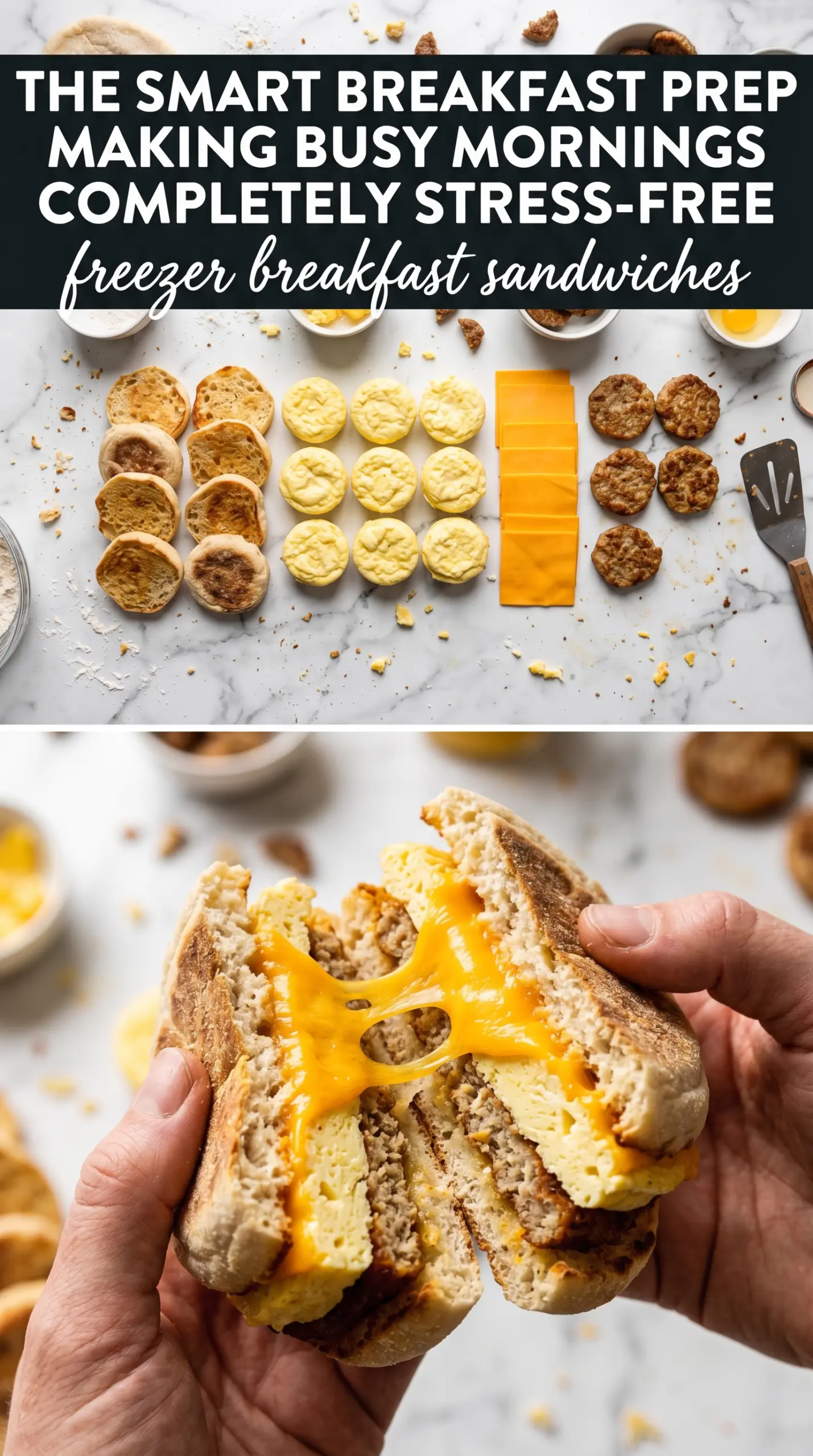
Eggs: The baked eggs do the heavy lifting here because they hold their shape and fit the muffin stack without sliding out. If you want a richer result, whisk each egg before baking for a more tender, omelet-like layer, but expect a softer texture than a neat baked round.
Cheese: Put the cheese directly against the hot egg and sausage when assembling. That little bit of residual heat helps the cheese fuse the layers together after reheating. If you tuck it only against the top bun, it often stays separate instead of melting into the sandwich.
Wrapping for the freezer: Wrap each sandwich tightly in plastic wrap before placing it in a freezer bag. That double layer matters because it keeps the bread from drying out and stops the sandwiches from clumping together. If you skip the first wrap, the freezer air gets to the muffin first.
How to Freeze, Reheat, and Keep the Texture Right
Cooking the Sausage First
Cook the sausage patties all the way through before anything gets assembled. They should be browned on the outside and fully cooked in the center, with no pink left behind. Set them on a paper towel briefly so excess grease doesn’t soak into the muffin while the sandwich freezes. If the sausage is still hot when it goes into the wrap, it steams the cheese and softens the bread.
Baking the Eggs in Neat Rounds
Spray the muffin tin well, then crack one egg into each cup. Break the yolks if you want a flatter egg layer that stacks more cleanly. Bake just until the whites are set and the centers no longer look glossy; overbaked eggs turn rubbery fast, and that texture gets even firmer after freezing. Let them cool a few minutes before assembling so the sandwich doesn’t trap steam.
Assembling and Freezing
Toast the English muffins lightly, then build each sandwich while the components are just warm, not hot. Stack the bottom muffin, egg, sausage, and cheese, then cap it with the top muffin and wrap it tightly. Freeze them in a single layer at first if you can, then move them into a bag once solid. That keeps them from getting misshapen before they’re fully frozen.
Reheating Without a Soggy Muffin
Unwrap the sandwich before microwaving so the steam can escape. Start with 1 minute, then add 15 to 20 second bursts until the center is hot and the cheese has melted. If your microwave runs hot, wrap the sandwich in a paper towel instead of plastic during reheating. Microwaving too long is the fastest way to end up with an egg that’s tough at the edges and a muffin that feels damp in the middle.
Three Ways to Make These Sandwiches Fit Your Morning
Bacon Instead of Sausage
Use two to three crisp slices of bacon per sandwich in place of a sausage patty. Bacon gives a saltier, lighter bite, but it won’t fill the sandwich as much, so the result feels a little thinner. Cook it crisp before freezing or it will go chewy after microwaving.
Dairy-Free Version
Use a dairy-free cheese slice and cook the eggs with cooking spray instead of butter. The sandwich still holds together well, but you’ll lose a little of the classic melt that American cheese gives. Choose a dairy-free slice that actually melts if you want the middle to feel cohesive after reheating.
Lower-Carb Bread Swap
If you want a lower-carb version, use your favorite keto-friendly sandwich bread or English muffin style bread. The sandwich still freezes well, but the texture is usually drier than a standard English muffin, so don’t skip the cheese layer. Toast the bread lightly before assembling to help it hold up.
Make Them Extra Hearty
Add a second slice of cheese or a thin tomato slice only if you plan to eat the sandwich right away after reheating. Extra moisture-heavy fillings can shorten freezer life and make the muffin soft. For best results, keep add-ins dry and modest if the goal is grab-and-go convenience.
Storage and Reheating
- Refrigerator: Store assembled sandwiches for up to 3 days. The muffin softens a little, so they’re best straight from the freezer or made for the next morning.
- Freezer: Freeze for up to 3 months. Wrap each sandwich tightly, then keep them in a freezer bag so they don’t pick up odors or dry out.
- Reheating: Unwrap first, then microwave 1 to 2 minutes until hot in the center. If the outside is hot but the middle is still cold, the sandwich needs shorter bursts, not one long blast, or the bread will toughen before the center thaws.
Questions I Get Asked About This Recipe

Freezer Breakfast Sandwiches
Ingredients
Equipment
Method
- Cook breakfast sausage patties (or bacon slices) according to package directions, then set aside.
- Spray a muffin tin with cooking spray and crack one egg into each cup, breaking yolks if desired.
- Season eggs with salt and pepper and bake at 350°F for 12-15 minutes until set.
- Toast English muffins lightly so they hold up after freezing and reheating.
- Assemble sandwiches by layering muffin bottom, egg, sausage patty, cheese slice, then muffin top.
- Wrap each sandwich individually in plastic wrap, then place in freezer bags.
- Freeze for up to 3 months; to reheat, unwrap and microwave for 1-2 minutes until heated through.