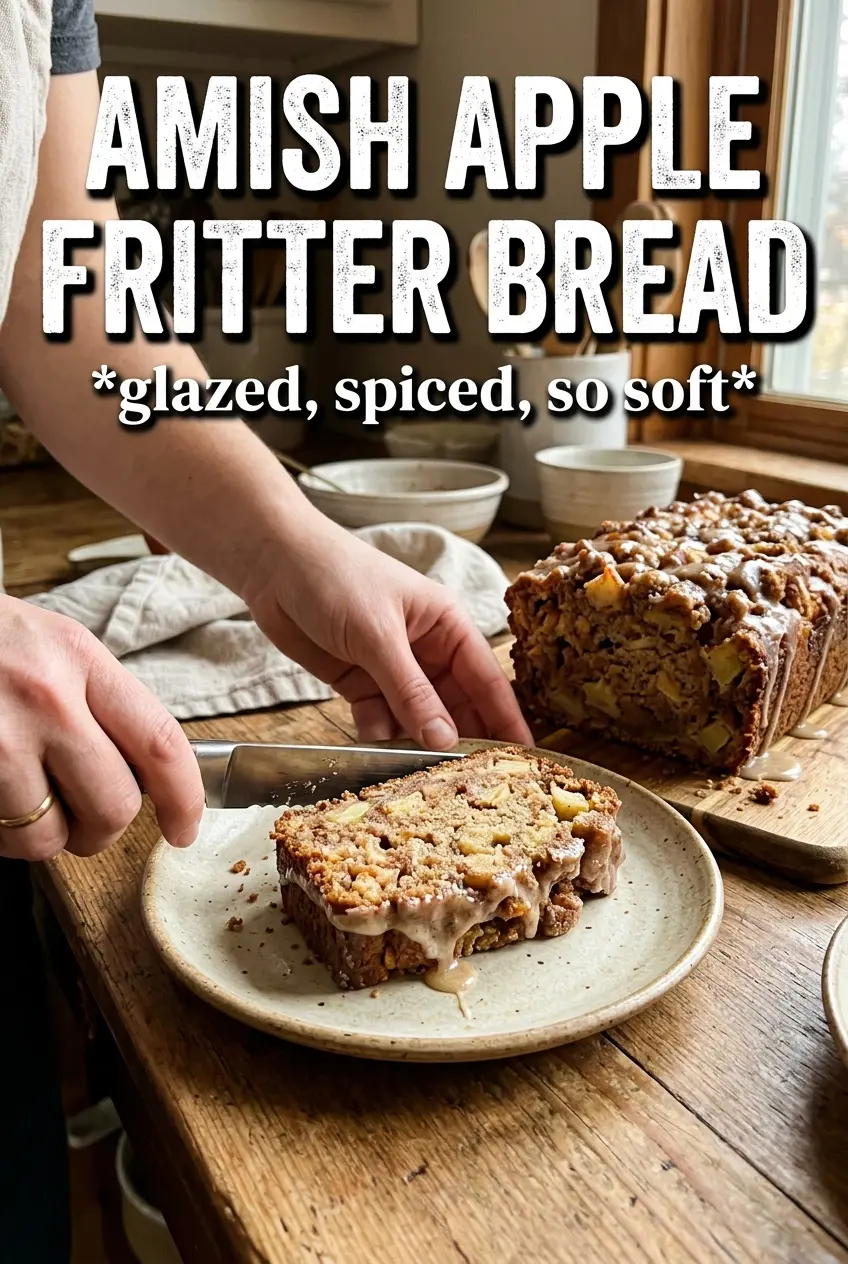
Amish apple fritter bread bakes up like the best part of a bakery fritter and a tender quick bread in one loaf. The crumb stays moist and tight enough to slice cleanly, while the cinnamon-sugar apples melt into little pockets that taste caramelized at the edges. That sweet glaze on top finishes the whole thing with the same sticky, just-baked appeal you expect from an apple fritter, only without any frying.
What makes this loaf work is the layering. Some of the apples get tossed with brown sugar and cinnamon first, so they release a little juice and pick up a deeper spice flavor while the bread bakes. The batter itself stays simple and sturdy, which keeps the loaf from turning soggy under all that fruit. A quick glaze over the warm bread sinks just enough into the top instead of sliding right off.
You’ll find the order matters here, along with a few small details that keep the loaf from baking up dense or gummy. If you’ve ever had apple bread collapse in the middle, the tips below will help you avoid that.
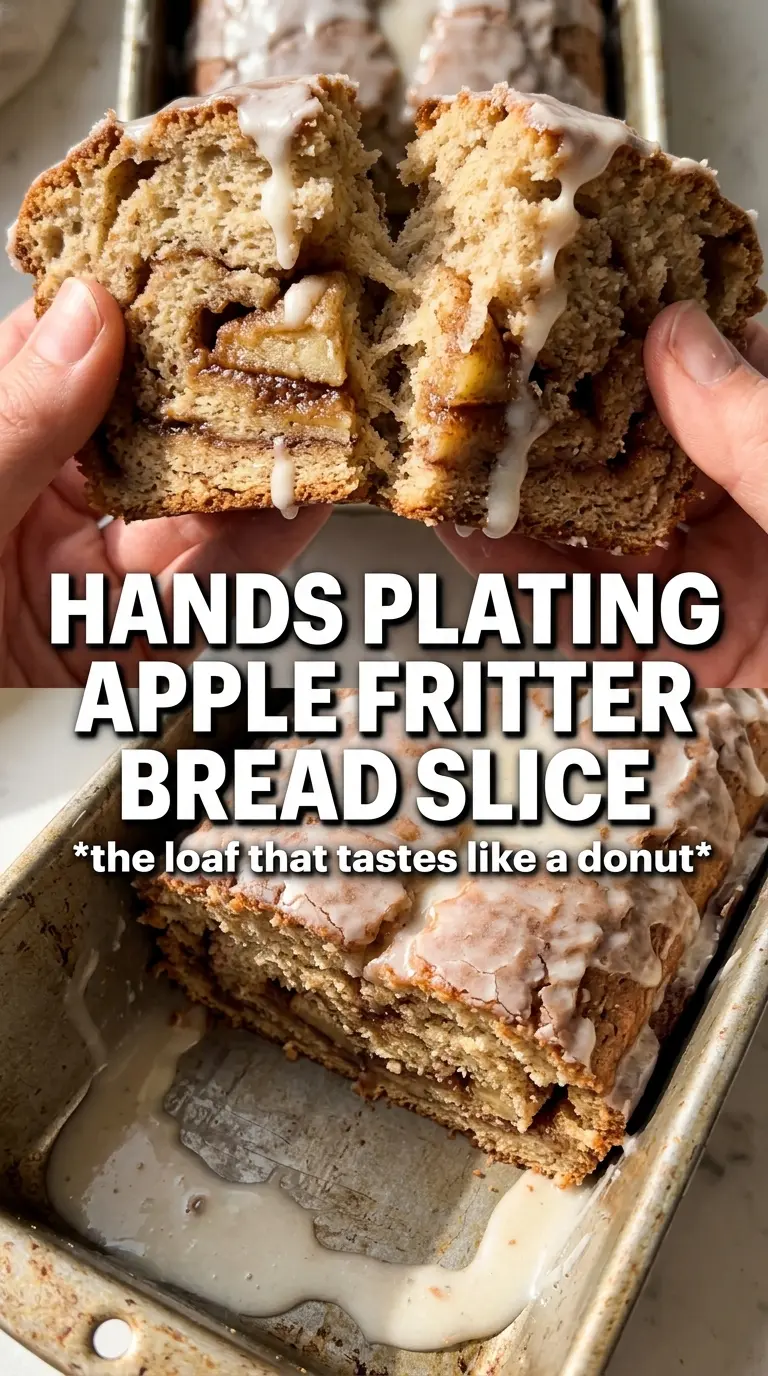
The apples stayed tender, the middle baked through without getting heavy, and the glaze soaked into the top just enough to make every slice taste like an apple fritter.
Love the cinnamon-sugar apple layers and that thick glaze? Save Amish Apple Fritter Bread for the next time you want a bakery-style loaf with a soft crumb and caramelized fruit.
The Swirl That Keeps the Apples from Sinking
Most apple quick breads go wrong when the fruit dumps into the batter all at once. The apples pull moisture downward, the center turns heavy, and the top bakes before the middle has a chance to set. This loaf avoids that by separating the apples into two layers and giving part of the cinnamon sugar direct contact with the fruit before it ever hits the pan.
That little bit of sugar on the diced apples does two jobs. It seasons the fruit all the way through and draws out just enough juice to create those soft pockets inside the loaf instead of raw apple cubes. The second layer of apples on top keeps the bread looking generous and helps the surface bake into a more fritter-like finish.
- Layering the apples — Putting half the apples in the middle and half on top keeps the loaf from collapsing under one wet layer.
- Brown sugar and cinnamon — Brown sugar brings a deeper caramel note than white sugar alone, and cinnamon clings to the fruit instead of disappearing into the batter.
- Finely diced apples — Small pieces soften evenly and won’t fight the crumb. Large chunks can leave wet pockets and make slicing messy.
What Each Ingredient Is Actually Doing in This Bread
- Apples — Use a firm baking apple if you can. Honeycrisp, Granny Smith, Braeburn, or a mix all work. Soft apples break down too fast and disappear into the loaf.
- Butter — Softened butter creams with the sugar to trap air, which helps the bread rise and stay tender. Melted butter won’t give the same lift.
- Whole milk — The fat in whole milk keeps the batter richer and the crumb softer. Lower-fat milk will work in a pinch, but the loaf won’t taste as full.
- All-purpose flour — This gives the bread enough structure to hold the apples and glaze without becoming cakey. I wouldn’t swap in a heavy gluten-free blend unless it’s made for 1:1 baking.
- Powdered sugar glaze — This is more than decoration. It adds the finishing sweetness that makes the loaf taste like an actual fritter rather than plain apple bread.
Building the Loaf So It Stays Tender, Not Heavy
Creaming the Butter and Sugar
Beat the butter and granulated sugar until the mixture looks pale and a little fluffy, not just blended. That step builds the air that gives the loaf lift, and skipping it leads to a denser crumb. Add the eggs one at a time if you can, then the vanilla, and stop mixing as soon as everything is smooth. Overmixing at this point won’t help the texture; it just warms the batter and can make the loaf bake up tight.
Adding the Dry Ingredients and Milk
Whisk the flour, baking powder, baking soda, and salt together first so the leaveners distribute evenly. Add the dry ingredients in alternate additions with the milk, starting and ending with dry. That keeps the batter from looking curdled and helps it stay smooth without beating too much air out of it. If the batter looks a little thick, that’s fine — it should spoon into the pan rather than pour like cake batter.
Layering and Baking
Pour in half the batter, add half the apples, then sprinkle on the remaining plain cinnamon sugar before the last layer of batter and apples go in. That middle sugar layer melts into the loaf and gives you the taste of an apple fritter in slices instead of just on top. Bake until the center tests clean with a toothpick and the top springs back lightly when pressed. If the top is browning too fast before the middle is done, tent it loosely with foil for the last 15 minutes.
The Warm Glaze Finish
Stir the powdered sugar and milk until smooth and drizzle it over the bread while it’s still warm. Warm bread grabs the glaze and turns it glossy instead of letting it sit in a hard white layer. If you wait until the loaf is fully cool, the glaze will stay more decorative and less absorbed, which changes the way each bite tastes.
Three Ways to Adjust the Loaf Without Losing What Makes It Good
Gluten-Free Version
Use a cup-for-cup gluten-free flour blend that already contains xanthan gum. The texture will be a little more delicate and slightly less bouncy, but the loaf still works well because the apples and glaze keep it moist. Don’t use almond flour here as a straight swap; it changes the structure too much and the bread won’t slice cleanly.
Dairy-Free Version
Swap the butter for a good plant-based baking butter and use an unsweetened non-dairy milk such as oat or almond milk. Oat milk gives the softest crumb and closest flavor, while almond milk is a little lighter. The glaze works the same way with either one.
Extra-Spiced Apple Version
Add a pinch of nutmeg or a small pinch of allspice to the brown sugar mixture if you want the loaf to taste more like apple pie filling. Keep the amounts modest or the cinnamon gets buried. This version leans warmer and more aromatic, which is nice when you want the bread to feel a little richer.
Storing the Loaf for Later
- Refrigerator: Store covered for up to 4 days. The crumb stays moist, though the glaze softens on the surface.
- Freezer: This bread freezes well. Wrap the cooled loaf or individual slices tightly and freeze for up to 2 months. Thaw at room temperature before reheating.
- Reheating: Warm slices in the microwave for 10 to 15 seconds or in a low oven until just heated through. Long reheating dries out the edges and makes the glaze tacky instead of soft.
Answers to the Questions Worth Asking
Amish Apple Fritter Bread
Ingredients
Equipment
Method
- Preheat oven to 350F and grease a 9x5 loaf pan for easy release.
- Mix brown sugar and cinnamon, then toss half of the mixture with the finely diced apples so the pieces are coated and glossy.
- Beat the softened butter and granulated sugar until fluffy, then add the eggs and vanilla extract and mix until smooth.
- Whisk the all-purpose flour, baking powder, baking soda, and salt, then alternate adding the dry mixture with whole milk to the butter mixture until just combined with no dry streaks.
- Pour half the batter into the loaf pan and spread it evenly to form the first layer.
- Layer half the cinnamon-sugar apple mixture on top so the loaf develops apple pockets throughout.
- Sprinkle the remaining plain cinnamon sugar over the apples so it bakes into a lightly caramelized ribbon.
- Add the remaining batter over the apples to cover them completely.
- Top with the remaining apples so you can see caramelized pieces baked on the surface.
- Bake at 350F for 55-60 minutes until a toothpick comes out clean.
- Stir powdered sugar with milk to make a smooth glaze, then drizzle it over the warm loaf so it sets with a thin sweet sheen.