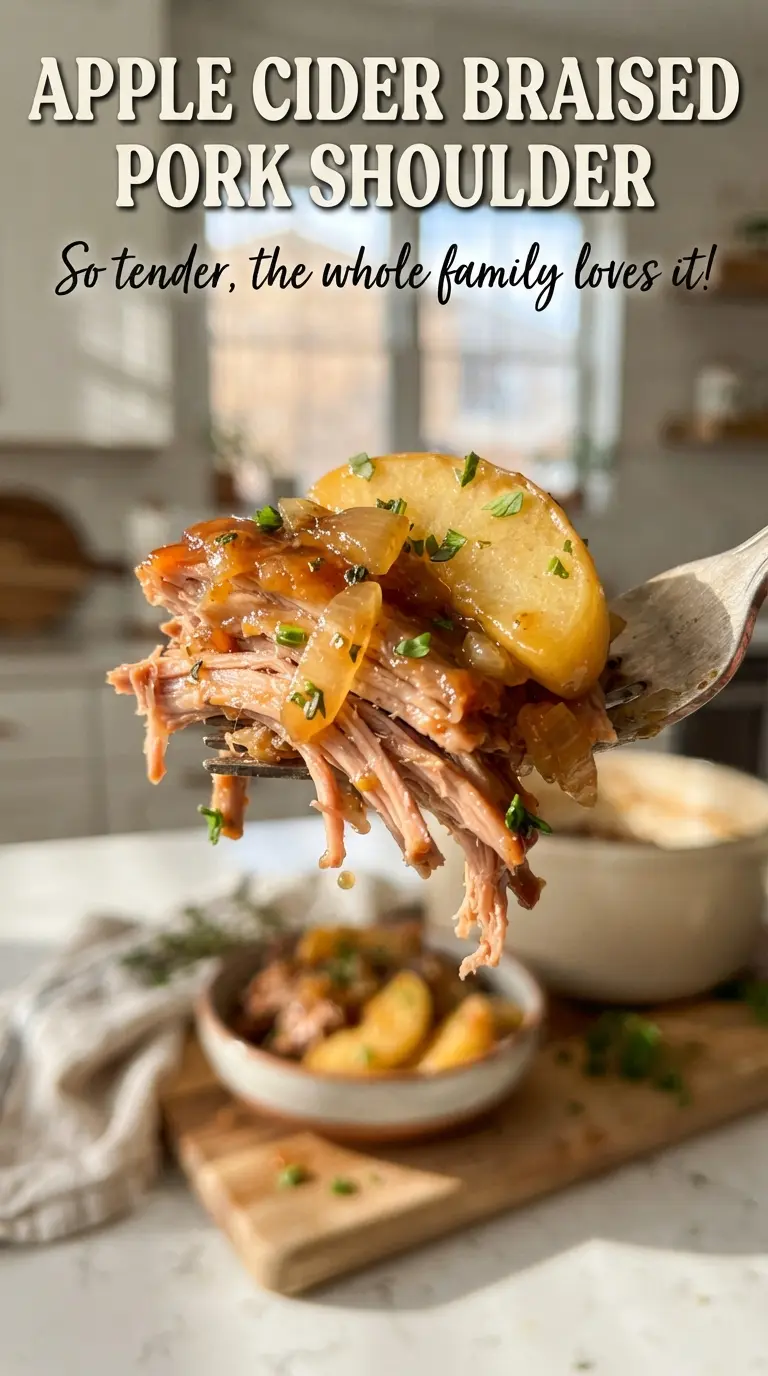
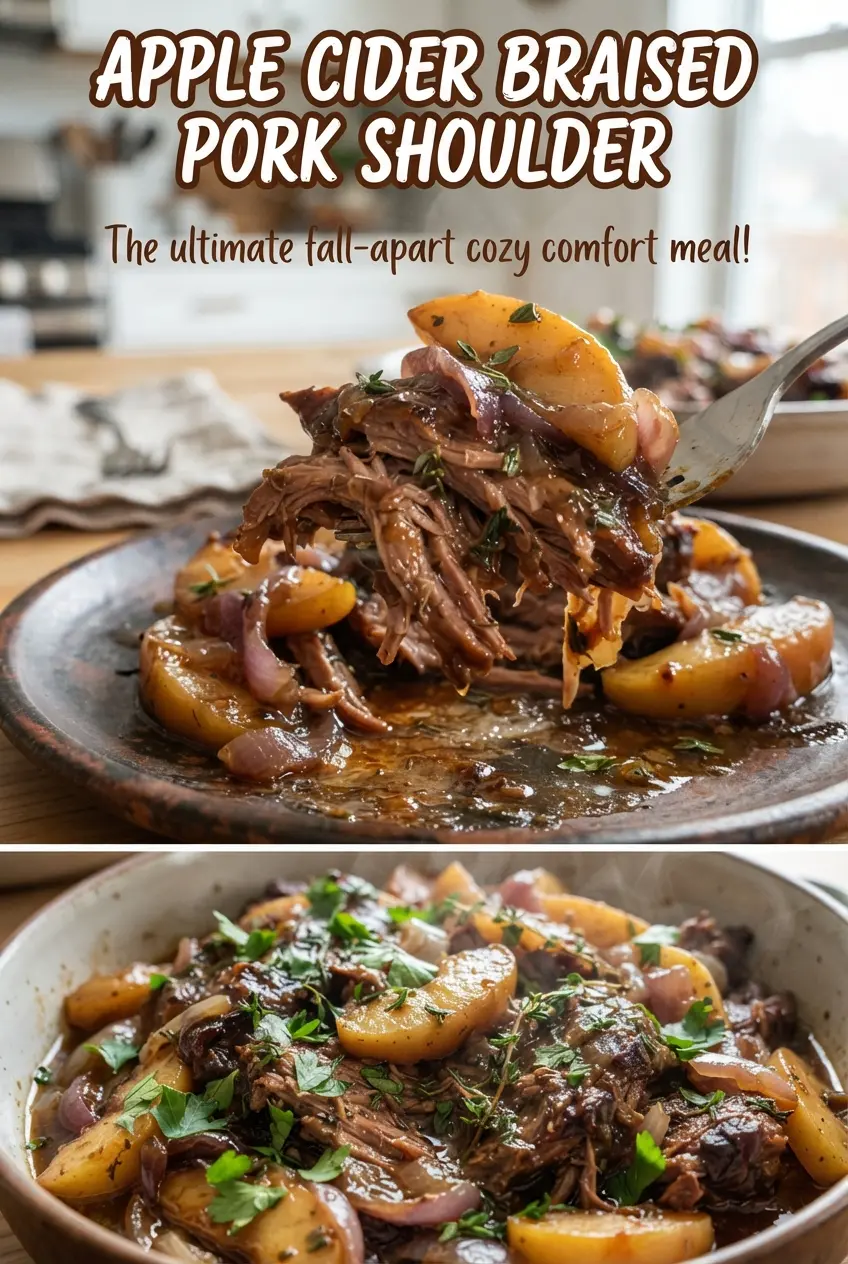
Apple cider braised pork shoulder lands on the table with the kind of deep, savory-sweet richness that makes people go quiet for a minute. The pork turns spoon-tender, the onions melt into the sauce, and the apples soften just enough to keep their shape without turning to mush. It’s the kind of braise that tastes like it took all day, because in a way, it did — but most of that time is the oven doing the work for you.
The real payoff here comes from building flavor in layers. A hard sear gives you those dark, crusty bits in the pot, then the cider, broth, vinegar, Dijon, and brown sugar pull them into a balanced braising liquid that isn’t just sweet or just tangy. The apples go in late on purpose so they hold together and keep the sauce bright instead of bland.
Below you’ll find the part that matters most: how to get the pork browned, how long to braise before adding the apples, and what to do if you want the sauce a little thicker at the end. It’s a straightforward recipe, but a few small details make it a lot better.
The pork shredded beautifully after the full braise, and the cider sauce reduced into something glossy and balanced instead of too sweet. I loved that the apples held their shape and didn’t disappear.
Save this apple cider braised pork shoulder for a tender, cider-kissed dinner with glossy pan sauce and soft braised apples.
The Browning Step That Gives This Braise Its Backbone
With braised pork shoulder, the biggest mistake is rushing the sear or crowding the pan. You need a deep brown crust on the pork before any liquid goes in, because that crust is what gives the sauce its savory base. If the meat goes into the oven pale, the final dish can taste flat even if the sauce looks rich.
Use a hot Dutch oven and give the pork space. The goal is a dark, even browning on the outside, not cooking it through at this stage. The onion goes in after the pork comes out, and the browned bits left behind stay in the pot where they belong. That’s where the flavor lives.
What Each Ingredient Is Actually Doing in the Pot
- Pork shoulder — This cut has the fat and connective tissue that turn silky over a long braise. Leaner cuts dry out before they get tender, so this is one place where the right cut matters a lot.
- Apple cider — Use actual cider, not apple juice if you can. Cider has a deeper, less candy-like apple flavor, and it gives the sauce more body and character.
- Dijon mustard and apple cider vinegar — These keep the braise from tasting heavy. The mustard adds sharpness and helps the sauce emulsify a little, while the vinegar brightens the sweet cider base.
- Brown sugar — Just enough to round out the acidity and pull the sauce together. If your cider is very sweet, reduce it a bit rather than skipping it entirely.
- Apples — Add them late so they stay in wedges instead of dissolving. A firm tart apple works best because it holds its shape and keeps the sauce from becoming cloying.
- Fresh thyme and rosemary — Dried herbs can work in a pinch, but fresh gives the braise a cleaner, woodsy finish. Strip the rosemary from the stem only if you want to chop it; whole sprigs are easy to remove later.
How to Braise the Pork Without Losing the Sauce
Seasoning and Searing
Coat the pork with salt, pepper, and smoked paprika before it hits the pan. The paprika won’t make the dish smoky in a loud way; it adds a subtle warmth that plays well with the cider. Sear the pork in hot oil until each side has a dark crust and the meat releases without sticking. If it tears when you lift it, it needs another minute.
Building the Braising Liquid
Cook the onion until it softens and picks up a little color, then add the garlic for just a minute so it doesn’t turn bitter. Pour in the cider, broth, vinegar, Dijon, and brown sugar, then scrape the bottom of the pot until those browned bits dissolve into the liquid. That step keeps the sauce from tasting thin, and it’s the difference between a good braise and one that tastes like boiled pork.
Long, Slow Oven Time
Return the pork with the thyme and rosemary, cover the pot, and let the oven do the work. After about 2 1/2 hours, the meat should be starting to relax but still need more time. Add the apples only for the final 45 minutes so they soften without collapsing. If the pork still feels tight, it needs more time; braised pork shoulder should shred easily with a fork.
Reducing the Sauce at the End
Once the pork is out, shred it into large pieces and simmer the liquid on the stove until it lightly coats a spoon. This last reduction concentrates the flavor and gives the sauce a gloss that clings to the meat instead of pooling at the bottom of the bowl. Don’t walk away here — once the liquid tightens up, it can go from glossy to overly salty fast.
Ways to Adjust the Braise for Different Kitchens and Diets
Make It Dairy-Free and Naturally Gluten-Free
This recipe is already dairy-free and gluten-free as written, which makes it especially easy to serve a crowd. Just check your Dijon mustard and broth labels if you need to avoid hidden additives. The texture and flavor stay the same, so there’s nothing lost with this version.
Use Apple Juice When That’s What You Have
Apple juice works in place of cider, but the sauce will taste a little sweeter and less complex. If you swap it in, keep the vinegar and Dijon as written so the braise doesn’t end up sugary. You may want to reduce the brown sugar by a tablespoon if your juice is very sweet.
Swap the Herbs Based on What’s in the Fridge
Thyme and rosemary are the right match here, but sage can step in if that’s what you’ve got. Sage gives the sauce a deeper, more savory edge that leans a little more holiday-style. Use less than you would thyme, though, because sage takes over quickly in a long braise.
Storage and Reheating
- Refrigerator: Store for up to 4 days. The sauce thickens as it chills, and the flavors get even better the next day.
- Freezer: Freezes well for up to 3 months. Cool it completely first, then pack the pork and sauce together so the meat stays moist.
- Reheating: Warm gently on the stove over low heat or covered in a 325F oven until hot. Don’t crank the heat, or the pork can dry out and the sauce can tighten too much.
Questions I Get Asked About This Recipe
Apple Cider Braised Pork Shoulder
Ingredients
Equipment
Method
- Preheat oven to 325F. Season the pork with salt, black pepper, and smoked paprika.
- Heat olive oil in a Dutch oven, then sear the pork until well browned, about 4-5 minutes per side, and remove it.
- Cook the onion in the Dutch oven for 5 minutes. Add the smashed garlic and cook for 1 minute.
- Stir in the apple cider, chicken broth, apple cider vinegar, Dijon mustard, and brown sugar, scraping up the browned bits from the bottom.
- Return the pork to the pot and nestle in the fresh thyme and rosemary. Cover and braise for 2 1/2 hours at 325F.
- Add the apple wedges to the Dutch oven and continue braising, covered, for 45 minutes at 325F until the pork is fork-tender.
- Shred the pork into large pieces. Simmer the braising liquid on the stove for 10 minutes to reduce, then serve the pork with the sauce and apples.