Apple cider braised pork shoulder turns a tough, humble cut into something silky, deeply savory, and rich with sweet-tart pan juices. The meat gives up easily with a fork after a long braise, but it doesn’t taste flat or one-note. You get browned edges from the sear, gentle sweetness from the cider and apples, and enough acidity to keep every bite awake.
The trick here is building flavor in layers instead of leaning on one big ingredient. A hard or fresh cider both work, but either way the liquid needs help from Dijon, vinegar, and browned pork drippings to keep the sauce from tasting sugary. Searing the shoulder first matters more than people think; that deep crust is what gives the braising liquid its backbone.
Below you’ll find the exact cues I watch for so the pork turns fall-apart tender without going stringy, plus a few ways to adapt it for different diets and leftovers that taste even better the next day.
The pork was melt-in-your-mouth tender and the cider sauce thickened up just enough to spoon over the potatoes without being runny. I used fresh cider and the apples held their shape perfectly.
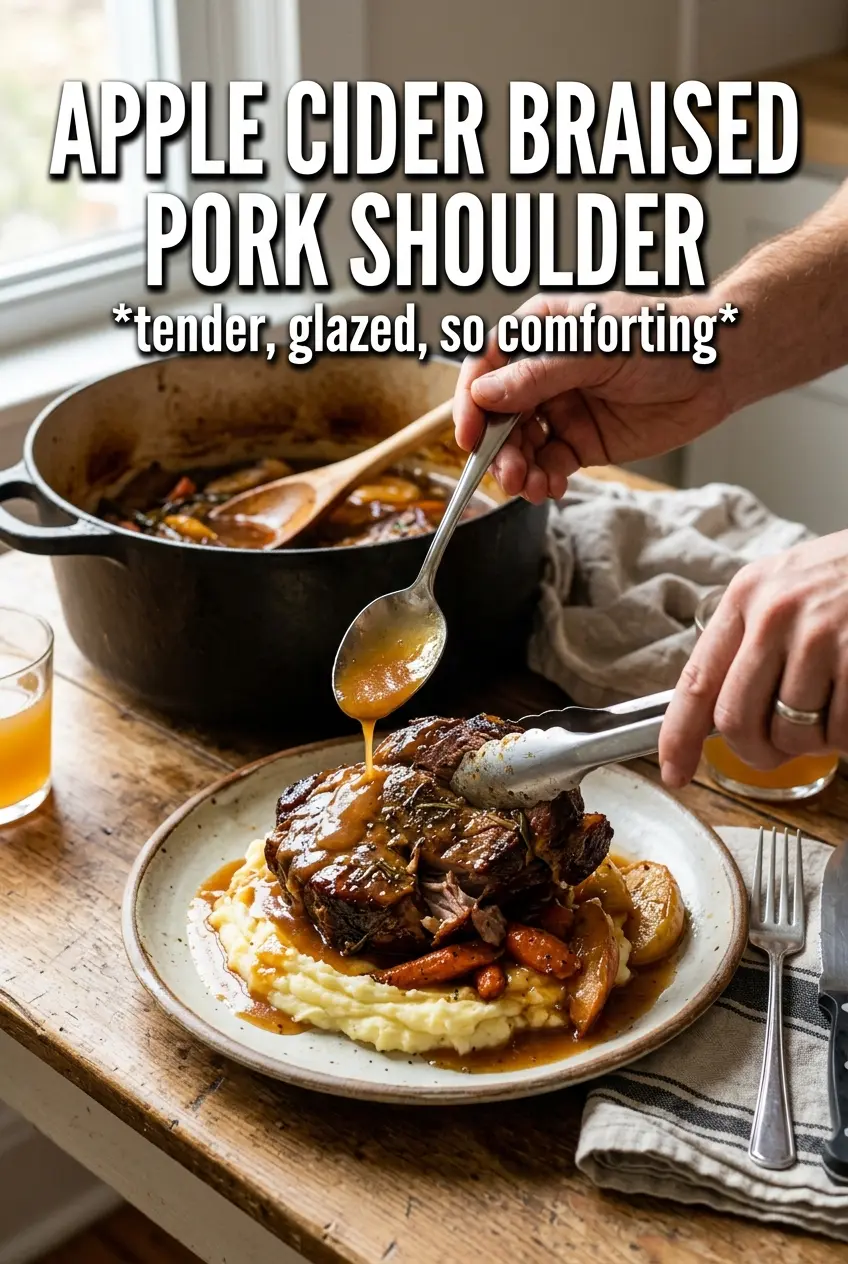
Save this apple cider braised pork shoulder for the nights when you want fork-tender pork, caramelized apples, and a pan sauce made for mashed potatoes.
The Sear Is What Keeps the Braise From Tasting Flat
Once pork shoulder goes into the oven, most of the work is already done. The part people rush is the sear, and that’s the part that gives this dish its depth. You want a hard, dark brown crust on every side before the liquid goes in, because that crust melts into the cider and broth as the pork braises. If the meat is pale when it goes into the pot, the sauce will taste thin no matter how long it cooks.
There are two other places this recipe can go sideways. First, don’t crowd the pot during searing or the pork will steam. Second, don’t boil the braising liquid after the pork goes in; the gentle oven heat is what keeps the shoulder tender instead of dry and stringy. A braise should move slowly enough that you see only a few lazy bubbles around the edges.
- Bone-in vs. boneless shoulder — Boneless works beautifully here and is easier to shred, but a bone-in roast can add a little extra richness. If you use bone-in, the cook time may stretch by 20 to 30 minutes.
- Cider choice — Hard cider brings a sharper, more grown-up tang. Fresh cider gives you rounder apple flavor and a slightly sweeter finish. Both are good; just avoid anything labeled “apple drink,” which usually tastes too thin.
- Dijon mustard — This isn’t here to make the pork taste like mustard. It helps emulsify the sauce and keeps the braising liquid from turning cloying.
- Apples — Use firm apples that can hold their shape in the oven. Softer apples turn to jam before the pork is tender.
What Each Ingredient Is Actually Doing in This Dish

- Pork shoulder — This cut has enough fat and connective tissue to turn spoon-tender over a long braise. Leaner cuts won’t give you the same texture and usually dry out before the apples and cider finish their job.
- Apple cider and chicken broth — Cider gives sweetness and fruit, while broth keeps the sauce from becoming syrupy. If you only use cider, the sauce can end up too sweet; if you only use broth, you lose the point of the dish.
- Apple cider vinegar — A small amount sharpens the whole pot and keeps the sauce lively. You can swap in a splash of white wine vinegar in a pinch, but the cider vinegar has a softer edge that fits better here.
- Apples, onion, and garlic — Onion and garlic build the base under the braising liquid, while the apples soften into sweet-tart pieces that taste like part of the sauce instead of a separate garnish.
- Fresh thyme and rosemary — Fresh herbs hold up better over four hours than dried ones do. If you only have dried, use a light hand; too much dried rosemary can take over the whole pot.
Building a Braise That Stays Tender All the Way Through
Getting the Color Before the Liquid Goes In
Heat the oil until it shimmers, then lay the pork in without moving it until it releases on its own. Each side should look deep brown, not just tan, before you turn it. That color is flavor, and it also keeps the finished sauce from tasting like plain cider. If the pot starts smoking hard, lower the heat; burned fond tastes bitter and will carry through the braise.
Softening the Onion Base
After the pork comes out, the onion and garlic go into the same pot so they pick up every browned bit left behind. Cook them just until the onion turns translucent and the garlic smells sweet, not sharp. Garlic burns fast in a Dutch oven, especially after searing, so keep it moving and don’t let it sit against the hot surface too long.
Letting the Oven Do the Work
Once the pork is back in the pot, spoon some of the liquid over the top, cover tightly, and braise at 325°F until the meat pulls apart with almost no resistance. The finished pork should shred easily with two forks, and the apples should be soft but not collapsed into mush. If the roast still feels tight at 3 1/2 hours, keep going in 15-minute bursts; shoulder gets tender on its own schedule, and the finish matters more than the clock.
Shredding in the Juices
Shred the pork right in the pot so every strand gets coated with the reduced cider sauce. Pull out any obvious fat caps or tough pieces, then stir the meat through the liquid before serving. That last step is what keeps the pork juicy on the plate instead of dry by the time it reaches the table.
How to Adapt This for a Smaller Pot, a Sweeter Sauce, or No Alcohol
Make It Without Hard Cider
Use all fresh apple cider and keep the vinegar in the recipe. The sauce will be a little sweeter and less sharp, so don’t skip the Dijon or the vinegar, or the braise can taste one-dimensional.
Gluten-Free Without Any Fuss
This recipe is naturally gluten-free as written as long as your broth and Dijon are certified gluten-free. The texture and cook time stay exactly the same.
For a Less Sweet Finish
Cut the brown sugar to 1 tablespoon and use tart apples like Granny Smith. You’ll get a brighter sauce with more acid and less caramel sweetness, which works well if you’re serving the pork with rich mashed potatoes.
Storage and Reheating
- Refrigerator: Store the pork and juices together for up to 4 days. The flavor gets even deeper after a night in the fridge.
- Freezer: Freezes well for up to 3 months. Cool completely, portion with the sauce, and freeze in airtight containers so the meat doesn’t dry out.
- Reheating: Reheat gently on the stovetop over low heat or covered in the oven with a splash of broth. Don’t blast it in the microwave or the pork can turn stringy before the sauce warms through.
Answers to the Questions Worth Asking
Apple Cider Braised Pork Shoulder
Ingredients
Equipment
Method
- Preheat the oven to 325F and season the pork shoulder generously with salt and pepper. The surface should look speckled with seasoning before you start searing.
- Heat olive oil in a Dutch oven and sear the pork on all sides until deeply browned. Continue until you get dark caramelized crust, about a few minutes per side.
- Remove the pork, then sauté the onion and garlic in the Dutch oven for 3 minutes. Stir until the onion softens and the garlic smells fragrant.
- Whisk the apple cider, chicken broth, Dijon mustard, brown sugar, and apple cider vinegar until smooth, then pour into the pot. Scrape up any browned bits from the bottom so the sauce develops flavor.
- Return the pork to the pot and nestle in the apples, thyme, and rosemary. The herbs should be spread across the surface, with apple quarters partially submerged.
- Cover and braise at 325F for 3-1/2 to 4 hours until fall-apart tender. Look for meat that easily pulls apart with a fork and apples that soften into the sauce.
- Shred the pork in the juices and serve over mashed potatoes. Spoon the caramelized cider pan sauce and apples over the shredded meat so every bite is glossy.