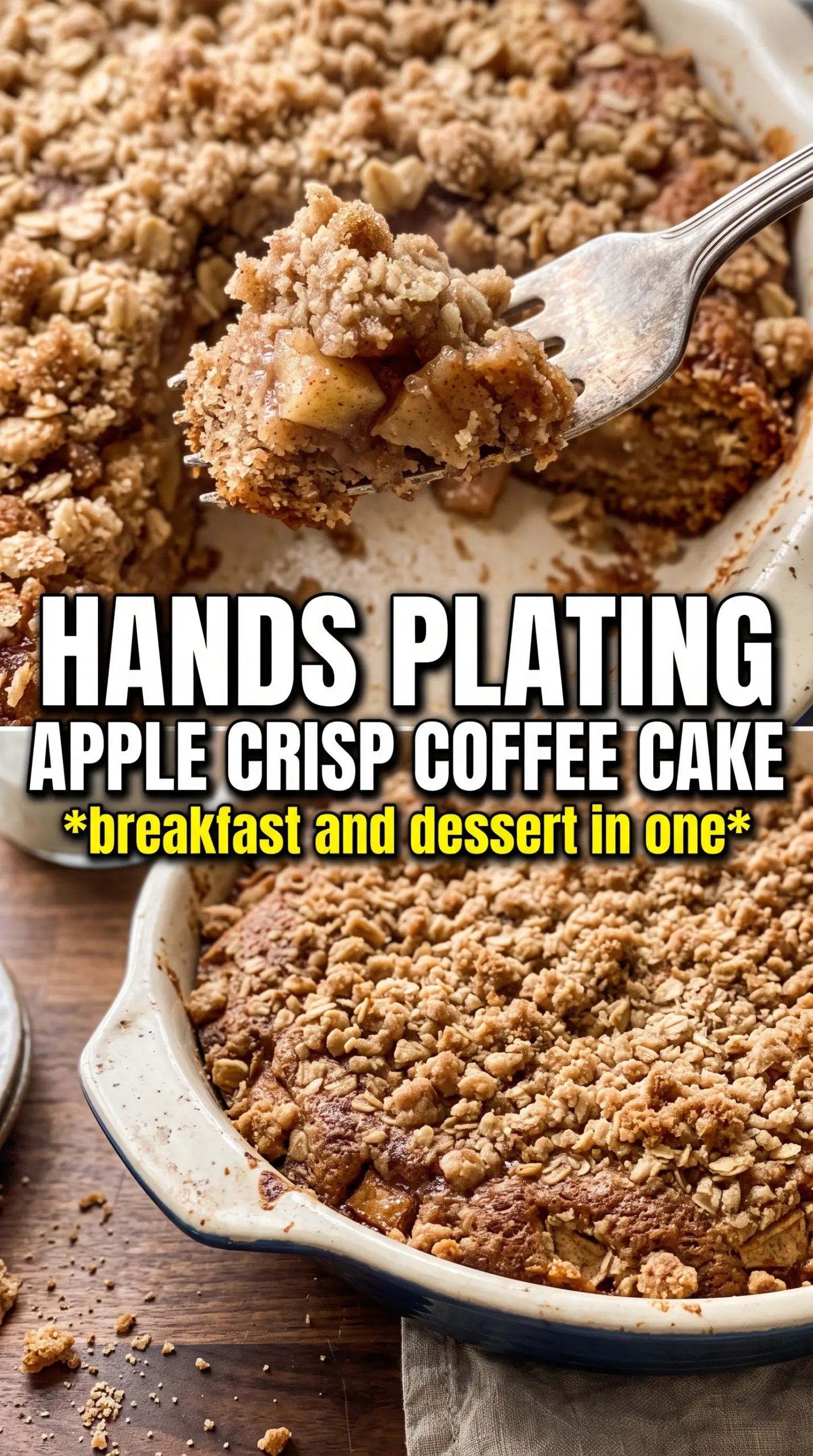
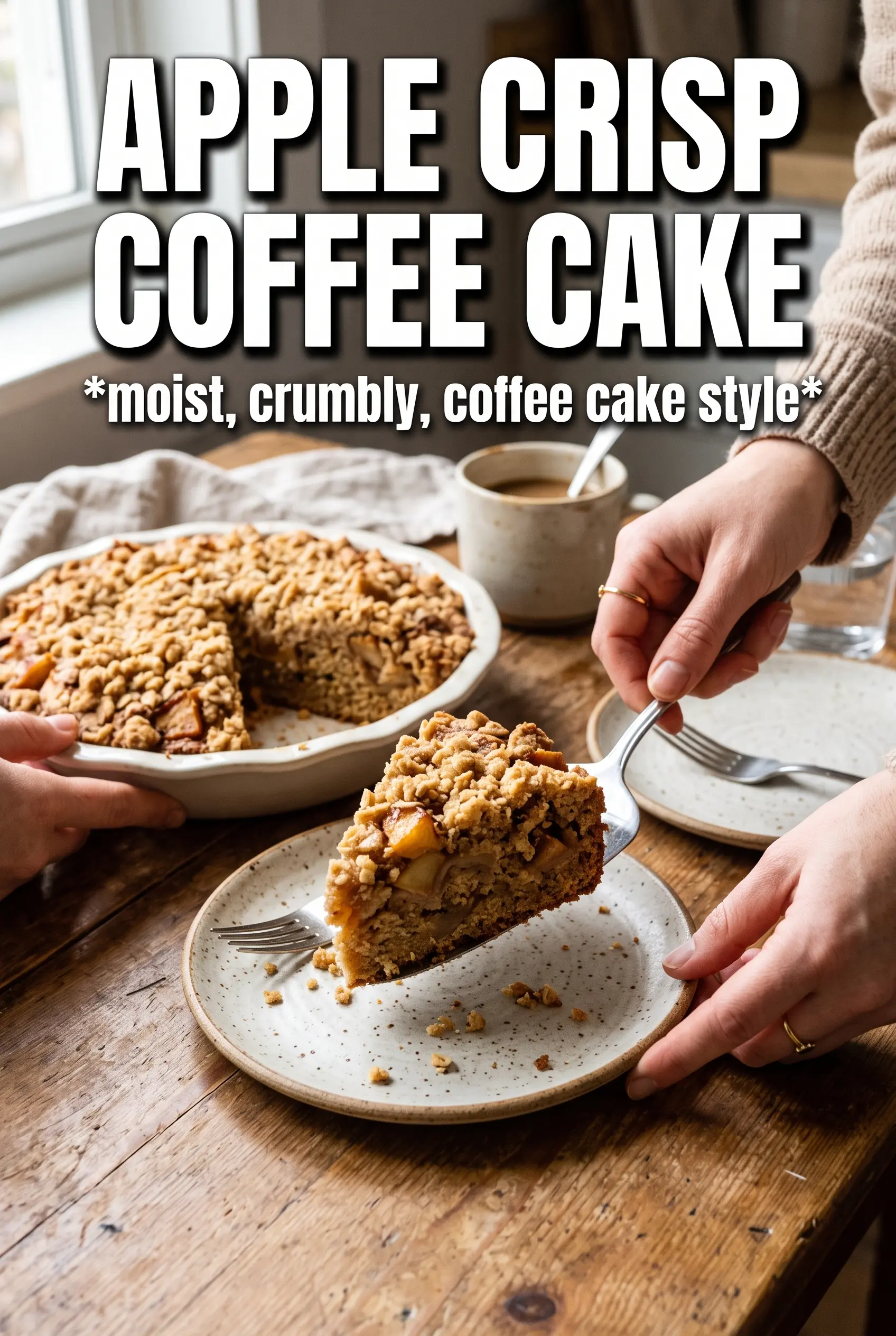
Apple crisp coffee cake lands in that perfect middle place between a tender breakfast cake and the crunchy, cinnamon-heavy topping everyone reaches for first. The cake stays moist from sour cream and diced apples, while the oat crumble bakes into a golden cap with those caramelized edges that crackle when you slice through them. It’s the kind of pan that disappears fast, whether you serve it warm for brunch or cut a square off later in the afternoon with coffee.
What makes this version work is the balance. The batter is sturdy enough to hold the apples without turning dense, and the topping starts cold so it bakes up clumpy instead of sandy. A little sour cream keeps the crumb soft without making it heavy, and the apples add pockets of moisture that keep each bite from tasting one-note.
Below, I’m walking through the part that matters most: how to keep the topping crisp, how to avoid a gummy center, and which apples hold their shape best if you want that clean layer under the crumble.
The oat topping baked up crunchy instead of sinking, and the apples stayed tucked into the cake instead of making it soggy. I served it warm and everyone wanted seconds.
Save this apple crisp coffee cake for mornings when you want a buttery crumb, cinnamon apples, and a crunchy oat topping in one pan.
The crumble has to start cold, or it turns sandy
The topping is where a lot of coffee cakes go wrong. If the butter is too warm, the oats and flour blend into paste before they ever hit the oven, and you lose those clumpy bits that bake into crisp little nuggets. Cold butter cut into the dry ingredients gives you texture instead of dust.
Refrigerating the crumble while you mix the cake helps even more. That short chill keeps the butter from melting early, so the topping sets on top of the batter instead of disappearing into it. You want scattered clumps, not a uniform blanket.
- Cold butter for the topping — This is what makes the crumble hold its shape and brown into crisp pockets. Cubed butter works best because you can cut it in quickly without overworking the mixture.
- Sour cream — This adds richness and keeps the crumb tender. Plain Greek yogurt works in a pinch, but the cake will be a little tangier and slightly less plush.
- Apples — Use a firm baking apple like Granny Smith, Honeycrisp, or Braeburn. Soft apples turn mushy and blur into the batter before the cake sets.
- Rolled oats — Old-fashioned oats give the topping that classic crisp texture. Quick oats will work, but the crumble will be finer and less nubby.
What each layer is doing in the pan
- Flour, baking powder, and baking soda — The combination gives the cake lift without making it cakey or dry. The soda reacts with the sour cream, while the powder handles the rest of the rise.
- Cinnamon in both layers — Cinnamon in the batter and the topping keeps the flavor consistent from top to bottom. If you only season the crumble, the cake underneath tastes flat.
- Butter and sugar in the cake — Creaming them until fluffy traps air, which helps the cake rise evenly. Stop once the mixture turns pale and light; if you beat it forever, the structure gets unstable.
- Diced apples — Fold them in last so they stay distributed instead of sinking. Small dice bake through faster and give you apple in every bite without making the crumb collapse.
Getting the batter and topping to bake at the same pace
Building the base
Start by creaming the butter and sugar until the mixture looks lighter in color and a little fluffy around the edges of the bowl. That’s the air you’re baking into the cake. Add the eggs one at a time, then the vanilla and sour cream, and stop as soon as the batter looks smooth. If it looks slightly curdled before the flour goes in, that’s fine.
Folding in the dry ingredients
Add the flour mixture in two additions and fold just until the dry streaks disappear. Overmixing here tightens the cake and makes the crumb tough instead of soft. The batter will be thick, and that’s exactly what you want because it needs to support the apples and the crumble.
Scattering the crumble evenly
Spread the batter into the greased 9×13 dish, then break the chilled topping across the surface with your fingers. Don’t press it down. Let it sit loosely on top so hot air can move through the crumble and crisp it from the outside in. If you pack it, the topping bakes up dense and soft instead of crunchy.
Baking to the clean-center point
Bake until the top is deep golden and a toothpick comes out clean from the center of the cake portion, not from a pocket of apple. If you hit a juicy apple chunk, the tester can lie to you. Start checking around 50 minutes, and pull the pan once the center is set and the crumble smells toasted and buttery.
How to make it nutty and extra crisp
Add 1/2 cup chopped pecans or walnuts to the topping. They toast as the cake bakes and make the crumble more pronounced, but they also make it a little less sandy and more rustic.
How to make it dairy-free
Use a plant-based butter that bakes well and swap the sour cream for unsweetened dairy-free yogurt with some body. The cake will still be tender, though the topping may brown a little faster, so watch the last 10 minutes closely.
How to make it gluten-free
Use a 1:1 gluten-free flour blend in both the cake and the topping, and keep the oats certified gluten-free if cross-contamination matters. The crumb will be a touch more delicate, but the structure holds well because the cake is already built for moisture.
Storage and Reheating
- Refrigerator: Store covered for up to 4 days. The topping softens a bit in the fridge, but the cake stays moist.
- Freezer: Freeze individual slices wrapped tightly for up to 2 months. Thaw overnight in the refrigerator for the best texture.
- Reheating: Warm slices in a 300F oven for 8 to 10 minutes. The oven brings back the crumble better than the microwave, which turns the topping soft and steamy.
Questions I Get Asked About This Recipe
Apple Crisp Coffee Cake
Ingredients
Equipment
Method
- Preheat oven to 350F and grease a 9x13 baking dish for easy release.
- Refrigerate the prepared oat topping after you make it so the butter stays cold and the crumble turns clumpy.
- In a bowl, combine rolled oats, all-purpose flour, brown sugar, cinnamon, and salt.
- Cut in cold cubed unsalted butter until the mixture looks clumpy.
- Refrigerate the crumble while you mix the cake batter.
- Whisk all-purpose flour, baking powder, baking soda, cinnamon, and salt together until evenly combined.
- Beat softened unsalted butter and granulated sugar until fluffy, about 2 minutes.
- Add eggs and vanilla, then beat again just until smooth.
- Add sour cream and mix until incorporated.
- Fold the flour mixture into the wet ingredients until no dry streaks remain.
- Fold in diced apples so they’re evenly distributed through the batter.
- Spread the batter evenly in the greased 9x13 baking dish.
- Scatter the oat crumble generously over the top so it covers the surface.
- Bake at 350F for 50 to 55 minutes, until a toothpick comes out clean and the crumble is golden.
- Let cool briefly, then dust with powdered sugar if desired before serving.