Thinly sliced ribeye, caramelized onions, and melted cheese on a toasted hoagie roll is the kind of sandwich that disappears fast. A good Philly cheesesteak needs a hot cooking surface and enough space to keep the meat from steaming, and the Blackstone makes that part easy. You get browned steak, sweet onions, and a roll with just enough crunch to hold everything together.
What makes this version work is the order. The onions and peppers go down first so they can soften and pick up color while the griddle is hot. The steak cooks quickly on direct heat, gets chopped as it sears, and then the cheese melts right on top before everything is tucked into buttered rolls. That keeps the filling juicy instead of dry and gives you the classic cheesesteak texture you’re after.
Below, I’ll show you the small details that make the biggest difference, including how to slice the steak thin enough to cook fast and what to do if you want the most authentic version possible without overcomplicating it.
The steak stayed tender, the onions got sweet without turning mushy, and the cheese melted right into the meat. The griddle made it easy to toast the rolls at the same time, and dinner was on the table in 20 minutes.
Save this Blackstone Philly cheesesteak for the nights when you want melty provolone, browned ribeye, and toasted rolls without a pile of dishes.
The Part Most Cheesesteaks Lose: Browning the Steak Without Steaming It
The biggest mistake with a griddle cheesesteak is crowding the steak into a damp pile. Once that happens, the meat gives off liquid, and you end up with gray, soft strips instead of browned beef with real flavor. The Blackstone helps because it gives you a wide hot surface, but the meat still needs to go down in a thin layer and stay in contact with the heat long enough to pick up color before you start chopping it into smaller pieces.
Ribeye is the right choice here because the marbling keeps the meat tender even after a fast, hard sear. If you use a leaner cut, slice it extra thin and don’t overcook it, or the sandwich turns dry. The cheese should go on while the steak is still hot so it melts into the meat instead of sitting on top in one stiff layer.
- Ribeye steak — This is the cut that gives you the rich, tender bite people expect from a real cheesesteak. Freeze it for 20 to 30 minutes before slicing so you can shave it thin without tearing it.
- Onions and green peppers — The onions bring sweetness, and the peppers add that familiar savory crunch. If you want a more classic Philadelphia-style sandwich, use just onions; the peppers are a common and tasty add-in, but not required.
- Provolone or Cheese Whiz — Provolone melts into a smooth, mild layer and lets the beef stay the focus. Cheese Whiz gives you the old-school salty, ultra-creamy finish, and it’s the better pick if you want a more traditional shop-style cheesesteak.
- Hoagie rolls — A soft roll with a little chew is what holds up under the hot filling. Toasting the cut sides with butter keeps the sandwich from going soggy the second you scoop the meat on.
What Each Ingredient Is Actually Doing in Authentic Blackstone Philly Cheesesteak
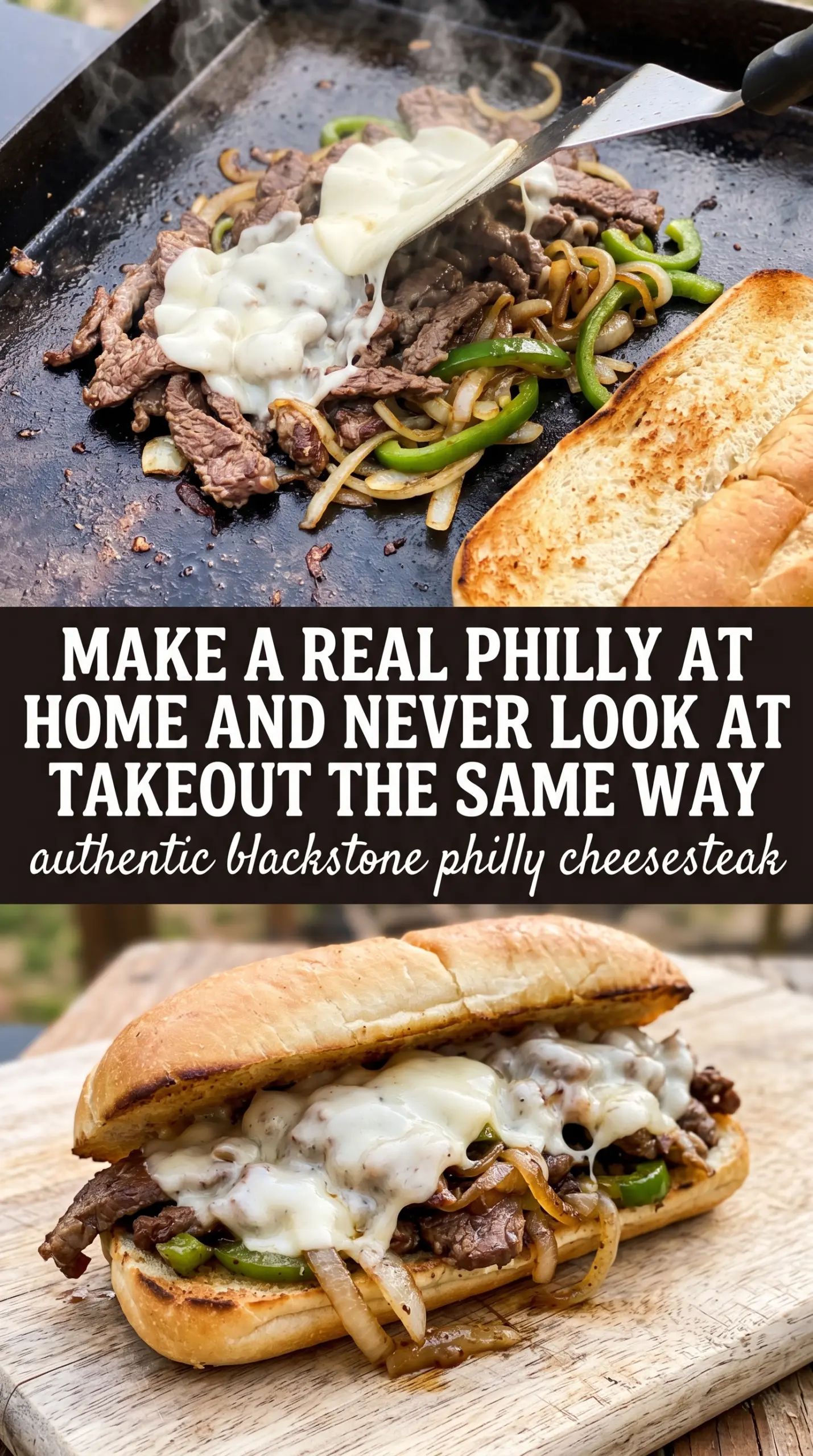
- Protein (quality, proper thickness) — Good quality protein tastes better. Even thickness ensures even cooking.
- Seasoning (bold, distributed throughout) — Don’t be shy with salt and pepper. Quality seasoning elevates everything.
- Oil or fat (protective and flavorful) — The fat helps develop crust and carries flavors. Use generously.
- Heat management (appropriate temperature for the protein) — Too high and the outside burns before the inside cooks. Too low and it steams.
- Technique (sear, then finish based on thickness) — Proper technique creates flavor. Sear for crust, then cook through gently.
- Aromatics and seasonings (garlic, herbs, spices) — These add complexity and depth. Distribute them throughout the cooking process.
- Resting time (let it rest before serving) — Resting allows juices to reabsorb. This keeps the protein moist and tender.
- Optional: finishing sauce or glaze — A light sauce adds richness without overwhelming. Apply at the very end.
Building the Griddle Order So the Rolls Stay Toasted and the Filling Stays Juicy
Softening the Onions and Peppers First
Start with the onions and peppers on the hot griddle in oil and let them cook until the onions turn translucent and the edges get a little browned. Stir them often enough that they soften evenly, but don’t rush this part or they’ll stay sharp and undercooked in the finished sandwich. Once they’re sweet and tender, move them to the cooler side of the griddle so they don’t burn while the steak cooks.
Searing and Chopping the Ribeye
Lay the sliced ribeye out in a thin layer on the hottest part of the griddle and season it right away. Let it sit long enough to brown before you start chopping with spatulas, because cutting too early can turn it into gray crumbles instead of seared pieces. The meat is done when it’s no longer pink and the edges have those browned bits that taste like the grill.
Melting the Cheese and Toasting the Rolls
Divide the steak into four portions, top each one with cheese, and give it a minute to melt while the meat is still sizzling. Butter the rolls and toast them cut-side down until they’re golden and lightly crisp, not hard or dry. If the bread is too dark before the cheese melts, the griddle is hotter than it should be; pull the rolls off first and let the filling finish on the cooler side.
Loading the Sandwiches Fast
Scoop the steak, onions, and peppers straight into the toasted rolls and serve them immediately. A cheesesteak waits for nobody, and the bread starts soaking up juices the moment the filling hits it. The best sandwich has a little mess to it, but it should still hold together when you lift it.
How to Adapt This Cheesesteak for Different Cheese, Bread, and Cooking Setups
Classic Philadelphia-Style
Skip the bell peppers and use only onions if you want the leanest, most traditional version. The sandwich tastes a little more beef-forward and less sweet, which is exactly what many people expect from a classic cheesesteak.
Cheese Whiz Finish
Swap the provolone for warmed Cheese Whiz if you want a smoother, saltier, more nostalgic cheesesteak. It coats the steak instead of layering on top of it, so the filling eats a little messier and more like a true takeout sandwich.
Dairy-Free Version
Use a dairy-free meltable cheese and skip the butter on the rolls, then toast the bread with a little oil instead. You’ll lose some of the classic richness, but the steak, onions, and peppers still carry the sandwich well.
No Blackstone, No Problem
A large cast-iron skillet or flat griddle on the stove works too. Cook the onions and peppers first, transfer them out, then sear the steak in batches so the pan stays hot enough to brown the meat instead of steaming it.
Storage and Reheating
- Refrigerator: Store the steak, onions, and peppers separately from the rolls for up to 3 days. The filling stays tasty, but the bread will soften if you assemble it ahead.
- Freezer: The cooked filling freezes well for up to 2 months. Cool it completely first, then pack it in a flat container or freezer bag so it thaws quickly.
- Reheating: Warm the filling in a skillet over medium heat until hot, then toast fresh rolls and assemble at the end. Microwaving the whole sandwich makes the bread rubbery and pulls the cheese out of the meat.
Questions I Get Asked About This Recipe
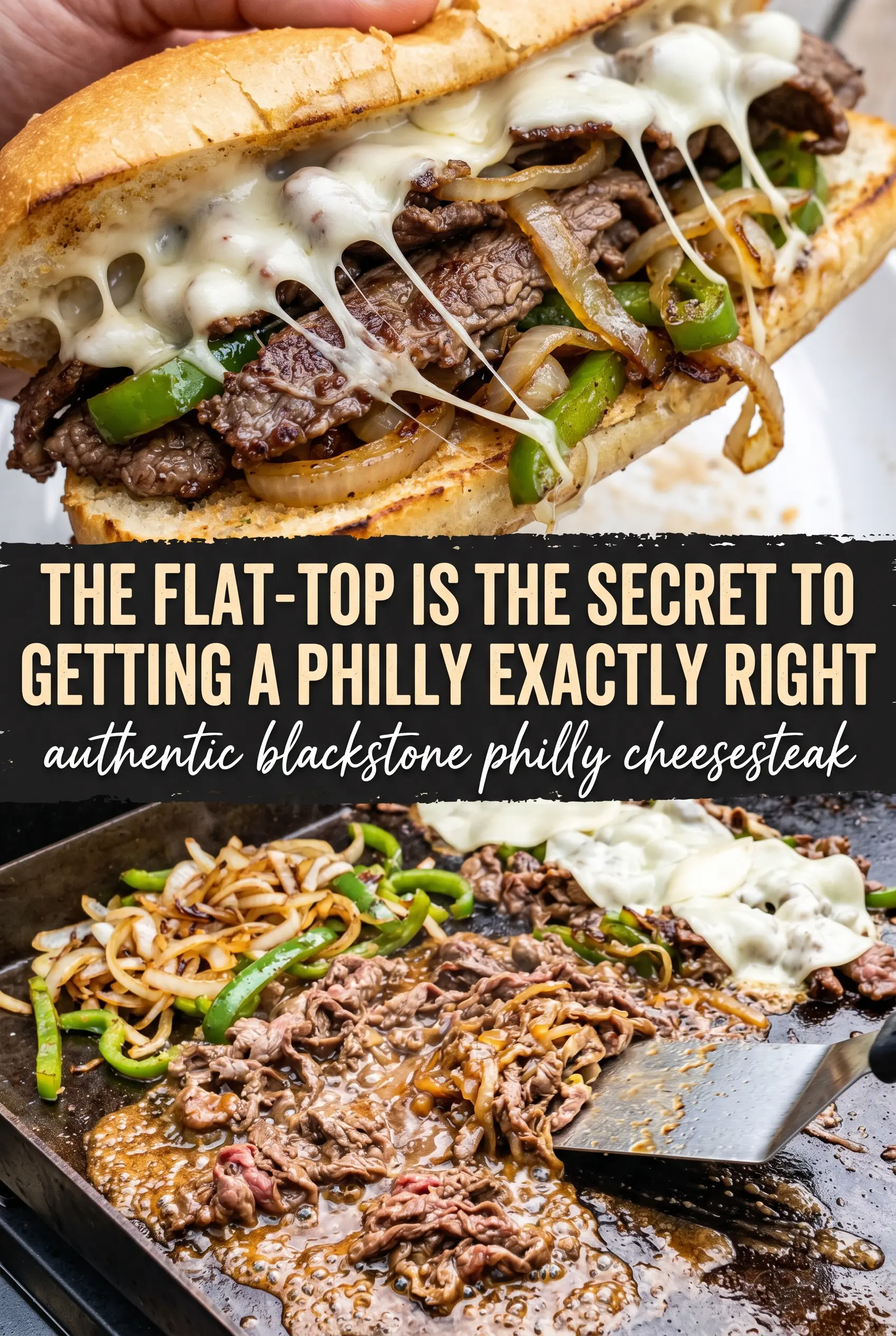
Authentic Blackstone Philly Cheesesteak
Ingredients
Equipment
Method
- Heat a griddle to medium-high heat and add oil, letting it shimmer lightly before adding onions and peppers.
- Cook onions and peppers until caramelized, about 8-10 minutes, then move them to the side of the griddle.
- Season the thinly sliced ribeye with salt and pepper to taste.
- Cook the steak on the hot griddle for 3-4 minutes, chopping with spatulas as it cooks.
- Divide the steak into 4 portions and top each portion with provolone (or Cheese Whiz), allowing the cheese to melt.
- Butter and toast the hoagie rolls on the griddle until golden.
- Scoop each steak portion with onions and peppers into toasted rolls and serve immediately.