Golden roast potatoes with softened feta tucked into the center of the pan make this side dish feel a little special without asking for any extra work. The potatoes crisp at the edges, the tomatoes collapse into a salty-sweet sauce, and the feta turns creamy enough to coat every bite. It’s the kind of pan you set down and watch disappear fast.
What makes this version work is the balance in the roasting pan. Baby potatoes cut side down get the most contact with the hot dish, which gives you better browning than tossing everything together at the start. The block of feta softens instead of melting completely, so you get pockets of tangy cheese rather than a greasy sauce. Lemon at the end keeps the whole dish bright and stops the feta from tasting flat.
Below you’ll find the one roasting detail that matters most, plus a few swaps that still keep the texture on track. If you’ve ever had potatoes come out pale or feta turn dry, this method fixes both problems.
The potatoes got those crispy edges I was hoping for, and the feta softened just enough to stir through without turning into a sauce. The lemon at the end made the whole pan taste fresh instead of heavy.
Save these baked feta roast potatoes for the night when you want crispy edges, creamy feta, and one pan that does the work.
The Reason These Potatoes Crisp Instead of Steam
The biggest mistake with roast potatoes is crowding them into a pan that’s too small or too shallow. When the pieces sit in a puddle of oil and tomato juice, they steam before they brown. Here, the potatoes are spread around the feta in a single layer, and their cut sides are what contact the hot pan first. That direct contact is what gives you the crust.
Another small but important detail is not stirring too early. Leave the potatoes alone for most of the roast so the cut faces can color. If you keep moving them around, you break the surface before it has time to set, and you lose the best texture in the dish.
- Baby potatoes — Their size helps them cook through at the same time the edges turn golden. Halve them so the cut side can brown.
- Block feta — A block softens more predictably than crumbled feta. Crumbles dry out faster and won’t give you that creamy center.
- Cherry tomatoes — They burst into the pan juices and add moisture and acidity. Larger tomatoes release too much liquid too fast.
- Olive oil — This carries the herbs and helps the potatoes roast instead of dry out. Use a good-tasting oil here, since it stays in the finished dish.
What Each Ingredient Is Actually Doing in the Pan

- Baby potatoes — These hold their shape and roast into crisp, tender halves. Waxy potatoes work better than starchy ones, which can fall apart before the feta is ready.
- Feta cheese — Use a block packed in brine if you can find it. It softens more evenly and has better flavor than pre-crumbled feta, which often tastes dry and salty in a blunt way.
- Cherry tomatoes — They turn jammy and give the dish enough moisture to coat the potatoes once everything is tossed together. If your tomatoes are large, cut them in half so they blister instead of flooding the pan.
- Garlic — Smashed cloves roast gently and perfume the oil. Keep them whole or just lightly crushed so they mellow instead of burning.
- Lemon zest and juice — Juice adds brightness at the end, while zest gives you the fragrant top note. Add both after roasting; heat dulls their freshness.
- Fresh herbs — Basil gives a sweeter finish, and parsley keeps things clean and sharp. Use fresh herbs at the end, not early, so they stay vivid.
The Roasting Time That Gives You Crisp Potatoes and Soft Feta
Start with the Feta in the Center
Set the feta block in the middle of the baking dish before anything else goes in. That gives the cheese a little shelter from direct dry heat while the potatoes roast around it. If you bury the feta under the potatoes, it won’t soften evenly and can dry out before the rest of the pan is done.
Let the Potatoes Sit Cut-Side Down
Arrange the potatoes so most of the cut surfaces are touching the pan. That’s the side that browns best. Drizzle with oil after they’re in the dish so every piece gets coated, then leave the pan alone for the first stretch of roasting. If the potatoes are pale at the end, the pan was either too crowded or the oven wasn’t hot enough.
Roast Until the Tomatoes Collapse and the Cheese Softens
After about 40 minutes, check for three signs at once: the potatoes should be fork-tender, the bottoms should be deeply golden, and the tomatoes should be wrinkled and starting to burst. The feta should look softened on the outside with some golden spots on top. If the potatoes are done before the cheese has softened, give the pan a few more minutes; feta can take the heat as long as it isn’t sitting under a blanket of liquid.
Finish with Lemon and Herbs
Squeeze the lemon over the hot pan, then add zest and herbs right away. The acid cuts through the salt and oil, and the herbs cling better to warm potatoes than to a cool finished dish. Break the feta into chunks and toss gently so some pieces melt into the potatoes while others stay visible.
How to Change the Pan Without Losing the Texture
Dairy-Free Version
Leave out the feta and roast the potatoes with extra garlic, lemon zest, and a handful of olives. You’ll lose the creamy-salty center, but the pan still has enough acidity and herb flavor to feel balanced. A spoonful of tahini stirred in at the end works well if you want richness without dairy.
Herb Swaps That Still Taste Right
Thyme can be swapped for rosemary, but use a lighter hand because rosemary can take over the pan fast. Dried oregano is harder to replace, so keep that one if possible. If you only have Italian seasoning, use it sparingly and add extra lemon at the end to keep the dish from tasting muddled.
Making It More Substantial
Add chickpeas to the pan if you want this to lean from side dish into a light main. Drain them well and dry them first so they roast, not steam. They’ll pick up the oil and spices and give the dish a little more body without changing the method.
Storage and Reheating
- Refrigerator: Store leftovers in an airtight container for up to 3 days. The potatoes soften a bit as they sit, but the flavor holds up well.
- Freezer: Freezing isn’t ideal. The potatoes turn mealy and the feta changes texture after thawing.
- Reheating: Reheat on a sheet pan or in a baking dish at 400F until the potatoes are hot and the edges wake back up, about 10 to 15 minutes. The microwave makes the potatoes soft and the feta greasy, which is the main thing to avoid.
Answers to the Questions Worth Asking
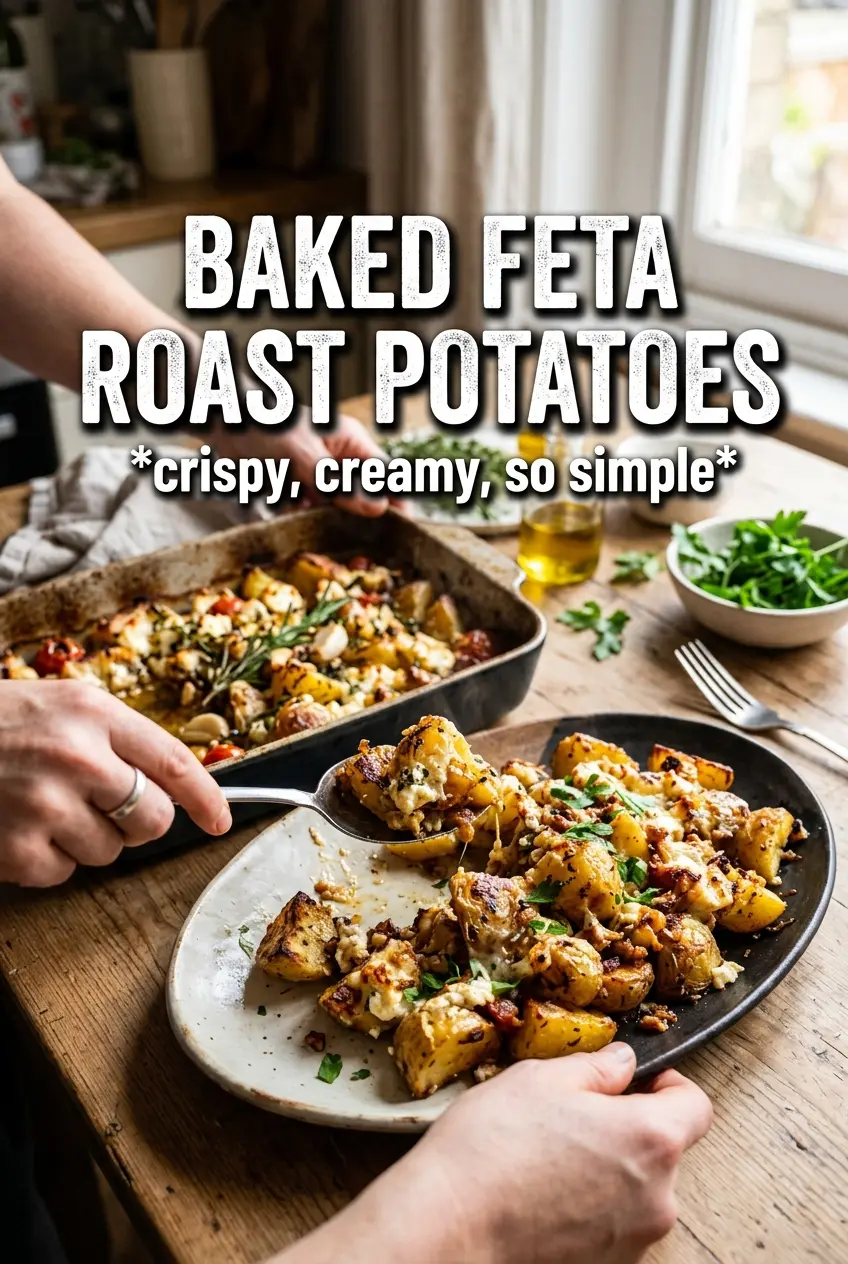
Baked Feta Roast Potatoes
Ingredients
Equipment
Method
- Preheat the oven to 400°F. Place the feta block in the center of a baking dish so it will soften as the potatoes roast (visual cue: block sits intact in the middle).
- Halve and arrange the baby potatoes around the feta with the cherry tomatoes and smashed garlic. Position everything so cut sides of the potatoes face down/up for caramelization (visual cue: potatoes surround feta in one layer).
- Drizzle the olive oil over the potatoes, tomatoes, and garlic. Sprinkle oregano, thyme, red pepper flakes, salt, and black pepper evenly across the top (visual cue: ingredients look glossy and speckled with herbs).
- Roast for 40-45 minutes at 400°F until the potatoes are golden and tender and the feta is softened and golden (visual cue: feta edges are browned and potatoes show crisp caramelized spots).
- Squeeze the lemon juice over the hot roasted potatoes and feta, then scatter the lemon zest and fresh basil or parsley. The aromatics should look bright and fresh against the golden tray (visual cue: herbs sit on top and zest is visible).
- Break the feta into the potatoes and toss everything together until coated in the lemony, garlicky juices (visual cue: feta becomes creamy and clings to potato surfaces).