Pillowy banana bread cinnamon rolls bake up soft, tall, and fragrant, with a gooey brown sugar swirl tucked inside every spiral. The banana in the dough doesn’t just add flavor; it gives the rolls a tender, almost custardy crumb that stays soft even after they cool a bit. When the browned butter cream cheese frosting hits the warm rolls, it melts into the seams and turns every bite rich without making them heavy.
What makes this version work is balance. The bananas bring moisture, so the dough needs enough flour to stay kneadable without turning dense. Warm milk helps the yeast wake up fast, and the first rise gives the dough time to relax so it rolls out cleanly instead of springing back. Browning the butter for the frosting adds a toasty note that keeps the whole pan from tasting one-dimensional.
Below you’ll find the exact timing that keeps the rolls fluffy, plus the small details that matter when you want clean spirals, soft centers, and frosting that melts just enough on contact.
Save these banana bread cinnamon rolls for the morning when you want soft swirls and that browned butter cream cheese frosting melting over the top.
The Mistake That Makes Banana Rolls Heavy Instead of Fluffy
The biggest risk with banana dough is overloading it with flour because it feels sticky at first. That’s how you end up with rolls that bake up tight and bready instead of soft and airy. Banana adds moisture before the flour has a chance to hydrate fully, so the dough usually needs a short knead before you decide it wants more flour.
Another place people go wrong is rushing the rise. Yeast dough with mashed banana moves a little slower than a plain sweet roll dough, and that first hour is doing the work of softening the banana flavor and giving the gluten time to relax. If the dough hasn’t doubled, the rolls will still bake, but they won’t have that tall, plush pull-apart texture.
What Each Ingredient Is Actually Doing in These Rolls
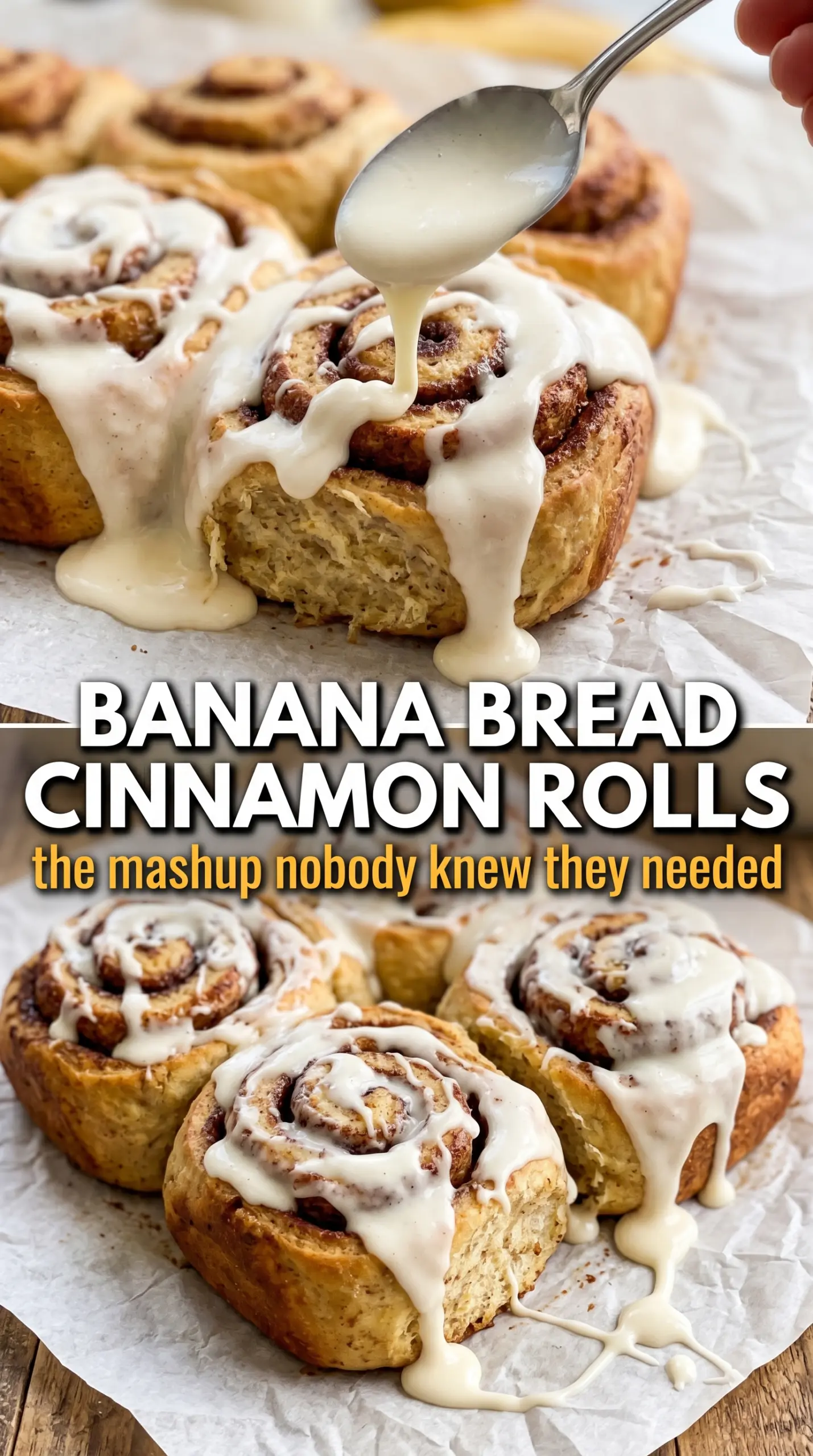
- Ripe bananas: Use bananas with plenty of brown spots. They mash smoothly, bring strong banana flavor, and add enough moisture to keep the crumb tender. Underripe bananas won’t give you the same sweetness or softness.
- Instant yeast: This keeps the rise moving along without a separate proofing step. Active dry yeast works too, but give it a few extra minutes in the warm milk mixture so it starts bubbling before the flour goes in.
- All-purpose flour: This is the right middle ground for soft rolls that still hold their shape. Bread flour makes the texture chewier, which fights the banana bread feel this recipe is going for.
- Brown butter in the frosting: This is the detail that makes the topping taste earned, not just sweet. Brown it until you smell toasted nuts and see little amber flecks, then let it cool until it’s warm, not hot, before beating it with the cream cheese.
- Cream cheese: Full-fat cream cheese gives the frosting body and tang so it can cut through the sweetness of the filling. Low-fat versions tend to go loose and thin once they hit warm rolls.
Rolling, Slicing, and Baking So the Spirals Stay Clean
Building the dough
Mix the warm milk, yeast, and sugar first, then let it sit long enough to look a little foamy. That tells you the yeast is alive and ready. Once the mashed bananas, butter, egg, flour, and salt go in, knead until the dough turns smooth and elastic, but stop before it gets stiff. If it still clings heavily to your hands after a few minutes, add flour a tablespoon at a time, because banana dough should be tacky, not dry.
Shaping the log
Roll the dough into a neat rectangle and spread the softened butter all the way to the edges. Leave no dry corners, or the filling will bake up unevenly and the spirals will gap. Sprinkle the brown sugar and cinnamon in an even layer, then roll the dough tightly from the long side so the log stays compact. A loose roll gives you wide, messy swirls that collapse in the pan.
Cutting and proofing the rolls
Use a sharp knife or unflavored dental floss to slice the log into even rolls. Pressing down with a dull knife smears the layers and squeezes out the filling. Place them cut-side up in a greased 9×13 pan and let them puff until they look filled in and touch each other lightly. If they still seem small and dense, give them more time; underproofed rolls bake up tight in the center.
Baking and frosting
Bake until the tops are golden and the centers spring back lightly when touched. Pull them from the oven before the edges get dark, because the pan will finish cooking them as they sit. Beat the browned butter, cream cheese, powdered sugar, milk, and vanilla until smooth, then spread it over the warm rolls right away so it melts into the swirls instead of sitting on top like a thick cap.
How to Adjust the Dough Without Losing the Soft Texture
Dairy-free version
Swap the milk for an unsweetened plant milk and use a good dairy-free butter in both the dough and filling. The rolls still rise well, but the frosting changes the most, so use a dairy-free cream cheese that’s known to be firm rather than whipped or spreadable.
Make them sweeter and more dessert-like
Add a little more brown sugar to the filling and keep the frosting on the thicker side by using a touch less milk. This gives you a gooier center and a heavier glaze, which works if you’re serving them as a brunch centerpiece or dessert.
Make-ahead breakfast rolls
Shape the rolls, place them in the pan, cover tightly, and refrigerate overnight. The next morning, let them sit at room temperature until puffy before baking. Cold dough straight from the fridge will bake unevenly and stay doughy in the center.
Storage and Reheating
- Refrigerator: Store covered for 3 days. The frosting firms up, but the rolls stay soft if they’re wrapped well.
- Freezer: Freeze baked, unfrosted rolls for up to 2 months. Wrap them tightly, then thaw and frost after reheating for the best texture.
- Reheating: Warm individual rolls in the microwave for 15 to 20 seconds or cover the pan with foil and heat in a 300°F oven until just warmed through. Don’t blast them too long or the banana dough can dry out fast.
Questions I Get Asked About This Recipe
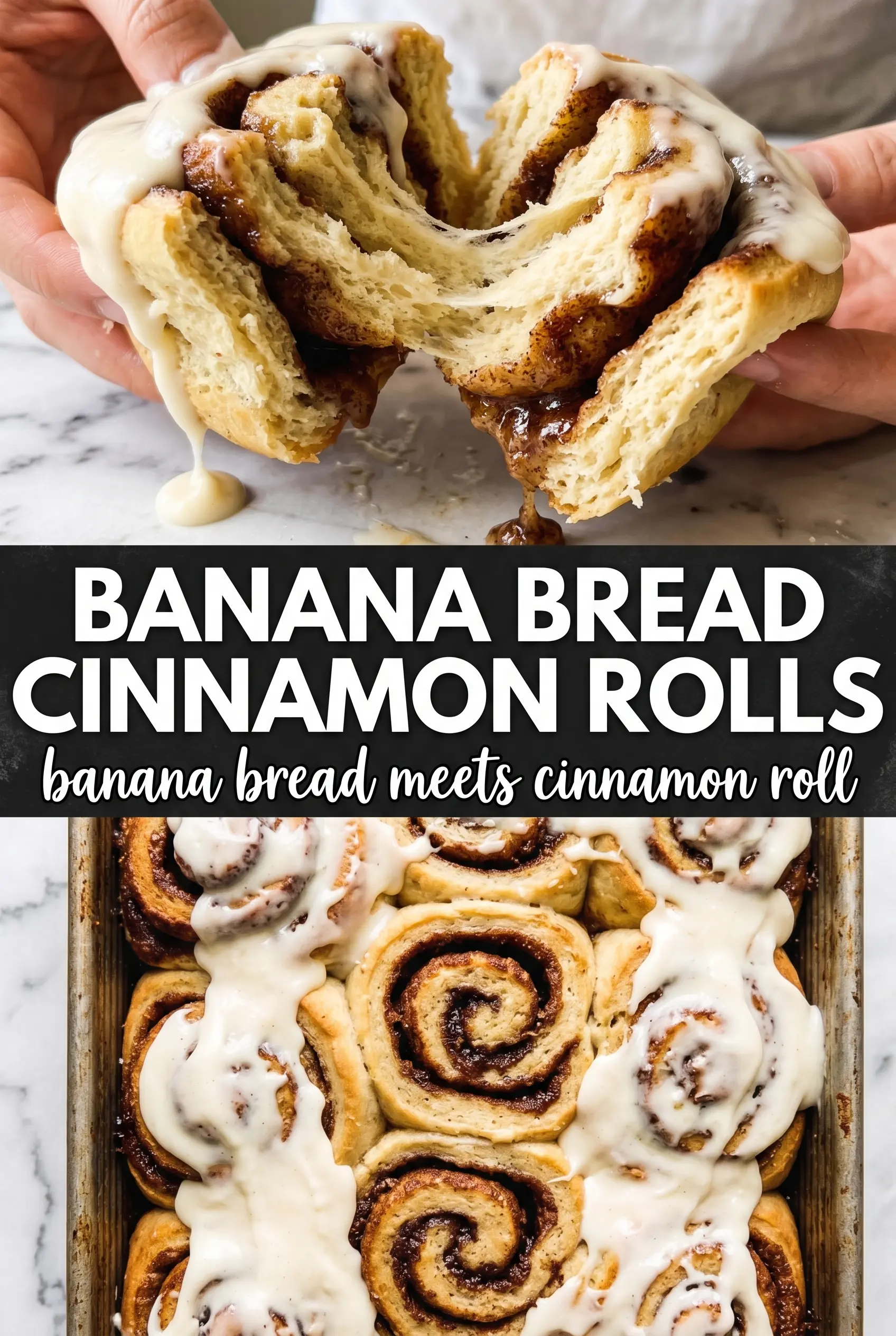
Banana Bread Cinnamon Rolls
Ingredients
Equipment
Method
- In a bowl, mix warm milk, instant yeast, and sugar, then let sit for 5 minutes until foamy. Visual cue: the surface should look bubbly, indicating active yeast.
- Add mashed bananas, softened butter, egg, flour, and salt to the yeast mixture, then knead until smooth. Visual cue: the dough should look elastic and no dry flour should remain.
- Cover the dough and let rise for 1 hour until noticeably puffy. Visual cue: it should nearly double and feel soft and airy.
- Roll the dough into a 12x18 rectangle, then spread softened butter over the surface. Visual cue: the rectangle should look glossy and evenly coated.
- Sprinkle brown sugar and cinnamon evenly over the butter layer. Visual cue: you should see an even brown-cinnamon dusting across the whole rectangle.
- Roll up the dough tightly from the long edge into a log. Visual cue: the roll should stay snug with a defined spiral.
- Slice the log into 12 rolls, then place them in a greased 9x13 pan. Visual cue: the cut sides should face up with visible swirls.
- Cover and let rise for 30 minutes until the rolls look thicker and puffed. Visual cue: the centers should rise closer to the rim of the pan.
- Bake at 375°F for 20–25 minutes until golden. Visual cue: the tops should be deep golden and the edges should look set.
- Beat browned butter, cream cheese, powdered sugar, milk, and vanilla until smooth. Visual cue: the frosting should be thick but spreadable with no lumps.
- Spread frosting over the warm rolls immediately so it melts into the swirls. Visual cue: frosting should ooze slightly into the spiral layers while staying mostly cohesive.