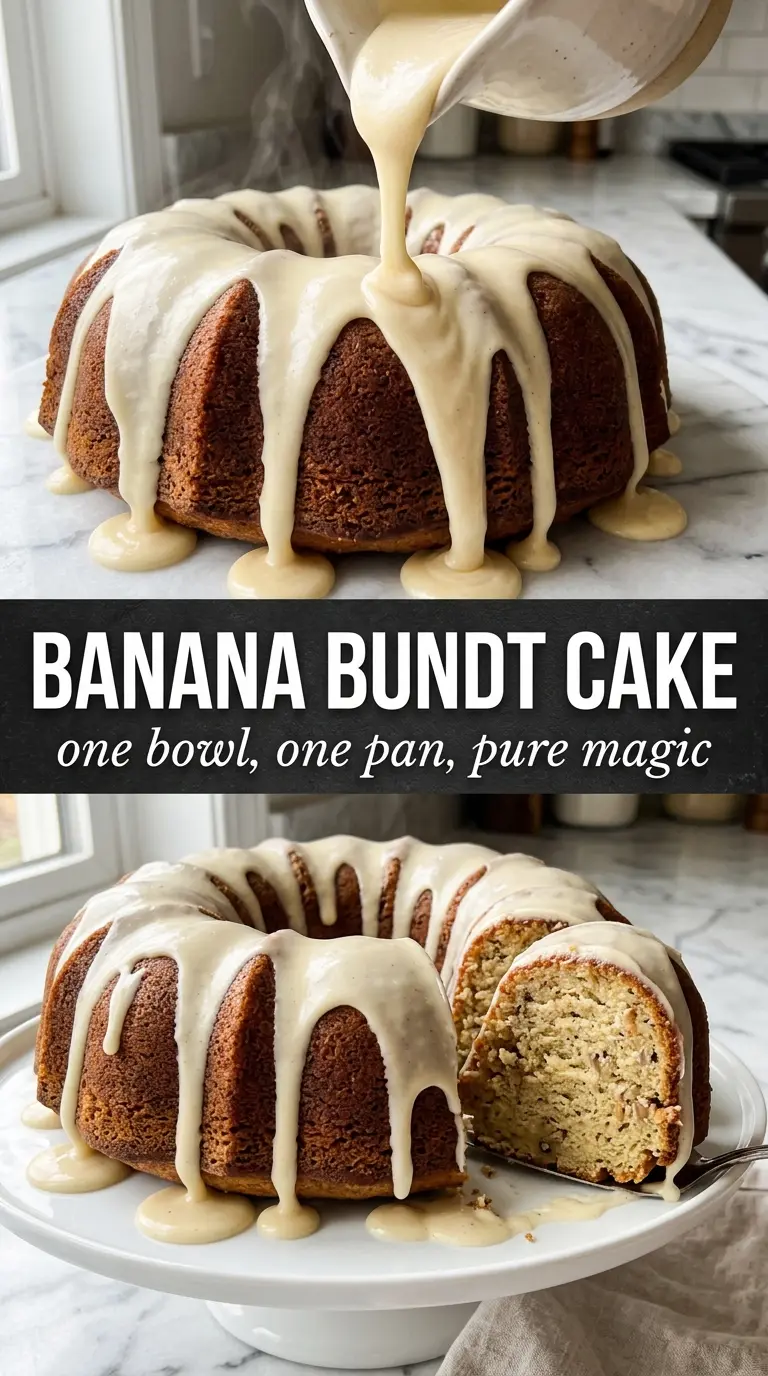
Banana Bundt Cake earns its place on the table when the crumb stays soft for days, the banana flavor comes through without turning muddy, and a thick cream cheese glaze clings to every ridge of the pan. The best versions have that balance of tender and sturdy: enough richness to taste like a proper cake, but not so much that it sinks or turns greasy.
This one works because the batter leans on sour cream for moisture and structure, not just extra banana. That matters. Too many banana cakes get heavy from overripe fruit alone, and bundt pans punish a batter that’s too loose. Here, the butter and sugar get whipped until pale, the eggs go in one at a time, and the dry ingredients are folded in with the sour cream in stages so the batter stays smooth instead of overworked.
Below, you’ll find the part that saves the cake from sticking, the reason the glaze should go on only after the cake is fully cool, and a few smart variations if you want to shift this toward a simpler loaf-style finish or a dairy-free version.
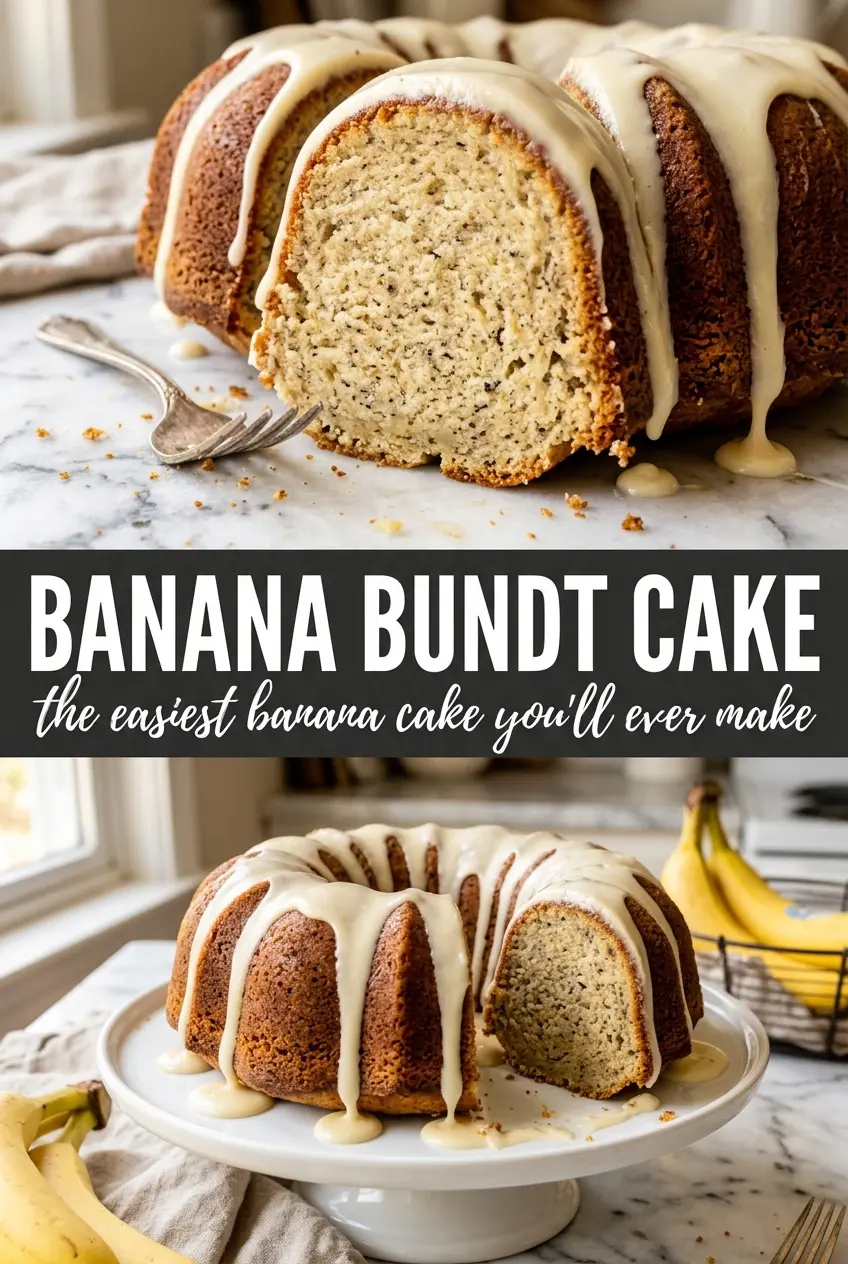
The cake released cleanly from my bundt pan and the cream cheese glaze dripped into every ridge. It stayed moist for three days and the banana flavor was even better on day two.
Save this banana bundt cake with cream cheese glaze for the kind of dessert that slices cleanly, stays moist, and looks dramatic without extra fuss.
The Bundt Pan Is the Real Test Here
A banana bundt cake can taste perfect and still fail the second it meets the pan. The problem usually isn’t the batter; it’s the corners and ridges inside the pan that grab onto sugar and butter if they aren’t coated thoroughly. This cake needs a heavy hand with grease and flour, right into every groove, because the glaze only looks dramatic if the cake comes out in one clean piece.
The other thing that trips people up is baking too hot. At 325°F, the cake has time to rise evenly before the outside overcolors. That slower bake helps the center set without the crust drying out, which matters in a dense loaf-style cake like this one. Pull it when a toothpick comes out clean from the thickest part, not when the top just looks browned.
- Bananas — Use very ripe bananas with plenty of brown spotting. They bring sweetness, moisture, and the strongest banana flavor. If your bananas are still a little firm, the cake will taste flatter and need more sugar to compensate.
- Sour cream — This is what keeps the crumb plush without making it heavy. Full-fat sour cream gives the best texture. Plain Greek yogurt works in a pinch, but the cake will be slightly tangier and a touch less rich.
- Butter — Softened butter traps air when you beat it with the sugar, which gives the cake a lighter rise than oil alone. Don’t swap in melted butter here; you’ll lose structure and the crumb turns tighter.
- Cream cheese glaze — The glaze isn’t just decoration. It adds the sharp, cool finish that balances the sweet banana cake. Use full-fat cream cheese and beat it smooth before adding the sugar, or you’ll end up with tiny lumps that won’t whisk out later.
What Each Ingredient Is Actually Doing in This Banana Bread
- Bananas (ripe, mashed) — Ripeness is critical. Ripe bananas are sweeter and add natural moisture. Use overripe for best flavor.
- Flour (all-purpose or whole wheat) — This provides structure. Don’t overmix or bread becomes tough and dense.
- Sugar (brown or white) — This tenderizes and adds flavor. The right amount creates moist crumb without gumminess.
- Eggs (the binder) — These hold everything together and add structure. Beat in gradually for volume.
- Butter or oil (the moisture keeper) — This keeps bread tender and prevents dryness. Oil creates moister bread than butter.
- Baking soda or baking powder (the leavening) — This creates rise. Too much creates bitter taste; too little makes dense bread.
- Vanilla extract (the flavor enhancer) — This deepens banana flavor and adds complexity. Don’t skip it.
- Mix-ins (nuts, chocolate chips, or fruit) — These add texture and prevent one-dimensional taste. Toss in flour so they don’t sink.
Building the Batter Without Overmixing It
Creaming the Butter and Sugar
Beat the butter and sugar until the mixture looks pale and fluffy, not just combined. That step gives the cake its lift, and it matters more here because banana batter is naturally heavy. If the butter is too cold, the mixture will look sandy and won’t trap enough air, so let it soften fully before you start.
Adding the Eggs and Bananas
Add the eggs one at a time and let each one disappear before the next goes in. That keeps the batter smooth and prevents curdling. The bananas should be mashed well, but a few small lumps are fine; they melt into the cake and leave little pockets of banana flavor.
Folding in the Dry Ingredients and Sour Cream
Alternate the flour mixture and sour cream in three additions, ending with flour. This keeps the batter from tightening up and stops you from overworking the gluten. If the batter starts looking thick and gummy, you’ve gone too far with the mixing; stop as soon as the last streak of flour disappears.
Baking and Cooling the Cake
Pour the batter into the prepared pan and tap it once on the counter to settle it into the ridges. Bake until a toothpick comes out clean from the deepest part of the cake and the top springs back lightly when touched. Let it cool in the pan for 20 minutes before turning it out. Any less and it can tear; any longer and the sugars can glue it to the pan.
Glazing the Finish
Beat the cream cheese, powdered sugar, milk, and vanilla until completely smooth, then spoon or pour it over a fully cooled cake. If the cake is even slightly warm, the glaze will slide right off and disappear into the crust. A cooled cake gives you those thick drips that settle into the ridges instead of running straight to the plate.
Three Ways to Make This Banana Bundt Cake Fit Your Table
Dairy-Free Version
Swap the butter for a plant-based baking stick, the sour cream for full-fat coconut yogurt, and the cream cheese glaze for a simple powdered sugar and dairy-free milk glaze. You’ll lose a little tang, but the cake will still stay moist and slice neatly.
Add Pecans for More Texture
Fold in 1 cup chopped toasted pecans with the final flour addition or sprinkle them over the glaze. Toasting matters here because raw nuts can taste dull against the sweet banana crumb, while toasted pecans add a deeper, buttery crunch.
Make It a Plain Banana Bundt Cake
Skip the glaze and dust the cooled cake with powdered sugar instead. That gives you a cleaner, less sweet finish that still highlights the banana flavor, and it’s the better choice if you want something that travels well.
Storage and Reheating
- Refrigerator: Store covered for up to 5 days. The crumb stays moist, though the glaze will firm up in the cold.
- Freezer: Freeze the unglazed cake tightly wrapped for up to 2 months. Thaw overnight in the refrigerator before glazing.
- Reheating: Warm individual slices for 10 to 15 seconds in the microwave if you want the cake soft again. Don’t reheat the glazed cake too long or the cream cheese topping will melt and slide off.
Answers to the Questions Worth Asking
Banana Bundt Cake
Ingredients
Equipment
Method
- Preheat the oven to 325°F and grease and flour a 12-cup bundt pan very thoroughly, making sure every crevice is coated (no dry patches).
- Beat the butter and sugar until light and fluffy, about 2–3 minutes, until the mixture looks paler and airy.
- Add the eggs one at a time, mixing well after each addition, until the batter looks smooth.
- Mix in the vanilla extract and mashed bananas until fully combined with no banana streaks.
- In a separate bowl, combine the flour, baking soda, salt, and cinnamon.
- Alternate folding in the flour mixture and sour cream in three additions, starting and ending with the flour mixture to keep the batter thick and cohesive.
- Pour the batter into the prepared bundt pan and smooth the top so it bakes evenly.
- Bake at 325°F for 60–70 minutes, until a toothpick inserted in the center comes out clean (dry crumbs only).
- Cool the cake in the pan for 20 minutes so it sets, then invert and remove to cool completely before glazing.
- Beat the cream cheese, powdered sugar, milk, and vanilla until smooth, thick, and pourable.
- Pour the glaze over the cooled cake so it cascades down the ridges in a steady ribbon.