Pillowy banana cake with cream cheese frosting has a way of disappearing fast, and this version earns that reaction every time. The crumb stays soft and moist without turning gummy, the banana flavor comes through clearly, and the frosting lands with just the right tang to keep the whole cake from feeling heavy. It slices cleanly, holds together well, and still tastes like the kind of cake people go back for after they’ve already had a full piece.
The trick is balancing the mashed bananas with sour cream and not overworking the batter once the flour goes in. That keeps the crumb tender instead of tight. The frosting also matters here: cream cheese alone can go loose, so it needs enough powdered sugar and a little cream to whip into something thick, smooth, and swoopable across the top of a 9×13 pan.
Below, I’ve included the small details that make the difference, from how ripe the bananas should be to how to keep the frosting from sliding around on a warm cake.
The cake came out so moist and the frosting held its shape instead of getting runny. I used very ripe bananas and the banana flavor was spot on without tasting too sweet.
Like this banana cake with cream cheese frosting? Save it for the next time you need a moist sheet cake with a thick, tangy frosting that spreads like a dream.
The Secret to a Soft Banana Cake That Still Slices Cleanly
Banana cake gets dense fast when the batter is overmixed or when too much banana pushes the crumb toward pudding territory. The goal here is a batter that looks just barely finished once the flour goes in. That is what keeps the cake tender and light enough to cut into neat squares without collapsing.
Sour cream is doing important work. It brings moisture without thinning the batter the way extra banana or milk would, and its acidity helps the baking soda do its job. If your banana cake ever turns out heavy, bland, or gummy in the middle, the usual culprit is too much fruit and too much stirring, not the oven temperature.
- Ripe bananas — Use bananas with plenty of brown freckles and soft spots. They mash smoothly and taste sweeter, but blackened, watery bananas can make the cake too loose.
- Sour cream — This gives the cake its plush texture. Plain Greek yogurt works in a pinch, but it brings a little more tang and a slightly tighter crumb.
- Butter and sugar — Creaming them first traps air, which helps the cake rise evenly in a 9×13 pan. Don’t rush this part; the mixture should look pale and fluffy.
- Cinnamon — This doesn’t make the cake taste spiced. It just nudges the banana flavor forward and keeps the crumb from tasting flat.
What the Frosting Ingredients Are Really Doing Here
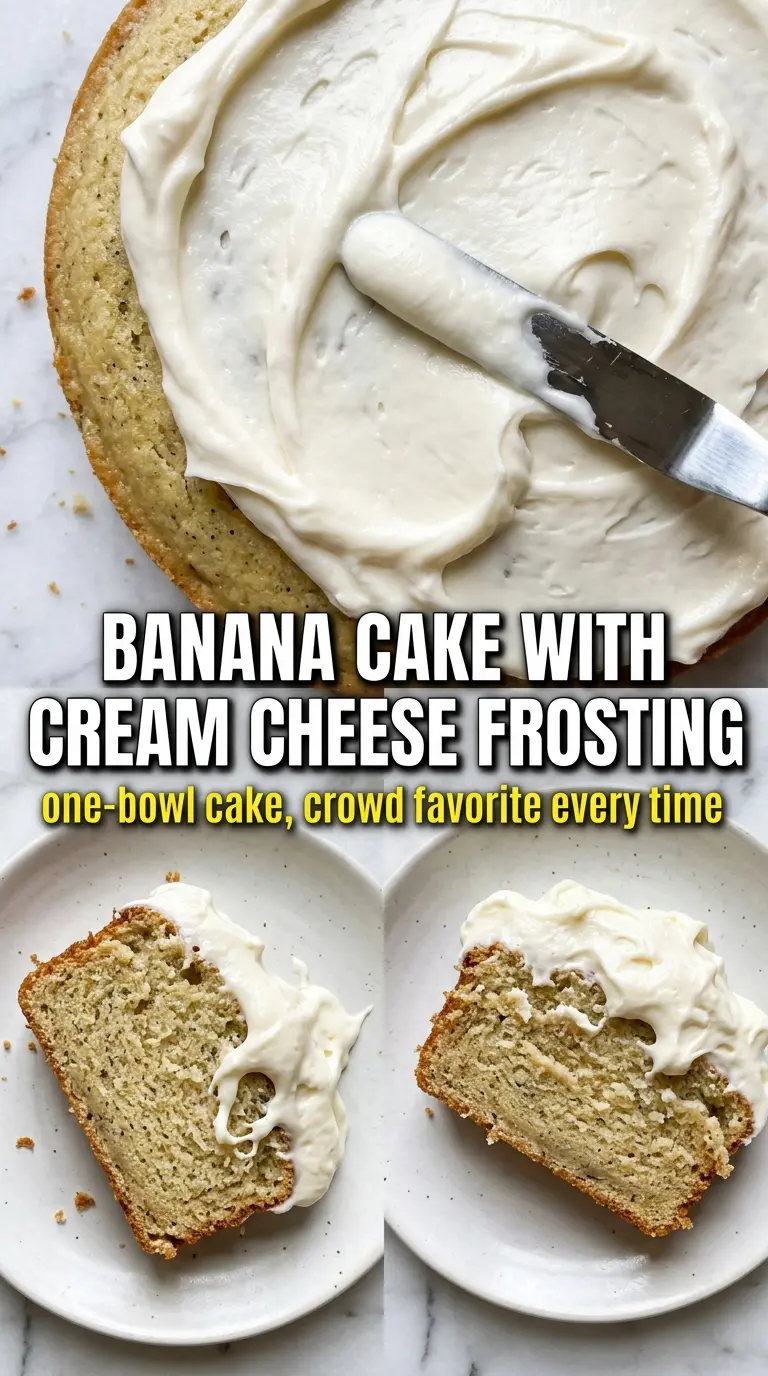
The frosting needs to be thick enough to hold soft peaks, because a loose cream cheese frosting will slide on a warm cake and disappear into the crumb. Cream cheese brings the tang, butter rounds it out, and powdered sugar gives the structure. Heavy cream is the final adjustment; add just enough to make it fluffy, not so much that it turns soft and glossy.
- Cream cheese — Full-fat blocks work best. Tub-style cream cheese usually has more water and can make the frosting slack.
- Butter — Butter softens the sharpness of the cream cheese and helps the frosting whip smoothly. It should be softened, not melted, or the frosting won’t hold.
- Powdered sugar — This is what gives the frosting body. If you reduce it too far, the frosting gets too loose for a sheet cake.
- Heavy cream — Use it a tablespoon at a time. It loosens the frosting just enough to spread across the cake without tearing the surface.
Mixing the Batter and Frosting Without Losing the Texture
Starting with the Butter, Sugar, and Bananas
Beat the butter and sugar until the mixture looks pale and fluffy, then add the eggs, vanilla, and mashed bananas. The batter will look a little broken at this stage, and that’s normal. What you want is everything evenly combined before the dry ingredients go in. If the bananas are still chunky, the cake can bake unevenly, so mash them well before they ever hit the bowl.
Folding in the Flour Without Beating the Cake Tough
Alternate the flour mixture and the sour cream, starting and ending with flour. That method keeps the batter smooth and prevents the sour cream from getting overmixed into a heavy paste. Stop as soon as the last streaks of flour disappear. If you keep stirring, the cake turns chewy instead of soft.
Baking Until the Center Springs Back
Spread the batter into a greased 9×13 pan and bake until a toothpick comes out clean and the center springs back lightly when touched. The edges should pull away just a little from the pan, and the top should look set with a gentle golden color. If the middle still jiggles, give it a few more minutes. Pulling it too early gives you a sunken center once it cools.
Whipping the Frosting to a Spreadable Peak
Beat the cream cheese and butter until perfectly smooth before adding the sugar. If you start with lumps, they never fully disappear. Add the powdered sugar gradually, then finish with vanilla and just enough heavy cream to make the frosting thick, creamy, and easy to swoop over the cooled cake. Frost only after the cake is completely cool, or the frosting will melt into the top instead of sitting in soft peaks.
Make It Into Banana Layer Cake
Bake the batter in two round cake pans instead of a 9×13 pan and start checking a little early, since the layers will bake faster. You’ll get a more celebration-style cake with extra frosting between the layers, but the crumb still stays soft and sturdy enough to stack.
Dairy-Free Banana Cake
Use a dairy-free butter substitute in both the cake and frosting, then swap the sour cream for a plain dairy-free yogurt with some body. The texture will still be moist, but the frosting will be a little less tangy and may need extra powdered sugar to firm up.
Walnut Banana Cake
Fold chopped walnuts into the batter or scatter them over the frosting for a little crunch. The nuts play well with the banana and cream cheese, but keep them out if you want the cake extra smooth and kid-friendly.
Storage and Reheating
- Refrigerator: Store covered for up to 5 days. The frosting firms up in the fridge, but the cake stays moist.
- Freezer: Freeze unfrosted cake layers tightly wrapped for up to 2 months. Frosting can be frozen separately, but the texture softens a bit after thawing.
- Reheating: Bring slices to room temperature before serving for the best crumb. If you warm them at all, do it gently and briefly, or the frosting will melt and slide.
Questions I Get Asked About This Recipe
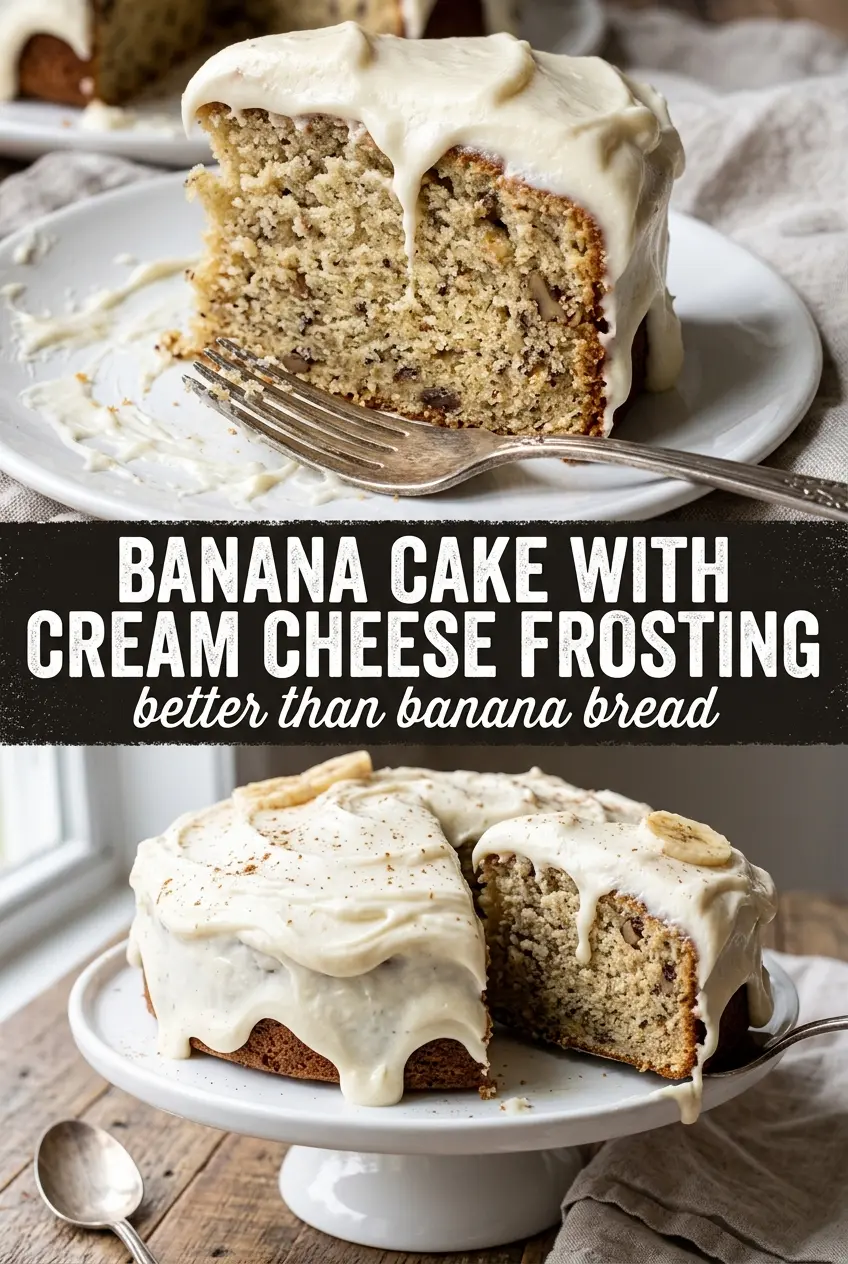
Banana Cake with Cream Cheese Frosting
Ingredients
Equipment
Method
- Preheat the oven to 350°F and grease a 9x13 pan so the cake releases cleanly.
- Beat the softened butter and sugar until fluffy, about 2–3 minutes, then add the eggs, vanilla extract, and mashed bananas and mix until combined.
- Incorporate the flour mixture (all-purpose flour, baking soda, baking powder, salt, and cinnamon) and the sour cream alternately, starting and ending with flour, to keep the batter evenly mixed.
- Pour the batter into the greased 9x13 pan and bake for 30–35 minutes until a toothpick comes out clean.
- Beat the softened cream cheese and butter until smooth, then gradually add powdered sugar with the vanilla extract and heavy cream until the frosting is thick and fluffy.
- Frost the completely cooled cake generously, sweeping the cream cheese frosting into billowing waves across the entire surface.