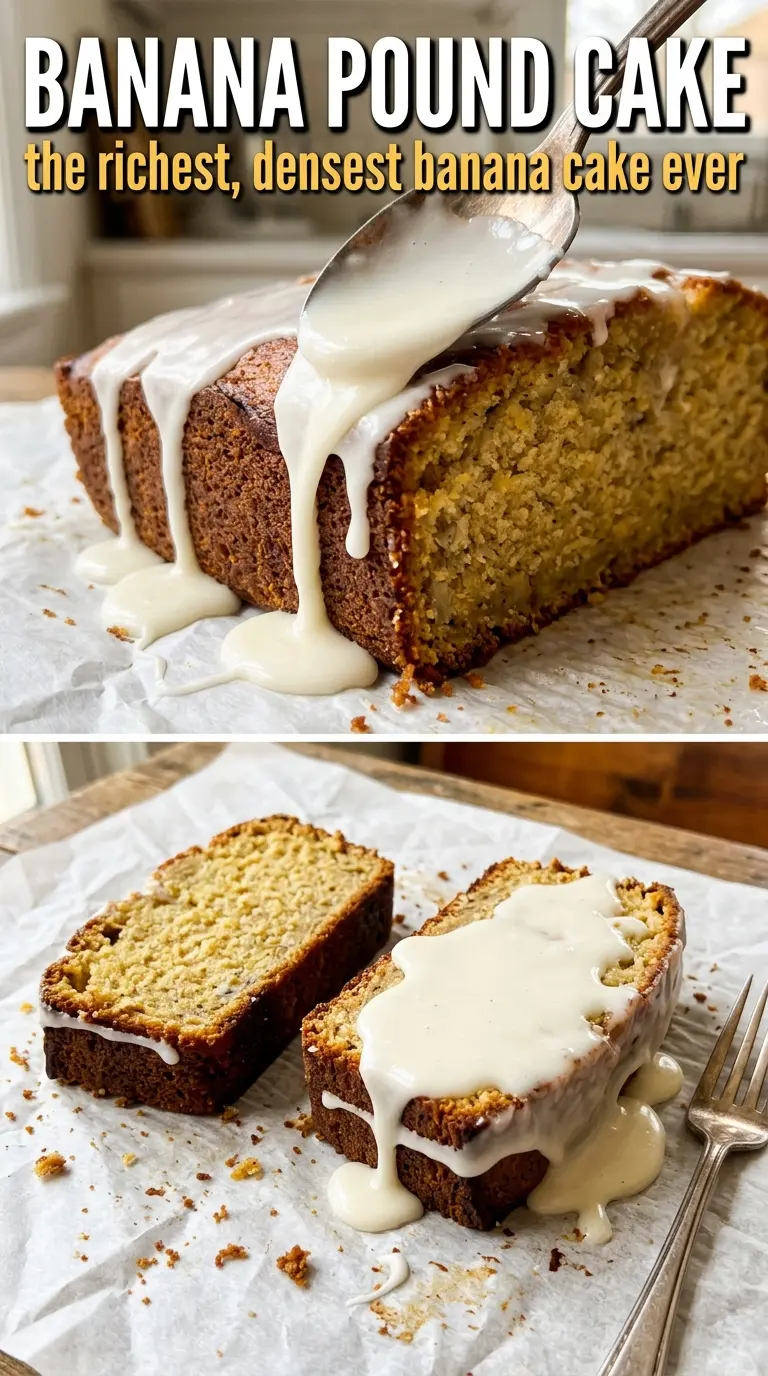
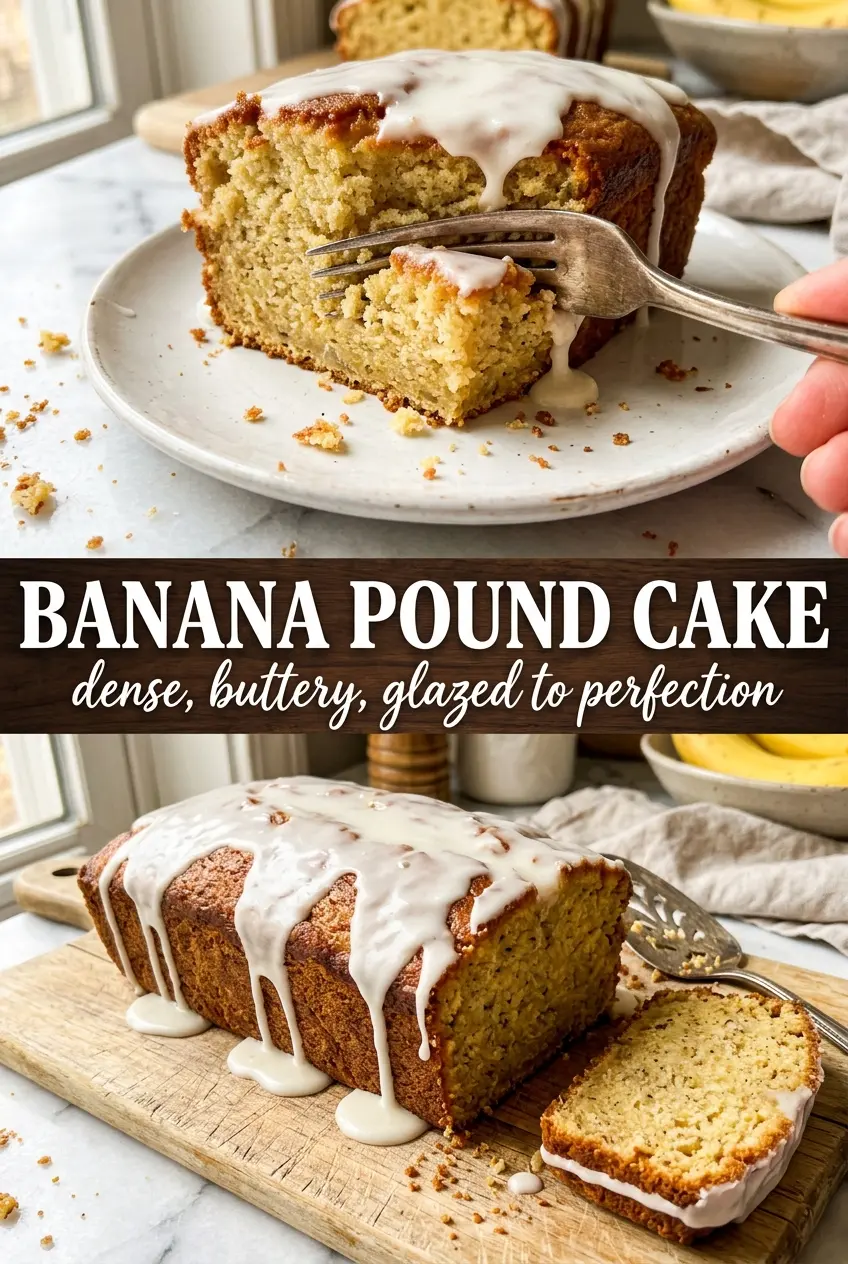
Banana pound cake earns its place when you want banana flavor with a tighter, silkier crumb than a quick bread can give you. It bakes up heavy in the best way: buttery, moist, and sturdy enough to slice cleanly, with a caramelized crust and a soft vanilla glaze that settles into the ridges. The banana comes through without turning the cake gummy or overly soft.
What makes this version work is the balance between all that butter and just enough sour cream to keep the crumb plush. The long creaming time matters here, too. You want the butter and sugar pale and almost whipped before the eggs go in, because that’s what keeps a dense cake from turning leaden. The bananas bring flavor and moisture, but they need help from the structure of the flour and eggs so the cake still holds its shape.
Below, I’ve included the small details that matter most: how ripe the bananas should be, why the cake should cool before glazing, and what to do if you’re baking it in a loaf pan instead of a bundt. Those little choices make the difference between a cake that slices beautifully and one that sinks in the middle.
The crumb stayed tight and velvety, and the glaze set up just enough that each slice held together without sliding off the plate. I made it in a bundt pan and it came out with that deep golden edge I was hoping for.
Save this banana pound cake for the days when you want a dense, buttery crumb and a glossy vanilla finish.
The Reason Banana Pound Cake Stays Dense Without Turning Heavy
This cake has to walk a narrow line. Too much banana and it turns soggy. Too little mixing and it bakes up streaky or uneven. The long creaming step gives you the lift you need before the bananas go in, and the sour cream keeps the crumb tender without thinning the batter.
The other thing that matters is the bake temperature. At 325°F, the edges set slowly enough to build that caramelized crust while the center catches up. If the heat is too high, the outside browns before the middle has time to firm up, and that’s how you get a sunk center with a raw seam under the crust.
What Each Ingredient Is Doing in This Cake
- Ripe bananas — Use bananas with plenty of brown spotting, or even nearly black peels if they’re still firm inside. They give the cake its flavor and moisture, but overripe bananas that are watery can make the texture too soft.
- Butter — This is pound cake, so butter is the backbone. It needs to be soft enough to whip with the sugar, not melted, because that air is part of what keeps the crumb from becoming brick-like.
- Sour cream — This is the ingredient that keeps the cake plush. Greek yogurt can work in a pinch, but sour cream gives a smoother, richer crumb and a slightly cleaner tang.
- All-purpose flour — Regular flour gives the cake structure without making it bready. Cake flour makes it a little too delicate here, and the cake can lose the firm, sliceable texture that makes pound cake feel like pound cake.
- Baking soda and baking powder — The bananas and sour cream need both. Baking soda helps with browning and balance, while baking powder gives a little extra rise so the cake doesn’t stay overly compact.
Building the Batter in the Right Order
Cream the Butter Until It Looks Whipped
Beat the butter and sugar together for a full 5 minutes until the mixture turns pale and fluffy. It should look almost like frosting and feel lighter on the paddle or beaters. If you rush this part, the cake will still bake, but the crumb will be tighter and flatter. Scrape the bowl once or twice so no streaks of butter hide at the bottom.
Add the Eggs One at a Time
Drop in each egg separately and beat until it disappears before adding the next one. That keeps the batter smooth and prevents it from looking curdled. If it does look split for a minute, don’t panic — the flour usually brings it back together. Cold eggs are more likely to make the batter look broken, so room temperature helps here.
Fold in the Dry Ingredients and Sour Cream in Batches
Alternate the flour mixture with the sour cream in three additions, beginning and ending with flour. This keeps the batter from tightening up and helps the sour cream blend without overmixing. Stop as soon as the last streaks of flour disappear. If you beat it hard at this stage, the cake gets tough and can tunnel.
Bake Until the Top Is Deep Gold and the Center Springs Back
Pour the batter into a well-greased and floured loaf pan or bundt pan and bake until the top is deeply golden and a toothpick comes out clean from the center. The cake should smell buttery and caramelized before you pull it. Let it cool in the pan for 20 minutes before turning it out; if you unmold it too soon, the hot crumb can tear or collapse.
Glaze After the Cake Has Cooled
Mix the powdered sugar, milk, and vanilla until smooth, then drizzle it over the cooled cake. If the cake is still warm, the glaze runs right off and disappears into the crust. On a fully cooled cake, it clings in glossy ribbons and sets into a thin finish that slices cleanly.
How to Adapt This Banana Pound Cake Without Losing the Texture
Gluten-Free Version
Use a 1:1 gluten-free baking blend that already includes xanthan gum. The cake will still be rich and sliceable, but it may bake up a little more fragile, so let it cool fully before unmolding. A blend with rice flour and tapioca usually gives the best crumb here.
Dairy-Free Option
Swap the butter for a plant-based baking stick and use full-fat coconut yogurt or dairy-free sour cream in place of the sour cream. The cake will still be moist, though the flavor shifts slightly toward coconut if you use a strongly flavored substitute. Avoid soft tub spreads meant for toast; they don’t cream the same way.
Make It More Like a Banana Bundt Cake
Bake the batter in a well-greased and floured bundt pan for a more dramatic crust and cleaner slices. The center bakes a little faster in a bundt shape, so start checking early at the 65-minute mark. You’ll get more browned edges and a prettier glaze drip.
Storage and Reheating
- Refrigerator: Store tightly wrapped for up to 4 days. The crumb stays moist, though the glaze softens a bit.
- Freezer: This freezes well. Wrap individual slices or the whole cake in plastic, then foil, and freeze for up to 2 months.
- Reheating: Thaw at room temperature, then warm slices briefly in the microwave or a low oven. Don’t overheat it, or the glaze will melt away and the cake can dry out at the edges.
Questions I Get Asked About This Recipe
Banana Pound Cake
Ingredients
Equipment
Method
- Preheat the oven to 325°F, then grease and flour a large loaf pan or bundt pan so the cake releases cleanly.
- Beat the butter and sugar together for 5 minutes until very light and fluffy, scraping the bowl once for even creaming.
- Add the eggs one at a time, beating well after each, then mix in the vanilla extract and mashed bananas.
- Combine the flour, baking soda, baking powder, and salt, then alternate folding the dry mix and sour cream into the batter in three additions.
- Pour the batter into the prepared pan and bake for 65–75 minutes until a toothpick comes out clean and the top is deeply golden.
- Cool the cake in the pan for 20 minutes before unmolding to help set the golden crust.
- Whisk powdered sugar with 2–3 tablespoons milk and vanilla extract until smooth, then drizzle over the cooled cake so the glaze runs down the sides.