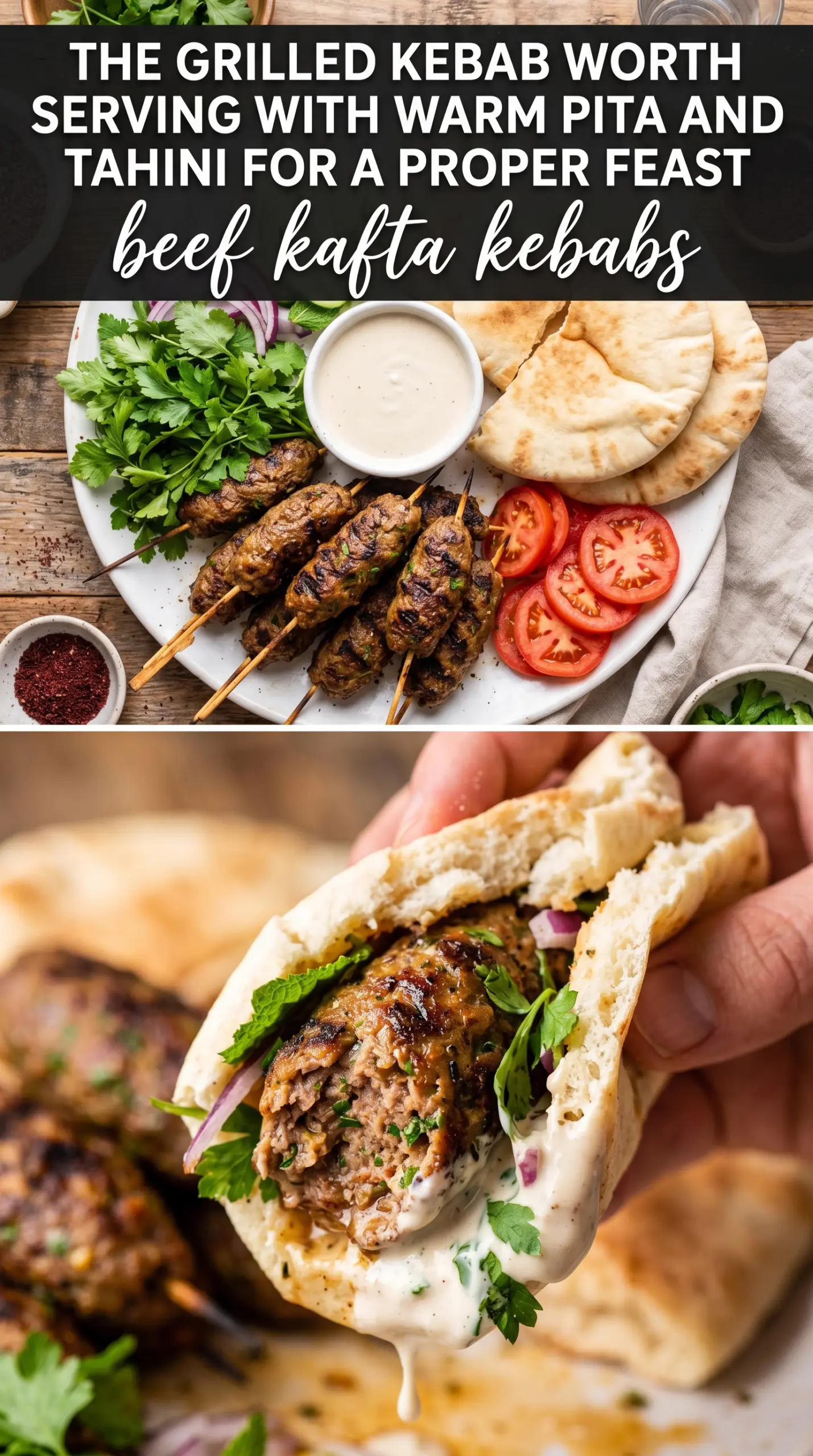
Beef kafta kebabs hit that sweet spot between juicy and deeply seasoned, with charred edges that give way to a tender, fragrant center. The onion, parsley, garlic, and warm spices work together in a way that tastes finished before you even get them on the grill. When they’re shaped well and cooked hot, the kebabs hold together cleanly and stay moist instead of drying out.
What makes this version work is the balance of fat, moisture control, and a short chill before grilling. The 80/20 beef brings enough richness to keep the kebabs from tightening up, while squeezing the grated onion dry keeps the mixture from turning loose and sticky. The spice blend leans classic: cumin and paprika for depth, allspice and cinnamon for that unmistakable kafta warmth, and just enough garlic and parsley to keep everything bright.
Below, I’ve included the small details that matter most: how wet the onion should be, why the rest time helps the meat hold its shape, and what to watch for when the kebabs hit the grill. Those are the steps that separate a kebab that looks good from one that stays together and eats even better.
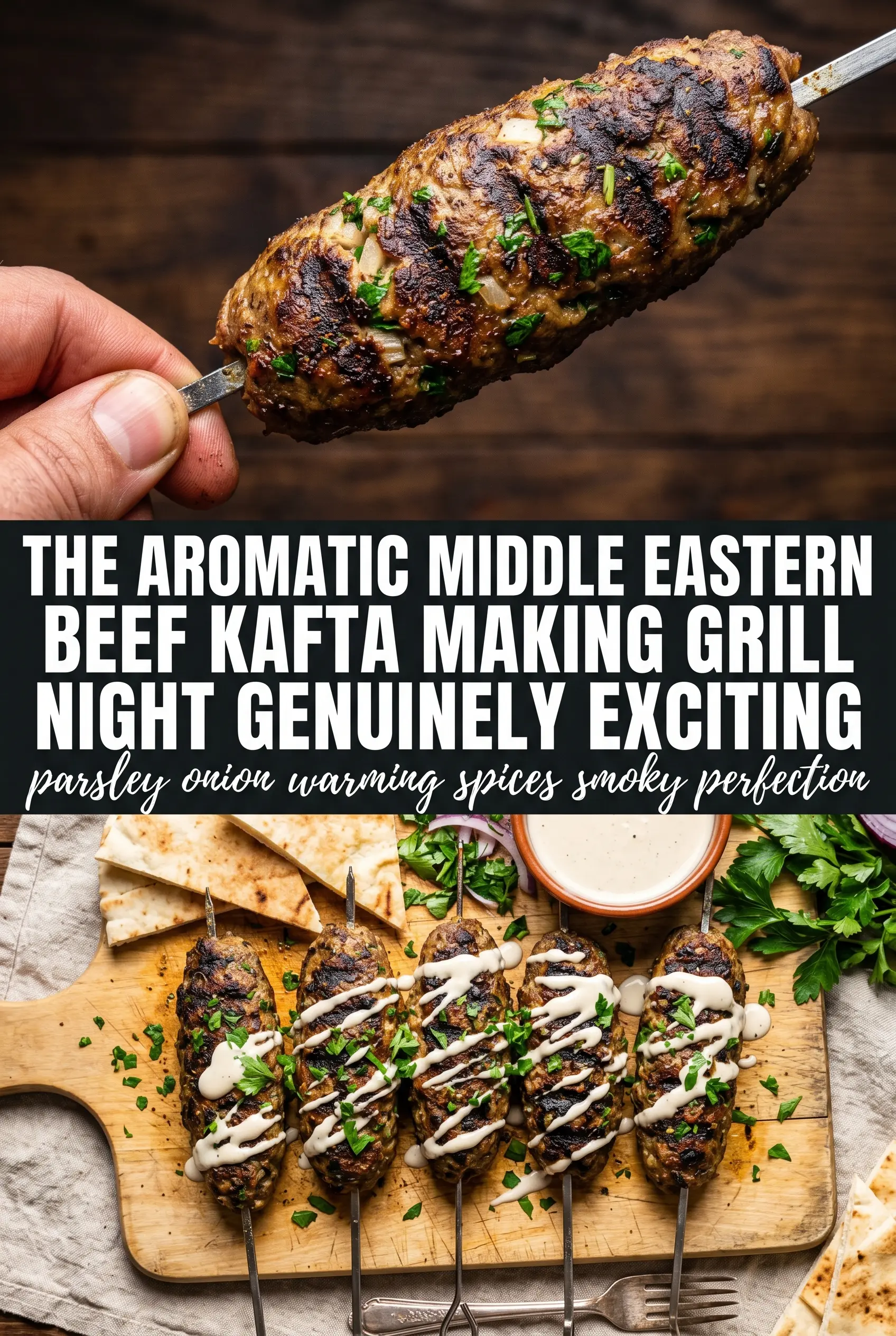
The kebabs held on the skewers perfectly after chilling, and the char from the grill gave the meat such a great crust without drying it out. The tahini with the spiced beef was spot on.
Love the charred edges and warm spices in these Beef Kafta Kebabs? Save this one for the next grill night when you want juicy ground beef skewers with tahini and pita.
The Part Most People Get Wrong With Kafta
The biggest mistake with kafta is using a mixture that’s too wet or too tightly packed. Grated onion adds flavor and moisture, but if you don’t squeeze it dry, the meat turns soft and the skewers can slump on the grill. The other trap is overworking the beef. Kafta should be mixed just until the spices and herbs are evenly distributed, then stopped before the texture turns dense.
Chilling the mixture for 30 minutes isn’t optional here. It firms the fat, helps the spices settle into the meat, and makes shaping around the skewers much easier. That rest also gives the mixture enough structure to keep its log shape once it hits heat, which is the difference between kebabs and loose ground beef on sticks.
What Each Ingredient Is Doing in These Kebabs
- 80/20 ground beef — The fat keeps the kebabs juicy over high heat. Leaner beef can work, but the texture gets drier and less forgiving, especially if you’re grilling to a good char.
- Grated onion, squeezed dry — This adds sweetness and moisture without making the mixture loose. Freshly grated onion blends more smoothly than chopped onion, and squeezing it dry is what keeps the kebabs from breaking apart.
- Parsley — It gives the kafta its fresh, herbal finish and cuts through the richness of the beef. Chop it finely so it disappears into the mixture instead of tearing the kebabs apart.
- Cumin, paprika, allspice, and cinnamon — This is the backbone of the dish. The cumin and paprika bring warmth and color, while allspice and cinnamon give that classic kafta depth that tastes layered, not heavy.
- Metal or soaked wooden skewers — Metal skewers conduct heat and help the meat cook a little more evenly through the center. If you’re using wood, soak them long enough that they don’t scorch before the kebabs are done.
- Tahini sauce and pita — These aren’t just serving suggestions; they complete the dish. The creamy, nutty sauce balances the spices, and warm pita makes the kebabs feel like a full meal instead of just grilled meat.
How to Shape and Grill Kafta Without Losing the Skewer
Mixing the Meat Gently
Combine the beef, onion, parsley, garlic, and spices in a bowl and mix just until everything looks even. The mixture should feel cohesive, not paste-like. If you keep kneading it, the proteins tighten and the kebabs turn springy instead of tender. Wet your hands lightly if the meat starts sticking, but don’t add extra liquid to the bowl.
Chilling for Structure
Cover the mixture and refrigerate it for 30 minutes. That short chill firms up the fat and makes the meat much easier to shape around the skewers. If you try to form the kebabs straight away, they’ll smear and slide. Cold mixture clings to itself; warm mixture doesn’t.
Shaping the Logs
Divide the meat into 6 to 8 portions and press each portion around a skewer in a long, even log. Keep the thickness consistent so the kebabs cook at the same rate from end to end. Press firmly enough that the meat grips the skewer, but don’t compress it so hard that it becomes dense. Smooth any cracks with damp fingers before the kebabs go to the grill.
Grilling to a Deep Char
Cook over medium-high heat for 4 to 5 minutes per side. You want visible browning and char marks before you turn them, because that crust helps the kebabs release cleanly. If they stick, they’re not ready to flip yet. Pull them once they’re cooked through but still juicy; overcooking is what takes kafta from tender to crumbly.
Oven-Broiled Kafta
Set the kebabs on a foil-lined rack and broil them close to the heat, turning once. You won’t get the same smoke from the grill, but you’ll still get good browning and a juicy center. Watch them closely in the last minute, because broilers move fast and the edges can go from charred to burnt in seconds.
Dairy-Free Serving Plate
This recipe is naturally dairy-free as written, so the easiest path is to keep the tahini sauce in the mix and skip any yogurt-based topping. Add cucumbers, tomatoes, and herbs for freshness. That keeps the plate balanced without changing the core flavor of the beef.
Gluten-Free Meal
The kebabs themselves are gluten-free, so the main thing to check is your tahini sauce and pita. Serve them with gluten-free flatbread or rice instead of standard pita. The meat needs no adjustment, which makes this an easy swap without losing anything on the grill.
Make-Ahead for a Crowd
You can shape the kebabs a few hours ahead and keep them covered in the fridge until grill time. For longer holding, form the meat around the skewers, place them on a tray, and chill them in a single layer so the shape stays neat. The texture holds better when they go from cold fridge to hot grill.
Storage and Reheating
- Refrigerator: Store cooked kebabs in an airtight container for up to 4 days. They’ll stay flavorful, though the exterior won’t be as crisp after chilling.
- Freezer: Freeze cooked or uncooked shaped kebabs for up to 2 months. Wrap them well and separate layers with parchment so they don’t stick together.
- Reheating: Warm them in a 325°F oven, covered loosely with foil, until heated through. The main mistake is blasting them on high heat, which dries out the beef before the center is hot.
Questions I Get Asked About This Recipe
Beef Kafta Kebabs
Ingredients
Equipment
Method
- In a mixing bowl, combine ground beef, grated onion, chopped parsley, minced garlic, cumin, paprika, allspice, cinnamon, salt, and pepper until evenly combined (no dry streaks).
- Cover and refrigerate for 30 minutes to firm up, so the mixture holds its log shape on the skewers.
- Divide the mixture into 6-8 portions and shape each portion around a skewer in a log shape, keeping an even thickness for consistent grilling.
- Preheat a grill to medium-high heat, then grill the skewers for 4-5 minutes per side until deeply browned with charred edges and cooked through.
- Serve the beef kafta kebabs hot with tahini sauce and pita, plus fresh vegetables if desired.