Beef pasta in creamy garlic sauce lands in that sweet spot between comforting and a little bit special: browned beef, a silky parmesan cream sauce, and enough garlic to make every bite taste full and savory. The sauce clings to the pasta instead of pooling at the bottom of the bowl, which is what turns a simple skillet dinner into the kind of meal people ask for again.
The trick is building the sauce in the same pan after the beef has browned. Those browned bits at the bottom of the skillet give the cream and wine a deeper base, and the parmesan melts in more smoothly when the heat stays gentle. Cooking the garlic in butter for just long enough to soften takes the raw edge off without letting it burn, which matters here because burned garlic will take over the whole dish.
Below, I’m walking through the small choices that make this pasta work every time, plus the swaps I trust when I want to change the pasta shape, skip the wine, or make it a little lighter without losing that creamy finish.
The sauce turned out silky and coated the pasta beautifully, and the garlic stayed mellow instead of sharp. I used penne, and even after sitting for a few minutes it didn’t clump up.
Save this beef pasta in creamy garlic sauce for the nights when you want a rich skillet dinner with parmesan, garlic, and almost no cleanup.
The Step Most People Rush That Makes the Sauce Taste Flat
The flavor in this dish starts before the cream ever hits the pan. Browning the beef well gives you savory depth, but the part that changes the final taste is letting the garlic bloom in butter until it smells fragrant and turns just lightly golden. If the garlic goes in and the heat is too high, it burns fast and the sauce ends up sharp instead of mellow.
The other place people go wrong is cranking the heat once the cream goes in. A gentle simmer is enough. Heavy cream thickens as the parmesan melts and the sauce reduces slightly; a hard boil can make the dairy separate and leave you with a greasy-looking pan instead of a smooth one.
What Each Ingredient Is Actually Doing in the Skillet
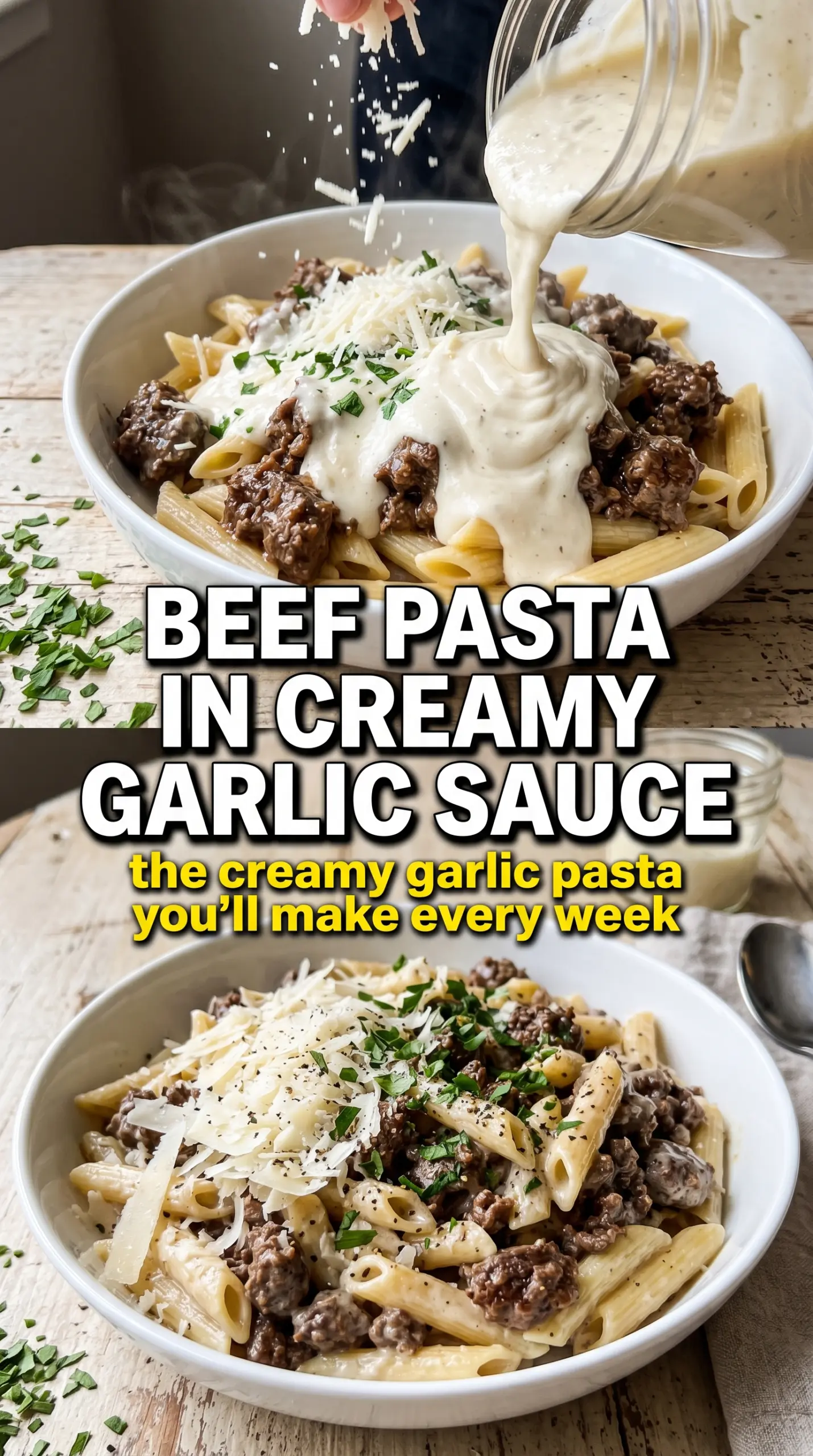
- Ground beef — This gives the sauce its savory backbone. An 85/15 blend has enough fat for flavor without making the finished dish greasy; if yours is much fattier, drain it well after browning.
- Garlic — Fresh minced garlic is worth using here. Jarred garlic can work in a pinch, but it tastes flatter and loses some of the punch that makes the cream sauce taste alive.
- Dry white wine — The wine lifts the sauce and loosens the browned bits from the skillet. If you don’t want to cook with wine, use low-sodium chicken broth plus a small splash of lemon juice to replace some of that brightness.
- Heavy cream — This is what makes the sauce plush and stable. Half-and-half can work, but the sauce will be thinner and needs a little more time to reduce.
- Parmesan — Use finely grated parmesan so it melts smoothly. Pre-shredded cheese often contains anti-caking agents that can leave the sauce grainy.
- Pasta shape — Penne and rigatoni grab the sauce well, while pappardelle gives you broader, silkier bites. Any sturdy shape works as long as you cook it just to al dente so it doesn’t turn soft after tossing in the sauce.
How to Build the Cream Sauce Without Breaking It
Browning the Beef First
Cook the ground beef over medium-high heat and break it into small pieces as it browns. You want deep color on the meat, not just gray crumbles, because that browning gives the sauce its base flavor. If the skillet fills with liquid, keep cooking until it evaporates and the meat starts sizzling again. Drain off excess fat before moving on so the sauce stays rich instead of heavy.
Softening the Garlic in Butter
Melt the butter in the same skillet and add the garlic once the pan has dropped back to medium heat. Stir it for just 1 to 2 minutes until fragrant and a little golden at the edges. If it starts to darken quickly, pull the pan off the heat for a moment; garlic goes from sweet to bitter fast, and there’s no fixing that later.
Turning Wine, Cream, and Cheese into One Sauce
Pour in the wine and let it bubble for about 2 minutes so the sharp alcohol smell cooks off. Then add the cream, Italian seasoning, and red pepper flakes, and bring the mixture to a gentle simmer, not a boil. Once the parmesan goes in, stir steadily until the sauce looks glossy and lightly thickened. If it looks grainy, the heat was too high, so take the pan off the burner and keep stirring until it smooths out.
Tossing Everything Together
Add the beef back to the skillet along with the cooked pasta and toss until every piece is coated. If the sauce seems too thick, loosen it with a splash of pasta water or a little more cream. If it looks thin, let it sit over low heat for a minute or two while stirring; the sauce tightens as it settles onto the pasta. Finish with parsley and serve right away while the sauce is still silky.
How to Adapt This for a Lighter Pan or a Bigger Dinner
Gluten-Free Pasta Swap
Use your favorite gluten-free pasta, but cook it just until it still has a little bite. Gluten-free noodles can soften quickly once they hit the hot sauce, so pull them from the water a minute early and toss them in right away. A sturdy shape like rigatoni or penne holds up better than delicate noodles.
Dairy-Light Version
You can replace the heavy cream with half-and-half, but the sauce will be a little thinner and less plush. Keep the heat low and give it extra time to reduce before adding the parmesan. Skip any temptation to boil it hard, since lower-fat dairy separates more easily.
Make It Spicier
Double the red pepper flakes or add a pinch of cayenne with the Italian seasoning. That gives the cream sauce a little heat without overpowering the garlic. If you want a sharper finish, crack black pepper over the top just before serving.
Storage and Reheating
- Refrigerator: Store leftovers in an airtight container for up to 3 days. The sauce will thicken as it chills, and the pasta will absorb some of the cream.
- Freezer: This dish freezes, but the sauce can separate a bit after thawing. If you do freeze it, portion it into containers and thaw overnight in the fridge before reheating.
- Reheating: Warm it gently in a skillet over low heat with a splash of cream, milk, or water. The biggest mistake is blasting it in the microwave until the sauce breaks and the pasta dries out.
Questions I Get Asked About This Recipe
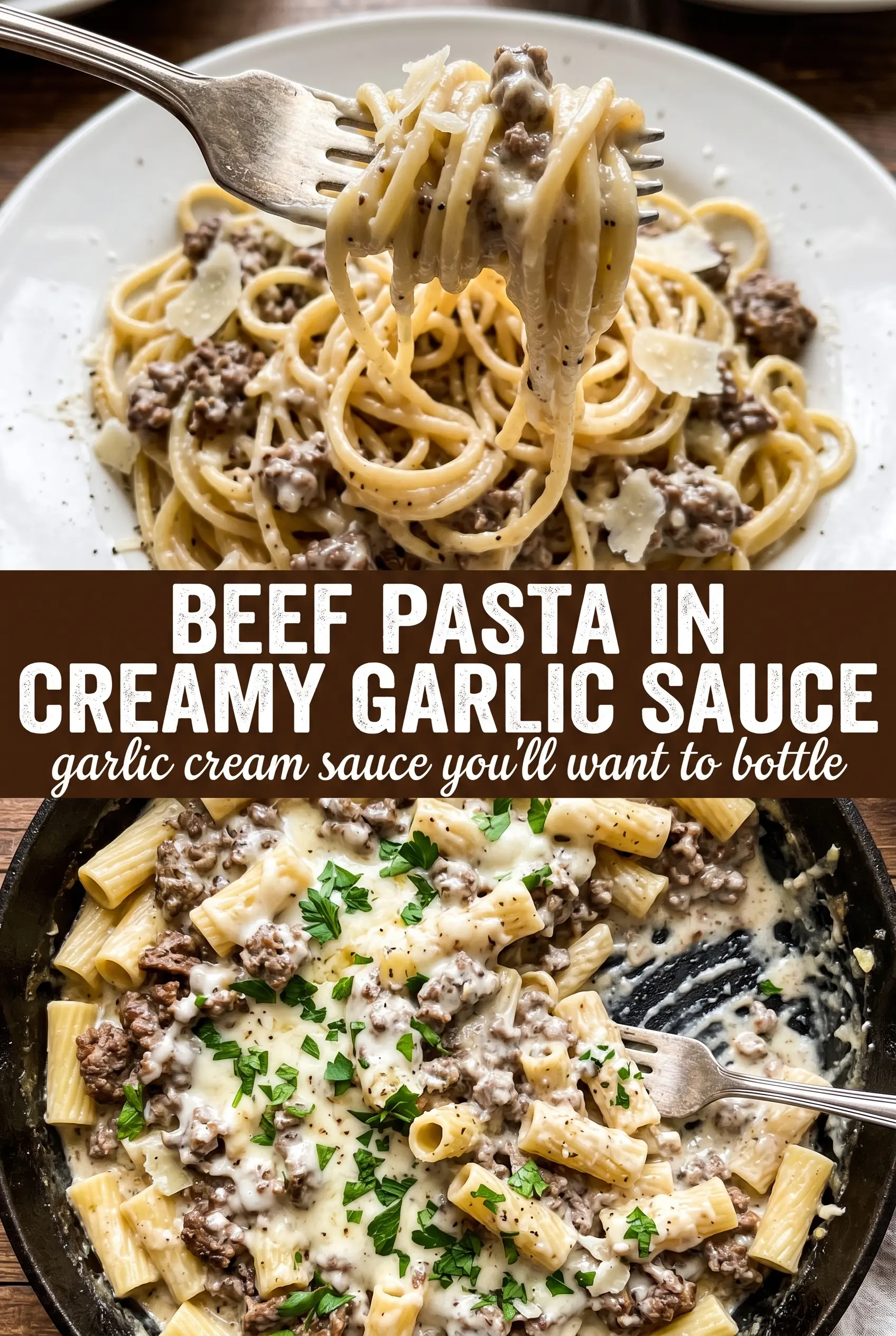
Beef Pasta in Creamy Garlic Sauce
Ingredients
Equipment
Method
- Heat a large skillet over medium-high heat and brown the ground beef, breaking it apart until no longer pink. Drain excess fat and set the beef aside.
- In the same skillet, melt the butter over medium heat and sauté the minced garlic for 1–2 minutes until fragrant and golden. Keep it moving so the garlic browns without burning.
- Pour in the dry white wine and simmer for 2 minutes to reduce slightly. Scrape up any browned bits from the pan as it bubbles.
- Add the heavy cream, Italian seasoning, and red pepper flakes, then bring to a gentle simmer. Let it bubble softly until the mixture looks cohesive and creamy.
- Stir in the parmesan cheese until the sauce turns smooth and slightly thickened, about 3 minutes. Continue stirring to prevent clumping and help it melt evenly.
- Return the browned beef to the pan and add the cooked pasta, tossing until everything is coated in the sauce. Add a splash of pasta water only if needed for looseness.
- Adjust salt and black pepper to taste, then garnish with fresh parsley and serve immediately. Keep the pasta hot so the sauce stays silky.