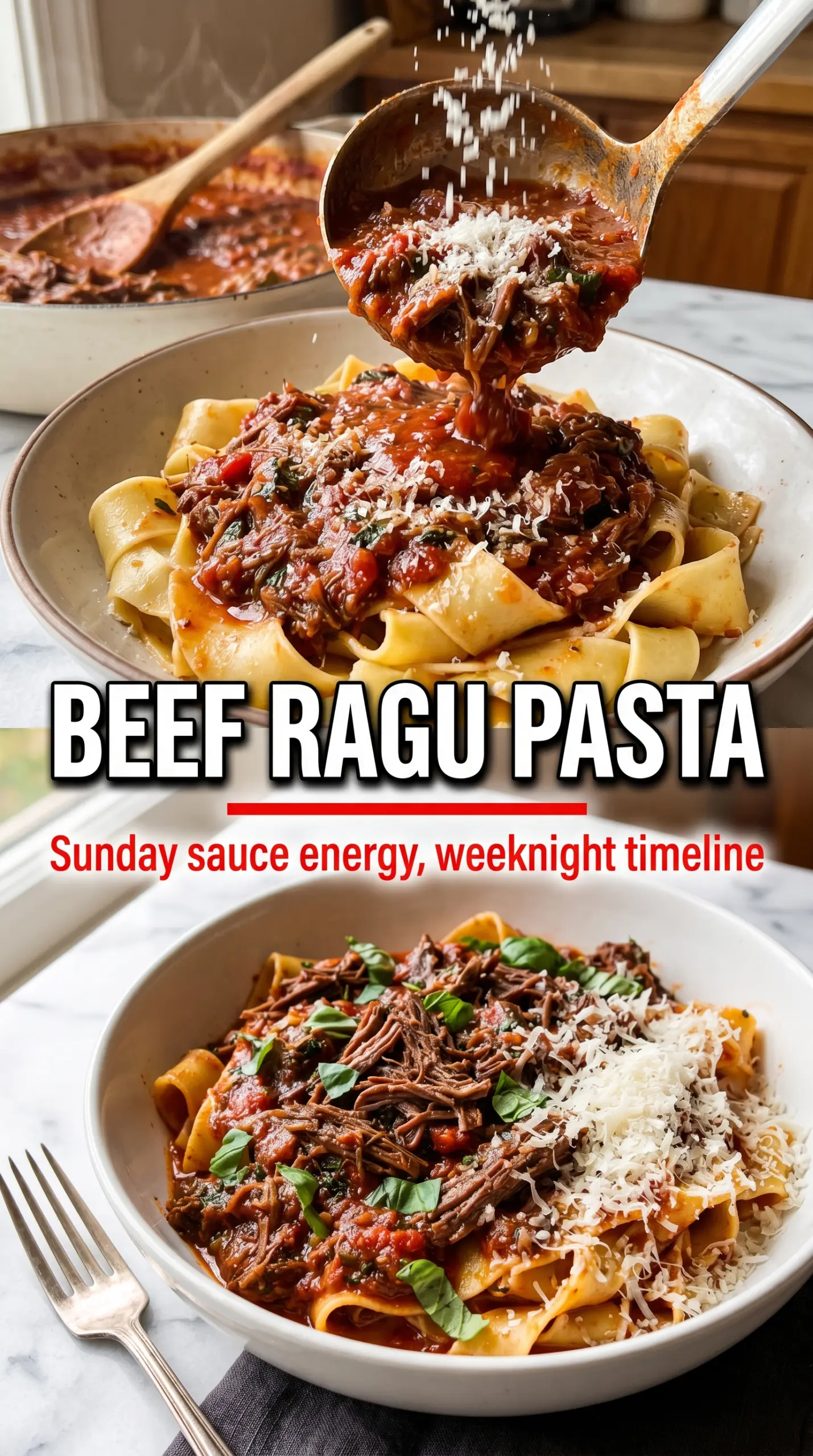
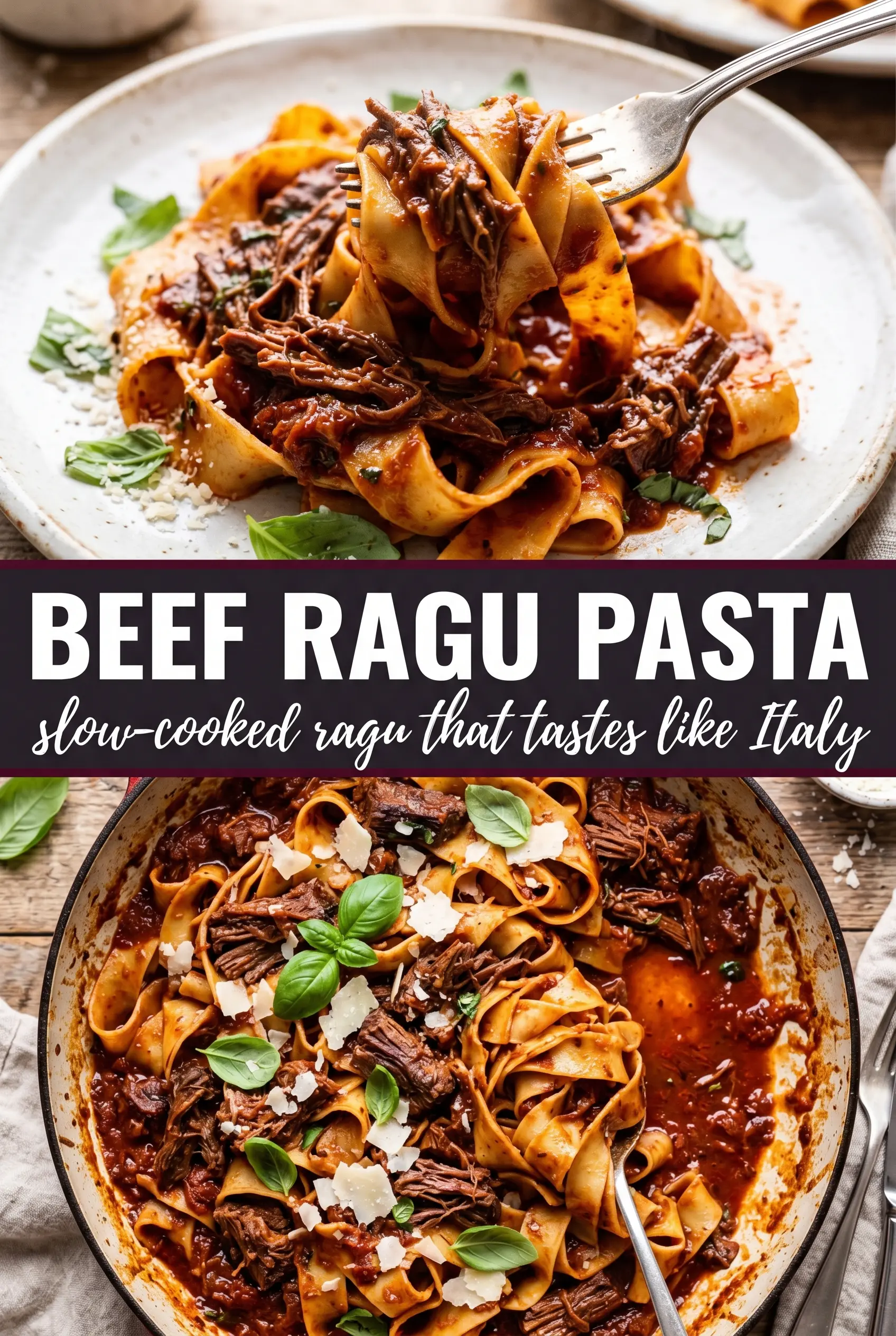
Wide noodles coated in a deep beef ragu have a way of making dinner feel deliberate without making the cook work twice as hard. The sauce turns glossy and thick, clinging to pappardelle instead of sliding off, and the red wine gives it that slow-simmered depth that tastes like it cooked all afternoon even when it didn’t. This version stays grounded and savory, with enough tomato to keep it bright and enough beef to make every bite feel substantial.
The key is building the sauce in stages. Browning the beef first gives you those dark bits at the bottom of the pot, and the vegetables soften in the same fat so nothing tastes flat or separate. The wine cooks down before the tomatoes go in, which keeps the sauce from tasting sharp, and the final simmer is long enough for everything to settle into one rich, cohesive pot.
Below you’ll find the exact point where the sauce thickens properly, plus a few swaps that help if you need to work around what’s already in your pantry. If you’ve ever had ragu turn watery or taste like plain meat sauce, this method fixes both problems.
The sauce reduced beautifully and coated the pappardelle instead of pooling at the bottom of the bowl. I also loved that the wine cooked off enough to leave depth without any bite.
Like this beef ragu pasta? Save it to Pinterest for the nights when you want glossy pappardelle and a sauce that tastes like it simmered all afternoon.
The Part That Keeps Beef Ragu from Tasting Like Meat Sauce
The difference between a good ragu and a heavy, dull one is layering. If you dump everything into the pot at once, the beef cooks, the tomatoes simmer, and the whole thing tastes flat. When you brown the meat first and then build the sauce in the same pot, the fond on the bottom becomes part of the sauce instead of wasted flavor.
The other mistake is rushing the reduction. That quick simmer after the wine goes in isn’t just about cooking off alcohol; it’s about concentrating the base before the tomatoes join in. If the wine still smells sharp, keep going until the pan looks almost dry again. That step keeps the finished sauce from tasting thin or acidic.
What Each Ingredient Is Actually Doing in This Ragu
- Ground beef (80/20) — The fat carries the flavor and helps the sauce feel lush instead of lean. If you use a much drier blend, the ragu can taste a little lean and need extra olive oil to round it out.
- Red wine — This is what gives the sauce its deeper, slightly glossy backbone. Use something dry and drinkable; cooking wine tastes harsh here, and you’ll taste it in the finished pot.
- Crushed tomatoes — They give the sauce body without making it chunky or overly sweet. A good canned brand matters more than you’d think because the tomatoes are a major part of the final flavor.
- Tomato paste — This is the shortcut to a darker, richer sauce. Cooking it for a minute before the liquid goes in removes the raw edge and makes the tomato flavor taste concentrated instead of tinny.
- Carrot, onion, and celery — This is the base that softens the acidity and gives the ragu a rounder, more finished taste. Dice them finely so they melt into the sauce instead of staying distinct.
- Pappardelle or tagliatelle — Wide noodles give the sauce something to cling to. If you use a thinner pasta, the ragu will still taste good, but you’ll lose some of that luxurious coating on each bite.
Building the Sauce in the Right Order
Browning the Beef First
Heat the olive oil in a Dutch oven over medium-high heat and add the ground beef in an even layer. Let it sit long enough to brown instead of just steaming; you want browned edges and some crispy bits, not pale crumbles. Drain off excess fat if the pan looks greasy, then keep going with the same pot. Those browned bits stuck to the bottom are exactly what the vegetables need next.
Softening the Aromatics
Add the onion, carrot, and celery to the pot and cook them until they’re softened and glossy, about 5 to 6 minutes. They should lose their raw crunch and smell sweet, not just hot. Stir in the garlic and tomato paste for about a minute, just until the paste darkens a shade and stops smelling sharp. If the garlic goes in too early, it can scorch and turn the whole sauce bitter.
Reducing the Wine
Pour in the red wine and scrape the bottom of the pot with a wooden spoon so all those browned bits dissolve into the liquid. Let it simmer until it reduces by about half and the sharp alcohol smell fades. This doesn’t need to be a hard boil; a steady simmer is enough. If the wine stays loose and boozy, the finished sauce won’t taste balanced.
Low Simmer, Deep Finish
Return the beef to the pot, add the tomatoes, seasoning, and bay leaf, then bring everything to a gentle simmer. Drop the heat low and let the sauce cook until it looks thick, rich, and slightly glossy, about 30 minutes. Stir now and then so the bottom doesn’t catch, especially as it tightens. When it’s done, the sauce should mound on a spoon instead of running off like soup.
Tossing with Pasta
Cook the pasta until just shy of al dente, then move it straight into the ragu with a splash of pasta water if needed. Toss for a minute or two so the sauce settles into the noodles instead of sitting on top of them. The pasta will finish cooking in the sauce and absorb a little of that flavor. Finish with parmesan and basil right at the end so the herbs stay fresh and bright.
Ways to Make This Ragu Fit What You Have
Use ground turkey for a lighter ragu
Ground turkey works, but it needs help because it doesn’t bring the same richness as beef. Add an extra tablespoon of olive oil and keep the tomato paste step; that’s what keeps the sauce from tasting thin. The result is lighter and a little cleaner tasting, but still good over wide noodles.
Make it dairy-free without changing the sauce
The sauce itself is already dairy-free, so the only thing to watch is the finish. Skip the parmesan or use a dairy-free alternative with a little saltiness; the basil still gives you enough freshness to balance the richness. The texture of the ragu stays exactly the same.
Swap the pasta for a gluten-free option
Use a sturdy gluten-free pasta that holds up to a thick sauce, not a delicate one that breaks apart when tossed. Cook it just to the edge of done because gluten-free noodles can go soft fast once they hit the hot ragu. The sauce will still cling well as long as the pasta has enough texture.
Make the sauce ahead for better flavor
This ragu gets even better after a night in the fridge because the flavors settle and the sauce thickens as it cools. Reheat it gently with a splash of water if needed before tossing with pasta. If you have the time, make the sauce a day ahead and cook the noodles fresh.
Storage and Reheating
- Refrigerator: Store the ragu for up to 4 days. It thickens as it sits, which is normal.
- Freezer: Freeze the sauce without the pasta for up to 3 months. Thaw overnight in the fridge before reheating.
- Reheating: Warm gently on the stove over low heat with a splash of water if needed. High heat can make the sauce look dry and can overcook the beef, so keep it slow and steady.
Answers to the Questions Worth Asking
Beef Ragu Pasta
Ingredients
Equipment
Method
- Heat 2 tbsp olive oil in a large Dutch oven over medium-high heat, then brown the ground beef until well-browned. Drain excess fat and set the beef aside.
- Sauté the onion, carrots, and celery in the same pot for 5–6 minutes until softened. Add the minced garlic and tomato paste, then cook for 1 minute.
- Pour in the dry red wine and simmer for 2 minutes until reduced by half. Stir to scrape up browned bits from the bottom.
- Return the browned beef to the pot and add the crushed tomatoes, Italian seasoning, and bay leaf. Bring the mixture to a simmer, then reduce heat to low and continue simmering for 30 minutes until thick and rich.
- Remove the bay leaf, then season the ragu with salt and pepper to taste. Simmer briefly if needed to reach a clinging consistency.
- Cook the pappardelle or tagliatelle pasta according to package directions until al dente. Reserve a splash of pasta water if the ragu looks too thick.
- Toss the cooked pasta with the beef ragu until the noodles are coated. Serve immediately topped with fresh basil and generous parmesan.