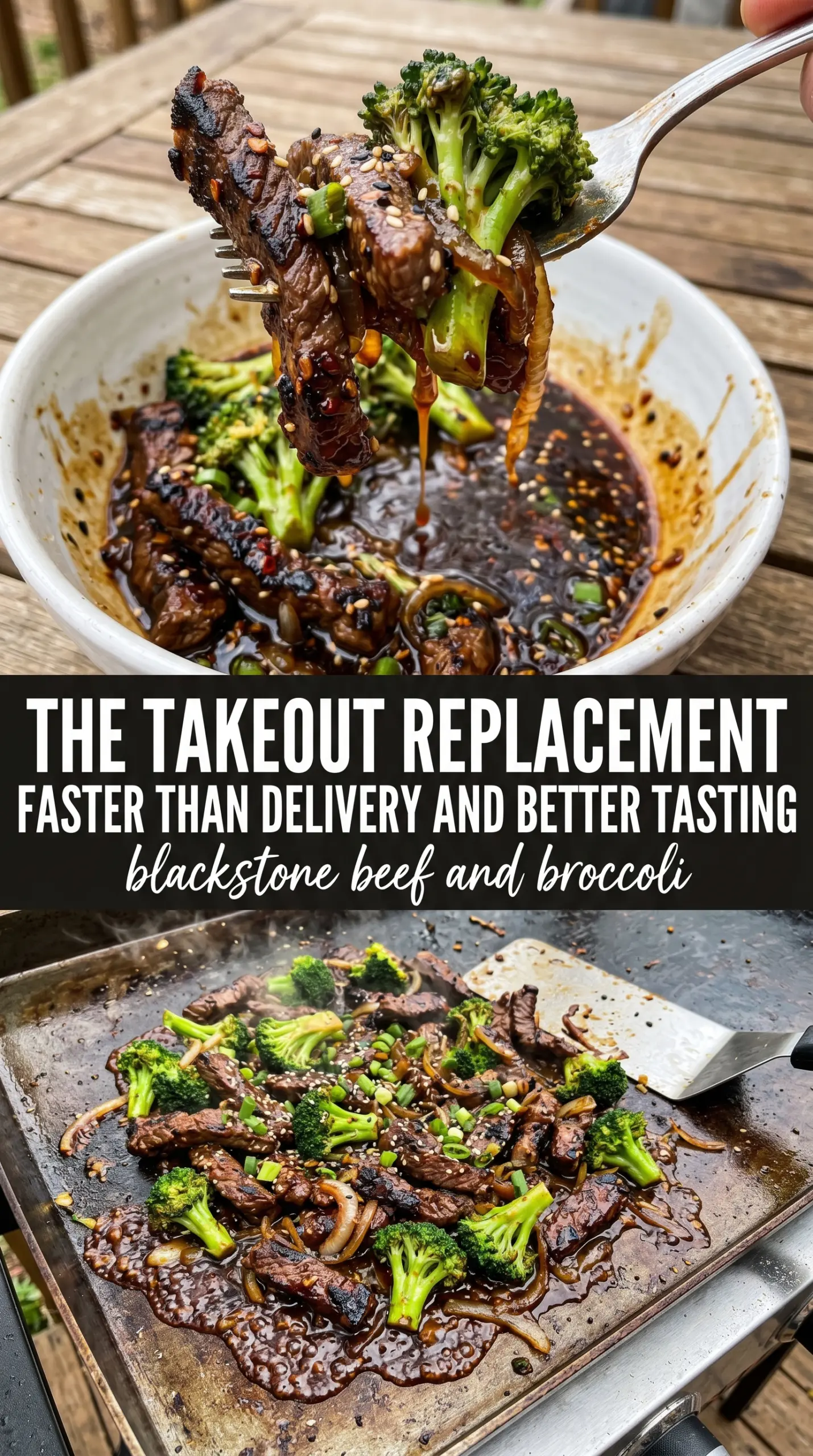
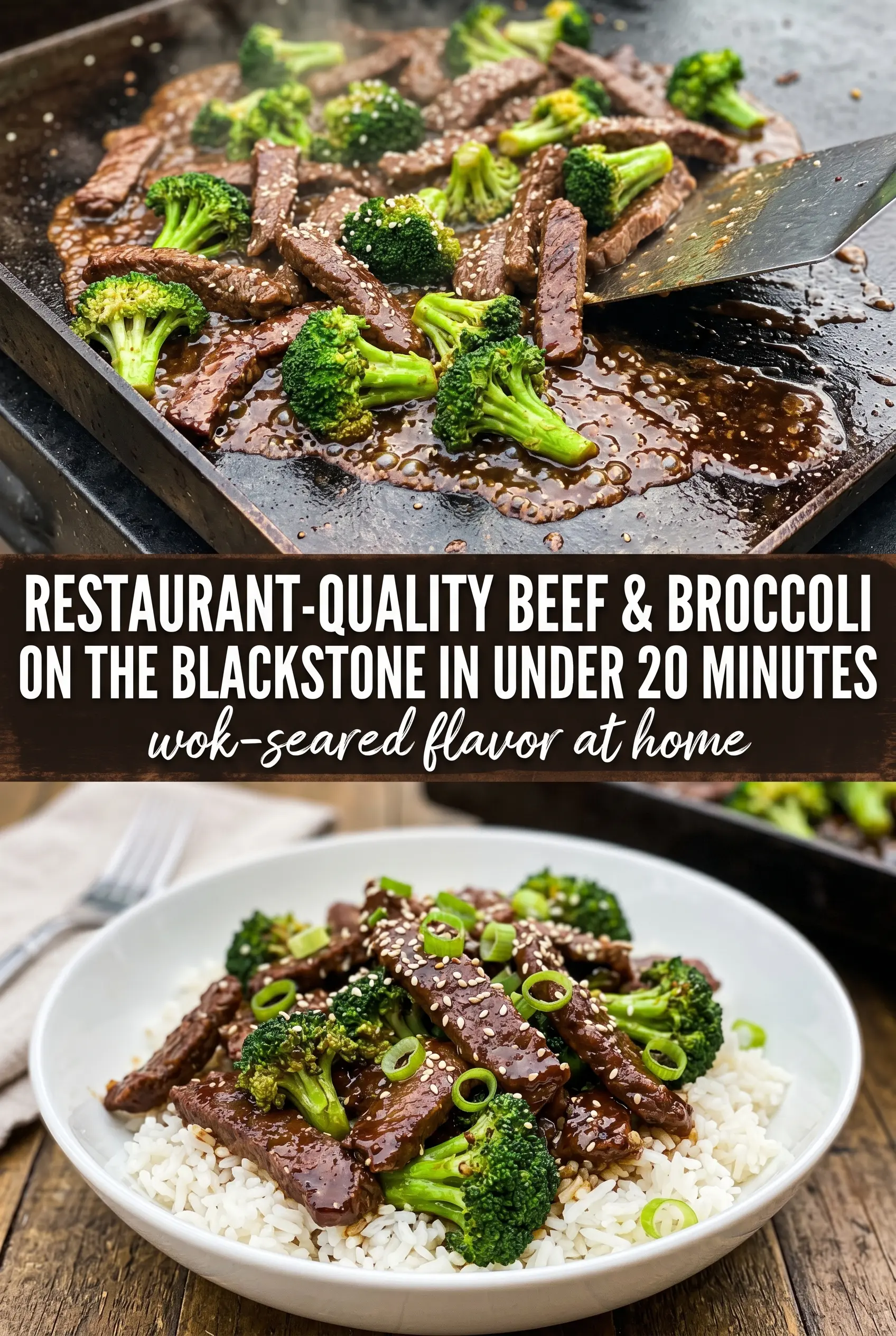
Tender beef strips, crisp-tender broccoli, and a glossy brown sauce are what make Blackstone beef and broccoli worth putting on repeat. The griddle gives you the kind of fast, high-heat sear that keeps the beef juicy while the broccoli picks up a little char at the edges without going limp. The sauce clings instead of pooling, which is the difference between a good stir fry and one that feels finished.
What makes this version work is the way the beef gets a short cornstarch marinade before it ever hits the griddle. That coating protects the meat and helps the sauce tighten up at the end. Cooking the beef in batches matters too. If you crowd the surface, the meat steams and the broccoli loses that clean, snappy bite that makes the dish so good over rice.
Below, I’ve included the small timing cues that keep the sauce glossy and the broccoli green, plus the swaps that still hold up when you’re missing one ingredient.
The beef stayed tender and the sauce thickened right on the griddle without turning gummy. I served it over rice and my husband went back for seconds before I even sat down.
Save this Blackstone Beef and Broccoli for the nights when you want a fast sear, glossy sauce, and dinner over rice in under 30 minutes.
The Marinade Is Short, but It Changes Everything
The biggest mistake with beef and broccoli on a griddle is skipping the marinade and expecting the sauce to do all the work. It won’t. The cornstarch mixed with soy sauce and brown sugar gives the beef a thin coating that helps it sear instead of drying out, and it also gives the final sauce something to cling to. Thirty minutes is enough. Much longer and the surface can start to get a little pasty instead of lightly glazed.
High heat is non-negotiable here, but the order matters just as much. The beef goes on first because it needs direct contact with the hot metal to brown quickly. The broccoli comes after, when there’s enough oil and heat left to char the edges without turning the florets mushy. If your broccoli is pale and soft, the griddle wasn’t hot enough or the pan was too crowded.
- Flank steak — Slice it thin against the grain so it stays tender. That cut is lean, which makes the quick sear important. Skirt steak works too, but it cooks a little faster and needs the same thin slicing.
- Cornstarch — This is doing two jobs: light tenderizing and sauce thickening. Arrowroot can stand in if needed, but use it the same way and don’t let the sauce boil hard after it goes in.
- Oyster sauce — This is where the sauce gets its deep savory finish. There isn’t a perfect swap, but hoisin sauce will give you a sweeter result if that’s what you have. Use a touch less brown sugar if you go that route.
- Broccoli florets — Fresh broccoli gives you the best texture here. Frozen broccoli will work in a pinch, but thaw and pat it dry first or it will steam on the griddle and soften too fast.
What Each Ingredient Is Actually Doing in Blackstone Beef and Broccoli
- Protein (quality, proper thickness) — Good quality protein tastes better. Even thickness ensures even cooking.
- Seasoning (bold, distributed throughout) — Don’t be shy with salt and pepper. Quality seasoning elevates everything.
- Oil or fat (protective and flavorful) — The fat helps develop crust and carries flavors. Use generously.
- Heat management (appropriate temperature for the protein) — Too high and the outside burns before the inside cooks. Too low and it steams.
- Technique (sear, then finish based on thickness) — Proper technique creates flavor. Sear for crust, then cook through gently.
- Aromatics and seasonings (garlic, herbs, spices) — These add complexity and depth. Distribute them throughout the cooking process.
- Resting time (let it rest before serving) — Resting allows juices to reabsorb. This keeps the protein moist and tender.
- Optional: finishing sauce or glaze — A light sauce adds richness without overwhelming. Apply at the very end.
How to Keep the Sauce Glossy on a Hot Griddle
Marinating the Beef
Stir the beef with soy sauce, brown sugar, and cornstarch until every strip looks lightly coated, then let it sit for 30 minutes. The mixture should look a little slick, not soupy. If you’re seeing a pool of liquid at the bottom, the beef was sliced too thick or the cornstarch wasn’t mixed in well enough. That coating is what helps the sauce cling later, so don’t rush past this part.
Searing in Batches
Heat the griddle until it’s fully hot, then add the oil and lay the beef down in a single layer. You want an immediate sizzle. If the meat goes gray before it browns, the surface temperature dropped too much, usually because the griddle was overcrowded. Cook each batch just until the edges are browned and the centers are still juicy, then pull it off while you finish the vegetables.
Cooking the Broccoli
Add the broccoli to the remaining oil and cook it until the florets turn bright green with some browned spots underneath. That usually takes 4 to 5 minutes on a hot Blackstone. Stir it enough to keep it from burning, but don’t keep it moving constantly or it won’t get any color. The goal is tender-crisp broccoli that still has some bite when the sauce hits it.
Finishing with the Sauce
Add the garlic and ginger only for the last 30 seconds so they bloom without scorching. Then pour in the soy sauce, oyster sauce, brown sugar, and beef broth. The sauce should bubble and thicken quickly. Return the beef to the griddle and toss everything until the meat looks lacquered and the broccoli is coated. If the sauce gets too thick, a splash of broth loosens it without dulling the flavor.
Ways to Shift This Without Losing the Griddle Char
Gluten-Free Version
Use tamari instead of soy sauce and check that your oyster sauce is labeled gluten-free. The flavor stays close to the original, and the sauce still thickens the same way because the cornstarch does the heavy lifting.
Lower-Sugar Take
Cut the brown sugar in half and lean on the oyster sauce for depth. The sauce won’t be quite as glossy-sweet, but it will still coat the beef and broccoli cleanly.
Chicken or Shrimp Instead of Beef
Thin-sliced chicken breast or peeled shrimp both work on the same timing, but they need a shorter sear than beef. Chicken should hit 165°F, and shrimp only need a minute or two per side before they turn opaque and curl.
Storage and Reheating
- Refrigerator: Store leftovers in an airtight container for up to 4 days. The broccoli softens a little, but the beef stays flavorful.
- Freezer: It freezes okay for up to 2 months, though the broccoli will lose some texture. Freeze it flat in a sealed container and expect softer vegetables after thawing.
- Reheating: Reheat in a skillet or on the griddle over medium heat with a splash of broth or water. Microwaving works, but it can make the beef tight and the broccoli watery if you overdo it.
Questions I Get Asked About This Recipe
Blackstone Beef and Broccoli
Ingredients
Equipment
Method
- Combine 2 tablespoons soy sauce, 1 tablespoon brown sugar, and cornstarch, then marinate the beef for 30 minutes.
- Heat a griddle (Blackstone) to high heat and add 2 tablespoons oil, until the surface is shimmering.
- Cook the beef in batches for 2-3 minutes per side until seared, then set aside (avoid overcrowding for better browning).
- Add the remaining oil and cook broccoli for 4-5 minutes until tender-crisp, with bright green color.
- Add garlic and ginger and cook for 30 seconds, until fragrant.
- Add the remaining soy sauce, oyster sauce, brown sugar, and beef broth, then stir to combine into a glossy sauce.
- Return beef to the griddle, toss everything in the sauce for 2 minutes, until the beef is hot and coated.
- Garnish with sesame seeds for a finishing visual cue before serving.