These Blackstone Philly cheesesteak sandwiches hit the plate with everything people want from the classic: deeply browned steak, sweet peppers and onions, and provolone that melts right into the meat instead of sitting on top in a rubbery sheet. The griddle gives you the kind of fast, high-heat cooking that keeps the steak juicy while the vegetables pick up real color and sweetness. Stack that into a butter-toasted hoagie roll and you’ve got a sandwich that disappears fast.
The key is cooking the vegetables first and getting them truly tender before the steak goes down. Ribeye is the right cut here because it has enough marbling to stay flavorful even when sliced thin and cooked hard. The other detail that matters is the cheese: lay it over the hot steak and vegetables while they’re still on the griddle so it melts from the heat of the filling, not from extra time that can dry the meat out.
Below, I’ve laid out the small technique choices that make this sandwich work on a flat top, plus a few smart swaps for when you want to change the cheese, the roll, or the vegetables without losing what makes a cheesesteak taste like a cheesesteak.
The steak stayed tender, the onions and peppers got perfectly caramelized, and the provolone melted right into everything. Using the griddle made the whole sandwich feel like takeout from a great shop.
Keep this Blackstone Philly cheesesteak sandwich on hand for the nights when you want gooey provolone, griddled peppers, and a toasted hoagie with real steak flavor.
The Fastest Way to Lose the Steak Is to Crowd the Griddle
The biggest mistake with a cheesesteak on a flat top is trying to cook everything at once. If the onions, peppers, and steak all pile into the same space, the vegetables steam, the meat sheds moisture, and you end up with a gray filling instead of one with browned edges and separate layers of flavor. Cook the vegetables first, then move them off the griddle before the steak goes on.
Ribeye gives you some forgiveness because the fat keeps it tender, but even ribeye turns tough if it sits too long. Thin slices cook in minutes, and once the meat is no longer pink, it’s done. Keep the spatulas moving, chop the steak as it cooks, and stop as soon as the surface loses its raw look. That short cooking window is what keeps the sandwich juicy.
Why the Steak, Cheese, and Roll Need to Be Chosen Together
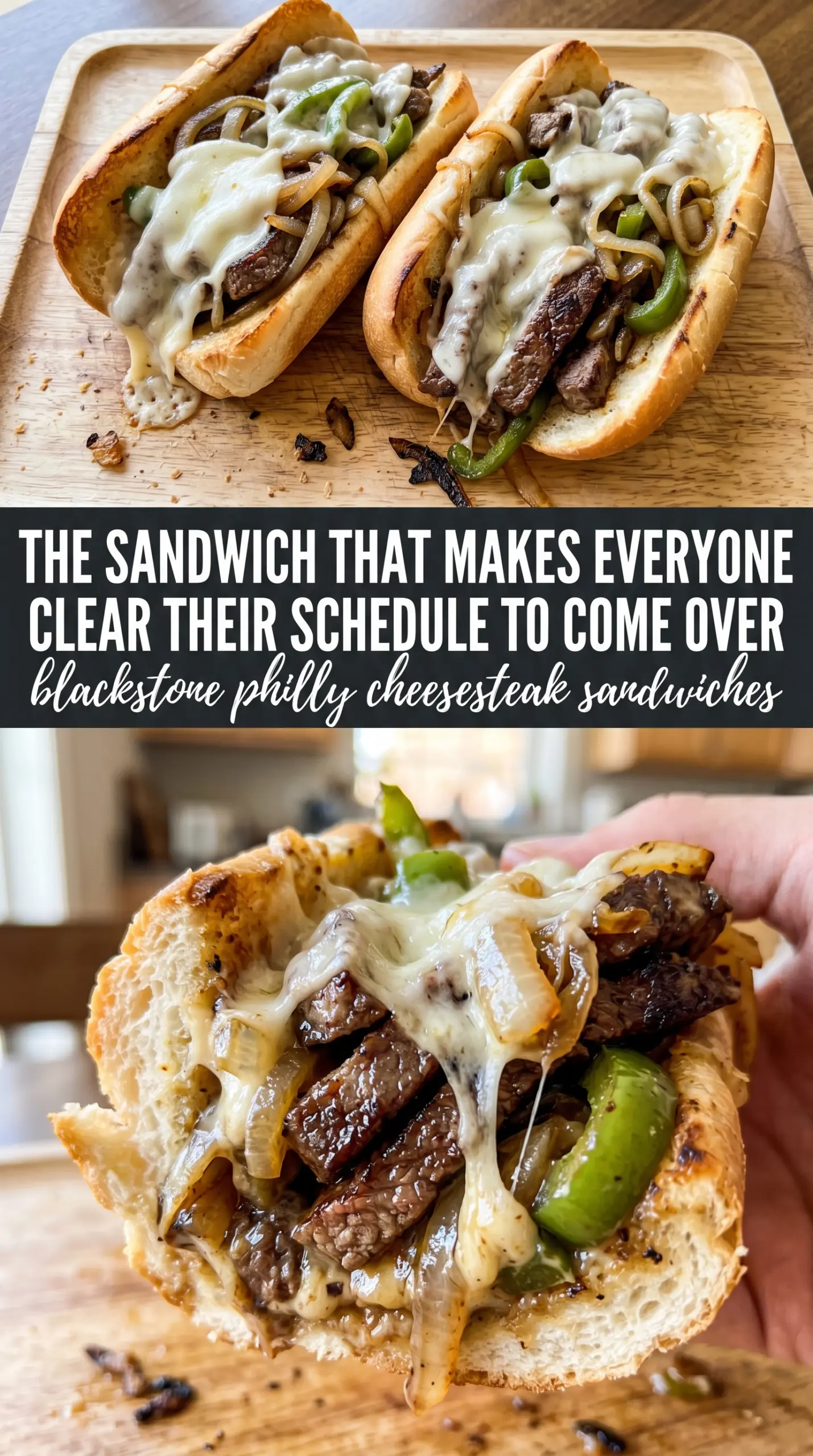
- Ribeye steak — This is the cut that gives the sandwich its rich, beefy bite. The marbling melts as it cooks, which is why ribeye stays tender on high heat. Ask for it thinly sliced if your butcher can do it, or chill the steak until firm and slice it yourself as thin as possible with a sharp knife.
- Onions and green bell peppers — These do more than add color. The onions bring sweetness, and the peppers give the sandwich its familiar sharp, grassy note. Cook them until they’re soft and lightly caramelized, not just wilted, or they’ll taste raw against the steak.
- Provolone — Provolone melts cleanly and keeps the filling creamy without getting greasy. It’s worth using good slices here because the cheese is a major part of the sandwich’s texture. If you want a stronger, saltier bite, white American cheese works too, but it changes the classic flavor more than you might expect.
- Hoagie rolls — A soft roll that toasts well is the difference between a cheesesteak and a pile of steak. You want a roll sturdy enough to hold the filling but not so crusty that it shatters when you bite in. Buttering and toasting the cut sides gives you a little barrier against the juices.
- Mayo — Optional, but useful if you want a little richness and moisture in the roll. A thin swipe goes a long way. Too much just makes the bread slick and buries the steak.
Building the Sandwich on the Griddle Without Losing the Heat
Softening the Peppers and Onions First
Heat the Blackstone to medium-high and add the oil before the vegetables go down. You want steady sizzling, not smoking oil; that tells you the griddle is hot enough to brown the edges without burning the onions before they soften. Stir occasionally and give them 8 to 10 minutes until they’re tender and starting to pick up color. If they look pale and watery, they need more time, not more heat.
Cooking the Steak in a Thin, Fast Layer
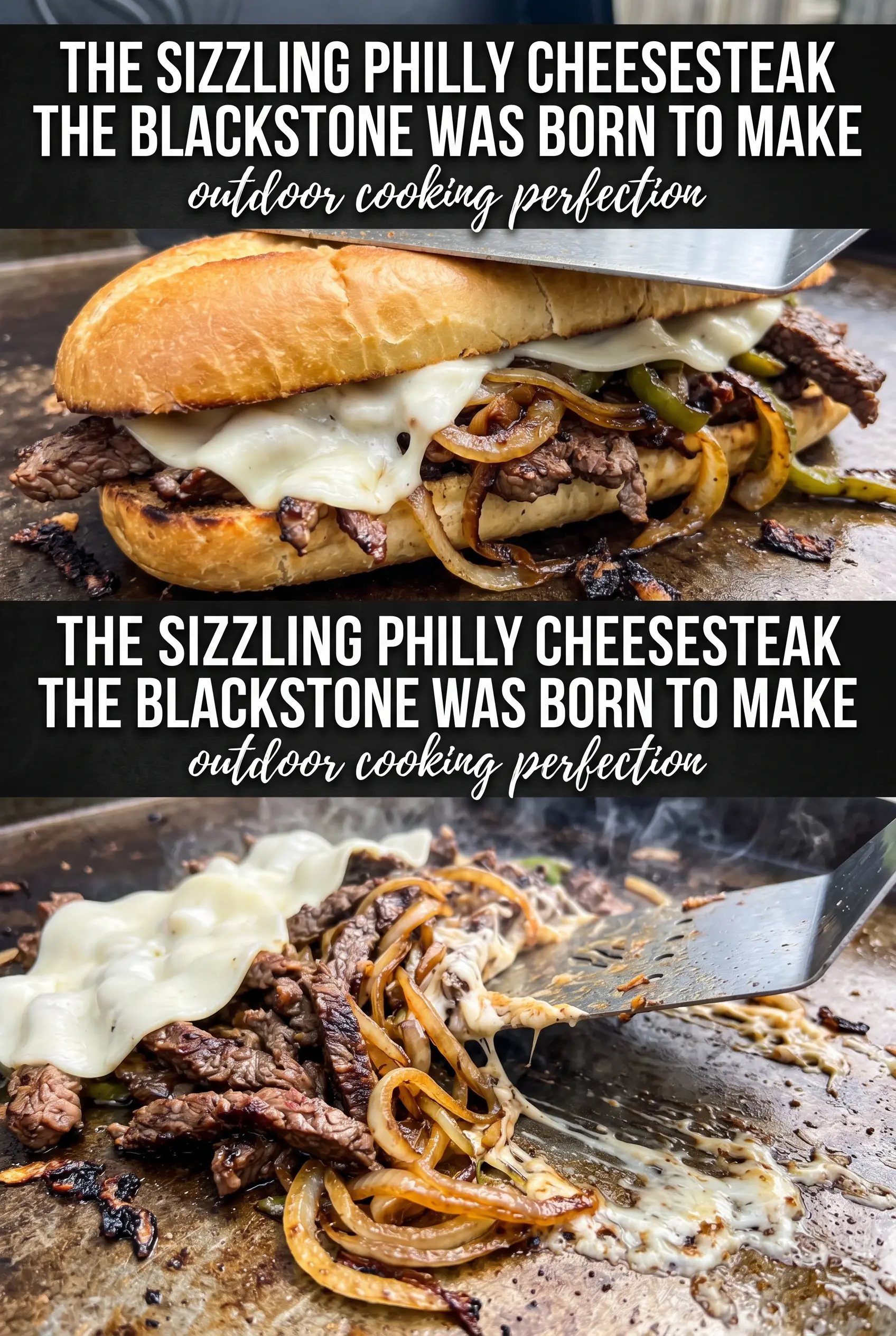
Season the sliced ribeye with salt and pepper, then spread it across the hot griddle in an even layer. Let it sit just long enough to brown in spots, then use two spatulas to chop and turn it so the pieces cook evenly. If the steak starts releasing a lot of liquid, the griddle is crowded; keep cooking until that moisture cooks off and the meat looks browned at the edges. Pull it right as it finishes, because a few extra minutes can turn ribeye chewy.
Melting the Cheese Right on Top
Divide the steak into four portions, then pile the onions and peppers over each one and top with provolone. The cheese should go on while everything is still sizzling so it softens from the trapped heat underneath. If the cheese isn’t melting, the filling has already cooled too much, so move fast. A loose tent of a spatula or burger dome helps, but the residual heat from the steak is usually enough.
Toasting the Rolls and Assembling Fast
Butter the hoagie rolls and place them cut-side down on the griddle until golden. Watch them closely; they go from toasted to overdone fast on a hot surface. Scoop the cheesesteak filling into the rolls while the cheese is still stretchy, add mayo if you want it, and serve immediately. This isn’t the kind of sandwich that sits well once assembled.
How to Tweak This Sandwich Without Losing the Cheesesteak Feel
Use white American instead of provolone
White American melts even more smoothly than provolone and gives you that classic drapey cheesesteak texture. It tastes a little milder and saltier, so the steak and onions need to be seasoned well. If your goal is the creamiest melt, this is the swap that changes texture the most.
Make it low-carb with a bowl
Skip the hoagie roll and serve the steak, vegetables, and cheese over shredded lettuce or in a bowl. You keep the flavor and the hot melty filling, but you lose the toasted bread structure that makes the original handheld. This is the cleanest way to cut carbs without changing the cook method.
Swap in mushrooms for some of the vegetables
Sliced mushrooms can replace part of the peppers if you want a deeper, earthier filling. Cook them long enough for their moisture to evaporate before they go soft, or they’ll water down the griddle. The sandwich gets a more savory edge and a little less sweetness.
Storage and Reheating
- Refrigerator: Store the steak, vegetables, and rolls separately for up to 3 days. The filling stays much better this way, and the bread won’t get soggy.
- Freezer: The steak and vegetable filling freezes well for up to 2 months. Cool it completely first, then freeze in a sealed container. Don’t freeze the assembled sandwiches.
- Reheating: Reheat the filling in a skillet or on the griddle over medium heat until hot. The mistake people make is microwaving it too long, which dries the steak and turns the vegetables limp. Toast the rolls fresh, then assemble right before serving.
Answers to the Questions Worth Asking
Blackstone Philly Cheesesteak Sandwiches
Ingredients
Equipment
Method
- Heat the Blackstone griddle to medium-high and add the oil.
- Cook the onions and peppers until caramelized, about 8-10 minutes, then set aside.
- Season the ribeye steak with salt and pepper and cook for 3-4 minutes, chopping with spatulas.
- Divide the steak into 4 portions, top each with the caramelized vegetables and 2 slices of provolone so the cheese begins to melt.
- Butter and toast the hoagie rolls on the griddle until golden.
- Scoop the steak mixture into the rolls, add mayo if desired, and serve immediately with the cheese pull.