Brown butter maple pumpkin cookies bake up soft in the middle with lightly crisp edges, then finish with a maple glaze that sets into a thin, sweet shell. The brown butter brings a nutty depth that keeps the pumpkin from tasting one-note, and the flaky salt on top sharpens every bite. They’re the kind of cookie that disappears fast on a cooling rack because the texture lands right between tender and chewy.
What makes this version work is the balance. Pumpkin puree adds moisture, but too much turns cookies cakey, so the puree needs to be blotted dry before it goes in. Brown sugar and maple syrup pull in different directions here too: the sugar gives structure and chew, while the syrup adds flavor and helps the dough spread just enough without going flat. Browning the butter first is the move that makes these taste deeper and more polished than a standard pumpkin cookie.
Below, I’ll walk you through the little details that keep the cookies from puffing up too much or baking up dull. If you’ve ever had pumpkin cookies turn bready, the technique here fixes that.
The brown butter gave these such a rich, nutty flavor, and the glaze set up beautifully without making the cookies soggy. I blotted the pumpkin like you said and they stayed soft instead of cakey.
Save these brown butter maple pumpkin cookies for the glaze-drizzled batch with chewy centers and flaky salt on top.
The Brown Butter Step That Keeps These Cookies Chewy
Brown butter changes the whole cookie, but only if you let it cool and solidify before mixing the dough. If you add it while it’s still warm and liquid, the dough spreads too fast in the oven and the cookies bake up greasy at the edges. Once it firms back up, it creams with the brown sugar into a base that traps air and gives you a soft center instead of a flat puddle.
The other place people go wrong is pumpkin. Even a little extra moisture pushes these cookies toward cakey, so blot the puree on paper towels until it looks thick and dull rather than wet and glossy. That small step is what keeps the crumb tender without turning the texture muffin-like.
What Each Ingredient Is Actually Doing In These Cookies
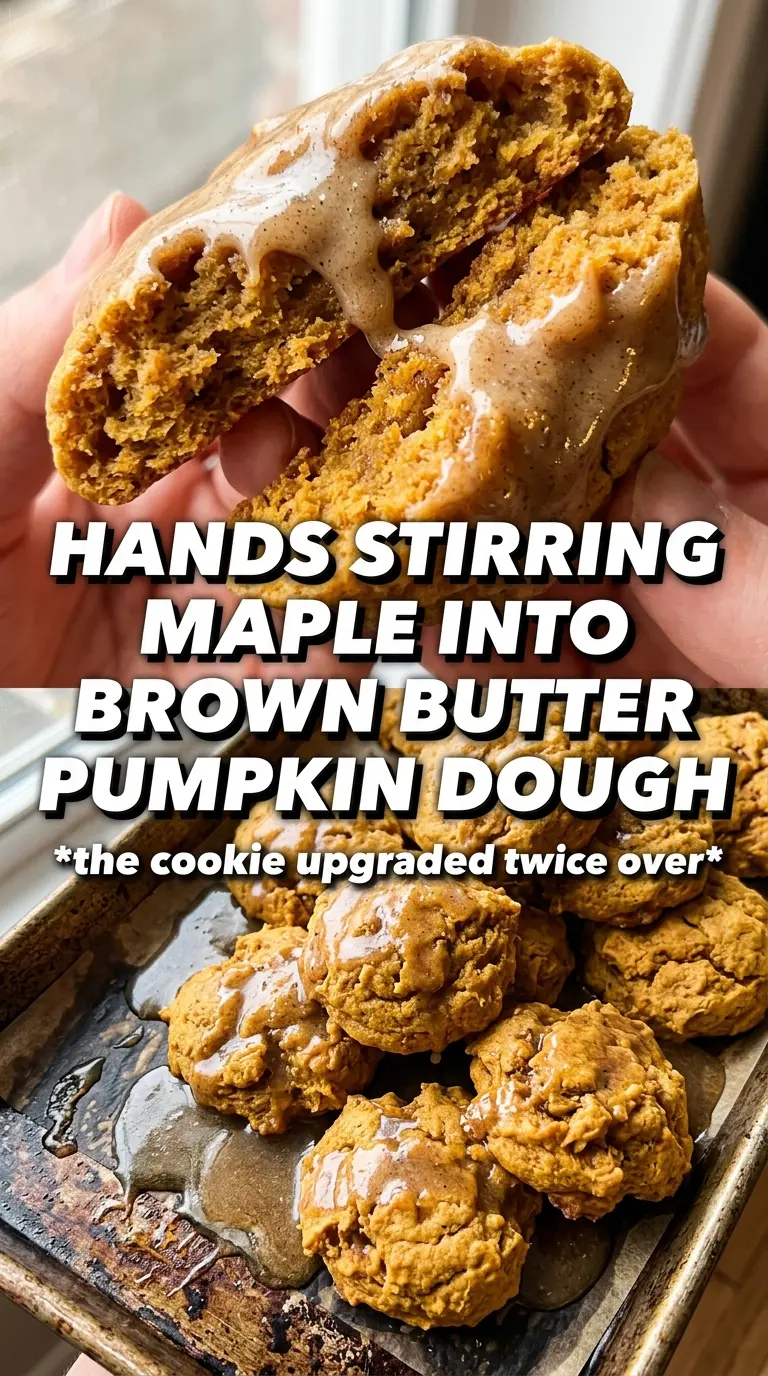
- Brown butter — This is the flavor engine. The milk solids toast as the butter browns, giving the cookies that nutty, almost caramelized note you can’t get from regular melted butter. Cool it until solid before you use it, or the dough will spread too much.
- Pumpkin puree — Use canned pumpkin, not pumpkin pie filling. The puree adds gentle flavor and moisture, but it must be blotted dry so the dough stays chewy instead of cakey.
- Pure maple syrup — This deepens the sweetness and keeps the cookies soft. Pancake syrup won’t give the same flavor and can make the glaze taste flat, so this is one place where the real thing matters.
- Brown sugar — Packed brown sugar adds chew and helps the cookies hold onto moisture. It also works with the maple syrup to build a richer caramel note under the pumpkin spice.
- Flour + baking soda — The flour gives the cookies enough structure to hold the glaze, while the baking soda helps them spread just enough and brown at the edges. Too much flour makes them dry, so spoon and level if you’re measuring by cups.
- Powdered sugar glaze — The glaze should be thick enough to drizzle in ribbons, not thin enough to disappear. Start with less milk than you think you need, then loosen it drop by drop.
Building The Dough So The Cookies Spread The Right Amount
Mix The Base Until It’s Creamy, Not Fluffy
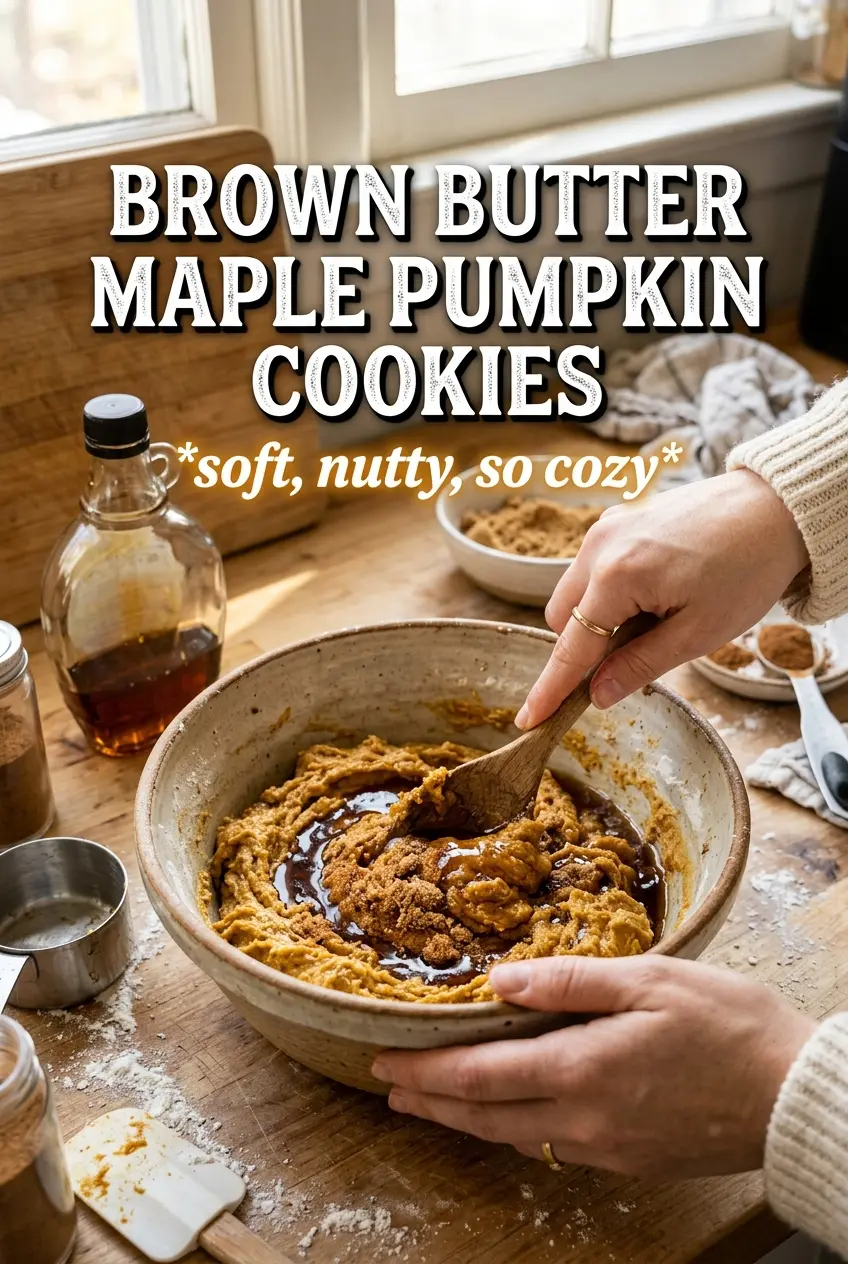
Beat the solidified brown butter with the brown sugar and maple syrup until the mixture looks smooth and a little lighter in color. You’re not trying to whip lots of air into it; you just want it evenly combined so the sugar dissolves into the butter. If the butter is too hard, let it sit a few minutes first. If it’s too soft, the dough will be loose and the cookies won’t hold their shape.
Fold In The Dry Ingredients Just Until The Flour Disappears
Once the eggs, pumpkin, and vanilla are in, add the dry ingredients and mix only until no dry streaks remain. Overmixing here builds toughness, and pumpkin dough goes from tender to dense fast. The finished dough should feel soft and scoopable, not sticky enough to pour. If it seems wet, chill it briefly before portioning.
Bake Until The Edges Set And The Centers Still Look Soft
Scoop the dough into 2-tablespoon rounds and bake at 375°F until the edges are golden and the centers still look slightly underdone. They finish setting on the hot pan, and pulling them too late is how you lose the chewy middle. Let them cool completely before glazing, or the glaze will melt off instead of sitting on top in a neat drizzle.
Make Them Nutty and Toasty
Keep the brown butter in the recipe, but add a handful of chopped toasted pecans to the dough. They reinforce the browned, nutty flavor and add a little crunch around the edges without changing the soft center.
Dairy-Free Version
Use a high-quality plant butter that browns well, then cool it fully before mixing. The flavor won’t be quite as deep as real butter, but the cookies still bake up soft and spiced with a clean maple finish.
Gluten-Free Swap
Use a 1:1 gluten-free baking blend with xanthan gum already included. The cookies may spread a touch less and bake a little more delicately, so let them cool on the pan for a full minute before moving them.
Skip The Glaze For A Less Sweet Cookie
Leave off the maple glaze and finish with flaky salt only. The cookies taste more like a spiced brown-butter tea cookie that way, and you’ll get a little more of the pumpkin and maple in the dough itself.
Storage and Reheating
- Refrigerator: Store in an airtight container for up to 5 days. The glaze stays set, and the cookies soften a little more by day two.
- Freezer: Freeze the unglazed baked cookies for up to 2 months. Glaze after thawing so the topping stays smooth instead of sticky and cracked.
- Reheating: Warm a cookie for 8 to 10 seconds in the microwave if you want the center a little softer. Don’t heat glazed cookies too long or the topping will melt and run.
Answers To The Questions Worth Asking
Brown Butter Maple Pumpkin Cookies
Ingredients
Equipment
Method
- Brown the butter in a skillet until it turns deeply golden and smells nutty, then refrigerate until solid, about 1 hour. Visual cue: the butter will be amber-gold with browned milk solids at the bottom.
- Preheat oven to 375F and line baking sheets with parchment. Visual cue: parchment should sit flat with no wrinkles.
- Whisk all-purpose flour, baking soda, pumpkin pie spice, cinnamon, and salt in a bowl until evenly combined. Visual cue: the mixture should look evenly speckled.
- Beat the solidified brown butter, brown sugar, and maple syrup until creamy. Visual cue: the mixture lightens and turns smooth.
- Add the blotted pumpkin, eggs, and vanilla extract, mixing until the batter is cohesive. Visual cue: it should look thick and uniform without streaks.
- Fold the flour mixture into the wet ingredients until no dry flour remains. Visual cue: stop mixing once streaks disappear.
- Scoop dough into 2-tablespoon rounds and place on the prepared sheets with space between. Visual cue: rounds should hold their shape.
- Bake for 10-12 minutes at 375F until the edges are golden. Visual cue: centers may look slightly set but not dry.
- Cool cookies completely before glazing. Visual cue: when cool, cookies won’t smear if touched gently.
- Whisk powdered sugar and maple syrup, then add milk 1 tablespoon at a time until the glaze drizzles thickly. Visual cue: drizzle should fall in ribbons that slowly settle.
- Drizzle with maple glaze and sprinkle with flaky salt. Visual cue: the glaze should streak over the tops, and salt should appear as tiny flakes.