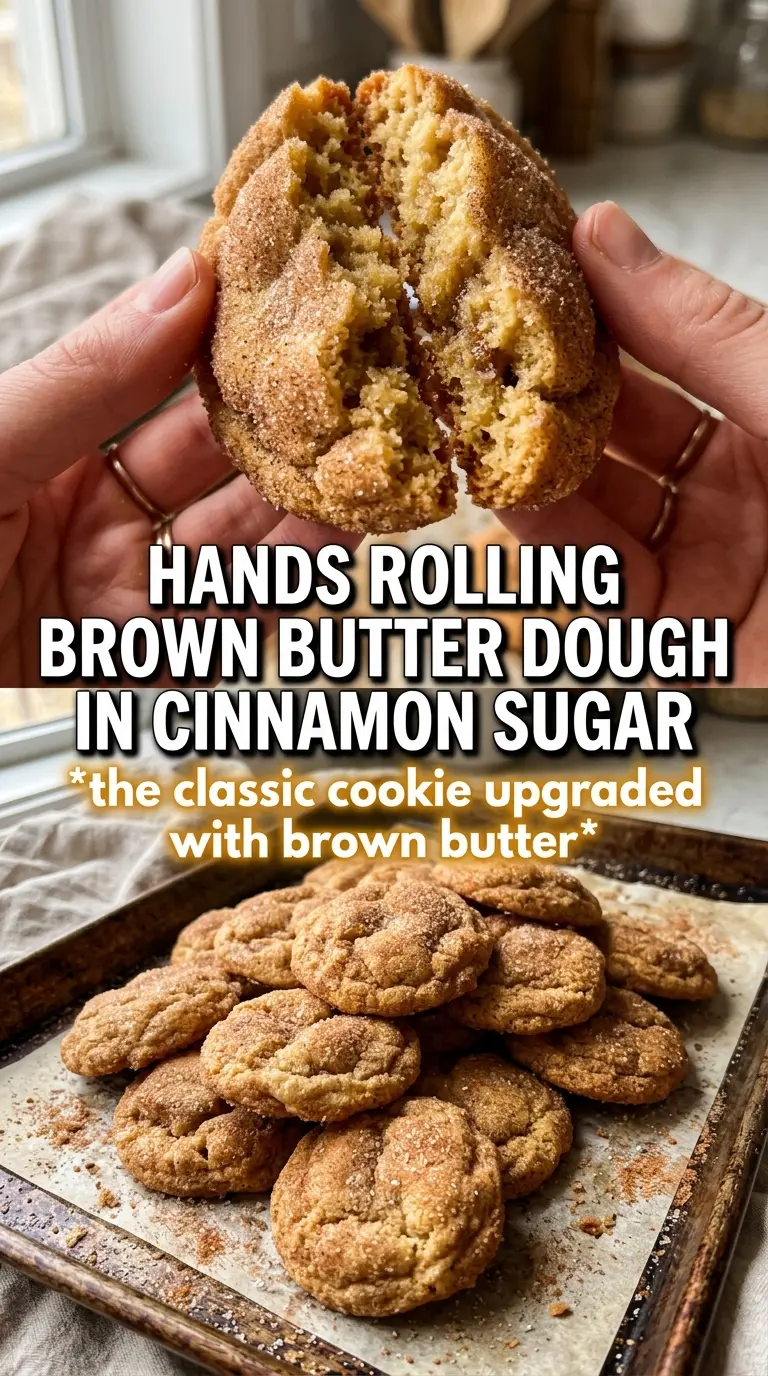
Brown butter snickerdoodles bake up with crisp cinnamon-sugar edges, soft centers, and that unmistakable toasty depth that makes people reach for a second cookie before they've finished the first. The familiar tang of a classic snickerdoodle is still there, but the browned butter adds a caramel note that turns a simple cookie into something worth repeating.
The trick is in the butter. Browning it first pulls out the nutty solids and gives the dough a deeper, richer flavor, but it also means you need to chill it back to a solid state before creaming it with the sugar. Skip that part and the cookies spread too much, which robs them of the crinkled tops and chewy middle that make this version work.
Below, I'll show you exactly when the dough is ready to scoop, how to get a generous cinnamon-sugar coating, and what to do if you want to bake a batch ahead for later in the week.
The brown butter made these taste like a bakery cookie, and the centers stayed soft while the edges turned perfectly crinkled. My kitchen smelled amazing for hours.
Save these brown butter snickerdoodles for the batch of cookies with the deep caramel flavor and crinkled cinnamon tops.
The One Extra Step That Keeps Brown Butter Cookies from Spreading Too Thin
Brown butter changes the structure of a cookie dough, not just the flavor. Once the water cooks off, the butter becomes more concentrated, which is why this dough needs that full hour to cool and solidify before you mix it with the sugar. If you try to cream it while it's still warm or liquid, the dough will loosen up, the cookies will spread, and you'll lose the thick, crackly tops that make a good snickerdoodle worth the effort.
The other thing that matters here is the balance of cream of tartar and baking soda. That combo gives snickerdoodles their slight tang and their soft, bumpy interior. The cinnamon goes into the dough itself, not just the coating, so every bite tastes like more than sugar on the outside.
- Brown butter — This is where the nutty, almost toffee-like flavor comes from. Let it cool until solid, not just lukewarm, or the dough will be too soft to hold shape.
- Cream of tartar — It gives the cookies their classic snickerdoodle tang and helps create that tender, slightly chewy center. There isn't a perfect stand-in here if you want the real texture.
- Cinnamon sugar coating — Roll the dough generously. A thin coating bakes into the cookie; a heavy coating gives you that shiny, spiced crust.
What Each Ingredient Is Actually Doing in These Cookies
- All-purpose flour — Keeps the cookies sturdy enough to hold their shape after the brown butter is added. Measure it lightly so you don't pack in extra flour and end up with dry cookies.
- Unsalted butter — Use real unsalted butter here so you control the salt after browning. Salted butter can work in a pinch, but it makes the flavor less clean and harder to balance.
- Granulated sugar — Sweetens the dough and helps create the crisp edges. A little brown sugar would add chew, but it would pull these away from the classic snickerdoodle texture.
- Eggs — They bind the dough and keep the centers soft. Add them one at a time if the mixture looks a little split after creaming; it usually comes back together once the flour goes in.
- Vanilla — It rounds out the browned butter and cinnamon. Use a good one if you have it, because it shows up in such a simple dough.
Building the Dough So the Cookies Bake Up Thick and Crinkled
Brown the butter and cool it completely
Cook the butter over medium heat until the milk solids turn amber and the kitchen smells nutty and toasted. Pull it off the heat the moment you see golden flecks at the bottom; if you let it go too far, it turns bitter fast. Pour it into a bowl and refrigerate until it's solid but still soft enough to beat, about an hour. If it's even a little runny, the dough will loosen and bake flatter than you want.
Mix the dough without overworking it
Cream the solidified brown butter with the sugar until it looks fluffy and a little lighter in color. Beat in the eggs and vanilla, then add the dry ingredients just until no streaks of flour remain. Stop there. Overmixing at this stage makes the cookies tougher and can tighten the crumb so much that you lose the soft middle.
Roll generously and bake on time
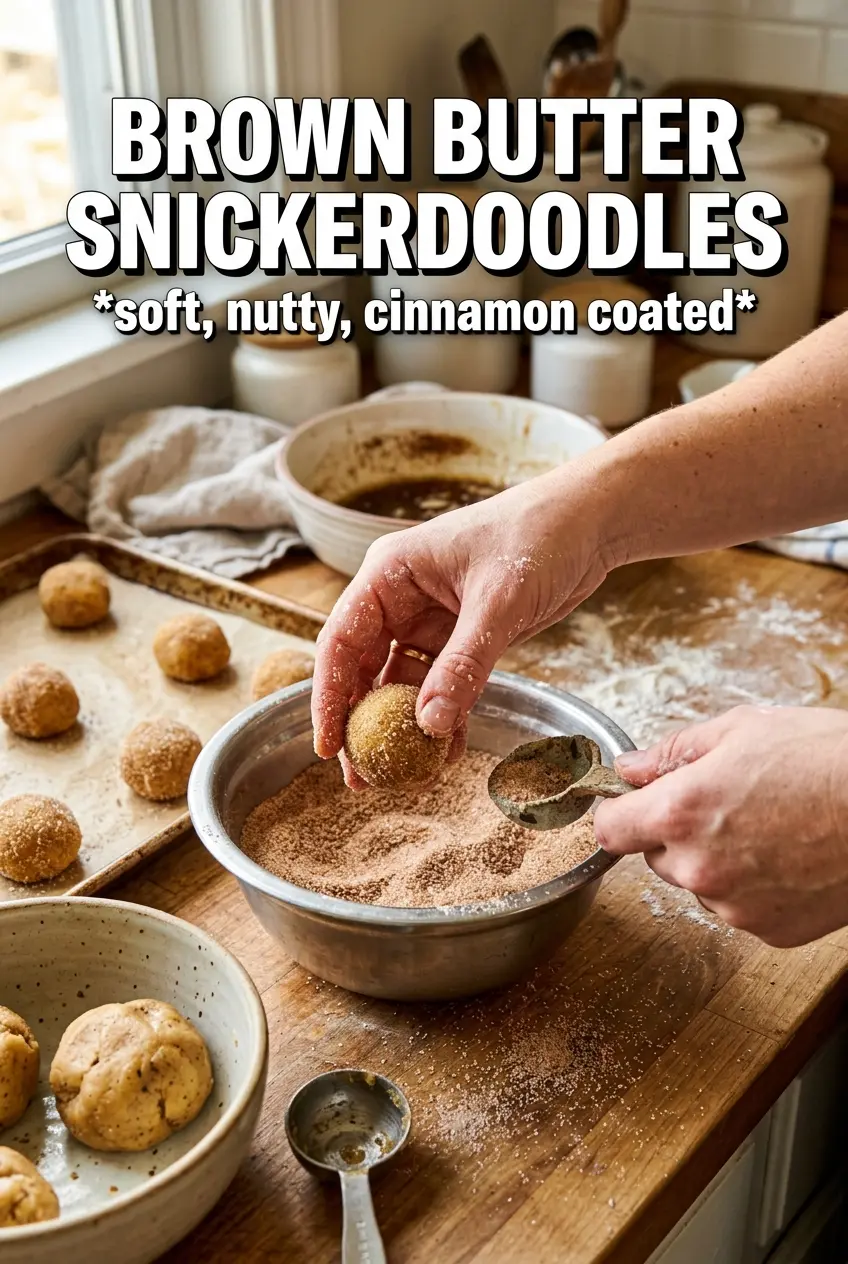
Mix the cinnamon sugar in a shallow bowl and coat each dough ball heavily so the outside bakes into a crackled, spiced shell. Scoop about 1-1/2 tablespoons each; smaller cookies bake too fast and larger ones can slump before the center sets. Bake until the edges look set and the tops are crinkled, then let them rest on the pan for five minutes. They finish setting there, and that short pause keeps them from breaking when you move them.
Make them a little chewier
Pull the cookies from the oven when the centers still look slightly underdone and let them finish on the sheet pan. That extra minute of carryover heat keeps the middle soft without turning the edges dry.
Gluten-free version
Use a 1:1 gluten-free baking blend that includes xanthan gum. The texture will be a touch more delicate, but the browned butter and cinnamon sugar still carry the flavor beautifully.
Extra cinnamon-forward cookies
Add another 1/2 teaspoon cinnamon to the dough if you want a stronger spice note. The cookies will taste a little warmer and more aromatic, but the browned butter still stays in front.
Storage and Reheating
- Refrigerator: Store baked cookies in an airtight container for up to 5 days. They stay soft, though the cinnamon coating softens a little after day one.
- Freezer: Freeze baked cookies or unbaked dough balls for up to 2 months. For dough, freeze on a tray first, then transfer to a bag so they don't stick together.
- Reheating: Warm baked cookies in a 300F oven for 3 to 4 minutes or in the microwave for about 8 seconds. Don't overheat them or the centers dry out before the sugar coating comes back to life.
Questions I Get Asked About This Recipe
Brown Butter Snickerdoodles
Ingredients
Equipment
Method
- Brown the unsalted butter until golden, then refrigerate until solid, about 1 hour with a visual cue of a firm, scoopable butter texture.
- Preheat the oven to 375°F and line baking sheets with parchment, using a visual cue of parchment fully covering the pan surface.
- Whisk together all-purpose flour, cream of tartar, baking soda, cinnamon, and salt until evenly combined, with a visual cue of uniform color and no dry streaks.
- Beat the solidified browned butter and granulated sugar until creamy, then add eggs and vanilla extract, mixing until smooth and lighter in appearance.
- Fold the flour mixture into the wet ingredients until just combined, with a visual cue of no visible dry flour pockets.
- Mix the rolling cinnamon sugar in a shallow bowl using granulated sugar, cinnamon, and nutmeg, with a visual cue of a consistently speckled coating.
- Scoop dough into 1-1/2 tablespoon balls, then roll generously in the cinnamon sugar mixture, using a visual cue of a thick, even coating.
- Bake for 10-12 minutes at 375°F until crinkled and the edges are set, with a visual cue of deeply golden tops and set rims.
- Cool the cookies on the pan for 5 minutes, letting the surface finish setting before transferring if needed.