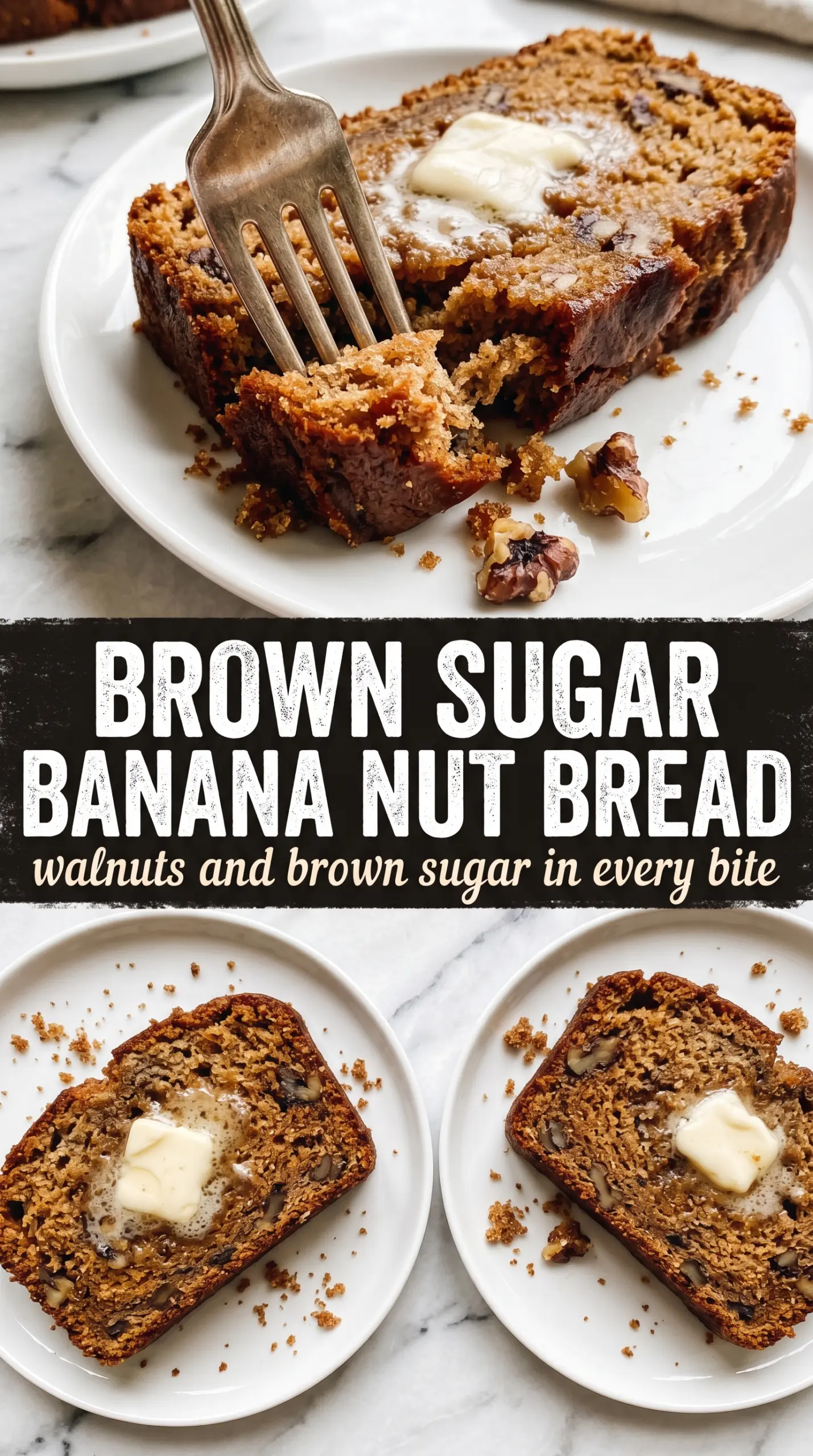
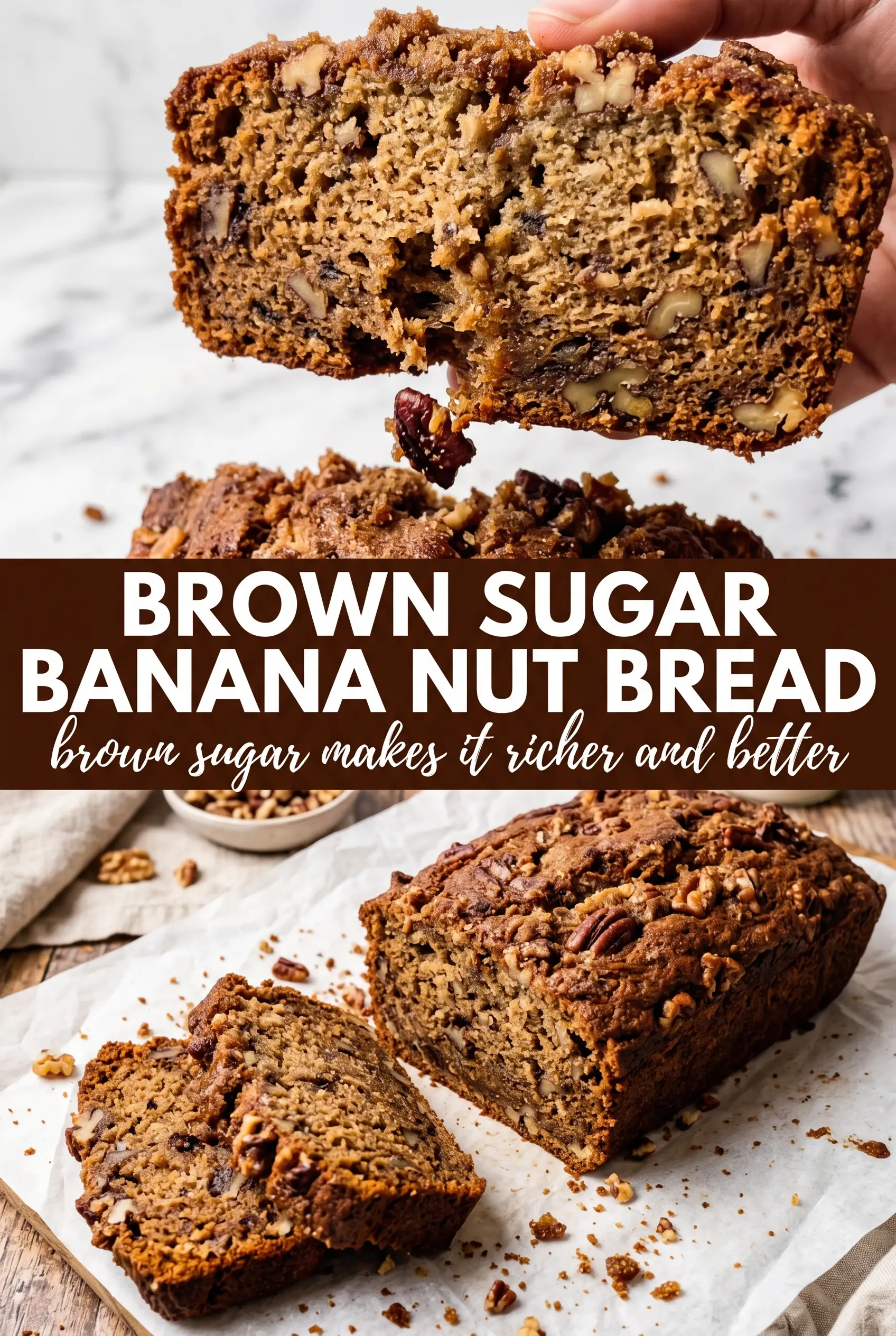
Brown sugar banana nut bread bakes up with a darker crumb, a softer texture, and a caramel note that plain banana bread just can’t match. The edges turn deep golden while the center stays plush and moist, and the walnuts give every slice a little crunch against that tender loaf. It’s the kind of bread that tastes even better the next day, once the brown sugar has had time to settle into the bananas.
The trick here is starting with melted butter and brown sugar before anything else. That mixture gives you a head start on flavor and helps the loaf bake with a rich, almost toffee-like depth. The bananas should be very ripe, with plenty of brown speckles, because underripe fruit leaves the bread flat and less fragrant. The walnuts are folded in at the end so they stay evenly distributed instead of sinking to the bottom.
Below, I’m walking through the part that matters most for this loaf: how to keep it moist without making it gummy, how to know when it’s baked through, and the swaps that still keep the crumb tender and flavorful.
The brown sugar gave it this almost caramel flavor, and the loaf stayed moist all the way through without being dense. I baked mine for 63 minutes and the toothpick came out clean right in the center.
Save this brown sugar banana nut bread for the days when you want a dark, caramel-tinted loaf with walnuts in every bite.
The Brown Sugar Batter That Keeps This Loaf Tender
Most banana bread goes wrong when the batter gets overmixed after the flour goes in. Once the flour is added, the loaf needs only a few folding strokes. Overworking it develops gluten and turns a soft breakfast bread into something tight and chewy. The other common problem is underbaking the center because the crust browns before the middle sets. This loaf needs enough time for the sugar and bananas to cook down into a moist crumb, not a wet one.
The melted butter helps the brown sugar dissolve into the batter instead of staying grainy. That matters because brown sugar carries molasses, and the molasses is what gives the loaf its deeper color and caramel edge. If you only cream softened butter and sugar the way you would for cookies, you’ll get a lighter, fluffier crumb. Here, you want dense moisture, not lift.
- Brown sugar — This is the backbone of the flavor. Packed brown sugar gives the loaf its darker color and that soft caramel finish. Light brown sugar works fine, but dark brown sugar pushes the flavor even deeper.
- Very ripe bananas — Use bananas with plenty of brown spots and soft flesh. They mash smoothly and bring sweetness plus moisture. Firm yellow bananas won’t give the same flavor or texture.
- Walnuts — Roughly chopped walnuts add crunch and keep the loaf from feeling one-note. Toasting them first is optional, but it adds a nutty edge if you want a stronger walnut flavor.
- Butter — Melted butter gives richness and keeps the crumb soft after the loaf cools. Oil can work in a pinch, but the flavor won’t be as full or as round.
What Each Ingredient Is Actually Doing in This Banana Bread
- Bananas (ripe, mashed) — Ripeness is critical. Ripe bananas are sweeter and add natural moisture. Use overripe for best flavor.
- Flour (all-purpose or whole wheat) — This provides structure. Don’t overmix or bread becomes tough and dense.
- Sugar (brown or white) — This tenderizes and adds flavor. The right amount creates moist crumb without gumminess.
- Eggs (the binder) — These hold everything together and add structure. Beat in gradually for volume.
- Butter or oil (the moisture keeper) — This keeps bread tender and prevents dryness. Oil creates moister bread than butter.
- Baking soda or baking powder (the leavening) — This creates rise. Too much creates bitter taste; too little makes dense bread.
- Vanilla extract (the flavor enhancer) — This deepens banana flavor and adds complexity. Don’t skip it.
- Mix-ins (nuts, chocolate chips, or fruit) — These add texture and prevent one-dimensional taste. Toss in flour so they don’t sink.
Building the Loaf So It Bakes Through Without Drying Out
Mix the Brown Sugar Base First
Whisk the melted butter and brown sugar until the mixture looks smooth and glossy, then whisk in the eggs and vanilla. This gives you a more even batter and helps the sugar dissolve before the flour goes in. If the mixture looks a little grainy at this stage, keep whisking for a few more seconds; that graininess disappears once the bananas go in. Don’t rush the eggs into a hot butter mixture or they can curdle.
Fold in the Bananas and Dry Ingredients
Stir in the mashed bananas until the batter looks thick and evenly speckled. Add the flour, baking soda, cinnamon, nutmeg, and salt, then fold only until the dry streaks disappear. The batter should look lumpy, not silky, and that’s a good sign. If you keep stirring until it looks perfectly smooth, the loaf will bake up tough.
Finish With the Walnuts and Bake
Fold in the walnuts at the very end so they stay suspended through the loaf instead of clumping in one section. Scrape the batter into a greased 9×5 loaf pan and bake at 350°F until the top is deep golden brown and a toothpick comes out clean from the center. If the top is browning too quickly before the middle is done, lay a loose piece of foil over the loaf for the last stretch of baking. Let it sit in the pan for 15 minutes before turning it out so it sets enough to slice cleanly.
How to Adapt This Banana Nut Bread Without Losing the Good Part
Dairy-Free Banana Nut Bread
Swap the butter for melted coconut oil or a neutral oil. Coconut oil keeps the loaf rich, but it adds a faint coconut note; neutral oil gives the softest crumb with the least extra flavor. The texture stays moist, though the buttery depth will be a little lighter.
Gluten-Free Version
Use a 1:1 gluten-free flour blend that already contains xanthan gum. The loaf will still be tender, but it may need the full bake time because gluten-free batters often hold more moisture. Don’t add extra banana to compensate or the center can turn gummy.
Pecan Swap
Replace the walnuts with chopped pecans for a sweeter, more buttery crunch. Pecans lean softer and a little richer, which fits the brown sugar base beautifully. Toasting them first makes the flavor stand out even more.
Muffin-Style Bake
Divide the batter into a lined muffin tin and bake until the tops spring back lightly and a tester comes out clean. The flavor stays the same, but the edges bake up more quickly, so start checking early. This is the best route if you want grab-and-go portions.
Storage and Reheating
- Refrigerator: Store tightly wrapped at room temperature for 3 days or in the fridge for up to 5 days. The crumb firms up a little in the fridge, but the flavor gets even deeper.
- Freezer: This loaf freezes well. Wrap individual slices or the whole cooled loaf tightly in plastic wrap and then foil, and freeze for up to 3 months.
- Reheating: Warm slices in the microwave for 10 to 15 seconds or in a low oven until just heated through. Don’t overheat it or the crumb will dry out fast.
Questions I Get Asked About This Recipe
Brown Sugar Banana Nut Bread
Ingredients
Equipment
Method
- Preheat oven to 350°F and grease a 9x5 loaf pan, then place it on a sheet pan for easy handling. A matte coat of grease helps the loaf release cleanly.
- Whisk melted butter and brown sugar together until smooth, then whisk in eggs and vanilla. The mixture should look glossy and well combined before adding bananas.
- Stir in mashed bananas until fully incorporated. Look for no streaks of banana and a thick, uniform batter.
- Fold in all-purpose flour, baking soda, cinnamon, nutmeg, and salt until just combined, then fold in walnuts. Stop when no dry flour remains to keep the crumb extra tender.
- Pour the batter into the pan and bake for 60–70 minutes until a deep golden brown and a toothpick inserted in the center comes out clean. Watch the top darken and set as it finishes.
- Cool in the pan for 15 minutes before turning out. The loaf should feel firm and sliceable while still warm.