Roasted Brussels sprouts and butternut squash turn this pasta into something that eats like a full meal, with crisp edges, tender centers, and a brown butter sauce that clings to every ridge of the rigatoni. The vegetables bring sweetness and bite, the parmesan pulls it all together, and the toasted hazelnuts finish with a little crunch that keeps each forkful interesting.
What makes this version work is the separation of the vegetables before they hit the pasta. Brussels sprouts need space and direct heat to caramelize instead of steaming, and the squash needs enough time to soften without falling apart. Brown butter, garlic, and sage build the sauce in minutes, but the reserved pasta water is what helps it coat the noodles without turning greasy.
Below you’ll find the exact point where the butter should smell nutty, how to keep the vegetables from going soft, and the best swap if you want to make this without nuts.
The Brussels stayed browned instead of mushy, and the brown butter with sage gave the pasta this cozy, nutty flavor that tasted restaurant-level. Even my picky kid ate the squash pieces.
Save this Brussels sprouts and butternut squash pasta for the night you want caramelized vegetables, brown butter, and a one-pan-style finish that feels special.
The Step Most People Skip: Roasting the Vegetables Separately
The quickest way to flatten this dish is to roast the Brussels sprouts and butternut squash together on a crowded pan. The sprouts give off moisture, the squash softens fast, and you end up with steamed vegetables instead of caramelized edges. Separate pans or at least separate space on one pan keeps each vegetable in its own lane long enough to brown properly.
425F gives you enough heat to drive off surface moisture without burning the sugar in the squash. The Brussels are done when the cut sides are deeply golden and the outer leaves look a little crisp. The squash should be tender enough to pierce with a fork, but not collapsing into mash when you toss it with the pasta.
What Each Ingredient Is Doing in This Bowl
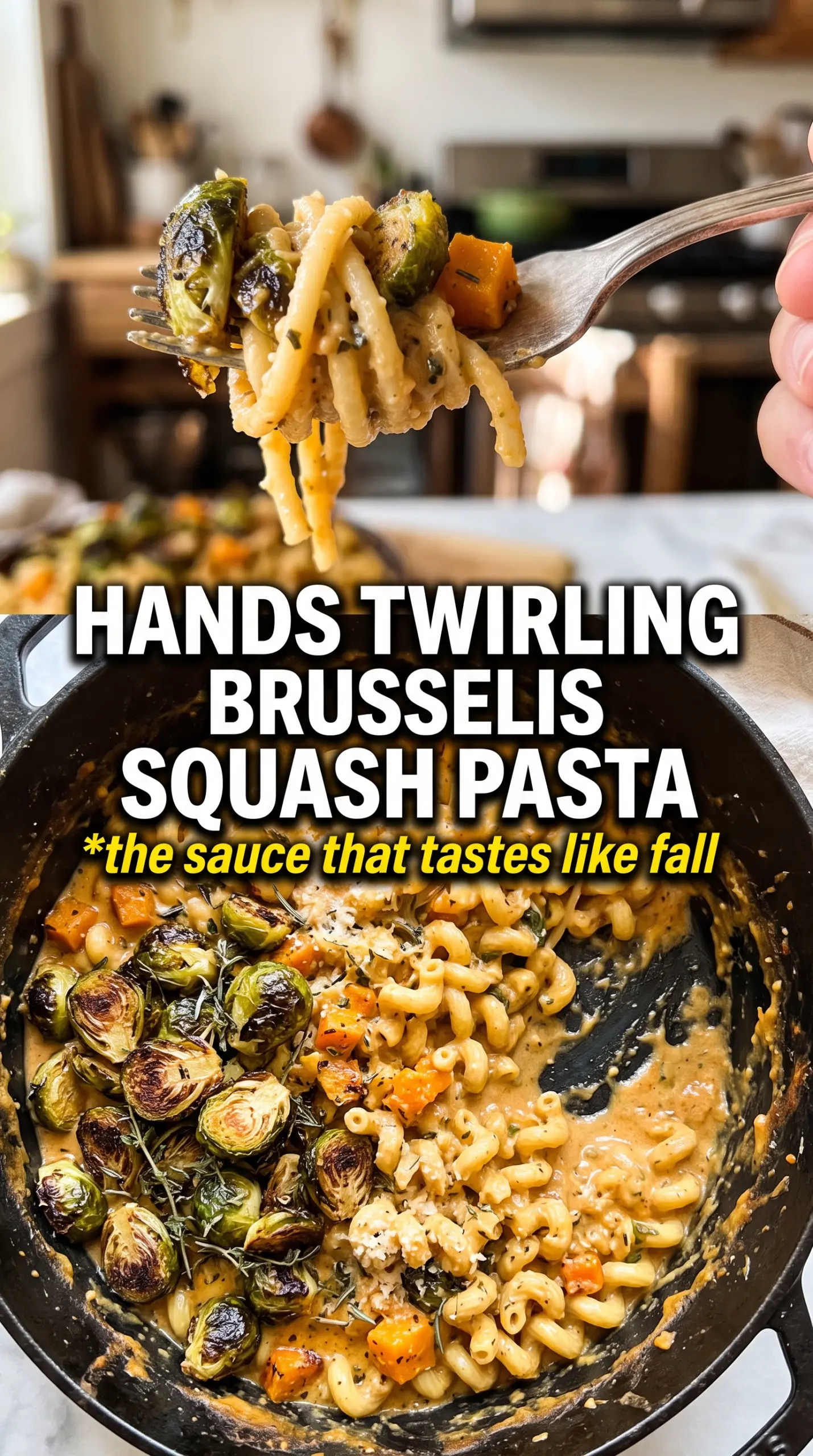
- Rigatoni or penne — Short pasta with ridges holds onto the brown butter and parmesan better than long noodles. Use a sturdy shape here; delicate pasta gets lost under the vegetables.
- Butternut squash — This brings sweetness and a soft, creamy bite once roasted. Pre-cut squash is fine if it’s fresh, but pieces that are too small will dry out before the sprouts finish.
- Brussels sprouts — Halving them gives you more surface area for browning, which is where the flavor is. If your sprouts are large, quarter them so the centers cook before the edges char.
- Butter — Brown butter is the sauce. Unsalted is best because it lets you control the final seasoning, and you want to watch the color closely once the milk solids start turning amber.
- Sage — Fresh sage perfumes the butter and makes the whole dish taste rounder and more savory. Dried sage will work in a pinch, but use less because it can turn dusty and overpowering.
- Parmesan — This gives the sauce body and salt. Grate it finely so it melts into the pasta instead of clumping on top.
- Toasted hazelnuts or walnuts — These add crunch and keep the texture from going soft. Toast them before chopping so their flavor stays clean and nutty instead of raw.
Building the Sauce Before the Pasta Catches Up
Brown the butter without rushing it
Melt the butter in a wide pan over medium heat, then let it foam and settle. The milk solids will sink and then begin to turn golden with a nutty smell that tells you you’re close. Pull it off the heat the moment it turns amber; if it goes too far, it turns bitter fast.
Wake up the garlic and sage
Stir in the garlic and sage after the butter browns, not before. Garlic burns faster than butter browns, so adding it early gives you a bitter edge instead of a mellow base. Keep it moving for about a minute, just until the garlic smells sweet and the sage looks glossy.
Use the pasta water to turn fat into sauce
When the pasta goes into the pan, add a splash of reserved pasta water and toss hard. The starch in that water helps the butter and parmesan emulsify into a silky coating instead of leaving grease at the bottom of the skillet. Add more only if the pasta looks dry; too much water dilutes the sauce and washes out the browned flavor.
Fold in the vegetables at the very end
Add the roasted Brussels sprouts and squash after the pasta is coated. This keeps the vegetables intact and stops the squash from breaking down into the sauce. The final toss should look glossy, with the vegetables clinging to the noodles rather than sinking underneath them.
Make It Dairy-Free Without Losing the Nutty Finish
Swap the butter for a good olive oil and use a dairy-free parmesan alternative or a spoonful of nutritional yeast. You won’t get true brown butter, but the roasted vegetables, sage, and toasted nuts still give you a deep, savory bowl with plenty of richness.
Make It Gluten-Free With a Better Pasta Shape
Use a sturdy gluten-free rigatoni or penne that can hold up to tossing. Cook it just shy of done, because gluten-free pasta gets soft fast once it hits the sauce and vegetables.
Swap the Nuts for Crunch Without the Hazard
If you need to avoid tree nuts, use toasted pumpkin seeds instead of hazelnuts. You still get that final crunch, and the seeds bring a toasty note that works well with the squash and sage.
Storage and Reheating
- Refrigerator: Store in an airtight container for up to 4 days. The pasta will absorb some of the sauce, so it gets a little tighter after chilling.
- Freezer: It freezes, but the squash texture softens after thawing and the parmesan can turn grainy. Freeze only if you don’t mind a softer finish, and keep the nuts out until serving.
- Reheating: Warm it in a skillet over medium-low with a splash of water to loosen the sauce. Microwaving works in a pinch, but it can dry out the pasta and make the vegetables slump.
Questions I Get Asked About This Recipe
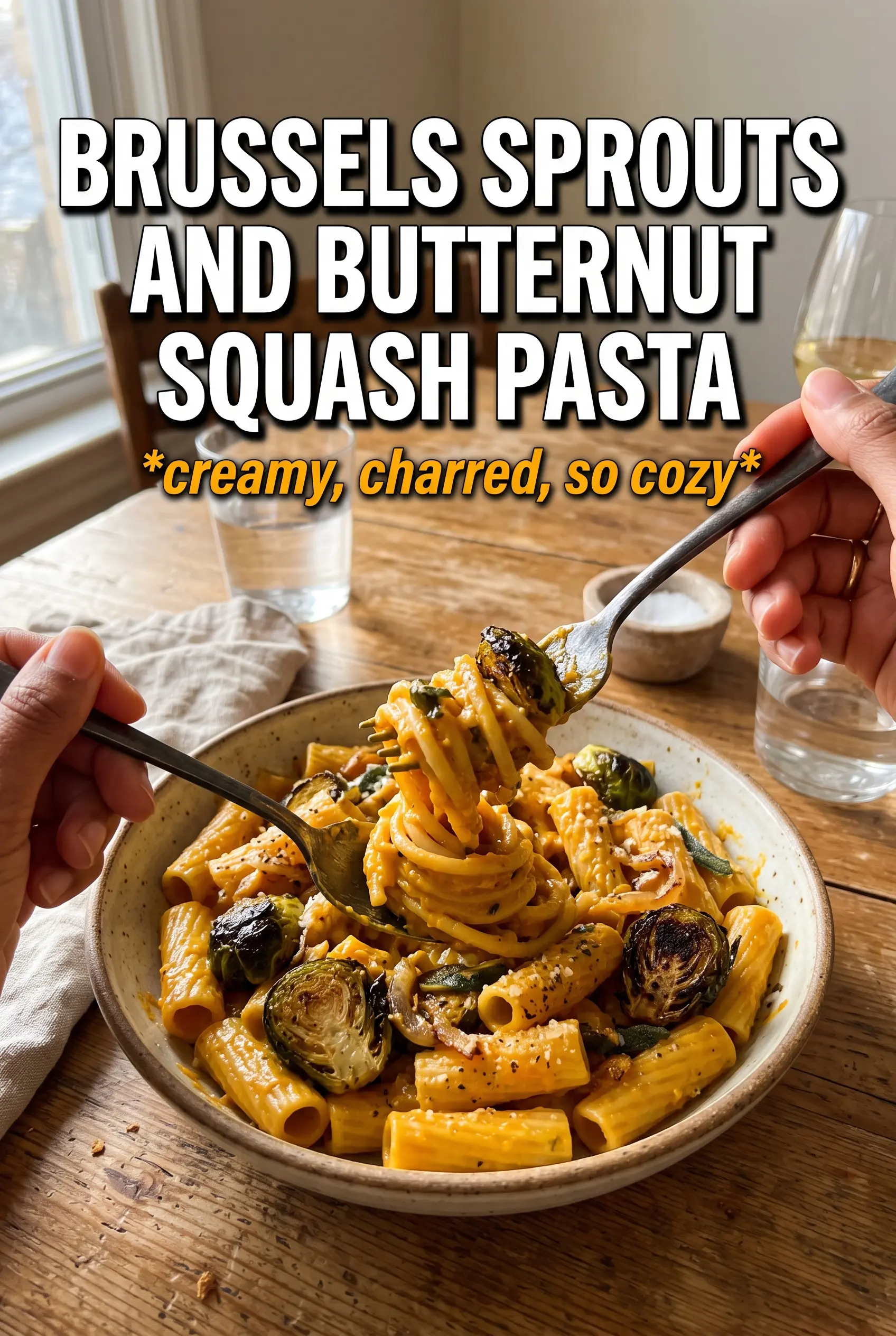
Brussels Sprouts And Butternut Squash Pasta
Ingredients
Equipment
Method
- Heat oven to 425F. Toss butternut squash cubes with olive oil, salt, and pepper, spread on a sheet pan, and roast for 25 minutes until caramelized.
- With a separate sheet pan or space cleared out, toss halved Brussels sprouts with olive oil, salt, and pepper, spread in an even layer, and roast at 425F for 25 minutes until caramelized.
- Cook rigatoni or penne according to package directions until al dente, reserving 1 cup of pasta water before draining.
- In a cast iron skillet over medium heat, melt the unsalted butter and cook until it turns golden and smells nutty.
- Add minced garlic and chopped fresh sage to the brown butter and cook briefly until fragrant, keeping the butter golden.
- Add drained pasta to the skillet and pour in pasta water a splash at a time, tossing to coat until glossy.
- Toss in the roasted butternut squash and roasted Brussels sprouts, then add grated parmesan and toss until the sauce clings to the pasta.
- Season with salt and pepper to taste. Top with toasted hazelnuts or walnuts and serve immediately.