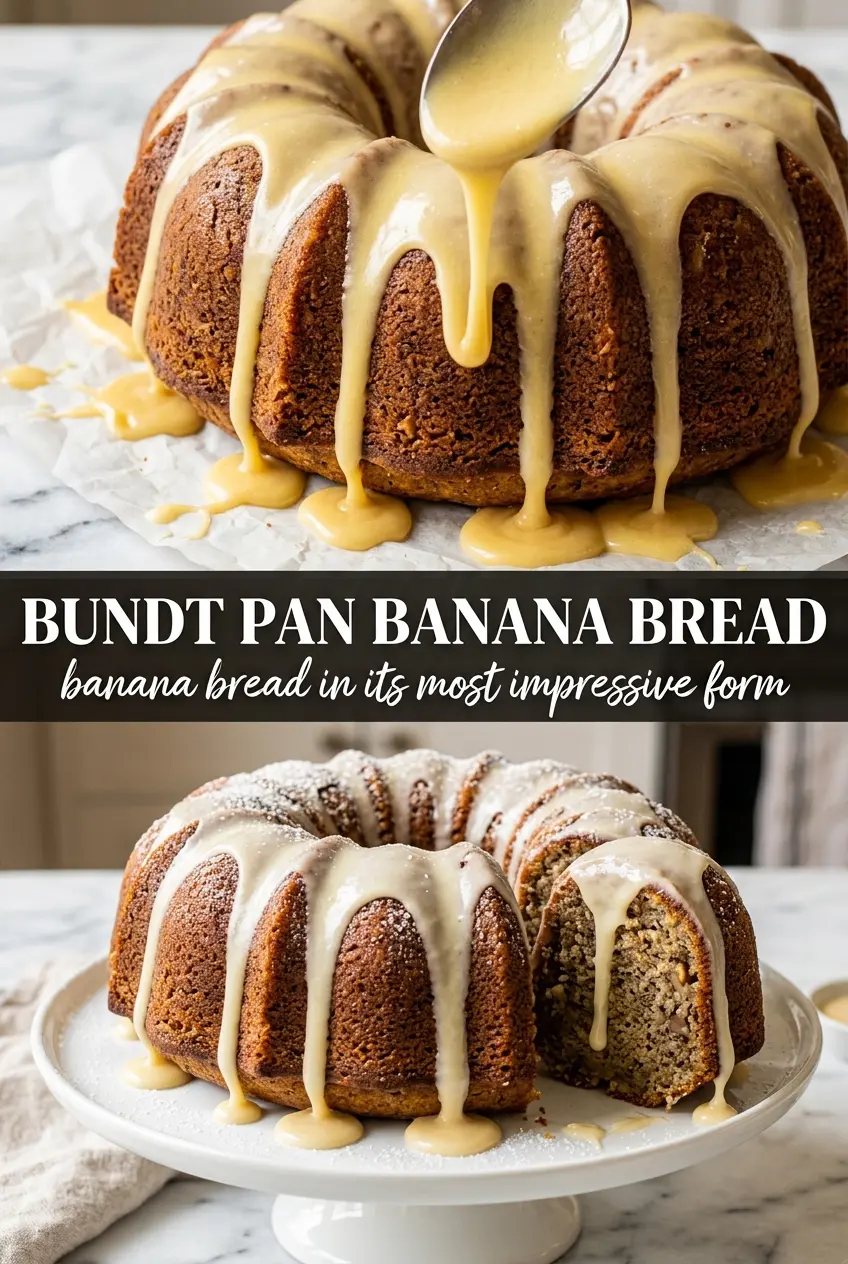
Bundt pan banana bread bakes up with a deep golden crust, a tender crumb, and all the familiar banana bread comfort you want, but the shape gives it a little drama that a standard loaf pan just can’t match. The ridges catch the vanilla glaze, so every slice feels bakery-worthy even though the batter is plain, practical pantry food.
The trick here is using sour cream and a well-greased bundt pan. Sour cream keeps the crumb soft without making it heavy, and the bundt shape needs more attention than a loaf pan because every curve has to be coated so the bread releases cleanly. I also like folding the dry ingredients in just until the flour disappears; overmixing turns banana bread tight instead of tender.
Below, I’m walking through the small details that keep this from sticking, the reason the glaze works better on a fully cooled cake, and a few swaps if you want to use what’s already in your kitchen.
The glaze settled into every ridge and the crumb stayed moist for days. I was worried the bundt pan would be hard to unmold, but it came out clean after 15 minutes exactly.
Pin this bundt pan banana bread for the kind of breakfast that looks polished, slices cleanly, and stays moist under a vanilla glaze.
The Reason Bundt Banana Bread Releases Cleanly Instead of Sticking
A bundt pan changes the whole risk profile of banana bread. The batter has more surface area touching the pan, which means every groove has to be greased and floured with care. If you miss the upper curves or the center tube, the bread can tear when you invert it, even if the crumb is fully baked.
The other common problem is overbaking the outside while the middle stays soft. A bundt pan bakes faster at the edges than a loaf pan, so the best cue is a toothpick that comes out with a few moist crumbs, not a wet batter trail. Pull it at the right moment and let it rest for 15 minutes; that short cooling time helps the structure set so it releases instead of collapsing.
What the Sour Cream and Bananas Are Doing Here
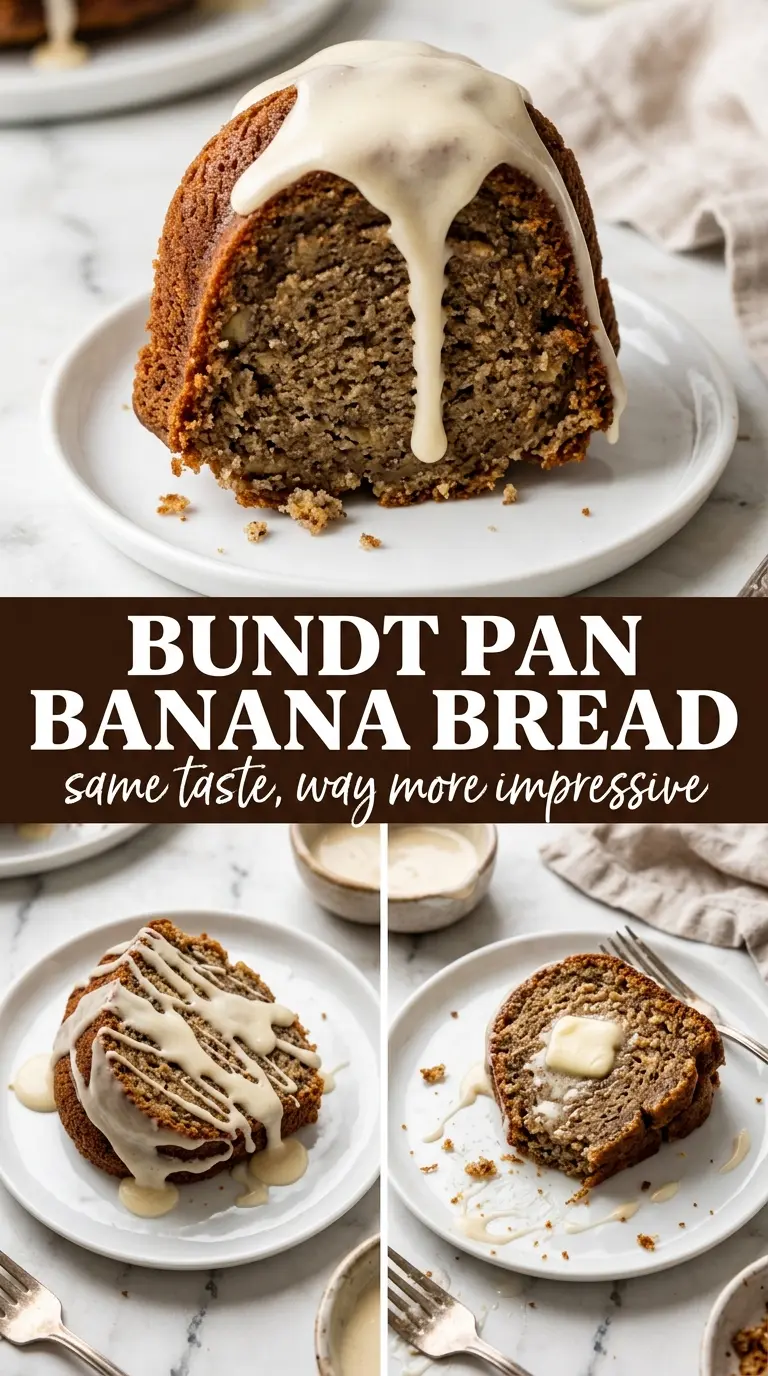
- Bananas — The riper they are, the stronger the banana flavor and the sweeter the loaf. Brown-speckled bananas are ideal; if yours are still firm and pale, the bread will taste flatter and need a bit more baking time.
- Sour cream — This is what keeps the crumb plush. Yogurt can work in a pinch, but sour cream gives a softer, richer texture and a little more insurance against dryness.
- Melted butter — Melted butter gives you a moist crumb and a clean banana bread flavor without needing to cream anything. If you swap in oil, the bread will stay soft, but you’ll lose the buttery depth that plays so well with the glaze.
- Cinnamon — Just enough to warm the banana without turning this into spice bread. Leave it out if you want a straighter banana flavor, but don’t increase it too much or it starts competing with the glaze.
- Walnuts — Optional, but they add crunch and keep each slice from feeling too soft. Toast them first if you want the strongest flavor; add them raw if convenience matters more than depth.
Building the Batter Without Toughening the Crumb
Starting With the Wet Ingredients
Mash the bananas until they’re mostly smooth, then whisk in the melted butter, sugar, eggs, and vanilla. The mixture should look glossy and thick, not whipped and airy. Stir in the sour cream last so the batter stays cohesive and creamy. If the butter is hot enough to cook the eggs, wait a few minutes before combining everything; lukewarm butter mixes in cleanly and keeps the texture even.
Folding in the Dry Ingredients
Add the flour, baking soda, salt, and cinnamon and fold just until no dry streaks remain. Stop there. Overmixing builds gluten and makes banana bread dense and chewy in the wrong way. If you’re using walnuts, fold them in at the very end so they stay evenly distributed instead of sinking to the bottom of the pan.
From Pan to Oven
Scrape the batter into a thoroughly greased and floured bundt pan, then tap it on the counter a few times to knock out large air pockets. The batter should settle into the ridges without needing to be pushed around much. Bake until the top is deeply golden and a tester comes out clean or with a few damp crumbs. If the top is browning faster than the center is setting, tent loosely with foil for the last stretch of baking.
How to Adjust This Bundt Banana Bread Without Losing the Good Part
Make it dairy-free
Use melted coconut oil instead of butter and a thick dairy-free yogurt in place of sour cream. The loaf will still be moist, but the flavor shifts a little lighter and less buttery. Don’t use a thin plant milk swap for the sour cream replacement; it won’t give the same body.
Skip the nuts without changing the texture
Leave the walnuts out entirely if you want a smooth, sliceable crumb. The loaf is sturdy enough on its own, so you don’t need to replace them with anything. If you want extra texture, sprinkle chopped nuts over the glaze instead of baking them inside.
Turn it into a lighter breakfast slice
You can cut the glaze in half or skip it entirely and dust the cooled bundt with powdered sugar. That keeps the loaf less sweet while still giving you the pretty ridged shape. The banana bread itself stays tender, so you won’t lose anything important.
Storage and Reheating
- Refrigerator: Store in an airtight container for up to 5 days. The crumb gets a little firmer in the fridge, but the glaze helps keep the top from drying out.
- Freezer: This freezes well. Wrap individual slices tightly and freeze for up to 3 months; thaw at room temperature so the glaze doesn’t turn sticky from trapped moisture.
- Reheating: Warm slices in the microwave for 10 to 15 seconds or in a low oven until just softened. Don’t overheat it or the crumb turns dry before the center is warmed through.
Questions I Get Asked About This Recipe
Bundt Pan Banana Bread
Ingredients
Equipment
Method
- Preheat the oven to 350°F, then thoroughly grease and flour a standard bundt pan so the ridges release cleanly.
- Whisk melted butter, sugar, eggs, and vanilla into mashed ripe bananas until smooth, then stir in sour cream until incorporated.
- Fold in all-purpose flour, baking soda, salt, and cinnamon until just combined, then fold in chopped walnuts if using.
- Pour the batter into the bundt pan and tap it on the counter to remove air bubbles trapped in the ridges.
- Bake for 45–55 minutes at 350°F until a toothpick comes out clean and the top is golden.
- Cool in the pan for 15 minutes before inverting so the bundt shape sets without cracking.
- Drizzle vanilla glaze over the cooled bread, letting it run down every ridge and pool at the base.