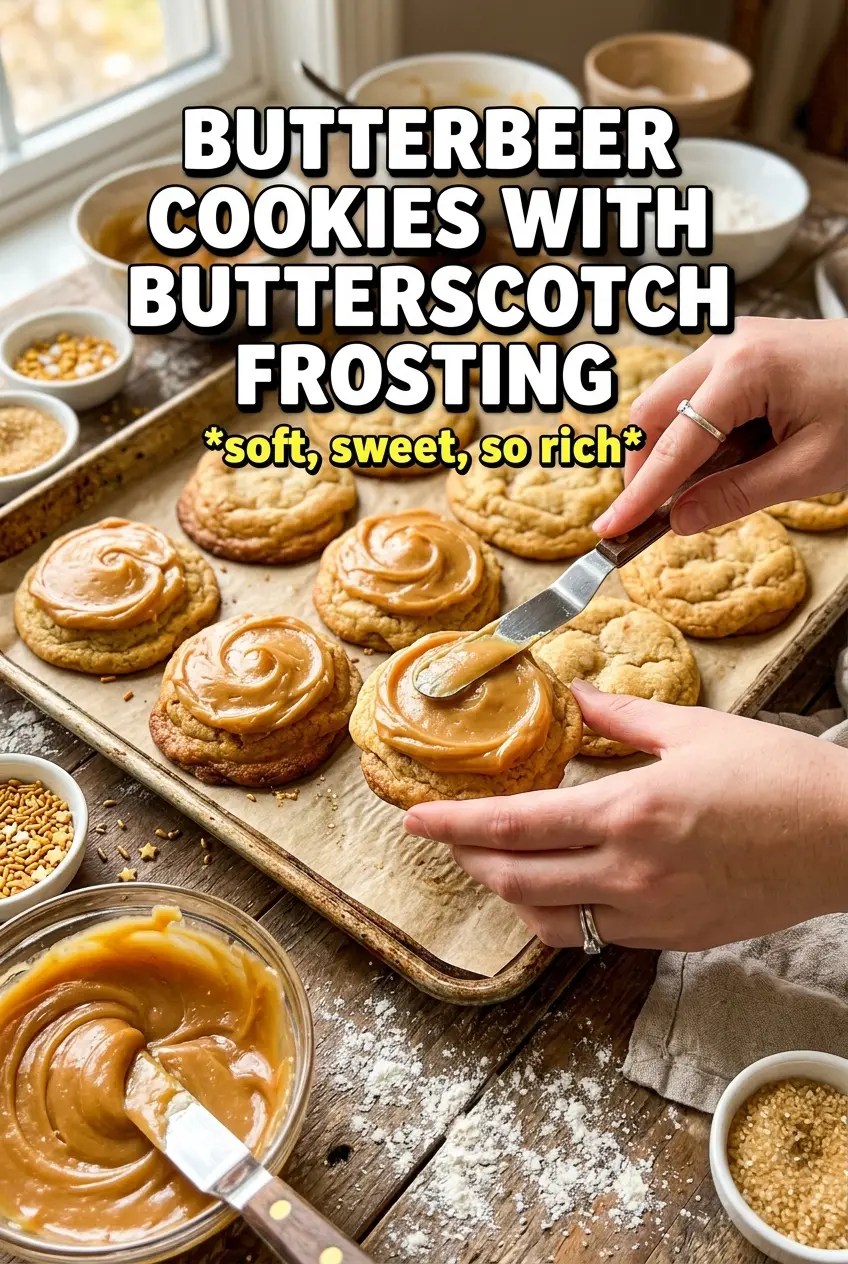
These butterbeer cookies bake up soft in the middle with lightly crisp edges, then get finished with a thick butterscotch frosting that tastes like the filling of your favorite candy bar dressed up for dessert. The butterscotch chips melt into little pockets, the extract pushes the cookie dough into that unmistakable caramel-butter flavor, and the frosting turns each cookie into something that looks bakery-made without needing any fancy technique.
The trick is balancing the cookie base so it stays tender enough to support the frosting. Brown sugar keeps the crumb soft and adds depth, while the butter extract and butterscotch extract do the heavy lifting on flavor. I also like baking these just until the edges set and the centers look slightly underdone; that gives you a cookie that stays soft after cooling instead of turning dry under the frosting.
Below, I’ll walk through the details that matter most, including how to keep the frosting smooth and how to avoid overbaking the cookies. There’s also a storage note, because these hold up better than you might expect if you stack them carefully.
The cookies stayed soft for days, and the butterscotch frosting set up just enough to swirl neatly without sliding off. I loved the caramel drizzle on top — it made them taste like a bakery cookie instead of a basic frosted one.
Save these butterbeer cookies with butterscotch frosting for the days when you want a soft cookie, thick frosting, and a caramel drizzle in every bite.
The Secret to Soft Cookies That Still Hold a Frosting Swirl
The biggest mistake with frosted cookies is baking them until they look completely finished in the oven. By the time they cool, they’ve gone past tender and into dry, which makes the frosting feel heavy instead of luxurious. These are better when you pull them as soon as the edges turn golden and the centers still look slightly puffy; they finish setting on the baking sheet.
Another place people go wrong is using butter that’s too warm. Soft butter should yield when pressed, but if it’s greasy or collapsing, it won’t trap enough air when you beat it with the sugars. That air is what gives the cookies a lighter texture instead of a dense, flat spread.
- Butter extract gives the dough that true butterbeer-style flavor. Vanilla works in a pinch, but you lose some of the caramelized, bakery note that makes these taste special.
- Butterscotch chips add pockets of sweetness and keep the flavor from feeling one-note. Fold them in at the end so they stay intact instead of melting into the dough.
- Brown sugar is doing more than sweetening the dough. It helps the centers stay soft and brings a deeper molasses note that plays well with the butterscotch.
- Baking soda gives the cookies enough lift to spread into thick rounds instead of staying squat and cakey.
What Each Ingredient Is Actually Doing in the Frosting

- Cream cheese gives the frosting structure and a little tang so it doesn’t read as plain sweet buttercream. Full-fat cream cheese works best because reduced-fat versions can turn loose.
- Butterscotch sauce is what makes the frosting taste like more than sweetened dairy. A thick sauce blends cleanly; if yours is thin, add it slowly so the frosting doesn’t go runny.
- Powdered sugar thickens everything into a pipeable swirl. Add it gradually so you can stop at the right texture instead of fighting a frosting that’s too stiff.
- Caramel drizzle goes on last and adds contrast in both flavor and appearance. Warm it just enough to drizzle cleanly, not enough to thin the frosting beneath it.
Building the Cookies and Frosting So Nothing Turns Greasy or Grainy
Whipping the Butter and Sugars
Start by beating the butter with both sugars until the mixture turns pale and fluffy. That step pulls air into the dough, and it matters more than most people think because it keeps the cookies from baking up heavy. If the butter is too cold, the sugar won’t dissolve properly; if it’s melted, the cookies spread too much and lose that soft, rounded shape.
Bringing the Dough Together
Add the eggs and extracts before the flour, and mix only until the dry ingredients disappear. Overmixing at this point tightens the dough and gives you cookies that bake up tougher than they should. Fold in the butterscotch chips by hand so they stay evenly distributed without being crushed.
Baking for the Right Center
Scoop the dough into 2-tablespoon rounds and leave a little space between them. Bake until the edges are lightly golden and the centers look set but still soft. If you wait for the tops to look dry all the way across, you’ve already gone too far for a frosted cookie.
Making the Frosting Pipeable
Beat the cream cheese and butter until completely smooth before adding the butterscotch sauce and powdered sugar. If the frosting looks loose, keep beating for a minute or two; it often firms up as the sugar incorporates. If it feels too soft to swirl, chill it briefly rather than adding more sugar right away, because too much sugar can make it gritty and overly sweet.
Gluten-Free Version
Use a 1:1 gluten-free baking blend that includes xanthan gum. The cookies will be a little more delicate, but the texture stays soft if you don’t overbake them. Let them cool fully before frosting so they don’t crumble when you swirl on the topping.
Dairy-Free Swaps
Use plant-based butter in the cookies and a dairy-free cream cheese alternative in the frosting. The flavor is still rich, though the frosting will usually soften faster at room temperature, so keep the finished cookies chilled until serving.
Extra Butterscotch Finish
Swap the caramel drizzle for a thinner ribbon of butterscotch sauce if you want the flavor to lean more in the cookie’s direction. It looks slightly less dramatic, but it reinforces the butterscotch note and keeps the topping consistent from bite to bite.
Storage and Reheating
- Refrigerator: Store frosted cookies in an airtight container for up to 4 days. Separate layers with parchment so the frosting doesn’t smear.
- Freezer: Freeze the unfrosted cookies for up to 2 months. Frosting freezes poorly once it’s piped, so decorate after thawing for the best texture.
- Reheating: These don’t need reheating. If the cookies have been chilled, let them sit at room temperature for 20 to 30 minutes before serving so the frosting softens and the flavor opens up.
Questions I Get Asked About This Recipe
Butterbeer Cookies With Butterscotch Frosting
Ingredients
Equipment
Method
- Preheat oven to 375°F (190°C) and line baking sheets with parchment; set aside for quick scooping.
- Whisk together the flour, baking soda, and salt until evenly combined and no streaks of dry ingredients remain.
- Beat the softened butter, brown sugar, and granulated sugar until fluffy, then scrape the bowl and add eggs, butter extract (or vanilla), and butterscotch extract.
- Fold the flour mixture into the butter mixture just until no dry flour remains, then fold in the butterscotch chips.
- Scoop dough into 2-tablespoon rounds and space them on the lined sheets, then bake for 10-12 minutes until the edges are golden.
- Cool cookies completely on the baking sheets before frosting so the frosting doesn’t melt or slide.
- Beat the cream cheese, butter, and butterscotch sauce until smooth, then beat in powdered sugar and vanilla until thick and pipeable.
- Pipe a generous swirl of butterscotch frosting onto each cooled cookie.
- Drizzle with caramel sauce and top each cookie with a butterscotch chip.