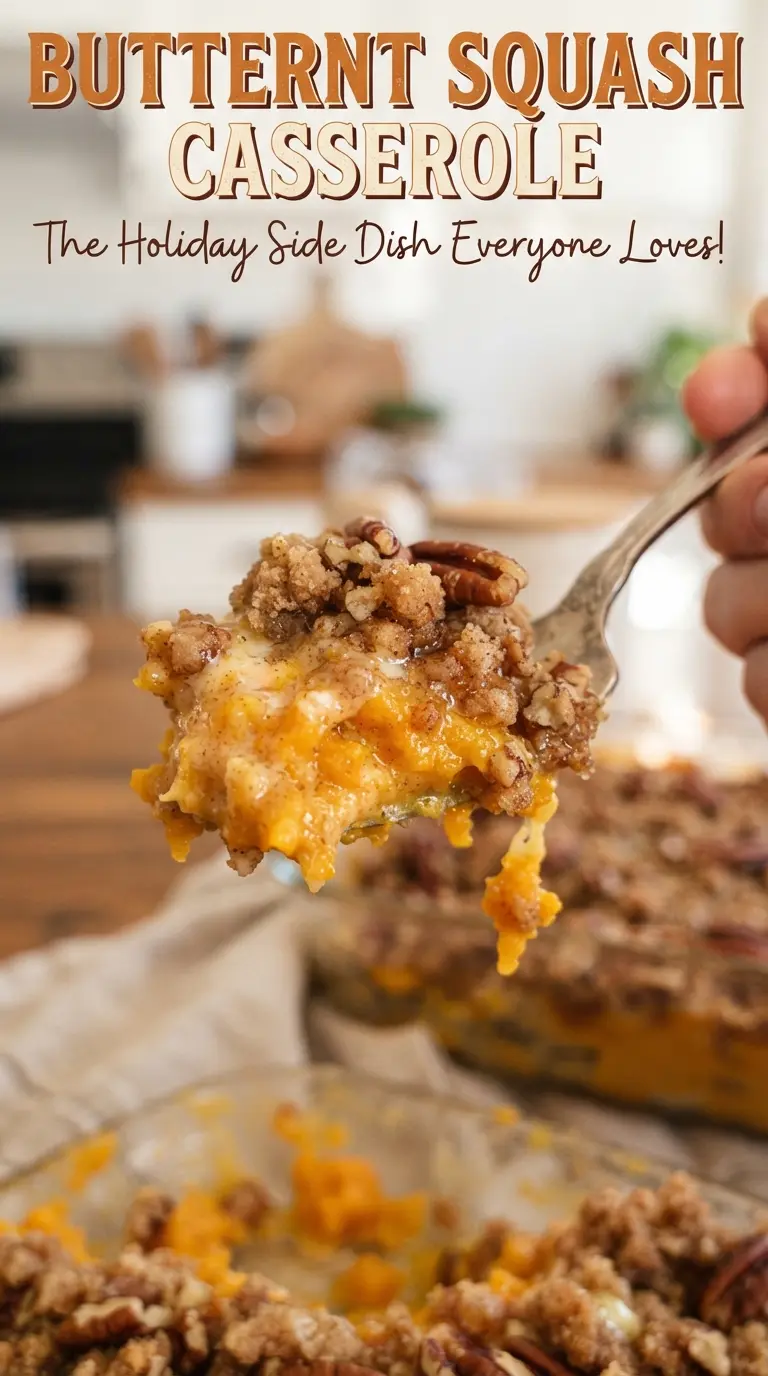
Butternut squash casserole lands somewhere between a classic side dish and a dessert-adjacent comfort food, and that sweet-savory balance is exactly why it keeps showing up on holiday tables and weeknight menus alike. The filling bakes up soft and silky, almost like a mash that’s been enriched just enough to hold its shape, while the pecan topping turns crisp and golden and gives every bite a little crunch.
What makes this version work is the way the squash is handled before it ever reaches the oven. Boiling it until it’s fully tender means the base mashes smoothly instead of turning grainy, and draining it well keeps the casserole from loosening into a soupy layer. The eggs help it set, the butter carries the flavor, and the brown sugar and cinnamon stay in the background just enough to make the squash taste deeper and warmer without turning it into pie filling.
You’ll also find a few practical notes below on how to keep the topping crisp, how to swap in a different nut if needed, and what to do if you want to get part of the casserole prepped ahead of time.
The squash baked up creamy, not watery, and that pecan topping stayed crisp all the way through dinner. I drained it well like you said, and the casserole held its shape beautifully when I scooped it.
Love a creamy butternut squash casserole with a crunchy pecan topping? Save this one for the holidays or any night you want a sweet-savory side that bakes up cleanly.
The Real Trick to a Casserole That Sets, Not Soups Out
Butternut squash carries a lot of water, and that’s the reason some casseroles slump instead of slice. Boiling it until it’s very tender is only half the job; draining it well matters just as much. If the squash goes into the bowl holding excess moisture, the eggs can’t set the base properly and the finished dish turns loose under the topping.
The other thing to watch is texture. You want the squash mashed until smooth enough to spread easily, but not whipped with so much force that it becomes gluey. The butter and milk should blend in cleanly, and the mixture should look thick and spoonable before it goes into the baking dish. If it looks wet, it’ll stay wet.
- Drainage — Let the squash sit in the colander for a few minutes after boiling. That short pause gives steam and excess water time to escape.
- Eggs — They’re what help the casserole hold together. Skip them and you’ll get a loose side dish rather than a set casserole.
- Pecan topping — It needs to stay crumbly, not pasty. If the butter is too hot when you mix it in, the topping can turn dense instead of sandy.
What Each Ingredient Is Actually Doing in This Dish
- Butternut squash — This is the backbone of the casserole, so use a squash that feels heavy for its size with firm, unbruised skin. Fresh cubed squash gives the best texture because you control the tenderness before mashing.
- Butter — Melted butter enriches both the filling and the topping. In the filling it adds silkiness; in the topping it helps the flour and pecans bake into crisp crumbles.
- Brown sugar — This adds molasses depth instead of plain sweetness. If you only have white sugar, the casserole will still work, but the flavor will be flatter and less warm.
- Eggs — They give the casserole structure. Don’t add them to piping hot squash or they can start to scramble; let the squash cool for a minute after mashing.
- Pecans — They’re worth using here because they bring both flavor and crunch. Walnuts can stand in, but they taste a little more bitter and less buttery.
- Flour — This is what gives the topping its streusel-like crumble. All-purpose flour works best; a gluten-free 1:1 blend will do the job, though the topping may be a touch more delicate.
Building the Filling and Topping in the Right Order
Cooking the Squash Until It Mashes Cleanly
Start by boiling the peeled squash cubes until a fork slides through without resistance. If the pieces are still firm in the center, the mash will leave little hard bits behind and the casserole won’t bake evenly. Once it’s tender, drain it well and let the steam escape for a minute or two before mashing. That extra evaporation keeps the base thick enough to support the topping.
Mixing the Base Without Making It Gluey
Mash the squash with the butter, brown sugar, eggs, milk, vanilla, cinnamon, and salt until the mixture looks smooth and cohesive. Stop as soon as the last lumps disappear. If you beat it too aggressively, the texture can turn stretchy instead of creamy. Spread it into the baking dish in an even layer so the casserole bakes at the same rate from edge to center.
Turning the Pecans Into a Crisp Streusel
Work the flour, pecans, remaining butter, and remaining brown sugar together until you get uneven crumbs. You want clumps, not a paste. If the topping looks greasy, the butter is too warm; toss in the flour a little at a time until it loosens. Scatter it over the squash without pressing it down so it can bake into a crunchy cap instead of a compact layer.
Baking Until the Edges Bubble
Bake the casserole until the top is deeply golden and the filling bubbles around the edges. That bubbling is the sign the center has heated through and the eggs have set. If the topping browns before the edges start moving, tent loosely with foil for the last part of baking. Let it rest a few minutes before serving so the filling settles and scoops cleanly.
How to Adapt It When You Need a Different Finish
Make-Ahead for a Busy Holiday Table
You can cook and mash the squash a day ahead, then cover and refrigerate the base separately from the topping. Assemble everything just before baking so the pecans stay crisp. If you bake it fully ahead, the topping softens a bit, though the flavor still holds up.
Dairy-Free Version
Use a plant-based butter and an unsweetened non-dairy milk with some body, like oat milk. The casserole will still set because the eggs are doing the structural work, but the flavor will be a little less rich than the original. Keep the topping crumbly and don’t add extra liquid to compensate.
Gluten-Free Topping
Swap the all-purpose flour for a 1:1 gluten-free baking blend. The topping will still crisp, though it may be a little more delicate when you scoop it. Don’t use almond flour here unless you want a softer, more cookie-like topping.
Swap the Pecans for a Different Crunch
Walnuts work if that’s what you have, and chopped almonds bring a firmer crunch. Pecans taste the most natural here because they lean buttery and sweet, but any nut you choose should be chopped fine enough to form an even crumble.
Storage and Reheating
- Refrigerator: Store covered for up to 4 days. The topping will soften a bit, but the casserole still slices and reheats well.
- Freezer: It freezes best without the topping already on it. Freeze the filling tightly wrapped, then add a fresh pecan topping before baking.
- Reheating: Warm in a 325F oven until hot through. The mistake to avoid is microwaving it hard, which turns the filling loose and makes the topping soggy.
Questions I Get Asked About This Recipe

Butternut Squash Casserole
Ingredients
Method
- Boil the butternut squash until very tender, about 15 minutes, then drain well and steam off excess moisture for a clearer mash.
- Preheat the oven to 350F and grease a 9x13-inch baking dish so the casserole releases cleanly after baking.
- Mash the butternut squash with 1/4 cup butter, 1/4 cup brown sugar, eggs, milk, vanilla extract, ground cinnamon, and salt until smooth and creamy, with no visible chunks.
- Spread the smooth squash mixture into the prepared baking dish in an even layer so it bakes uniformly.
- Mix all-purpose flour, chopped pecans, the remaining butter, and the remaining brown sugar until crumbly, then sprinkle evenly over the squash.
- Bake at 350F for 35-40 minutes until the topping is golden and the edges bubble, checking the last 5 minutes for deep brown color.