Butternut squash goat cheese and caramelized onion quiche earns its place on the table with a custardy center, a crisp crust, and pockets of sweet, savory, tangy filling in every slice. The squash softens into little golden bites, the onions turn jammy, and the goat cheese melts just enough to leave creamy streaks without disappearing into the eggs.
The key is giving the vegetables their own time before they ever meet the custard. Roasting the squash keeps it from turning watery in the oven, and slow-cooking the onions brings out the sweetness that balances the goat cheese. Blind baking the crust matters here too, because a wet filling can turn a good pastry soggy fast.
Below, I’ve included the small details that keep the custard silky and the crust crisp, plus a few swaps that work when you need to adjust for what’s in the fridge.
The squash stayed tender, the onions were sweet and rich, and the goat cheese gave each bite just enough tang. My crust stayed crisp even under the custard, which never happens for me with quiche.
Save this butternut squash goat cheese and caramelized onion quiche for the crisp-crusted slices with sweet onions and tangy goat cheese.
The Trick to Keeping the Crust Crisp Under a Custard Filling
Quiche goes wrong when the filling and the crust fight each other. The custard needs enough time to set, but the crust needs protection from all that moisture before it can start absorbing it. Blind baking gives the pastry a head start, and that short pre-bake makes a bigger difference than people expect.
The other thing that helps is keeping the vegetables cooked and relatively dry before they go into the shell. Roasted squash holds its shape instead of dissolving into the custard, and caramelized onions bring sweetness without releasing the raw onion water that can make slices slump. If your quiche has ever come out loose in the middle and soggy at the bottom, that’s usually where the problem started.
What Each Ingredient Is Actually Doing in This Quiche

- Butternut squash — Roasting concentrates its sweetness and keeps the cubes intact. Don’t use raw squash here; it’ll stay firm while the custard sets around it. Pre-roast until the edges are browned and the centers are tender.
- Caramelized onion — This is the backbone of the flavor. The long, slow cook in butter pulls out a deep sweetness that raw or quickly sautéed onions can’t match. Cook them until they’re soft, golden, and almost spreadable.
- Goat cheese — Goat cheese brings tang and creaminess, and it holds its shape in little pockets instead of melting into nothing. A soft, fresh log-style goat cheese works best. If you want a milder result, use less; the flavor is noticeable even in a small amount.
- Heavy cream and whole milk — This combination gives the custard body without making it heavy. All cream works, but it sets firmer and tastes richer; all milk makes a looser quiche. The blend here lands in the middle, which is where I like it.
- Fresh thyme and nutmeg — Thyme keeps the filling savory and nutmeg adds that quiet warmth you taste more than you can name. Dried thyme can stand in, but use less because it’s stronger and less delicate than fresh.
Building the Filling in the Right Order
Blind Baking the Shell First
Fit the crust into the pan and bake it before the filling goes in. You want the surface to look dry and pale golden, not fully browned, because the custard will finish the job later. If you skip this step, the bottom crust usually turns soft before the eggs have a chance to set.
Cooking the Onions Until They Turn Sweet
Use medium-low heat and give the onions time to collapse and turn a deep golden color. They should smell sweet, not sharp, and the pan should look glossy with butter and onion juices that have cooked down. If the heat is too high, they’ll brown on the outside before they lose their bite, which leaves the quiche tasting unfinished.
Whisking a Smooth Custard
Whisk the eggs, cream, milk, thyme, nutmeg, salt, and pepper until the mixture looks completely even. You don’t want streaks of egg white floating around the bowl. A smooth custard bakes more evenly and gives you that soft, sliceable center instead of a scrambled texture.
Baking Until the Center Still Jiggles
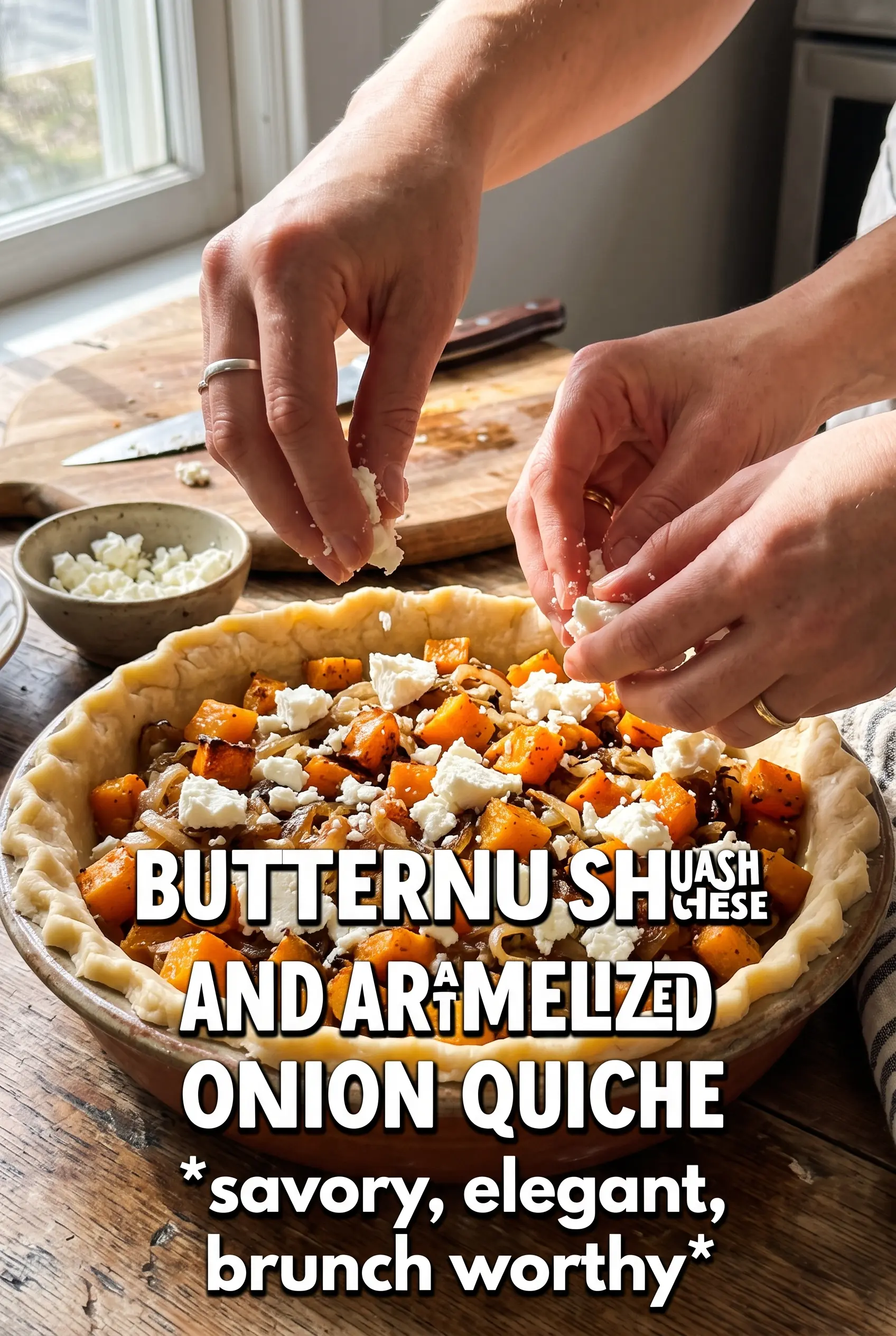
Scatter the squash and onions in the crust, crumble the goat cheese over top, then pour in the custard. Bake until the edges are set and the center still has a slight wobble when you nudge the pan. Pull it before the middle looks fully firm, because carryover heat finishes the set while the quiche rests.
Make It with Frozen Squash
Frozen cubed squash works if you roast it straight from frozen and give it extra time to drive off moisture. It won’t brown as deeply as fresh, but it still gives you the sweet, soft bites this quiche needs.
Dairy-Free Version
Use a rich unsweetened oat or cashew cream in place of the heavy cream and milk, and swap in a dairy-free cheese that melts softly rather than one that disappears completely. The filling will be a little less plush, but the squash and onions still carry the dish.
Make It Ahead for Brunch
You can roast the squash, caramelize the onions, and blind bake the crust a day ahead. Assemble and bake when you’re ready, which keeps the crust crisper than baking the full quiche and reheating it later.
Storage and Reheating
- Refrigerator: Store slices covered for up to 4 days. The crust softens a bit after the first day, but the flavor stays great.
- Freezer: Quiche freezes well. Cool completely, wrap slices tightly, and freeze for up to 2 months. Thaw overnight in the fridge before reheating.
- Reheating: Warm slices in a 325F oven until heated through. The microwave will make the custard rubbery and the crust limp, which is the main thing to avoid.
Answers to the Questions Worth Asking
Butternut Squash Goat Cheese And Caramelized Onion Quiche
Ingredients
Equipment
Method
- Preheat oven to 375F, then fit the pre-made pie crust or homemade shortcrust pastry into a 9-inch tart or pie pan and blind bake for 12 minutes with a lightly set base as the cue.
- Roast the cubed butternut squash on a sheet pan at 425F until tender, around 20 minutes, so the cubes look softened and slightly caramelized at the edges.
- Caramelize the thinly sliced large onion in unsalted butter over medium-low heat for 30 minutes, stirring occasionally, until golden and sweet with translucent strands.
- Whisk the eggs, heavy cream, whole milk, fresh thyme, nutmeg, salt, and black pepper until smooth and uniform in color.
- Scatter the caramelized onion and the roasted butternut squash over the blind-baked crust, spreading into an even layer as a visual cue.
- Crumble the goat cheese evenly over the filling so small white bits are distributed throughout.
- Pour the custard mixture over everything until it fills the pan and reaches near the top of the filling.
- Bake at 375F for 40-45 minutes until just set with a slight wobble in the center when you gently move the pan.
- Rest the quiche for 10 minutes before slicing so the custard firms up slightly and holds clean wedges.