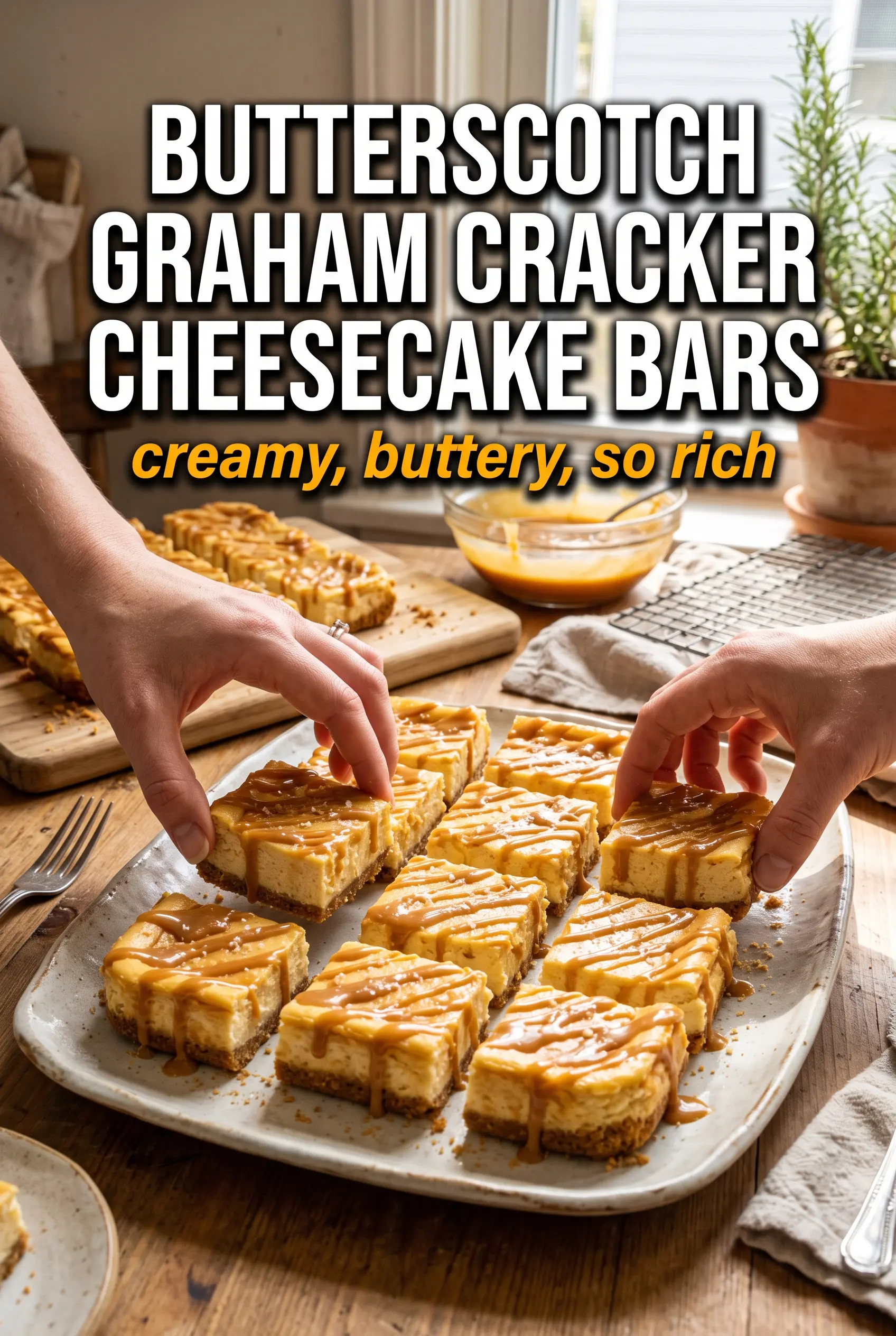
Butterscotch graham cracker cheesecake bars hit that sweet spot between nostalgic and polished. You get a firm, buttery crust that holds clean squares, a creamy cheesecake layer with just enough tang to keep the butterscotch from turning cloying, and a glossy drizzle on top that sets up into little ribbons of caramel-like sweetness. They slice neatly, travel well, and disappear fast from a dessert tray.
The trick here is in the balance. Graham cracker crumbs need enough butter to pack tightly, but not so much that the crust turns greasy. The cheesecake filling stays smooth because the cream cheese is softened all the way and the melted butterscotch chips are cooled before they go in, which keeps the batter from going lumpy or overly warm before baking.
Below, I’ve included the little details that matter most, from getting a clean chill before slicing to the best way to drizzle the topping without soaking the bars.
The crust stayed crisp under the cheesecake layer, and the butterscotch drizzle set up beautifully after chilling. I cut them after three hours in the fridge and got neat bars with no messy edges.
Save these butterscotch graham cracker cheesecake bars for the days when you want a creamy cheesecake square with a crunchy crust and a rich butterscotch finish.
The Crust Has to Be Tight Before the Filling Goes In
A cheesecake bar lives or dies by the base. If the graham crust is loosely packed, the filling slips when you cut it and the bottom layer crumbles before you even get a clean square. Press it in firmly, all the way into the corners, and bake it long enough to smell toasted, not just warm. That short bake sets the butter and gives the crust enough structure to stand up to the creamy center.
The other common mistake is pouring the filling onto a crust that’s still too hot. Let it cool for a few minutes after baking so the bottom layer doesn’t soften and turn greasy at the edges. You want a crust that feels compact under the back of a spoon and looks slightly darker than when it went in.
What Each Ingredient Is Doing in These Cheesecake Bars
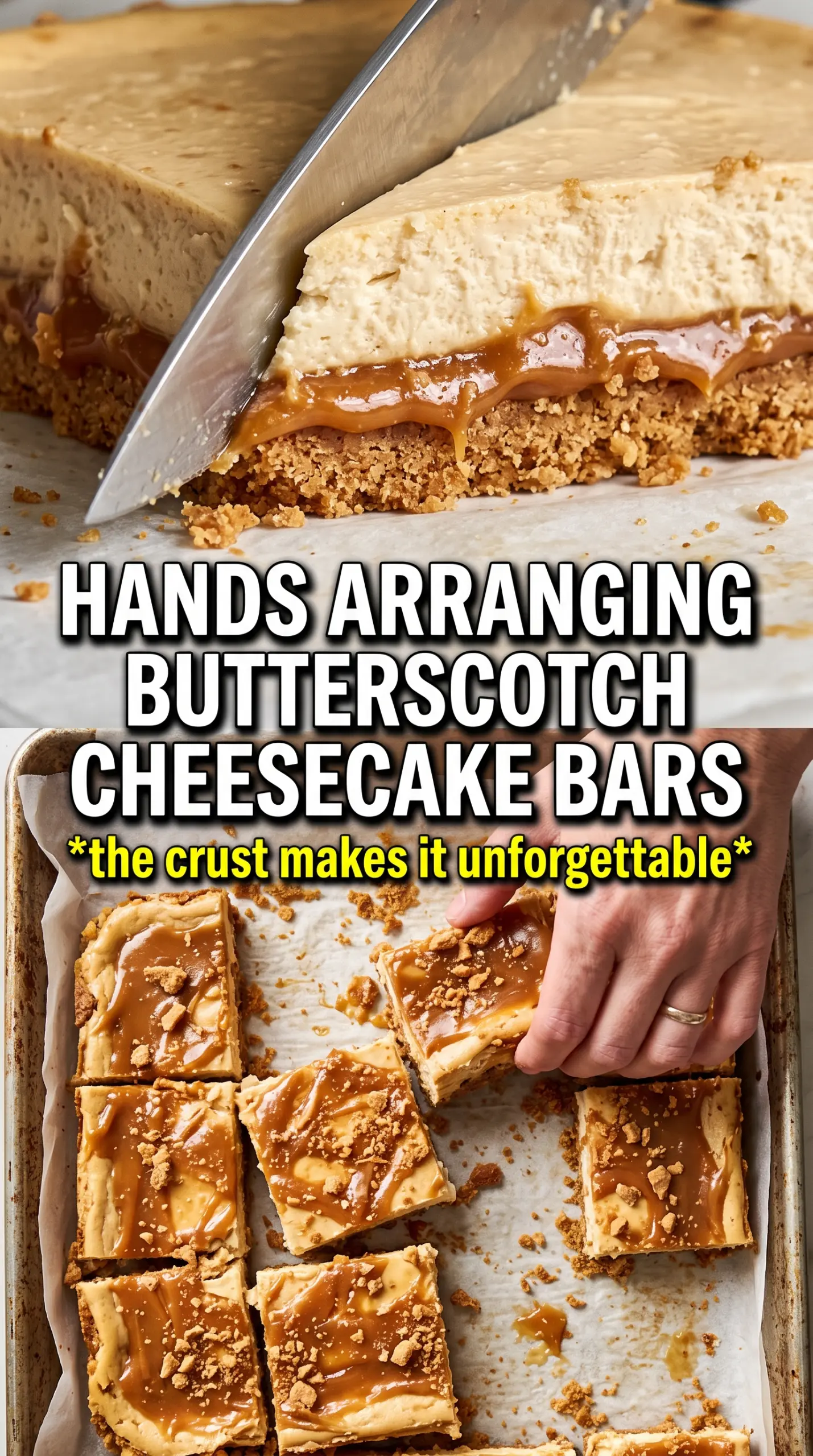
- Graham cracker crumbs — These give the bars their toasty, slightly sandy base. Finely ground crumbs pack together best; if yours are coarse, pulse them a little more so the crust slices cleanly instead of falling apart.
- Melted butter — Butter is the glue that holds the crust in place and gives it that rich, bakery-style bite. Don’t cut it back too far or the crust will dry out and break when you lift the bars from the pan.
- Cream cheese — This is the body of the filling, and it needs to be fully softened before mixing. Cold cream cheese leaves little white lumps, and no amount of baking fixes that once they’re in the batter.
- Sour cream — It loosens the filling just enough and keeps the texture silky instead of dense. Full-fat sour cream works best here because it adds richness without thinning the batter too much.
- Butterscotch chips — These bring the butterscotch flavor into both the filling and the topping. Melt them gently and let them cool before stirring them into the batter so they don’t scramble the eggs or make the mixture grainy.
- Butterscotch extract — This boosts the flavor in a way the chips alone can’t. It’s worth using if you want the bars to taste clearly butterscotch-forward instead of just sweet.
Building the Filling Without Overmixing It
Start With a Smooth Base
Beat the cream cheese and sugar until the mixture looks fully smooth and slightly fluffy, with no grainy streaks around the bowl. That first minute or two matters because it sets the texture for the whole filling. If the base stays lumpy here, the lumps stay in the baked bars. Scrape the bowl well before moving on so the cream cheese around the edges doesn’t hide in a thick layer.
Add the Eggs One at a Time
Eggs give the bars structure, but too much whipping traps extra air and makes the top puff and crack. Add them one at a time and mix only until each one disappears. The batter should look glossy and thick, not frothy. If it starts to look loose or curdled, stop and scrape the bowl; that usually means the ingredients were at different temperatures or the mixer stayed on too long.
Fold in the Butterscotch at the End
Stir in the sour cream, vanilla, melted butterscotch chips, and butterscotch extract just until combined. The batter will turn a warm pale caramel color and smell unmistakably like butterscotch. If the melted chips are too hot, they can create streaks or soften the cream cheese too much, so let them cool until they’re barely warm before they go in. Pour the filling over the crust and smooth the top gently instead of tapping the pan hard, which can pull air bubbles to the surface.
Three Ways to Make These Bars Fit Your Kitchen
Gluten-Free Crust
Swap in certified gluten-free graham-style crumbs and keep the rest of the recipe the same. The texture stays close to the original as long as the crumbs are fine and you press them firmly into the pan. A coarse crumb blend will still work, but the bars may crumble a little more at the edges.
Lighter Butterscotch Finish
If you want the butterscotch to stay in the background, cut the melted chips in the filling down to 1/3 cup and keep the full drizzle on top. You’ll get a cleaner cheesecake flavor with a sweet finish instead of an all-over butterscotch hit.
Dairy-Free Note
Use dairy-free cream cheese, a plant-based sour cream, and a butter substitute that bakes well. The bars will still set, but the filling will be a little softer and the flavor less rich, so give them the full chill time before slicing. Skip this swap if you need a firm, bakery-style square for serving on a platter.
Storage and Reheating
- Refrigerator: Store covered for up to 5 days. The crust stays firm, though the topping softens a little by day two.
- Freezer: These freeze well. Wrap the cut bars individually, then freeze in a sealed container for up to 2 months. Thaw overnight in the refrigerator for the cleanest texture.
- Reheating: These are best served cold, not warm. Let them sit at room temperature for 10 to 15 minutes if you want a softer bite. Heating them will loosen the cheesecake and melt the topping.
Answers to the Questions Worth Asking
Butterscotch Graham Cracker Cheesecake Bars
Ingredients
Equipment
Method
- Preheat oven to 325F, then line a 9x13 pan with parchment so the bars lift out easily later.
- Combine graham cracker crumbs, sugar, and melted butter, then press the mixture firmly into the bottom of the prepared pan.
- Bake the crust at 325F for 10 minutes, until it smells toasty and looks set.
- Beat cream cheese and granulated sugar until smooth, scraping the bowl as needed.
- Add eggs one at a time, beating just until each egg disappears into the batter before adding the next.
- Stir in sour cream, vanilla, melted butterscotch chips, and butterscotch extract until the filling is smooth and glossy.
- Pour the filling over the hot crust and smooth the top.
- Bake at 325F for 30-35 minutes, until the center is just set with a slight jiggle.
- Cool the bars completely at room temperature, so the filling firms up without overbaking.
- Refrigerate for 3 hours to fully chill and slice cleanly.
- Melt the butterscotch chips with the heavy cream, then drizzle the thick topping over the chilled bars.
- Scatter crushed graham crackers over the drizzle for a crunchy finish right before serving.