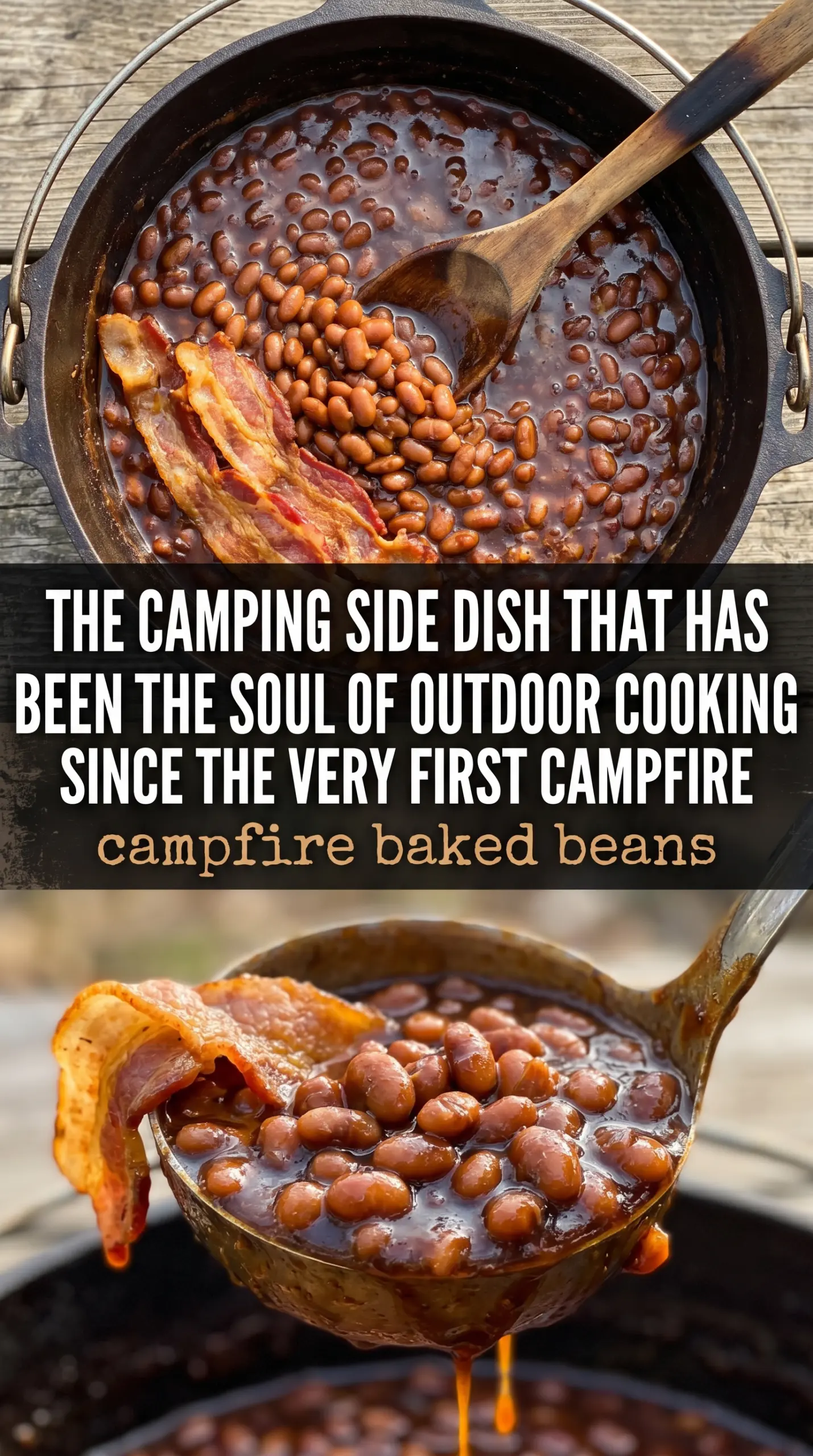
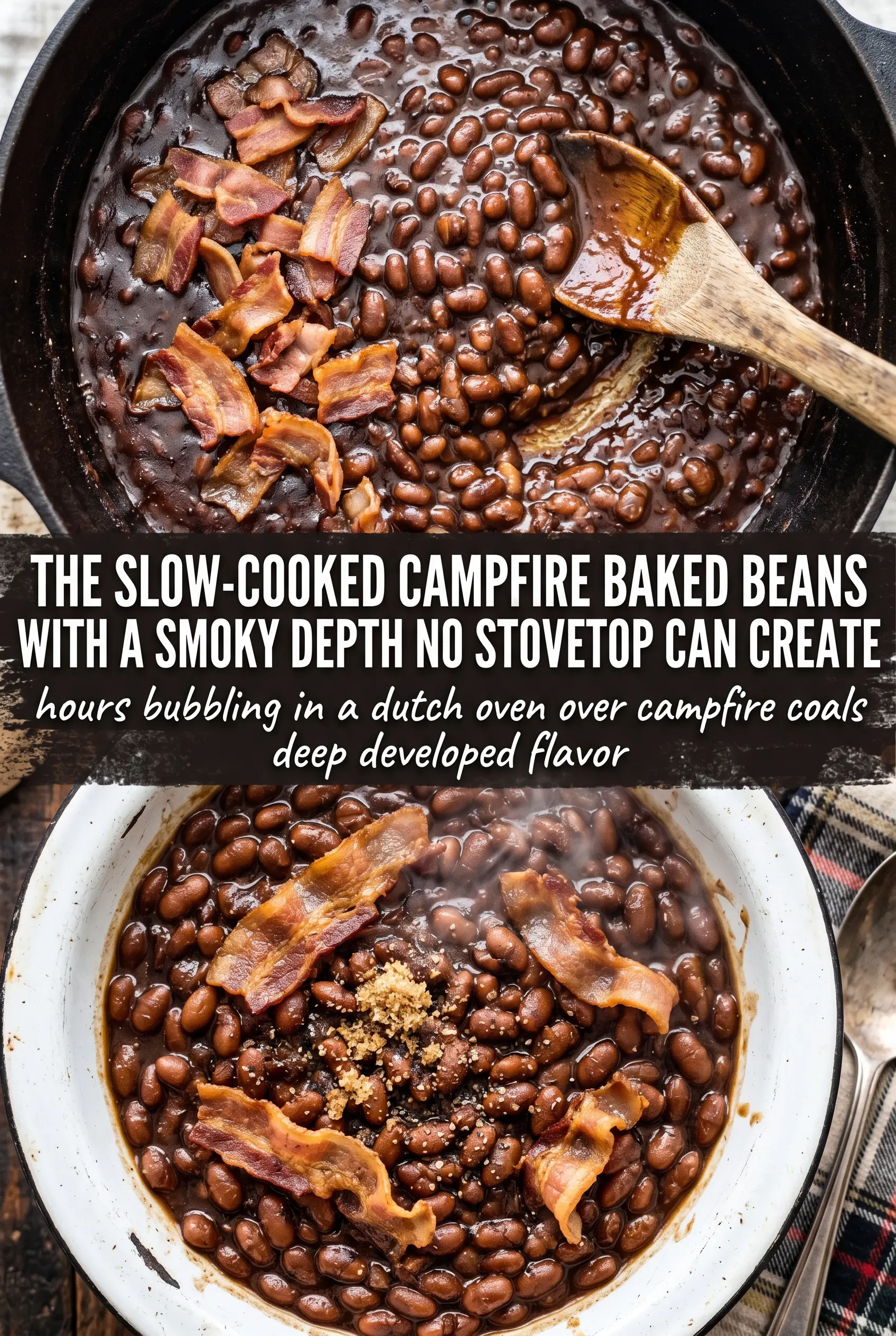
Bubbling campfire baked beans land on the table glossy, thick, and loaded with smoky bacon in every spoonful. The sauce clings to the beans instead of running all over the plate, and the onions soften just enough to melt into the base without disappearing completely. It’s the kind of side dish that gets scooped up fast, whether you’re serving burgers, ribs, or just a pile of cornbread.
What makes this version work is the balance. The baked beans bring their own sweet, savory backbone, while BBQ sauce, ketchup, brown sugar, mustard, and Worcestershire build a deeper sauce around them. The bacon adds salt and smoke, but the onion keeps the whole pot from tasting flat. Cooking everything uncovered is the move here; it lets the excess liquid cook off so you end up with beans that are spoonable and rich, not soupy.
Below, I’ll show you how to keep the beans from scorching in a Dutch oven, what to swap if you’re cooking without bacon, and how to hold them for serving so they stay thick and glossy.
Save these smoky campfire baked beans for your next cookout or camping trip when you want a thick, bacon-studded side that holds up next to grilled food.
The Part That Keeps Campfire Beans Thick Instead of Soupy
The mistake with campfire beans is treating the pot like a dump-and-wait situation. If you cover it, the steam stays trapped and the sauce never reduces enough to coat the beans. Uncovered cooking lets the liquid tighten up while the sugar and ketchup thicken into a glossy glaze around the beans.
The other thing that matters is heat control. A roaring fire can scorch the bottom before the sauce has a chance to thicken evenly, especially once the sugar is in the mix. A steady simmer is what you want: active bubbles around the edges, but not a violent boil. Stirring every few minutes keeps the bacon and onion from settling and sticking.
- Baked beans Canned baked beans give you the right soft texture and built-in seasoning. You can use a different brand, but avoid starting with plain beans unless you’re ready to build a longer sauce from scratch.
- BBQ sauce This is where the smoke and tang come from. Use a sauce you’d actually eat on ribs, since its flavor will show up clearly after the beans reduce.
- Bacon Cook it first and crumble it in. Adding raw bacon to the pot leaves you with greasy, undercooked pieces instead of little salty bites that hold their shape.
- Mustard and Worcestershire These two keep the sweetness in check. Yellow mustard gives the sharpest edge, but Dijon works if that’s what you have.
What Each Ingredient Is Actually Doing in Campfire Baked Beans
- Protein (quality, proper thickness) Good quality protein tastes better. Even thickness ensures even cooking.
- Seasoning (bold, distributed throughout) Don’t be shy with salt and pepper. Quality seasoning elevates everything.
- Oil or fat (protective and flavorful) The fat helps develop crust and carries flavors. Use generously.
- Heat management (appropriate temperature for the protein) Too high and the outside burns before the inside cooks. Too low and it steams.
- Technique (sear, then finish based on thickness) Proper technique creates flavor. Sear for crust, then cook through gently.
- Aromatics and seasonings (garlic, herbs, spices) These add complexity and depth. Distribute them throughout the cooking process.
- Resting time (let it rest before serving) Resting allows juices to reabsorb. This keeps the protein moist and tender.
- Optional: finishing sauce or glaze A light sauce adds richness without overwhelming. Apply at the very end.
Building the Pot So Nothing Catches on the Bottom
Starting With the Full Base
Combine everything in the Dutch oven before it goes over the fire. That gives the sugar, ketchup, BBQ sauce, and mustard a chance to dissolve into the beans instead of sitting in separate streaks. Stir until the onion and bacon are evenly distributed, and scrape the bottom well so there are no dry pockets.
Finding the Right Simmer
Set the pot over moderate heat and watch for gentle bubbling, not aggressive boiling. If the flame is too hot, the edges will darken before the center thickens, and the sugar can taste scorched. Move the pot farther from the coals or lift it off the heat briefly if the bubbling gets too wild.
Stirring Through the Finish
Cook uncovered for 25 to 30 minutes, stirring now and then, until the sauce looks shiny and clings to the spoon. The onions should turn soft, the bacon should look glazed, and the liquid should no longer puddle around the beans. Pull the pot once it thickens a little more than you think you want; it loosens slightly as it sits.
Make Them Meatless Without Losing the Smoky Edge
Skip the bacon and add 1 teaspoon smoked paprika plus a pinch of salt. You won’t get the same chewy, salty bites, but the beans still pick up a campfire-style depth from the paprika and the reduced sauce.
Sweetener Swaps That Actually Work
Brown sugar gives the sauce its caramel note, but maple syrup or honey can stand in if needed. Start with a little less, since both are a touch more aggressive than brown sugar once the beans reduce over heat.
Turning This Into a Bigger Cookout Batch
This recipe scales cleanly. Double it in a larger pot and give yourself a little extra simmer time, since a fuller pot releases steam more slowly and takes longer to thicken at the center.
Storage and Reheating
- Refrigerator: Store in an airtight container for up to 4 days. The beans thicken as they chill, so they’ll look firmer the next day.
- Freezer: They freeze well for up to 2 months. Cool completely first and portion into freezer-safe containers so they thaw evenly.
- Reheating: Warm gently on the stove over low heat with a splash of water if needed. The common mistake is blasting them on high heat, which can scorch the sugar-heavy sauce before the center is hot.
Questions I Get Asked About This Recipe
Campfire Baked Beans
Ingredients
Equipment
Method
- Combine baked beans, crumbled bacon, BBQ sauce, brown sugar, ketchup, diced onion, mustard, and Worcestershire sauce in a Dutch oven or large pot.
- Place the Dutch oven on the campfire and bring the mixture to a simmer, with steady bubbling around the edges.
- Cook uncovered for 25-30 minutes, stirring occasionally, until the beans are thickened and bubbling throughout.
- Serve hot as a side dish.