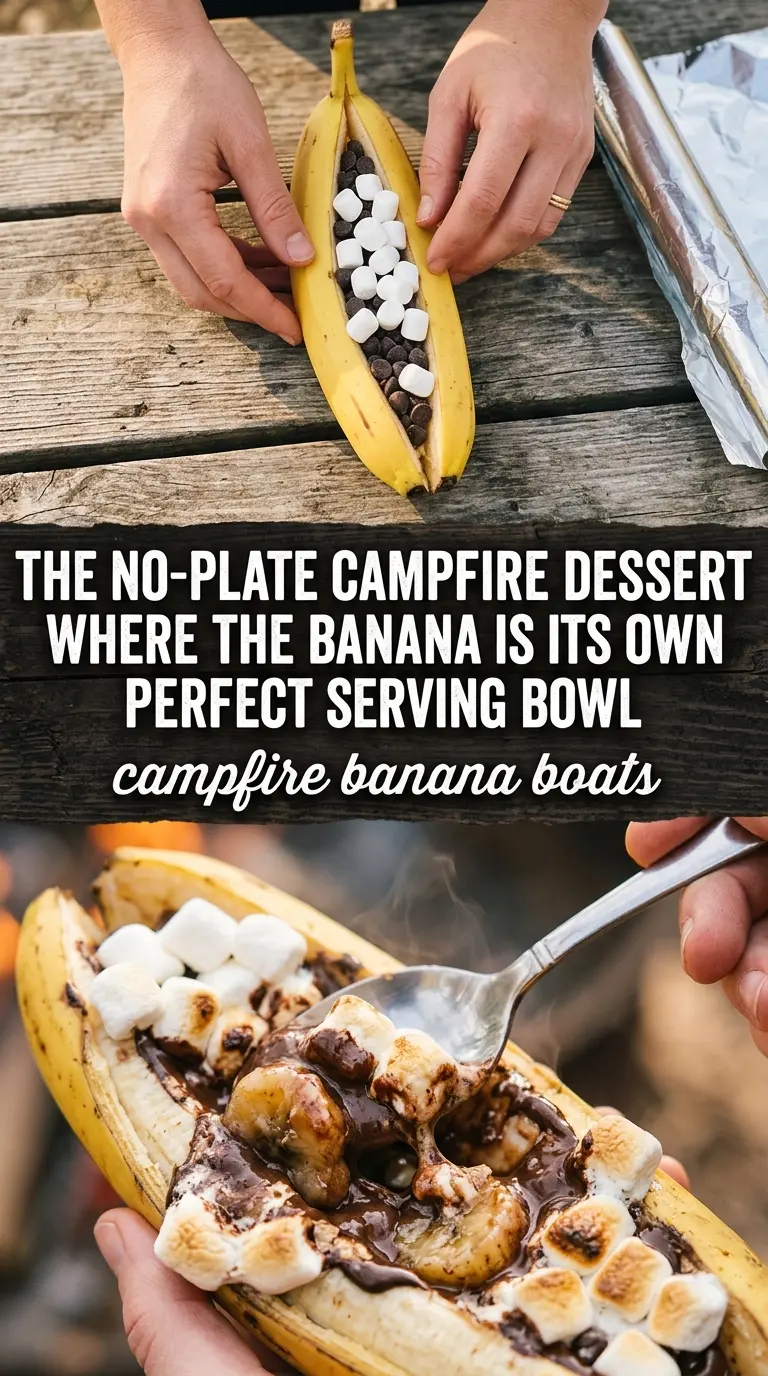
Campfire banana boats hit that sweet spot between nostalgic and low-effort: warm banana, melted chocolate, gooey marshmallows, and crunchy graham cracker pieces all in one tidy peel. They taste like a s’mores-and-banana-split mashup, but they’re easier to manage around a fire than a full dessert spread and a lot less fussy than roasting something that needs perfect timing.
The trick is in the cut and the wrap. Slice through the peel only, then open the banana just enough to make a pocket so the filling sits in place instead of leaking into the foil. Medium heat matters here; too much direct heat will scorch the peel before the center gets molten, and too little heat leaves you with warm banana and unmelted chips. A short rest after cooking helps the filling settle so it eats like a spoonable dessert instead of a lava spill.
Below, I’ve included the detail that matters most for campfire cooking: how to get the bananas tender without turning them mushy, plus a few smart swaps if you want to change up the toppings or serve them without a campfire at all.
The bananas got perfectly soft and the chocolate melted into the marshmallows without getting watery. We ate them straight out of the peel and nobody missed the graham crackers from a normal s’more.
Like this gooey campfire banana boat? Save it to Pinterest for your next fire-night dessert with melted chocolate and marshmallow pockets.
The Part That Keeps the Bananas from Collapsing into the Foil
The biggest mistake with banana boats is cutting too deep or packing them too full. Once the peel is split open, the banana needs to stay structurally intact so it can soften without turning to mush. Leaving the bottom peel uncut gives you a little boat that holds the filling and makes serving easier when the bananas come off the fire.
Medium heat is the difference between melted and scorched. The chocolate and marshmallows need time to soften while the banana turns silky, and that happens before the peel blackens if the fire isn’t raging. If the foil starts to smell burnt fast, move the packets to a cooler spot on the grate or near the edge of the coals.
- Bananas — Use ripe bananas with a few brown spots, not overripe ones that feel soft all the way through. They’ll sweeten as they heat, and they hold their shape better than super-soft bananas.
- Chocolate chips — Standard semisweet chips give the cleanest melt and keep the dessert from going cloying. Milk chocolate works if you want it sweeter, but it melts faster and can taste a little one-note.
- Mini marshmallows — Minis melt evenly and tuck into the banana pocket better than large marshmallows. If you only have big ones, tear them into pieces so they melt at the same pace as the chocolate.
- Graham cracker pieces — Add these just before wrapping so they stay slightly crisp. If they sit too long against the hot banana, they soften, which isn’t bad, just less crunchy.
- Peanut butter chips — Optional, but they add a salty, nutty note that keeps the dessert from tasting flat. If you skip them, a small spoonful of peanut butter swirled into the banana pocket works too.
What Each Ingredient Is Actually Doing in Campfire Banana Boats
- Protein (quality, proper thickness) — Good quality protein tastes better. Even thickness ensures even cooking.
- Seasoning (bold, distributed throughout) — Don’t be shy with salt and pepper. Quality seasoning elevates everything.
- Oil or fat (protective and flavorful) — The fat helps develop crust and carries flavors. Use generously.
- Heat management (appropriate temperature for the protein) — Too high and the outside burns before the inside cooks. Too low and it steams.
- Technique (sear, then finish based on thickness) — Proper technique creates flavor. Sear for crust, then cook through gently.
- Aromatics and seasonings (garlic, herbs, spices) — These add complexity and depth. Distribute them throughout the cooking process.
- Resting time (let it rest before serving) — Resting allows juices to reabsorb. This keeps the protein moist and tender.
- Optional: finishing sauce or glaze — A light sauce adds richness without overwhelming. Apply at the very end.
How to Build the Filling So It Melts All at Once
Cutting the Pocket
Run a knife lengthwise through the peel, then gently pry the banana open without separating it from the peel. The goal is a shallow pocket, not two halves hanging loose. If the cut goes all the way through, the banana will slump and the filling will spill into the foil.
Layering the Fillings
Start with chocolate chips, then tuck in the marshmallows and graham cracker pieces. The chocolate needs direct contact with the warm banana so it melts first, while the marshmallows puff and go glossy on top. Don’t mound everything so high that the foil has to fight the filling closed.
Wrapping and Heating
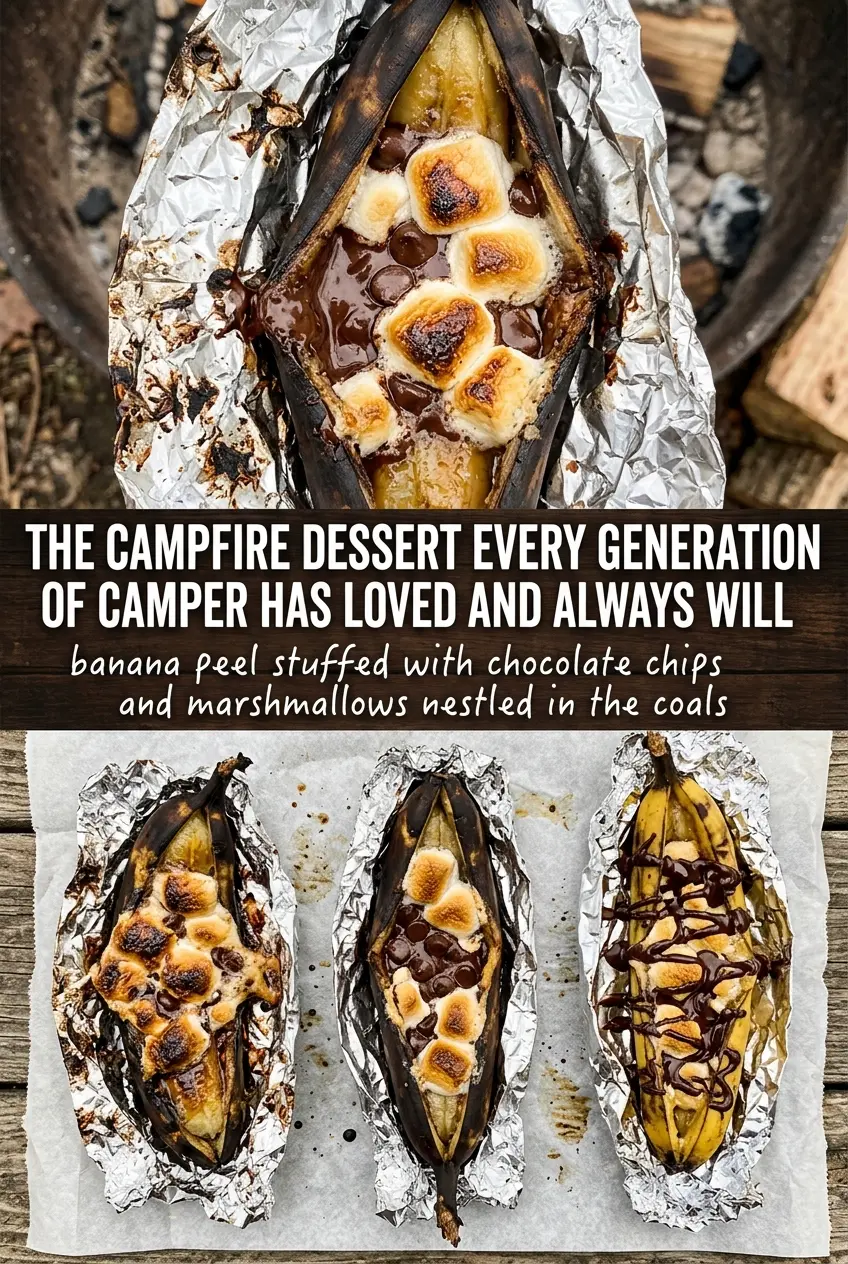
Wrap each banana snugly in foil and place it on the grate over medium heat for 8 to 10 minutes. You’re looking for a soft banana that gives slightly when pressed through the foil and a smell that turns deeply sweet and toasty. If one side is hotter than the other, rotate the packets halfway through so the peel doesn’t blacken before the center melts.
Cooling and Serving
Let the banana boats sit for 2 minutes before opening the foil. That short rest keeps the molten filling from running everywhere the second you unwrap it. Spoon the filling straight from the peel and eat while it’s still warm and soft.
Ways to Change the Toppings Without Losing the Fun
Dairy-Free Banana Boats
Use dairy-free chocolate chips and skip any add-ins that contain milk solids. The texture stays the same, and the banana still gives you plenty of creamy sweetness. This is the easiest way to make the dessert work for a dairy-free crowd without changing the campfire method.
Extra-Crunchy S’mores Style
Add the graham cracker pieces after the banana comes off the fire instead of before wrapping it. They’ll stay crisp and give you more texture on top, though they won’t soften into the filling the way they do when they cook inside the boat.
Nutty Chocolate Version
Use peanut butter chips or a thin smear of peanut butter in the pocket before adding the chocolate. The peanut butter brings a saltier, richer finish that makes the banana taste more like a dessert bar than a s’more. If you go heavy with it, the filling turns dense, so keep it light.
Oven Method for Rainy Nights
Bake the foil-wrapped bananas at 400°F for about 10 minutes. The banana softens and the toppings melt just like they do on the fire, but you lose a little of that smoky edge. It’s the better choice when you want the same dessert without managing coals.
Storage and Reheating
- Refrigerator: Best eaten right away. If you have leftovers, cover and refrigerate for up to 1 day, but the banana softens and the graham crackers lose their crunch.
- Freezer: Not a good freezer dessert. The banana turns watery when thawed and the marshmallows don’t recover their texture.
- Reheating: Warm leftovers loosely wrapped in foil in a 325°F oven until heated through. Don’t microwave them if you want to avoid rubbery chocolate and a split banana.
Questions I Get Asked About This Recipe
Campfire Banana Boats
Ingredients
Method
- Cut each ripe banana lengthwise through the peel, leaving the bottom peel intact. This keeps the banana boat-shaped pocket in place.
- Open each banana slightly to create a pocket inside the peel. Arrange the openings so they can hold fillings without spilling.
- Fill each banana with chocolate chips, mini marshmallows, and graham cracker pieces. Add peanut butter chips if using for extra chocolate-banana flavor.
- Wrap each filled banana in aluminum foil. Seal loosely so steam can escape while keeping the fillings contained.
- Place the foil-wrapped bananas on a campfire grate over medium heat for 8-10 minutes, until the chocolate and marshmallows melt. You should see the filling soften and look glossy through the foil seams.
- Let the banana boats cool for 2 minutes before unwrapping. The filling will thicken slightly so it’s easier to eat.
- Unwrap and eat the banana boats with a spoon directly from the peel. Scoop the melted chocolate and toppings from the pocket in each peel boat.