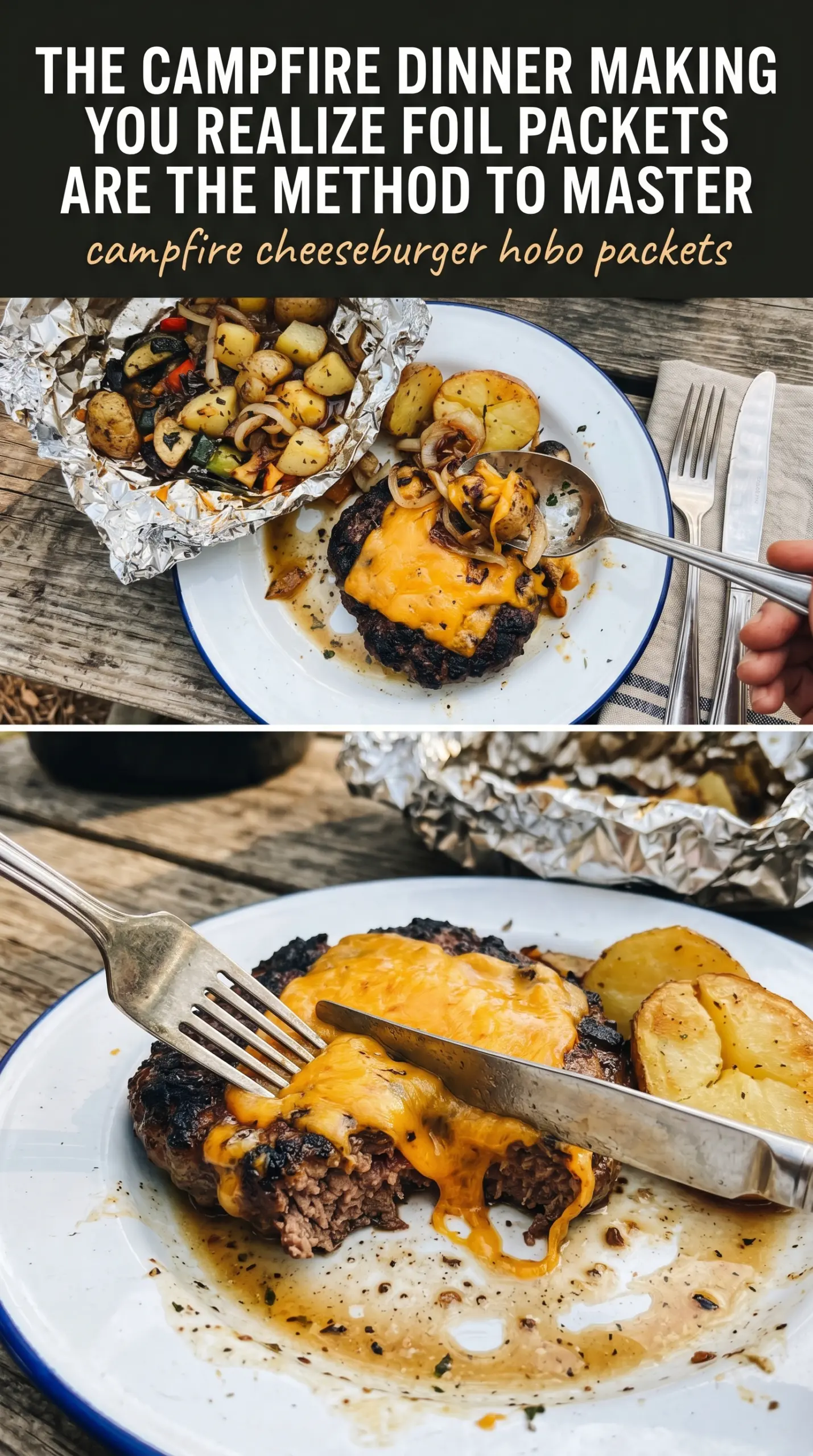
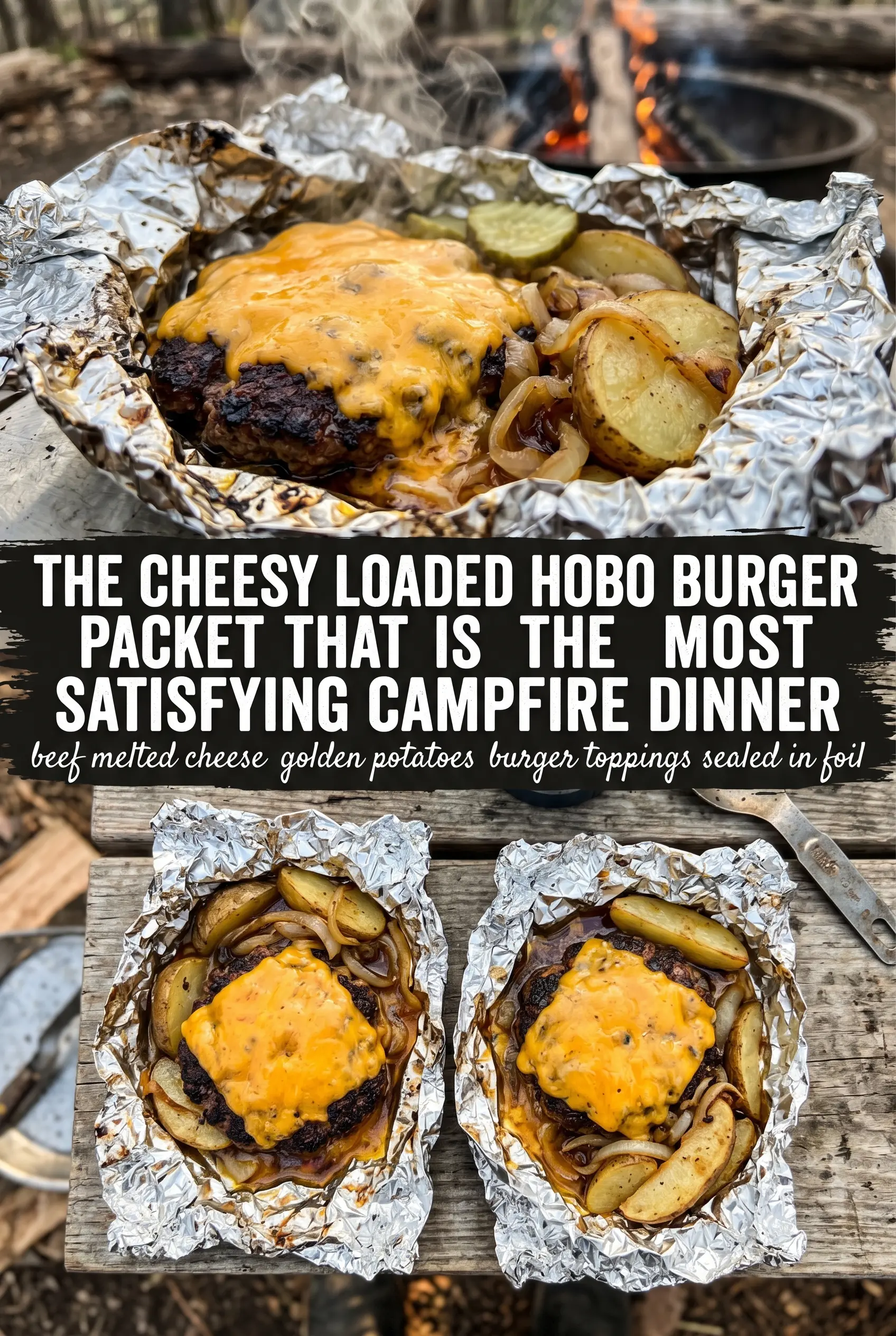
Campfire cheeseburger hobo packets deliver everything people want from a burger night without the juggling act of buns, pans, and side dishes. The beef stays juicy, the potatoes soften underneath, and the cheese melts right into the hot filling when the packets come off the fire. It’s the kind of meal that feels casual in the best way, but still comes out with enough structure to eat without a mess.
What makes this version work is the layering. The potatoes go on the bottom so they get direct heat and pick up the beef drippings as they cook. Thin patties cook through evenly in the same amount of time the potatoes need, and the sealed foil traps steam so the onions turn tender instead of staying sharp. The ketchup and mustard go inside the packet instead of on the side, which gives the whole thing that classic cheeseburger taste without extra cleanup.
Below, I’ve included the little timing detail that keeps the cheese melty without overcooking the burgers, plus a few easy swaps if you want to adapt the packets for a grill, a campfire, or a weeknight oven dinner.
The potatoes were tender, the burgers stayed juicy, and adding the cheese at the end kept it perfectly melted instead of greasy. We ate these straight from the foil packets and there was hardly anything left to clean up.
Save these campfire cheeseburger hobo packets for your next foil-packet dinner on the grill or over the fire.
The Part That Keeps the Potatoes Tender Instead of Tough
The potatoes are the ingredient most likely to throw people off. If they’re cut too thick, they’ll still be firm when the beef is done. Thin slices solve that problem because they cook through in the same 25 to 30 minutes as the patties, and the foil traps enough steam to soften them without turning them to mush. That steam is the difference between a packet that eats like dinner and one that feels undercooked in the middle.
The other mistake is stacking everything too tightly. Give the potatoes and onions a loose base so heat can move around inside the packet. If you pack the foil like a brick, the center steams slowly and the edges cook first, which leaves you with uneven texture. Heavy-duty foil matters here because it holds up on the grate and seals cleanly without tearing when you flip the packets.
What Each Ingredient Is Doing Inside the Packet
- Ground beef — Use a beef blend with some fat so the patties stay juicy in the foil. Very lean beef can work, but it dries out faster and tastes flatter once it’s been tucked inside the packet.
- Potatoes — Thin slices are non-negotiable. They act like the base of the packet and soak up the beef juices, but they only cook evenly if they’re sliced about 1/8-inch thick.
- Onion — Onions soften and sweeten as they cook, which rounds out the beef and mustard. Yellow or white onions both work; slice them thin so they don’t stay crunchy.
- Tomatoes — The tomatoes bring the burger element home, but they should go on top of the patty so they warm without breaking down completely. Thick slices hold their shape better than thin ones.
- Ketchup and mustard — These are more than condiments here. They season the whole packet and keep the flavor familiar, and mixing them inside the foil means every bite tastes like a cheeseburger, not just the top layer.
- Cheddar cheese — Add it at the end, after the patties are cooked through. If it goes in too early, it can separate and turn oily instead of melting into a clean, stretchy layer.
- Heavy-duty foil — Regular foil tears too easily once the packets are flipped and handled over heat. Heavy-duty sheets give you a tighter seal and fewer leaks, which matters when the potatoes are sitting in the hot juices.
Building the Packets So Everything Finishes at the Same Time
Start With the Potato Base
Lay the sliced potatoes and onions on the foil first, then season them lightly before the patty goes on top. That bottom layer needs the longest cook time, and it benefits most from direct contact with the hot foil and the steam trapped inside the packet. If the potato slices are stacked in a thick pile, they’ll stay firm in the center, so keep the layer spread out instead of mounded.
Shape Thin Patties, Not Thick Burgers
Form the ground beef into thin patties so they cook through in the same window as the vegetables. Thick burgers don’t work well in foil packets because the outside overcooks before the potatoes are tender. Press the patties a little wider than the finished shape you want; they tighten as they cook, and that keeps them from shrinking into small, dense rounds.
Seal, Flip, and Wait for the Steam to Do Its Job
Fold each foil sheet into a tight packet and crimp the edges well enough that steam stays trapped inside. Place them over medium heat and flip halfway through so the potatoes cook evenly from both sides. If the packets are blazing or the foil starts to darken too fast, the outside is too hot and the center won’t keep up, so move them to a gentler spot on the grate.
Finish With the Cheese
When the patties are cooked through and the potatoes feel tender when you press the packet lightly, open them carefully and add the cheese slices. Reseal the packets for just a couple of minutes so the cheese melts without cooking the burgers past juicy. Let them rest for five minutes before serving; that short pause keeps the juices from running straight out when you open the foil.
How to Adapt These Foil Packets for Different Cookouts
Gluten-Free and Bun-Free
The packets are naturally gluten-free as written, as long as your mustard and ketchup are labeled gluten-free. Skip the buns and serve the filling straight from the foil for a built-in low-carb option that still eats like a full meal.
Dairy-Free Burger Packets
Leave out the cheddar and add a little extra ketchup and mustard at the end for brightness. You lose the creamy melt, but the packets still taste complete because the beef, potatoes, and onions carry the main flavor.
Oven Method for Rainy-Night Dinner
Bake the sealed packets on a sheet pan at 400°F until the potatoes are tender and the beef is cooked through. The result is almost identical to the campfire version, just without the smoky edge from the grate.
Storage and Reheating
- Refrigerator: Store leftovers in an airtight container for up to 3 days. The potatoes soften a little more after chilling, but the flavor stays good.
- Freezer: These don’t freeze well once cooked because the potatoes turn grainy and watery after thawing. If you want to prep ahead, assemble the raw packets and freeze them before cooking, then thaw overnight in the fridge.
- Reheating: Reheat in a covered skillet or wrapped in foil in a 350°F oven until hot through. Don’t blast them in the microwave if you want the potatoes to stay intact; high heat makes the beef dry before the center warms.
Questions I Get Asked About This Recipe
Campfire Cheeseburger Hobo Packets
Ingredients
Equipment
Method
- Form the ground beef into 4 thin patties and season with salt and pepper.
- Set the patties aside while you prep the vegetables so everything cooks evenly in the packets.
- On each heavy-duty aluminum foil sheet, layer the thinly sliced potatoes and sliced onions.
- Place 1 burger patty on top of the potatoes and onions, then add the sliced tomatoes on top of the patty.
- Drizzle each packet with ketchup and mustard so it soaks into the layers during cooking.
- Fold the foil into sealed packets, pressing the seams to keep steam and juices contained.
- Place the packets on a campfire grate over medium heat.
- Cook for 25-30 minutes, flipping the packets halfway through for even browning and tender potatoes.
- Open each packet, add the cheddar cheese slices, and reseal briefly to melt.
- Let the packets cool for 5 minutes, then serve in packets or on hamburger buns if using.