Golden campfire potatoes come out tender in the middle, crisp at the edges, and soaked with butter and onion flavor that tastes like it came straight off the fire. The foil packet does all the work here, but the real trick is slicing the potatoes thin enough that they steam and roast at the same time instead of turning soft and heavy. When the packet opens, the potatoes should be glossy, deeply seasoned, and just sturdy enough to hold their shape on a fork.
This version works because the butter is dotted in cubes instead of melted and poured over the top. Those little pockets of fat spread through the potatoes as they cook, which keeps the slices from drying out and helps the paprika and garlic powder cling to every layer. Heavy-duty foil matters too. Thin foil tears faster over a grate, and once steam escapes, the potatoes lose the texture that makes them worth making.
Below, I’ll walk through the little details that keep the packet sealed, the potatoes evenly cooked, and the onions sweet instead of raw. I’ve also included a few smart swaps for oven cooking and make-ahead prep when the fire isn’t part of the plan.
Save these foil packet campfire potatoes for your next cookout, with buttery layers, sweet onions, and crisp edges.
The Part That Keeps Foil Packet Potatoes from Going Mushy
The texture lives or dies by the cut. Thin slices cook through evenly and let the onion soften at the same pace, while thick chunks often leave you with a mixed packet: browned outsides, firm centers, and a layer of steam trapped in the middle. Aim for slices that are close to the same thickness so the potatoes finish together.
The other thing people get wrong is the heat. A campfire grate should sit over medium heat, not open flame licking the foil. Too much direct fire scorches the bottom before the center softens. You want steady heat that turns the potato edges golden while the packet stays sealed enough to trap moisture.
- Even slicing This matters more than almost anything else here. If the slices vary too much, the thin ones break down while the thick ones stay hard.
- Sealed foil A tight packet traps steam, which is what finishes the potatoes from the inside. If the seal is loose, the potatoes dry out before they turn tender.
- Medium fire The packet should sizzle gently, not blast from below. If the heat is too aggressive, the butter burns before the potatoes are done.
What the Butter, Onion, and Spices Are Each Doing
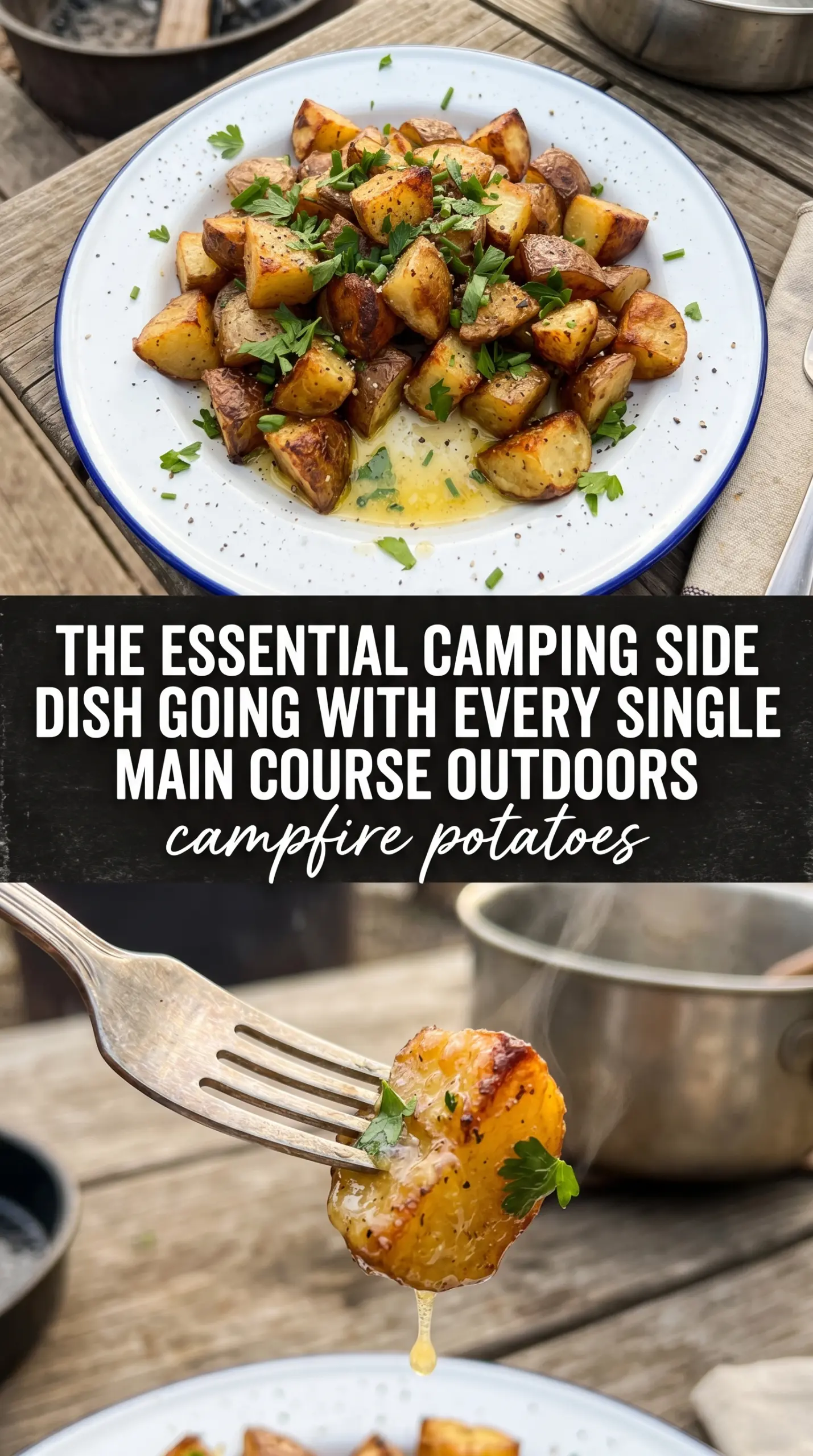
Potatoes are the backbone, and starchy varieties like russets or all-purpose potatoes soften beautifully in the packet. Waxy potatoes hold their shape more firmly, which is fine if you want neat slices, but they won’t get quite as fluffy inside.
Onion brings sweetness and a little moisture that perfumes the whole packet. Slice it thin so it softens in the same window as the potatoes. Thick onion wedges stay sharp and can taste undercooked even when the potatoes are done.
Butter is the fat that carries the seasoning and keeps everything glossy. Cubing it gives better coverage than melting it first, because the butter melts gradually and coats the layers instead of running to the bottom.
Paprika and garlic powder do the seasoning work without adding extra moisture. If you want a smoky note, use smoked paprika, but keep the amount the same so it doesn’t overpower the potato and onion flavor.
Building the Packet So It Cooks Evenly
Layering the Potatoes and Onions
Start with a double layer of heavy-duty foil, then pile the potatoes and onions in the center so you have room to fold the edges cleanly. Keep the pile in a compact mound rather than spreading it all the way to the edges, or the packet gets awkward to seal and the food cooks unevenly. A loose pile also lets steam move through the layers instead of escaping out the sides.
Seasoning and Sealing
Dot the butter cubes over the top, then season evenly across the surface so the seasoning isn’t concentrated in one spot. Fold the foil over the potatoes, then crimp the edges tightly to make a sealed packet. If you see gaps, steam leaks out and the potatoes dry before the center finishes.
Cooking Over the Fire
Set the packet on the grate over medium heat and flip it halfway through so both sides get the same exposure. The packet should feel hot and puff slightly with steam inside; that’s your cue that the potatoes are cooking through. If the bottom looks dark too quickly, move the packet to a cooler spot on the grate rather than opening it.
Finishing with Cheese
Open the packet carefully because the steam hits fast, then sprinkle the cheddar over the hot potatoes if you’re using it. Reseal the packet for a couple of minutes so the cheese melts into the butter and seasoning. If you leave the packet open too long, the cheese softens but doesn’t melt into that loose, spoonable finish.
Oven-Baked Campfire Potatoes
Bake the sealed foil packet at 400°F for about 30 to 35 minutes instead of cooking it over a fire. The texture stays close to the original, and this is the best swap when you want the same buttery potatoes without outdoor heat control. Use a sheet pan underneath so the packet is easy to handle and leaks don’t mess up your oven.
Dairy-Free Version
Swap the butter for a solid plant-based butter that behaves like real butter when heated. Oil works in a pinch, but it won’t coat the slices the same way or give you that rich, rounded finish. Skip the cheese or use a dairy-free shred that melts well, since some brands turn gummy in a foil packet.
Bacon and Chive Upgrade
Add cooked crumbled bacon after the potatoes come off the heat, not before. Raw bacon needs different timing than the potatoes, and adding it at the start can leave the fat greasy without giving you crisp pieces. Fresh chives at the end add a cleaner finish than extra onion.
Storage and Reheating
- Refrigerator: Store leftovers in an airtight container for up to 4 days. The potatoes soften a little more as they sit, but the flavor stays good.
- Freezer: They freeze, but the texture turns softer after thawing, so I don’t recommend freezing if you want the potatoes to hold their shape.
- Reheating: Reheat in a skillet over medium heat or in a 375°F oven until hot. Microwaving works, but it makes the slices wetter and less crisp, especially if the packet was tightly sealed.
Questions I Get Asked About This Recipe
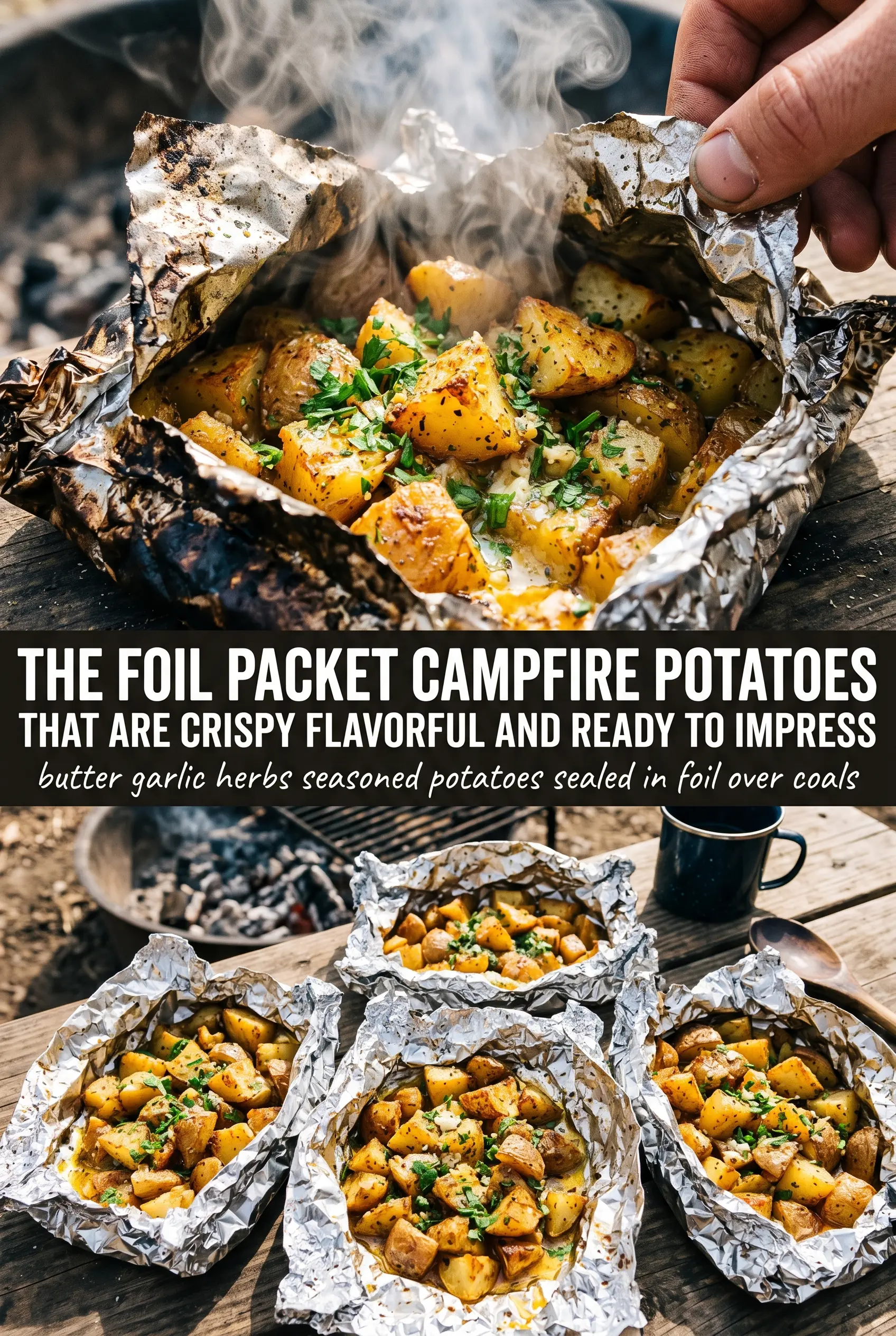
Campfire Potatoes
Ingredients
Equipment
Method
- Lay out 2 sheets of heavy-duty aluminum foil in a large double layer and layer the thinly sliced potatoes and onion slices on top. Aim for even coverage so the slices cook through at the same rate.
- Dot the potatoes and onions with cubed butter and sprinkle with garlic powder, paprika, salt, and pepper. Distribute seasonings across the top so each bite is well coated.
- Fold the foil into a sealed packet, pressing edges firmly to prevent steam from escaping. The packet should look tightly wrapped before it goes on the heat.
- Place the packet on a campfire grate over medium heat for 25 minutes, then check for doneness with a fork through the potato slices. Look for tender potatoes and visible steam within the packet.
- Flip the foil packet halfway through cooking to promote even browning and steam circulation. Continue cooking until the total cook time reaches 30 minutes.
- Open the packet carefully and sprinkle with shredded cheddar cheese if desired. The steam should puff up as the packet opens.
- Reseal the packet and cook it for 2 minutes on the grate to melt the cheese. Keep it over medium heat so the potatoes stay tender without drying out.
- Serve the campfire potatoes hot directly from the packet. Use a fork to lift the potato slices as shown in the hero element.