Steaming campfire ramen is one of those meals that turns a basic pot and a short ingredient list into something that feels complete. The noodles stay springy, the broth picks up just enough body from the seasoning packets, and the eggs poach right in the pot so every bowl comes out rich and filling without extra dishes.
What makes this version work outdoors is timing. The vegetables go in with the noodles so they thaw and heat through at the same pace, and the eggs are cracked in only after the noodles have had a few minutes to loosen and soften. That keeps the whites tender instead of stringy and gives the yolks a soft set that works beautifully in broth.
Below, I’ve included the campfire cue I watch for when the pot is at the right boil, plus a few smart swaps for making ramen work with whatever you packed.
I made this at camp with a little extra soy sauce and the eggs came out perfectly poached. The broth had way more flavor than I expected, and it felt like a real dinner after a long hike.
Save this campfire ramen for nights when you want a fast one-pot meal with soft eggs, tender noodles, and barely any cleanup.
The Part That Keeps the Eggs Tender Over a Fire
Ramen over a campfire fails when the pot is either barely simmering or rolling too hard. A weak boil leaves the noodles limp before the eggs set, while a wild boil tears the whites into wisps and clouds the broth. The sweet spot is a steady boil that calms down to an active simmer once the noodles go in. That gives the eggs enough heat to poach while keeping the texture soft.
Another mistake is adding the seasoning packets too early. Salted broth can still boil, but heavily seasoned water gives you less room to balance the finished bowl, especially once you add soy sauce and hot sauce. Hold the seasoning until the end so you can taste the broth first and adjust it with a light hand.
What Each Ingredient Is Doing in the Pot
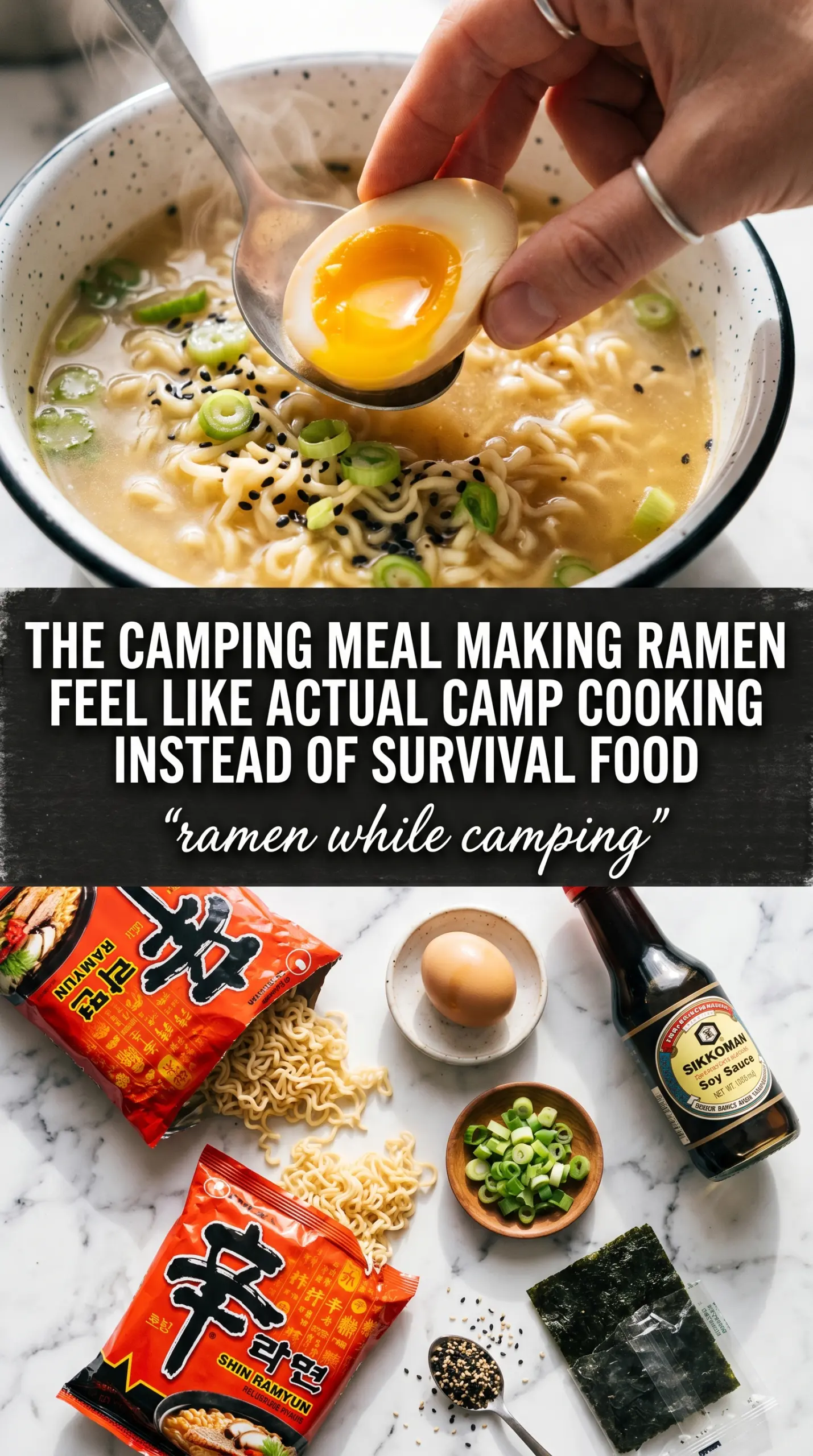
- Instant ramen noodles — These cook fast enough for camp conditions and hold up better than most thin noodles when they’re dropped into boiling water over open heat. Discarding the seasoning packets at first gives you control over the broth, which matters more here than it does on the stovetop.
- Frozen mixed vegetables — Frozen vegetables are the right call because they won’t wilt into mush before the noodles are done. Fresh vegetables can work, but they need to be cut small and added based on how long they take to soften.
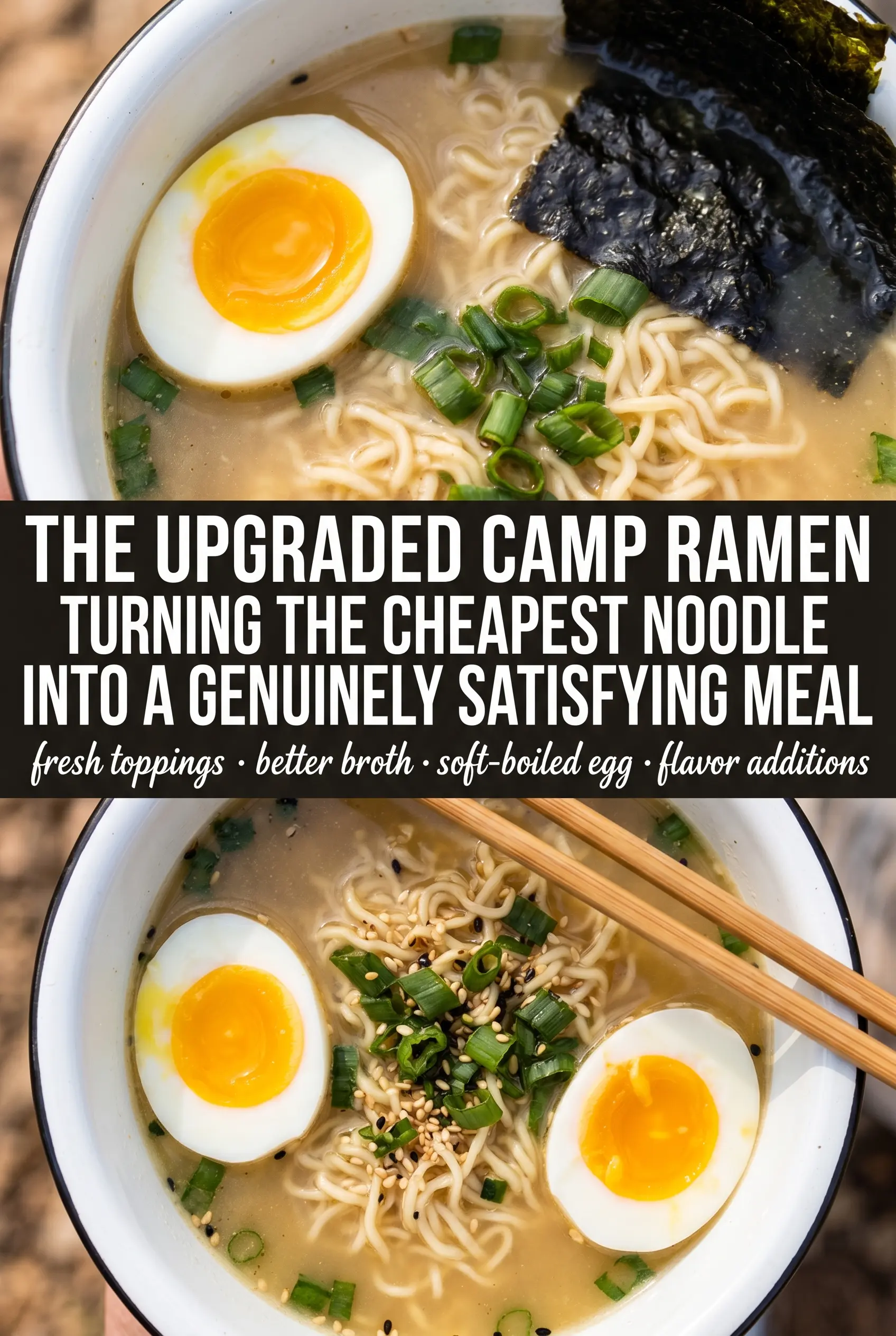
- Eggs — Cracking the eggs straight into the pot gives you soft poached eggs without carrying another pan. If you want firmer yolks, let them cook the full 4 minutes; if you want runnier yolks, pull the pot sooner and cover it briefly so the whites finish setting.
- Soy sauce and hot sauce — These finish the bowl and let you build depth without hauling extra ingredients. Soy sauce adds salt and umami; hot sauce cuts through the richness of the eggs. Add both after the seasoning so you don’t overshoot the salt level.
- Green onions — They bring a clean, sharp finish that wakes up the broth. Slice them before heading out so they’re ready the second the noodles are in bowls.
How to Build Campfire Ramen Without Overcooking It
Getting the Water to the Right Boil
Bring the water to a full boil before anything goes in. If the fire is uneven, move the pot where the heat is strongest and wait for the water to bubble hard across the surface, not just at the edges. A lazy simmer will make the noodles gummy before they’re fully hydrated. If the boil dies after adding ingredients, cover the pot briefly to bring the heat back without stirring too aggressively.
Cooking the Noodles and Vegetables Together
Add the noodles and frozen vegetables at the same time so the vegetables thaw while the noodles loosen. Stir just enough to separate the noodles, then leave the pot alone. Constant stirring breaks the noodles and can cool the water down too much over a campfire. After about 3 minutes, the noodles should look pliable and the vegetables should be hot through.
Poaching the Eggs in the Broth
Crack the eggs directly into the pot and let them sit undisturbed for a minute before you stir or nudge them. That gives the whites a chance to set in soft ribbons instead of scattering. Cook until the whites are opaque and the yolks are as set as you like, usually 3 to 4 minutes more. If the eggs are breaking apart, the water was moving too hard, so lower the heat or shift the pot off the hottest part of the fire.
Seasoning and Serving
Stir in the ramen seasoning packets at the end so the broth stays balanced. Taste first, then add soy sauce if it needs more depth and hot sauce if you want heat. Divide the ramen into bowls right away because the noodles keep soaking up liquid while they sit. If you wait too long, the broth disappears and the whole pot turns heavy.
How to Adapt This for the Gear and Food You Actually Packed
Make It Vegetarian-Friendly
Use a vegetable-based ramen packet or toss the seasoning packets and build the broth with soy sauce plus a spoonful of miso if you packed it. The eggs still give the bowl enough richness that you won’t miss meat, and the frozen vegetables become a bigger part of the meal.
Gluten-Free Ramen Swap
Use gluten-free ramen noodles and check that your soy sauce is tamari or labeled gluten-free. The cooking method stays the same, but gluten-free noodles can go from tender to soft fast, so start checking them a minute early.
Turn Up the Protein
Add leftover cooked chicken, sliced sausage, or canned tuna at the end just long enough to warm through. Since the base is already quick-cooking, pre-cooked protein works better than raw meat and keeps the total timing tight.
Storage and Reheating
- Refrigerator: Store leftovers up to 2 days. The noodles will keep absorbing broth, so expect a softer texture the next day.
- Freezer: I don’t recommend freezing this. The noodles turn mushy and the eggs get rubbery once thawed.
- Reheating: Rewarm gently in a pot with a splash of water or broth over low heat. Boiling it hard again is the mistake that turns the noodles bloated and the eggs tough.
Questions I Get Asked About This Recipe
Ramen While Camping
Ingredients
Equipment
Method
- Bring 6 cups water to a boil in a pot over campfire (visible rolling bubbles across the surface).
- Add 4 packages instant ramen noodles (reserve seasoning packets) and 1 cup frozen mixed vegetables, then stir to submerge them.
- Cook for 3 minutes, keeping the water at a steady boil and watching for noodles to start softening at the edges (visual cue: noodles begin to loosen and turn glossy).
- Crack 4 eggs directly into the pot, spacing them so each egg sets in a small pool (visual cue: egg whites turn opaque as they hit the hot water).
- Continue cooking for 3-4 minutes until eggs are poached and noodles are tender, with a light simmer/boil and noodles fully softened (visual cue: eggs look set with runny yolks if you prefer).
- Add the reserved ramen seasoning packets and stir to combine until the broth is evenly tinted and fragrant.
- Divide the ramen into 4 bowls, then top with sliced green onions and drizzle with soy sauce to taste.
- Add hot sauce to individual bowls if desired, then serve immediately while steaming (visual cue: active steam rising from the bowl).