Caramel apple cookies bake up soft in the center with golden edges, little pockets of melted caramel, and bits of apple that stay tender instead of turning mushy. The dough smells like a bakery the moment it hits the oven, and the finish of caramel drizzle with a pinch of flaky salt gives each cookie that sweet-salty contrast people go back for another tray to chase.
What makes these work is the prep on the apple and the balance in the dough. The apples have to be peeled, diced very fine, and patted dry so they don't leak moisture into the cookies and throw off the texture. Brown sugar brings chew, granulated sugar helps the edges set, and the spice blend keeps the apple flavor from tasting flat. Caramel bits melt into soft pockets instead of disappearing, which is exactly what you want here.
Below you'll find the tiny details that matter, from the right kind of apple dice to when to add the caramel drizzle so it actually sticks. There's also a storage note for keeping the cookies soft after baking, because these disappear fast but they still need to hold up for a day or two.
The apples stayed tender and the caramel bits melted into these little pockets without making the cookies greasy. I also loved the flaky salt on top — it kept them from being overly sweet.
These caramel apple cookies stay soft, chewy, and full of warm spice, so they're worth saving for the next time you want a fall-style dessert with a gooey caramel finish.
The Tiny Step That Keeps the Apples From Steaming the Dough
Fresh apple sounds like the whole point here, but it's also the ingredient most likely to sabotage the texture. Once diced, the apple needs to be patted dry until the surface moisture is gone. If you skip that step, the dough loosens in the oven and the cookies bake up cakier and softer in the wrong way, with wet spots around the apple pieces instead of a tender crumb.
The other thing that matters is the size of the dice. Very small pieces distribute evenly through the dough and soften just enough in the bake time to taste like apple, not chunks of fruit salad hidden in a cookie. That's the difference between a cookie that holds together and one that spreads unevenly or feels underbaked in the center.
- Dry apple pieces — They keep the dough from getting watery. Paper towels work fine, but press firmly and let the pieces sit a minute before adding them.
- Brown sugar — It brings moisture and chew, which pairs better with the apple than all granulated sugar would.
- Caramel bits — They melt into pockets instead of disappearing. Soft caramels chopped small work too, but they can create slightly larger gooey spots.
- Spices — Cinnamon does the heavy lifting, while nutmeg and allspice keep the flavor from tasting one-note. Don't overdo them or the cookies get muddy.
What Each Ingredient Is Actually Doing in These Cookies
- All-purpose flour — This gives the cookies enough structure to hold the apple pieces. A cup-for-cup gluten-free blend can work, but the cookies may spread a little more and finish softer.
- Baking soda — It helps the cookies spread just enough and browns the edges. Baking powder won't give the same texture here.
- Butter — Softened butter creams with the sugars and traps air, which is what gives these cookies their lift. If the butter is melted, the dough bakes up flatter and denser.
- Apples — Use a firm baking apple or a crisp sweet-tart apple if that's what you have. Avoid very juicy apples unless you're willing to dry them aggressively.
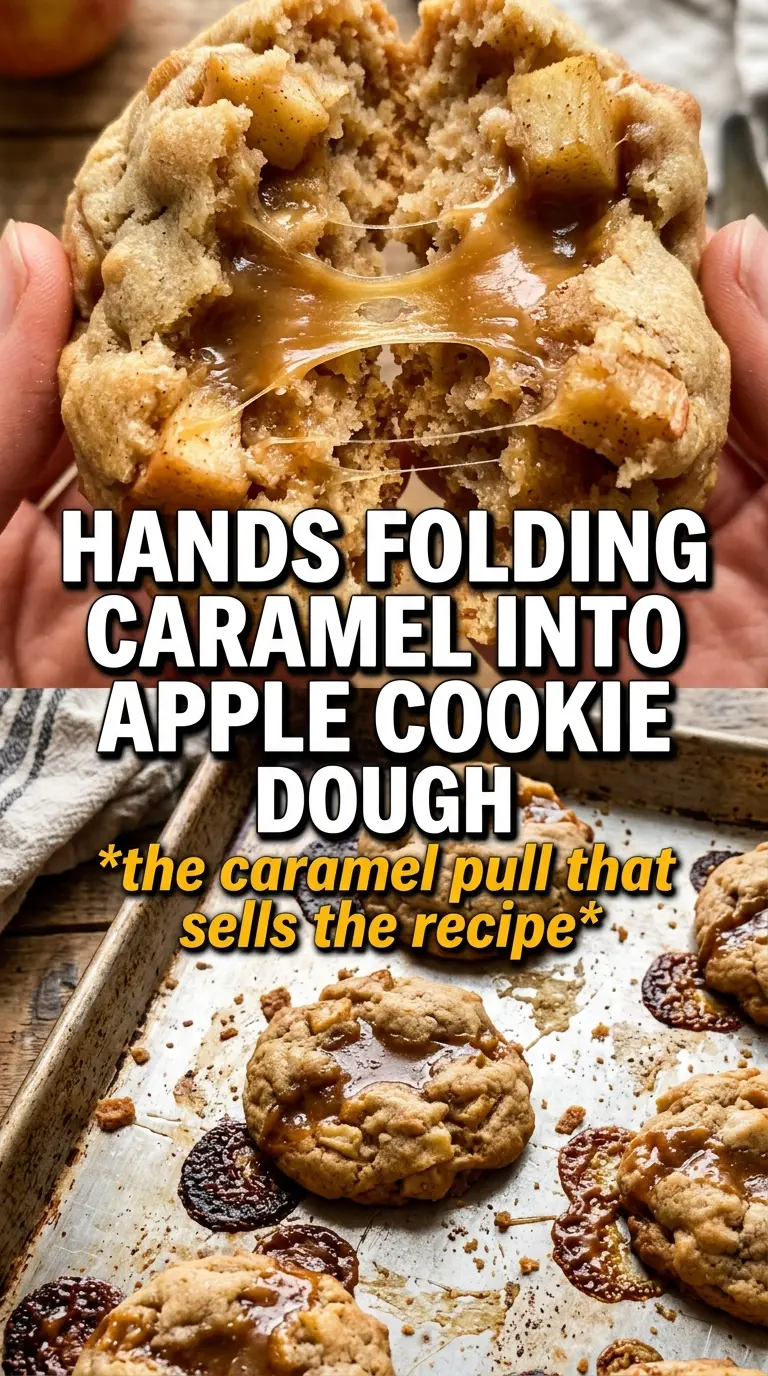
- Caramel sauce — Drizzle it while the cookies are still warm so it clings to the tops. If it goes on after the cookies cool completely, it tends to slide off.
The Bake Time That Sets the Centers Without Drying Out the Edges
Building the dough base
Start by creaming the butter with both sugars until the mixture looks pale and fluffy, not greasy. That step gives the cookies their structure, so don't rush it. Add the eggs and vanilla after the butter mixture is light, then mix only until combined. If the eggs go in while the butter is still cold and clumpy, the dough won't emulsify smoothly and the cookies can bake unevenly.
Folding in the apple and caramel
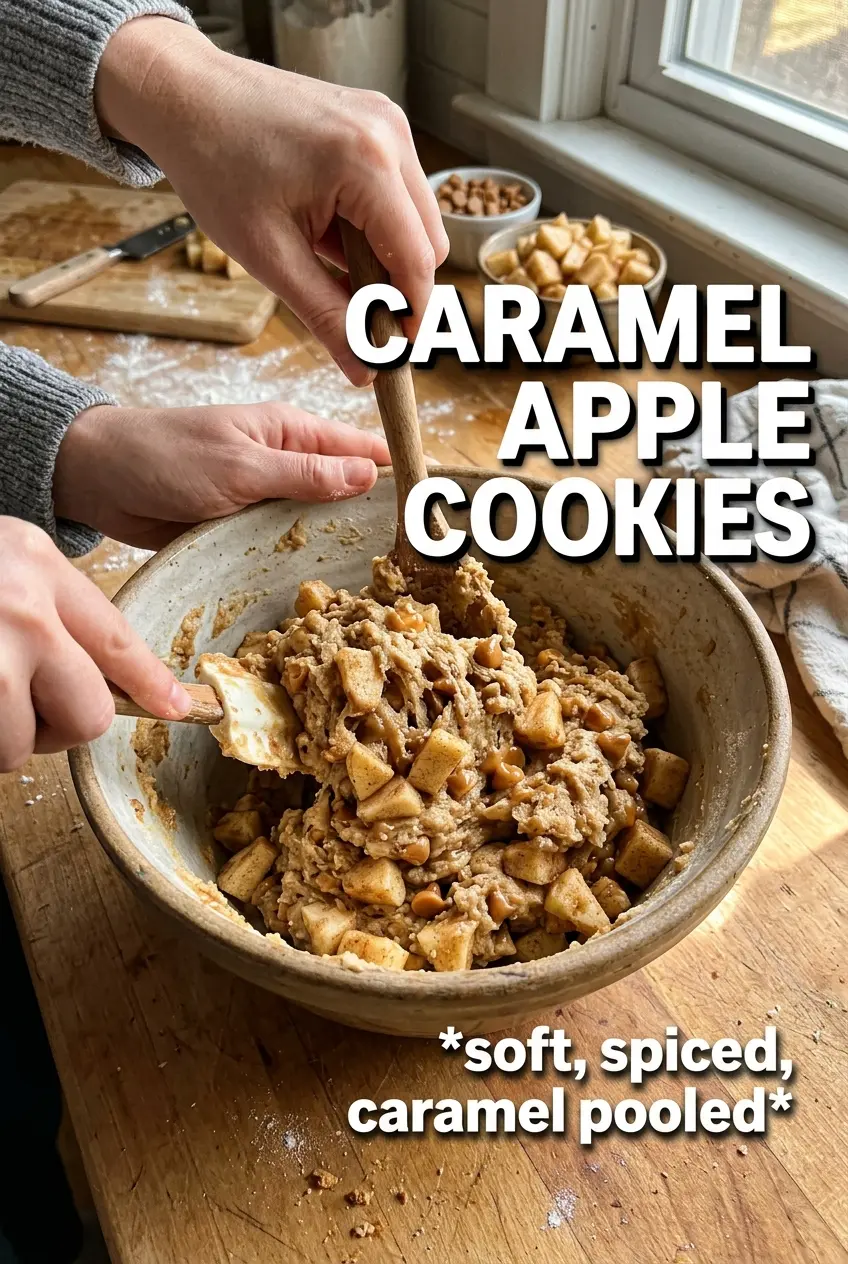
Once the dry ingredients are mixed in, fold gently so you don't overwork the flour. The apple and caramel bits should be distributed evenly, but the dough should still look soft and scoopable. Overmixing at this stage makes the cookies tougher, and aggressive stirring can break the caramel into tiny fragments that melt away instead of leaving pockets behind.
Baking until the edges just set
Scoop the dough into 2-tablespoon rounds and bake until the edges are golden and the centers still look slightly underdone. They finish on the baking sheet as they cool, which is what keeps the centers soft. If you wait until the tops look fully set in the oven, the cookies will be dry by the time they cool.
Finishing with caramel and salt
Drizzle the caramel sauce while the cookies are warm so it melts into the top just a little. The flaky salt goes on right after that, before the caramel sets. That last touch wakes up the apple and keeps the sweetness from flattening out.
How to Adapt These Cookies for Different Pantries and Preferences
Make Them Gluten-Free
A good 1:1 gluten-free baking blend can replace the flour without much drama. The cookies may spread a touch more and need a minute or two less in the oven, so watch for golden edges instead of relying on the timer alone.
Skip the Dairy
Use a plant-based butter that's formulated for baking. The texture stays close to the original, but the flavor is a little less rich, so don't skimp on the cinnamon and vanilla.
Use Pear Instead of Apple
Firm pears can stand in for the apple if that's what you've got. They bring a softer, sweeter finish, so the cookie tastes a little gentler and less tart, but the same drying step still matters.
Storage and Reheating
- Refrigerator: Store in an airtight container for up to 4 days. The cookies stay soft, though the caramel topping will firm up.
- Freezer: Freeze baked cookies without the caramel drizzle for up to 2 months. Add the drizzle after thawing so the tops look fresh.
- Reheating: Warm a cookie for 8 to 10 seconds in the microwave to soften the center. Don't overheat it or the caramel turns sticky and the cookie dries out fast.
Questions I Get Asked About This Recipe
Caramel Apple Cookies
Ingredients
Equipment
Method
- Preheat the oven to 375°F and line baking sheets with parchment so the cookies bake evenly and release cleanly.
- Dice the apples very finely and blot completely dry with paper towels to prevent soggy cookies.
- Whisk the all-purpose flour, baking soda, cinnamon, nutmeg, allspice, and salt until the spices are evenly distributed.
- Beat the softened unsalted butter, granulated sugar, and brown sugar until fluffy.
- Beat in the eggs and vanilla extract until the mixture looks smooth and cohesive.
- Fold in the flour mixture, mixing just until no dry streaks remain.
- Fold in the dried diced apples and the chopped caramel bits so the dough has pockets throughout.
- Scoop the dough into 2-tablespoon rounds and place on the prepared baking sheets, spacing them for spreading.
- Bake for 10-12 minutes at 375°F until the edges are golden and the centers look set.
- Drizzle with caramel sauce and sprinkle with flaky sea salt while the cookies are warm so the topping adheres.