Caramel fudge sets up with a glossy, amber finish and a dense, creamy bite that lands somewhere between a soft caramel and a classic slab of fudge. The best pieces hold their shape cleanly, but they still melt fast on the tongue, which is exactly why this version earns a spot on repeat. The flaky sea salt on top keeps the sweetness in check and gives each square a little crunch right at the finish.
What makes this batch work is the way the sugar, cream, butter, corn syrup, and condensed milk cook together until the mixture reaches soft-ball stage. That temperature matters more than the clock. Pull it off too early and the fudge stays loose; push it too far and it turns grainy and hard. The candy thermometer does the heavy lifting here, and the rest is mostly patience while it sets.
Below, I’ll show you the point where the mixture changes from pale and loose to thick and glossy, plus the small details that keep the texture smooth. If you’ve ever had fudge that never quite set, this is the version worth keeping.
The candy thermometer saved me here — it hit 239°F, and the fudge set up smooth and sliceable with that soft caramel chew instead of turning grainy.
Make this caramel fudge when you want glossy squares with a soft caramel center and a salty finish that cuts the sweetness.
The Soft-Ball Stage Is What Keeps This Fudge Sliceable
Caramel fudge only behaves if the sugar mixture reaches the right temperature. Below 238°F, the center stays too soft and the squares slump when you cut them. Above 240°F, the texture tightens up fast and starts heading toward grainy, brittle candy instead of smooth fudge.
The other trap is stirring less once it starts boiling. That’s how the bottom scorches and the sugar cooks unevenly. Keep it moving, use a heavy-bottomed pan, and watch the thermometer instead of guessing from the bubbles. When the mixture looks thick, glossy, and slower to stir, that’s usually the sign you’re close.
What Each Ingredient Is Doing in the Pan

- Granulated sugar — This gives the fudge its structure and that deep caramel sweetness. Once it dissolves and cooks past the boiling stage, it becomes the base of the final texture.
- Unsalted butter — Butter adds richness and helps the fudge set with a smoother mouthfeel. Salted butter works in a pinch, but reduce the added salt so the finish doesn’t get sharp.
- Heavy cream — Cream softens the sugar mixture and keeps the finished fudge from turning hard. Half-and-half can work, but the candy will be less silky and a little less forgiving.
- Light corn syrup — This is the ingredient that helps prevent crystallization. If you skip it, the fudge is much more likely to turn grainy, especially if sugar crystals cling to the sides of the pan.
- Sweetened condensed milk — This gives the fudge body, creaminess, and a milk-caramel flavor that tastes round instead of flat. There isn’t a true one-to-one swap here if you want the same texture.
- Flaky sea salt — The salt on top isn’t just decoration. It sharpens the caramel flavor and gives each square a clean finish so the sweetness doesn’t hang around too long.
Getting the Glossy Finish Without a Grainy Batch
Build the base before the heat climbs
Line the pan first and butter it well so the fudge can come out in one piece later. Combine everything except the vanilla and flaky salt in a heavy-bottomed saucepan, then stir constantly as it comes to a boil over medium heat. If the mixture catches on the bottom early, the whole batch can pick up a burnt edge that never disappears. The goal here is a smooth, even boil with no dry sugar patches on the sides of the pan.
Watch the thermometer, not the clock
Once the mixture is boiling, keep stirring frequently and watch for 238-240°F. The bubbles get thicker and the mixture takes on a darker caramel color as it approaches the right stage. If you take it off too soon, the fudge won’t firm up enough to slice. If it goes much higher, it can turn stiff and crumbly instead of creamy.
Finish fast and pour cleanly
Take the pan off the heat before you add the vanilla and salt. Stir them in quickly, then pour the mixture into the prepared pan right away because it starts setting as soon as it leaves the heat. Sprinkle the flaky salt over the top while the surface is still warm so it sticks. Let it cool at room temperature first; rushing it straight into the fridge can leave the center uneven.
How to Adapt This Fudge for Different Kitchens and Different Cravings
Dairy-Free Version
Use full-fat coconut cream in place of the heavy cream and a plant-based butter with a firm texture. The fudge will still set, but the flavor shifts slightly toward coconut and the finish won’t be quite as buttery. Keep the thermometer exactly where it should be, since the texture depends on temperature more than the dairy itself.
Extra-Salty Caramel Fudge
Double the flaky sea salt on top or add a tiny pinch more salt to the pot after cooking. This keeps the candy from reading as one-note sweet and gives the caramel flavor more contrast. Don’t add too much to the pan itself or the finished squares can taste flat instead of balanced.
Chocolate Swirl Finish
Drizzle a small amount of melted dark chocolate over the warm fudge and drag a knife through it once for a marbled look. The chocolate adds a bitter edge that plays well with the caramel base, but too much will overpower the salt and vanilla. Keep the swirl light so the fudge still tastes like fudge.
Storage and Reheating
- Refrigerator: Store in an airtight container for up to 2 weeks. The texture firms up in the fridge, so let it sit at room temperature for a few minutes before serving.
- Freezer: It freezes well. Wrap the slab tightly in parchment and then plastic wrap, or separate cut squares with parchment so they don’t stick together, and freeze for up to 3 months.
- Reheating: Fudge isn’t meant to be reheated. If it feels too firm from the fridge or freezer, let it warm at room temperature until the center softens slightly. Microwaving changes the texture fast and can make the edges greasy.
Answers to the Questions Worth Asking
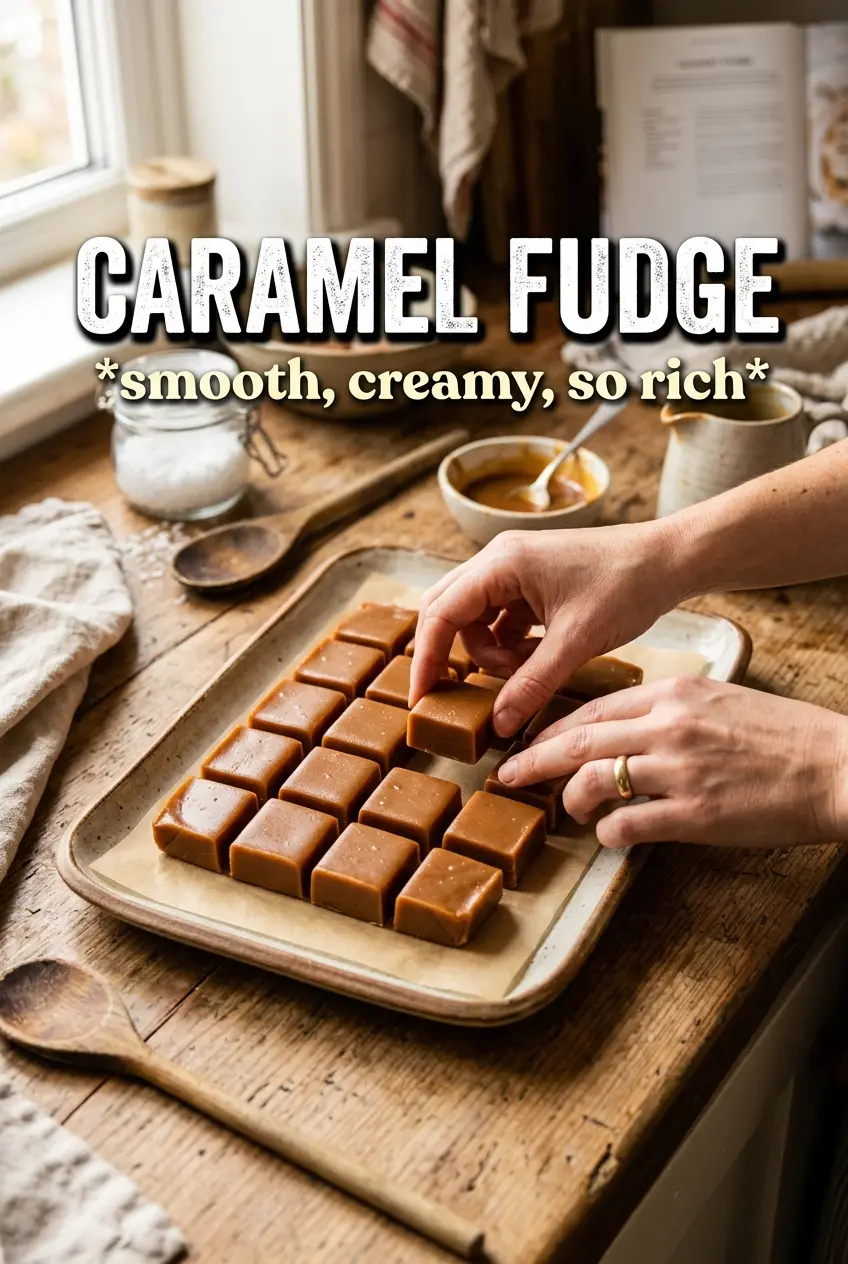
Caramel Fudge
Ingredients
Equipment
Method
- Line an 8x8 pan with parchment and butter it generously so the fudge releases cleanly.
- Combine granulated sugar, unsalted butter, heavy cream, light corn syrup, and sweetened condensed milk in a heavy-bottomed saucepan.
- Bring the mixture to a boil over medium heat, stirring constantly to prevent scorching.
- Cook, stirring frequently, until the mixture reaches 238-240°F (soft ball stage) on a candy thermometer.
- Remove from heat and stir in vanilla extract and salt.
- Pour the hot caramel fudge into the prepared pan and sprinkle with flaky sea salt.
- Cool at room temperature for 1 hour, until the surface looks set and less glossy.
- Refrigerate for 1 more hour until firm enough to slice cleanly.
- Cut into squares with a sharp knife and serve once the edges hold their shape.