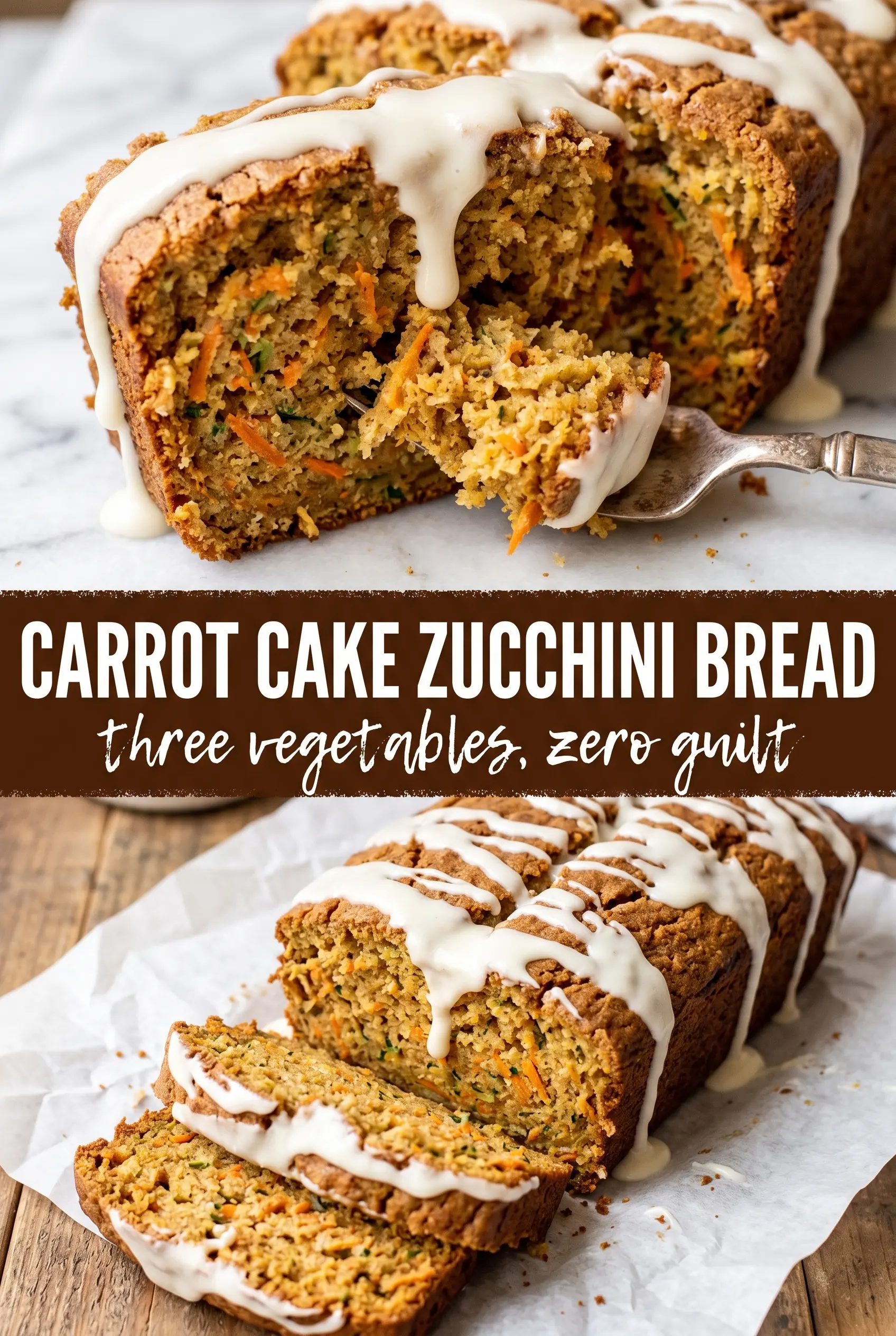
Carrot Cake Zucchini Bread bakes up tender, warmly spiced, and just sturdy enough to slice cleanly once it cools. The zucchini melts into the crumb and keeps the loaf soft for days, while the carrots bring a little sweetness and those tiny orange flecks that make every slice look homemade in the best way. The cream cheese frosting on top turns it from a quick bread into something people hover over at the counter with a knife in hand.
The trick here is managing moisture without making the loaf heavy. Zucchini holds a lot of water, so squeezing it dry matters more than it seems, and the Greek yogurt adds tenderness without making the batter greasy. Brown sugar deepens the flavor and keeps the crumb soft, while the cinnamon, ginger, and nutmeg give it that carrot-cake warmth without overpowering the vegetables.
Below, I’ll show you how to avoid a dense middle, when to frost, and the swaps that still give you a good loaf even if you’re out of one of the add-ins.
The loaf stayed moist for days, and the frosting set up thick instead of sliding off. I squeezed the zucchini like you said and the texture came out perfect.
Carrot Cake Zucchini Bread with cream cheese frosting is the kind of loaf that disappears slice by slice, especially when the crumb stays soft and spiced.
The Moisture Balance That Keeps This Loaf from Turning Dense
Quick breads with two vegetables can go wrong in one of two ways: they bake up wet and gummy in the middle, or they turn tight because the batter was overmixed to compensate. This loaf works because the zucchini is squeezed dry before it ever hits the bowl, and the carrots are finely grated so they soften fast in the oven instead of leaving stringy pockets behind.
The other thing that matters is the fat-to-liquid balance. Oil keeps the crumb soft even after chilling, while Greek yogurt adds tenderness and enough acidity to support the baking soda. If you skip the squeeze on the zucchini, the center takes longer to set and the frosting will sit on a loaf that never quite firms up the way it should.
What Each Ingredient Is Actually Doing Here
- All-purpose flour — Gives the loaf enough structure to support the vegetables and frosting without turning cakey. A 1:1 gluten-free blend with xanthan gum can work, but the crumb will be a little more delicate.
- Baking soda and baking powder — The soda reacts with the yogurt for lift, and the baking powder gives the loaf a little extra rise so it doesn’t bake flat. Both matter here; leaving one out makes the texture heavier.
- Brown sugar — Brings moisture and a deeper molasses note that fits the carrot-cake spices. White sugar will sweeten it, but the loaf loses some of its warmth and softness.
- Greek yogurt — Adds tenderness and a slight tang that makes the spices taste fuller. Sour cream works in the same amount if that’s what you have.
- Zucchini — This is the quiet ingredient that keeps the loaf soft for days. Grate it fine and squeeze it until it feels almost dry; that step changes everything.
- Carrots — Use a fine grater so they disappear into the crumb instead of staying crunchy. Pre-shredded carrots from a bag are usually too dry and thick for this loaf.
- Raisins or pecans — Optional, but each adds something useful: raisins for little bursts of sweetness, pecans for crunch. If you use nuts, toast them first for better flavor.
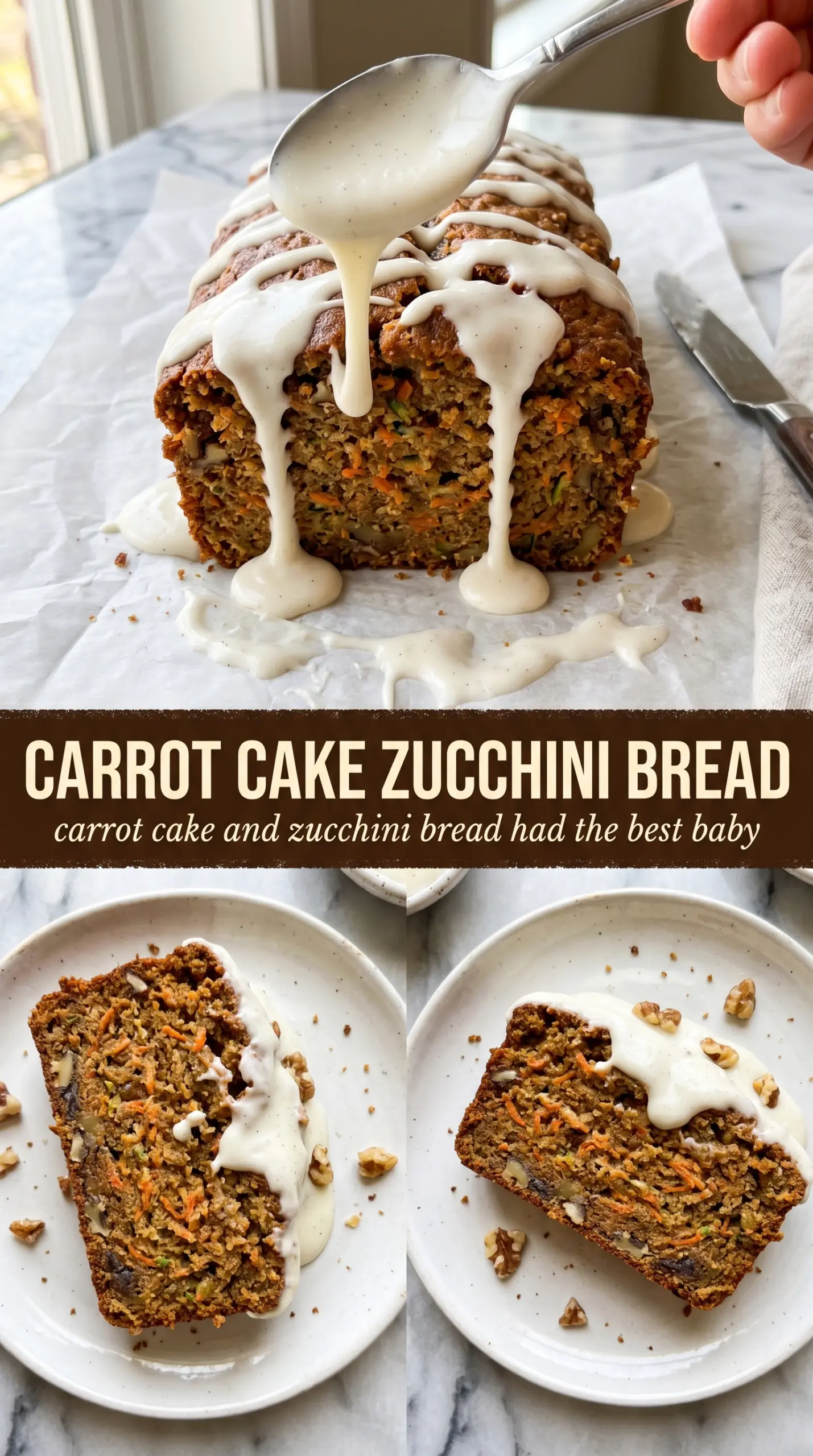
- Cream cheese frosting — Spread it only after the loaf is completely cool, or it will melt and slide. Softened cream cheese gives you the smoothest finish; cold cream cheese leaves little lumps.
Mixing the Batter Without Losing the Tender Crumb
Start with the dry ingredients
Whisk the flour, baking soda, baking powder, salt, cinnamon, ginger, and nutmeg until the spices disappear into the flour. That even distribution matters because cinnamon clumps can leave one bite spicy and another bland. This is also the point where you catch any small lumps before they end up in the loaf.
Build the wet base until it looks smooth
Beat the brown sugar, eggs, oil, yogurt, and vanilla until the mixture looks glossy and unified. You want the sugar mostly dissolved and the eggs fully blended so the batter doesn’t separate later. If it looks streaky here, keep mixing before you add the vegetables.
Fold in the vegetables gently
Stir in the grated zucchini and carrots before the flour goes in. Once the dry ingredients are added, fold just until you stop seeing streaks of flour; overmixing at this stage is the fastest way to get a tough loaf. If you’re adding raisins or pecans, fold them in at the very end so they don’t sink.
Bake until the center springs back
Scrape the batter into a greased 9×5 loaf pan and bake at 350°F until a toothpick comes out clean, usually 55 to 65 minutes. The top should be deeply golden and the center should spring back lightly when touched. If the top is browning too fast before the middle is done, tent it loosely with foil for the last part of baking.
Cool before frosting
Let the loaf cool completely before you beat together the frosting and spread it on top. Warm bread softens cream cheese frosting into a slide, and the frosting won’t stay in that thick, swirled layer you’re after. If you want cleaner slices, chill the frosted loaf for 15 to 20 minutes before cutting.
How to Adapt This Loaf for Different Kitchens and Different Cravings
Dairy-Free Version
Swap the Greek yogurt for unsweetened dairy-free yogurt and replace the cream cheese frosting with a dairy-free cream cheese alternative. The loaf still bakes up tender, but the frosting will taste a little less tangy, so a small splash of extra vanilla helps round it out.
Nutty, More Carrot-Cake Style
Use the pecans instead of raisins and toast them first for a deeper, almost buttery flavor. This version gives the loaf more crunch and makes it feel closer to a classic carrot cake slice.
No-Frosting Breakfast Loaf
Leave off the frosting and you get a less-sweet breakfast bread that toasts well the next day. The crumb stays soft enough for slicing, and the spices still carry the whole loaf without needing the topping.
Storage and Reheating
- Refrigerator: Store covered for up to 5 days. The crumb stays moist, but the frosting firms up in the cold.
- Freezer: Freeze the unfrosted loaf tightly wrapped for up to 2 months. Frost after thawing for the cleanest texture; a frosted loaf can be frozen, but the topping softens a bit when it thaws.
- Reheating: Warm slices briefly at room temperature or for a few seconds in the microwave. If the loaf is frosted, don’t heat it long enough to melt the topping or the texture turns greasy.