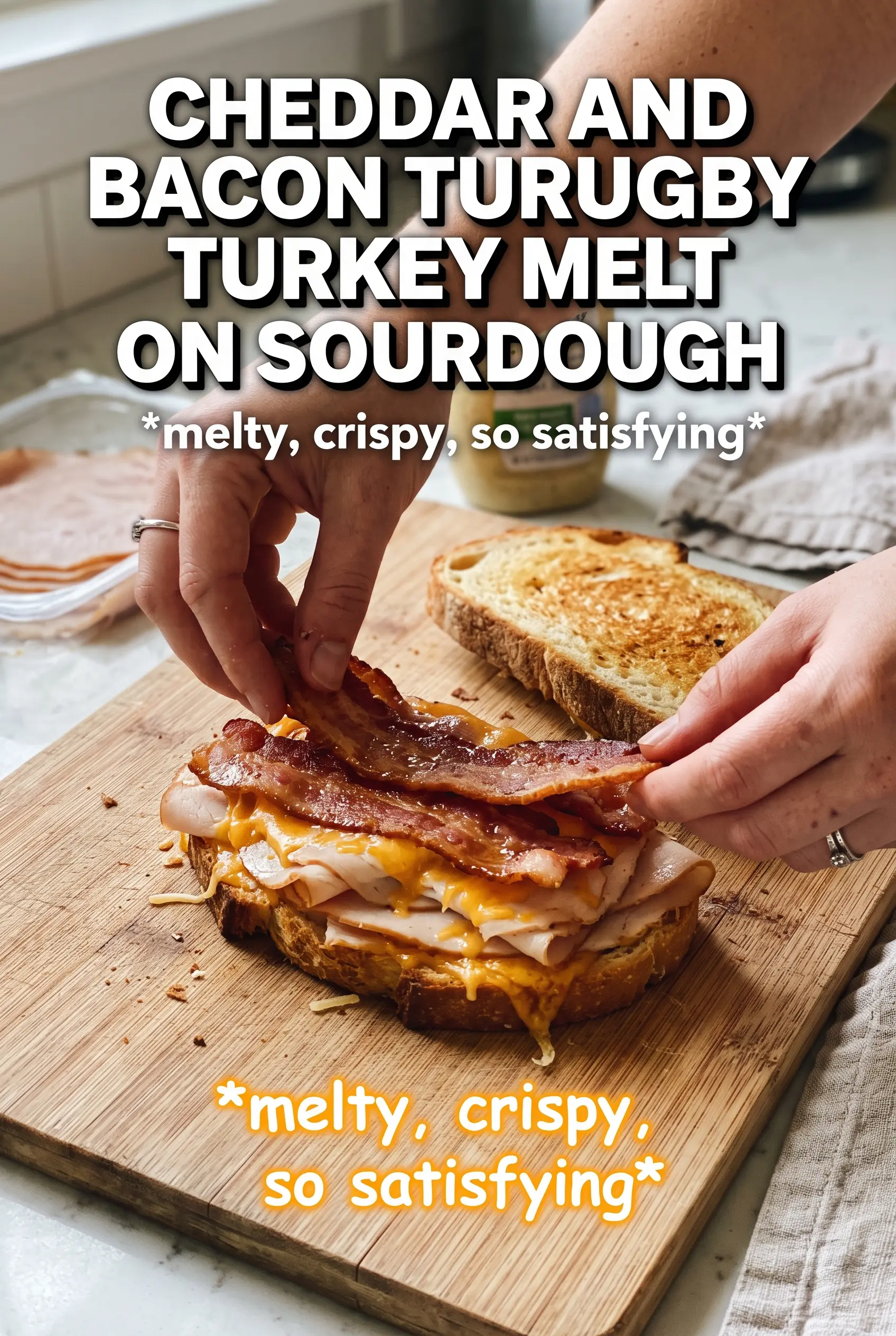
Golden sourdough, sharp cheddar, crisp bacon, and warm turkey turn into a melt that eats like a diner sandwich done at home with a little more care. The bread goes shatter-crisp on the outside while the inside stays soft enough to soak up the Dijon, mayonnaise, and the juices from the turkey and tomato. When the cheese loosens and starts to cascade at the edges, you know the sandwich is at the exact right moment.
What makes this version work is the balance between fat, acid, and texture. The Dijon cuts through the richness of the cheddar and bacon, while the mayonnaise helps the second slice of bread brown evenly without drying out. Using sourdough gives you structure, which matters once the sandwich is loaded with turkey and a handful of greens. Sharp cheddar is the right call here because it melts cleanly but still tastes bold enough to hold its own against the bacon.
Below you’ll find the small details that keep the bread from burning before the cheese melts, plus a few smart swaps if you need to adjust the sandwich for what you’ve got on hand.
The sourdough got perfectly crisp before the cheddar fully melted, and the Dijon kept the sandwich from tasting heavy. I added the arugula at the end like you said and it gave the whole melt a fresh bite.
Like this cheddar and bacon turkey melt? Save it to Pinterest for the days when you want a crisp sourdough sandwich with melty cheese, smoky bacon, and zero fuss.
The Part That Keeps the Bread Crisp While the Cheese Melts
The usual failure with a hot sandwich like this is heat that’s too high. The bread browns before the cheddar has time to soften, and you end up with a dark crust and a cold center. Medium heat is the sweet spot because it gives the cheese enough time to melt all the way through while the sourdough slowly turns deeply golden.
Butter on the outside is doing the heavy lifting here, but the Dijon and mayonnaise inside matter more than people think. Dijon adds sharpness and keeps the sandwich from tasting one-note, while mayonnaise gives a smooth, even spread that helps the other slice of bread color evenly. If your skillet runs hot, pull it down a notch as soon as the bread starts to sizzle hard.
- Keep the bacon fully crisp before it goes into the sandwich. Soft bacon turns chewy once it’s heated again.
- Use sharp cheddar, not mild. Mild cheddar melts fine but disappears under the turkey and bacon.
- Let the butter soften first so it spreads thinly. Thick clumps brown unevenly.
- Slice the tomato just before serving so it doesn’t water down the bread.
What Each Layer Is Doing in This Sandwich
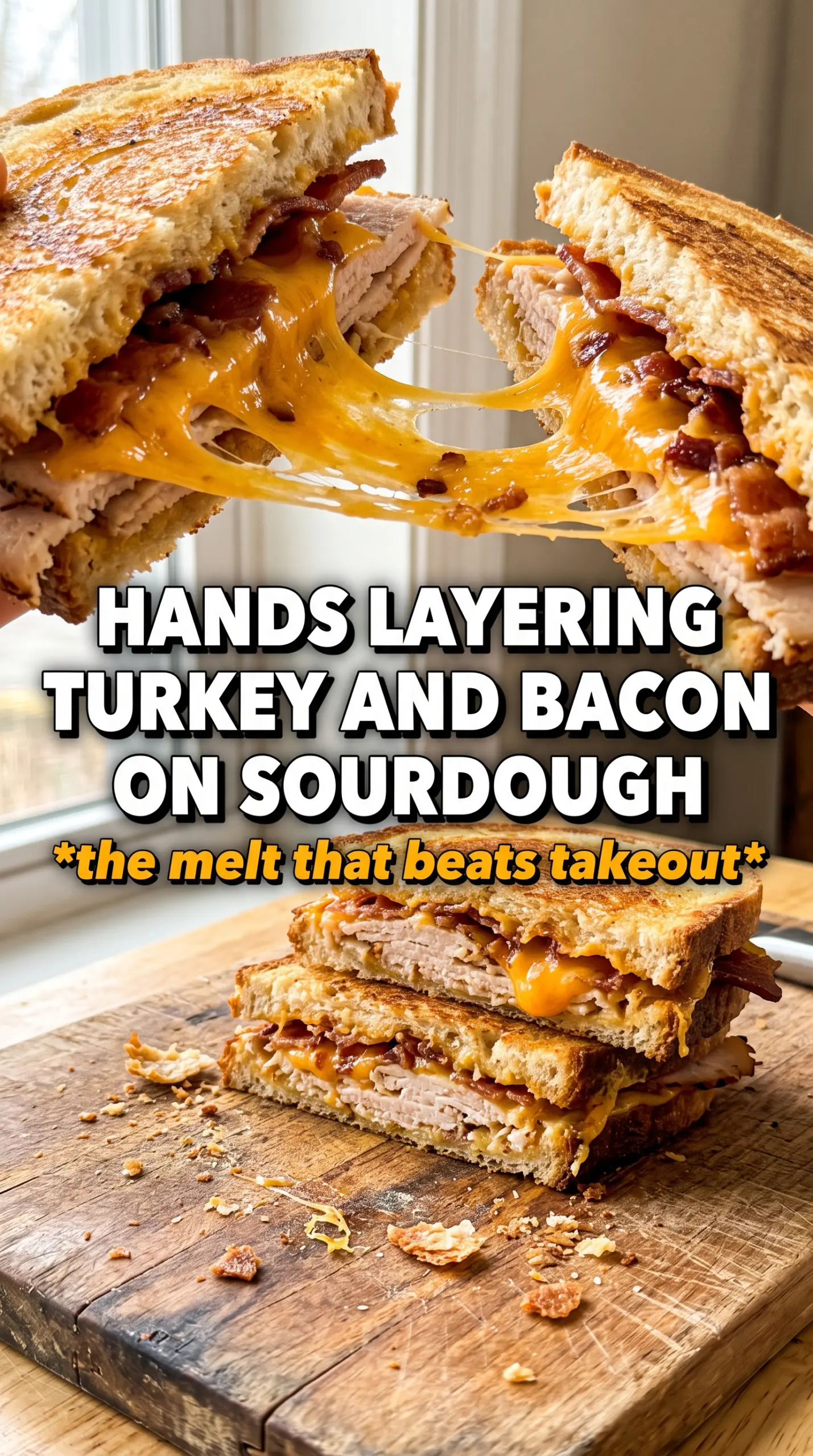
- Sourdough bread — The sturdy crust holds up to the filling and stays crisp instead of collapsing. If you swap it, use another bread with enough structure, like Texas toast or a good bakery white loaf.
- Sharp cheddar — This gives you the strongest cheese flavor and the best melt for a sandwich like this. Pre-sliced works fine, but thicker hand-sliced cheese takes longer to melt.
- Deli turkey breast — Thin slices warm through fast and stack neatly without making the sandwich bulky. Thick-cut turkey can work, but it needs a little more time in the pan.
- Bacon — This adds salt, crunch, and smoky richness. There isn’t a great substitute for the texture, but turkey bacon can work if that’s what you have, as long as you crisp it well.
- Dijon mustard and mayonnaise — These aren’t just condiments; they season the sandwich and help the bread toast evenly. If you want a little more tang, lean heavier on the Dijon side.
Building the Melt So Nothing Falls Out in the Pan
Layer the flavor before the heat
Start with butter on the outside of every bread slice, then spread Dijon on half and mayonnaise on the other half. That split matters because it gives the sandwich two different kinds of richness without making the filling greasy. Stack the turkey, bacon, and cheddar on the Dijon side so the cheese sits closest to the warm pan and begins melting first. If you pile the greens in too early, they wilt into the cheese and make the sandwich harder to seal cleanly.
Let the first side set before you flip
Set the sandwiches butter-side down in a skillet over medium heat and leave them alone until the first side is a deep golden brown. If you move them too soon, the bread can tear before it’s crusted. You want to hear a steady, gentle sizzle, not an aggressive fry. When the bottom is crisp and the cheese around the edges looks glossy and loose, flip carefully and cook the second side until the cheddar is fully melted.
Finish with the greens and tomato
Open each sandwich after cooking and add the arugula and tomato slices right before serving. That keeps the bread from getting soggy and gives you a fresher bite against the rich filling. A small pinch of salt and pepper on the tomato sharpens the whole sandwich. Press the halves together once more and serve it while the cheese is still stretchy.
How to Adapt This Melt for Different Kitchens and Eating Styles
Make it gluten-free without losing the crunch
Use a sturdy gluten-free sandwich bread with a good slice-to-crust ratio. Softer gluten-free breads can fall apart under the filling, so toast gently and handle the flip with a wide spatula. The flavor stays the same, but the bread may need an extra minute to get properly crisp.
Skip the bacon and keep the sandwich satisfying
Leave out the bacon and add a little extra cheddar plus a pinch more Dijon so the sandwich still has some edge. You’ll lose the smoky crunch, but the turkey and cheese still make a solid melt. A few thin slices of avocado can also add richness if you want to replace some of that bacon weight.
Use Swiss or provolone for a milder melt
Swiss gives a nutty finish, while provolone melts into a softer, more mellow sandwich. Both are less sharp than cheddar, so the Dijon matters more here to keep the flavor from flattening out. This is the swap to use when you want a gentler sandwich instead of a bold one.
Storage and Reheating
- Refrigerator: Store assembled leftovers for up to 2 days, though the bread will soften a bit from the tomato and greens.
- Freezer: I don’t recommend freezing this sandwich once it’s assembled; the lettuce and tomato turn watery and the texture goes downhill fast.
- Reheating: Reheat in a skillet over low heat with a lid for a few minutes so the center warms before the bread burns. The mistake to avoid is using the microwave, which makes the sourdough leathery and the bacon limp.